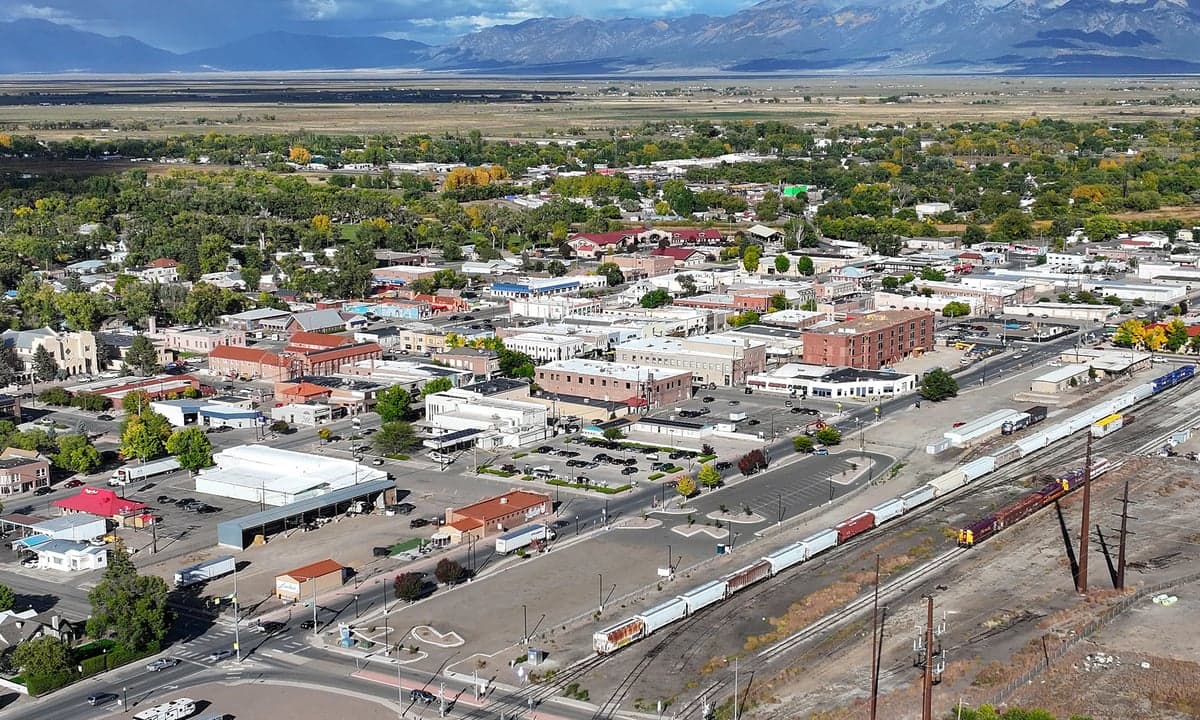
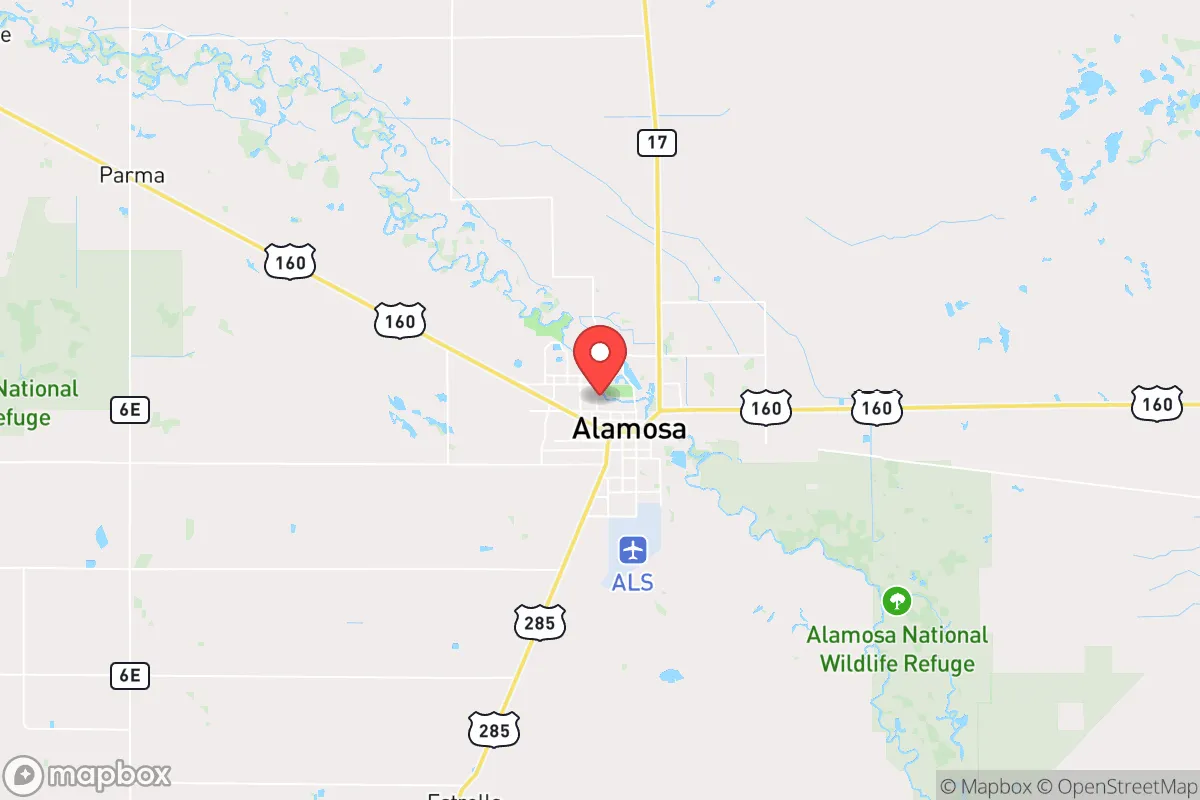
Photo: Wikipedia
Personal Sovereignty in Alamosa, CO
Viable for self-reliance. Generally workable, though some barriers may limit total independence.
What does Personal Sovereignty tell us?
Personal Sovereignty measures your capacity for self-reliance and independence with minimal government friction. Higher scores mean fewer barriers between you and the way you want to live... but it assumes you have the space you need and good neighbors.
What does this tell us?
Personal Sovereignty measures your capacity for self-reliance and independence with minimal government friction. Higher scores mean fewer barriers between you and the way you want to live... but it assumes you have the space you need and good neighbors.
State Policy
Energy independence: Net exporter (110% of energy produced in-state)
Personal Liberty
Homesteading

Personal Liberty Analysis
Alamosa, Colorado, offers a mixed bag for those prioritizing personal sovereignty, with its remote high-desert location providing significant physical distance from urban overreach, but its position within a deep-blue state government creating persistent friction for conservative-leaning individuals and families. The San Luis Valley’s isolation—roughly a three-hour drive from Colorado Springs and four from Denver—acts as a natural buffer against the most aggressive state-level mandates, but residents must contend with Colorado’s increasingly centralized regulatory apparatus, particularly in areas like energy, land use, and public health. For a survivalist or prepper mindset, Alamosa represents a strategic outpost: far enough from the chaos of the Front Range to offer breathing room, yet still subject to the long arm of a state government that has shown little hesitation in overriding local autonomy on issues from gun control to property rights. The key question for anyone considering relocation here is whether the valley’s rugged individualism and community self-reliance can sufficiently insulate you from policies that feel designed for Boulder or Denver, not for a rural agricultural town where people still depend on wells, septic systems, and their own wits.
Tax burden and regulatory posture: How Colorado’s state-level policies affect Alamosa
Colorado’s overall tax burden is moderate by national standards—state income tax sits at a flat 4.4% as of 2025, with a state sales tax of 2.9% that local jurisdictions can layer on top—but the regulatory climate is where the real sovereignty concerns emerge. Alamosa County itself is relatively hands-off compared to Front Range counties, with no countywide building codes in unincorporated areas and minimal zoning restrictions outside the city limits, which appeals to those wanting to develop land without bureaucratic interference. However, the state’s energy and environmental regulations are tightening: Colorado’s 2019 Climate Action Plan and subsequent legislation have imposed stricter emissions standards on vehicles and equipment, and the state’s push for renewable energy mandates can affect everything from generator use to agricultural operations. Property taxes in Alamosa County are among the lowest in Colorado—around 0.49% of assessed value—which is a genuine plus for landowners, but the state’s Gallagher Amendment repeal in 2020 has led to gradual increases that will likely continue. For a prepper, the real burden isn’t the tax rate itself but the creeping regulatory footprint: Colorado’s state government has shown willingness to preempt local control on issues like oil and gas setbacks, short-term rentals, and even local food sales, meaning Alamosa’s relative freedom could be eroded by Denver-based mandates over time.
Self-defense and gun law specifics: What Alamosa residents need to know about Colorado’s shifting landscape
Colorado’s gun laws have become significantly more restrictive in recent years, and Alamosa residents are not exempt from state-level changes that many conservatives view as infringements on the Second Amendment. The state passed a red flag law (Extreme Risk Protection Orders) in 2019, allowing courts to temporarily seize firearms from individuals deemed a risk, and in 2023, Colorado enacted a ban on “ghost guns” and raised the minimum purchase age for all firearms to 21. A 2024 law also imposed a three-day waiting period on all firearm purchases, which directly impacts those who believe in immediate self-defense capability. Alamosa County itself is more gun-friendly culturally—the sheriff’s office has publicly stated it will not enforce red flag orders it deems unconstitutional, and concealed carry permits are issued routinely with a shall-issue policy—but the legal landscape is precarious. Open carry is still legal in Colorado without a permit, but local ordinances in Alamosa city limits could theoretically restrict it in certain public spaces. For a survivalist, the practical reality is that Alamosa offers a relatively permissive local enforcement environment, but you must comply with state registration and background check requirements, and any future state-level magazine capacity limits or assault weapon bans could further constrain your options. The proximity to New Mexico (a more gun-friendly state in some respects) provides a potential workaround for certain purchases, but crossing state lines with firearms carries its own legal risks.
Self-reliance and homesteading viability: Lot sizes, zoning, and off-grid feasibility in the San Luis Valley
The San Luis Valley is one of the last places in Colorado where genuine off-grid living remains feasible, thanks to large rural lot sizes, minimal county zoning, and abundant groundwater. Outside Alamosa city limits, you can find parcels as small as 1 acre or as large as 160 acres, with many properties already set up for well and septic systems—no connection to municipal utilities required. Alamosa County has no countywide building codes for unincorporated areas, meaning you can construct a cabin, earthship, or shipping container home without plan review or inspection, as long as you meet basic state health department requirements for septic and well water. Solar power is highly viable here: the valley averages over 300 sunny days per year, and net metering is available through San Luis Valley Rural Electric Cooperative, though the state’s push for renewable energy mandates could eventually complicate grid-tied systems. For those wanting true independence, off-grid solar with battery storage is straightforward, and the county’s agricultural zoning allows for livestock, gardening, and even small-scale commercial farming without special permits. The main constraint is water rights: Colorado’s prior appropriation system means you must secure a well permit (typically granted for household use on parcels over 35 acres, or with a water augmentation plan for smaller lots), and the valley’s groundwater is increasingly scrutinized by state regulators concerned about aquifer depletion. For a prepper, the ability to drill a well, install solar panels, and raise chickens or goats on a few acres without county interference is a major sovereignty win, but the state’s water bureaucracy is a persistent headache that requires careful legal navigation.
Personal liberties: Parental rights, medical autonomy, speech, and property in Alamosa
Parental rights in Colorado have been a flashpoint, with the state passing laws that allow minors to consent to certain medical treatments (including mental health care and reproductive services) without parental notification, which directly conflicts with the values of many conservative families. Alamosa’s school district, while generally more traditional than Front Range districts, must still comply with state mandates on curriculum and health education, though local school board elections offer a pathway for parents to influence policy. Medical autonomy is another area of concern: Colorado has legalized both medical and recreational marijuana, and while Alamosa has opted out of retail cannabis sales, the drug’s availability statewide can create cultural friction for those who view it as a gateway to broader substance abuse. Vaccine mandates for schoolchildren remain a state-level decision, with Colorado having relatively lenient exemption laws compared to some blue states, but the political pressure to tighten them is constant. Free speech and property rights are stronger in Alamosa than in urban Colorado: the county has no hate speech ordinances or overly restrictive sign codes, and the local government generally respects private property rights, though the state’s land use planning laws can affect large-scale development. For a conservative individual or family, the calculus is that Alamosa offers a high degree of local cultural alignment with traditional values—churches are prominent, community events are family-oriented, and neighbors tend to mind their own business—but the state government in Denver is actively working to erode parental authority and medical freedom, and those battles will likely intensify regardless of local sentiment.
Overall, Alamosa provides a stronger sovereignty environment than any Front Range city, but it falls short of the true autonomy found in states like Idaho, Montana, or Wyoming, where state-level policies are more aligned with individual liberty. The San Luis Valley’s isolation and agricultural character create a natural fortress for those willing to navigate Colorado’s regulatory maze, but the state’s trajectory on gun control, parental rights, and energy mandates means you’ll need to stay politically engaged and legally vigilant. For a survivalist or prepper who values physical distance from urban centers and a community that still practices neighborly self-reliance, Alamosa is a viable option—just don’t expect the state government to have your back. The real sovereignty here comes from what you build on your own land, not from any protection the system provides.

* Values derived from national, state, county, city and local statistics and may differ in a specific area. Last updated: 2026-05-11T22:08:49.000Z
Narrative content on this page is AI-generated and may contain mistakes. Verify any details that matter before acting on them.
ReloMaps may earn a commission from affiliate links at no extra cost to you.

