Photo: Wikipedia
Find The Best Places To Live
in Colorado Springs
PRO TIP! You can paste a Zillow or Redfin link to get info on that property.
What It's Like Living in Colorado Springs, CO
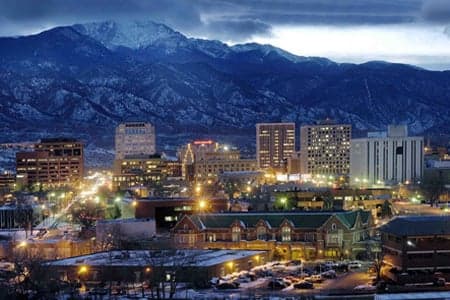
Colorado Springs has a reputation as the place where the mountains meet the plains, and that’s not just a geography lesson—it shapes everything about living here. You get the outdoor playground of the Rockies without the isolation of a mountain town, and a city that feels both sprawling and grounded, with Pikes Peak as a constant, looming backdrop. It’s a place where people actually use their REI memberships, where the Air Force Academy’s cadets are a visible part of the community, and where the local identity is proudly, unapologetically conservative, with a strong military and evangelical Christian influence that sets it apart from the rest of Colorado.
The Daily Rhythm: Outdoor Obsession Meets Suburban Practicality
A typical weekday in Colorado Springs starts early. The sun comes up fast over the Front Range, and you’ll see people heading to Garden of the Gods for a pre-work hike or running the trails at Palmer Park before the heat sets in. Commutes are short—the average is about 23 minutes—so you can actually live 15 minutes from work and 15 minutes from a trailhead. The city’s layout is a series of neighborhoods (Old Colorado City, Briargate, the Broadmoor area) connected by major arteries like I-25 and Powers Boulevard, and traffic is manageable compared to Denver, though the I-25 corridor north to Denver can be a slog during rush hour.
Weekends are for the outdoors, no question. People here don’t just talk about hiking—they do it, every weekend, rain or shine. The most popular spots are Garden of the Gods (free, world-class rock formations), the Manitou Incline (a brutal 2,000-foot stair climb that’s a local rite of passage), and Pikes Peak itself, which you can drive up or hike via Barr Trail. But there’s also a strong social scene built around breweries—places like Bristol Brewing, Phantom Canyon, and the newly popular Red Leg Brewing are where you’ll find families with kids in tow, young singles, and retirees all mingling. The food scene is solid but not flashy: think farm-to-table comfort food at The Rabbit Hole, excellent tacos at La’au’s, and a surprising number of good sushi spots (Sushi Ato is a local favorite).
Sports, Community, and the Kind of Person Who Thrives Here
Sports are a big deal, but not in the way you might expect. There’s no major pro team in Colorado Springs itself, but the city is home to the Colorado Springs Switchbacks FC, a USL Championship soccer team that draws passionate crowds at Weidner Field downtown. High school football is genuinely important—teams like Pine Creek and Palmer Ridge pack stands on Friday nights. And the Air Force Academy’s football games at Falcon Stadium are a fall ritual, with the cadet wing marching in formation and flyovers that make you feel like you’re in a movie. For pro sports, Denver is a 90-minute drive north, and many residents are die-hard Broncos, Avalanche, or Rockies fans who make the trip regularly.
The kind of person who fits in here is someone who values self-reliance, the outdoors, and a slower pace than Denver. It’s a city of 483,000 people, with a median age of 35.6, so it’s youngish but not a college town. Many residents are military families (Fort Carson, Peterson SFB, Schriever SFB), evangelical Christians (Focus on the Family is headquartered here), or outdoor enthusiasts who work remotely or in defense/aerospace. The median household income is $83,198, and about 42% of adults have a college degree, so it’s a well-educated, middle-to-upper-middle-class population. You’ll see a lot of Subarus and pickup trucks, a lot of Patagonia vests, and a lot of people who genuinely love talking about their latest 14er climb.
What’s There to Do: Festivals, Parks, and the Quirks of Local Life
Festivals punch above their weight here. The Pikes Peak International Hill Climb (the “Race to the Clouds”) is a huge deal every June, drawing gearheads from across the country. The Colorado State Fair happens in nearby Pueblo, but the Springs has its own gems: the Territory Days festival in Old Colorado City, the Colorado Springs Labor Day Lift Off (a massive hot air balloon event), and the Broadmoor’s annual holiday lights display, which is genuinely magical. The music scene is modest but earnest—the Black Sheep is the go-to for indie and punk shows, while the Pikes Peak Center hosts Broadway tours and orchestras.
One cultural quirk you’ll notice: the city is deeply religious and deeply outdoorsy, and those two worlds don’t always mix. You’ll see churches on every corner, and the Focus on the Family campus is a major employer and cultural force. But you’ll also see a strong libertarian streak—people who want to be left alone to hike, shoot, or ride their dirt bikes. The result is a place that’s polite but not overly friendly, where neighbors wave but don’t necessarily invite you over for dinner. Another quirk: the city’s water is famously hard, and locals will warn you about mineral buildup in your appliances.
Pros and Cons of Living Here: The Honest Trade-Offs
- Pro: Unmatched outdoor access. You can be on a world-class trail in 10 minutes, and the weather allows year-round hiking (300+ days of sunshine).
- Con: The cost of living is real. The index is 140 (40% above the national average), and median home values are $420,700. Rents have climbed fast, and wages haven’t kept up for everyone.
- Pro: Strong sense of community. Military and church networks create built-in social circles, and the city feels safe in many neighborhoods despite a violent crime rate of 679 per 100,000 (concentrated in certain areas).
- Con: Limited nightlife and dining. If you want a late-night food scene or a diverse restaurant landscape, Denver is the better bet. The Springs rolls up early on weeknights.
- Pro: No state income tax. Colorado’s flat 4.4% income tax is low, and property taxes are reasonable compared to the national average.
- Con: The “Springs bubble.” It’s a conservative, military-heavy city in a blue state, and some residents feel culturally isolated from the rest of Colorado.
Seasonal rhythms are distinct: summer is crowded with tourists (especially in Manitou Springs), fall is glorious with golden aspens, winter is mild but can bring sudden snowstorms that shut down I-25, and spring is a muddy, windy transition. Schools are a major community hub—District 20 and District 11 are the largest, and school choice is a big topic of conversation among parents. Overall, Colorado Springs is a place for people who want a slower, more grounded life with the mountains as their backyard, but who are willing to trade some urban amenities and cultural diversity for that privilege.

Similar mid-size cities to Colorado Springs
* Values derived from national, state, county, city and local statistics and may differ in a specific area. Last updated: 2026-04-21T10:26:08.000Z
Narrative content on this page is AI-generated and may contain mistakes. Verify any details that matter before acting on them.
ReloMaps may earn a commission from affiliate links at no extra cost to you.

