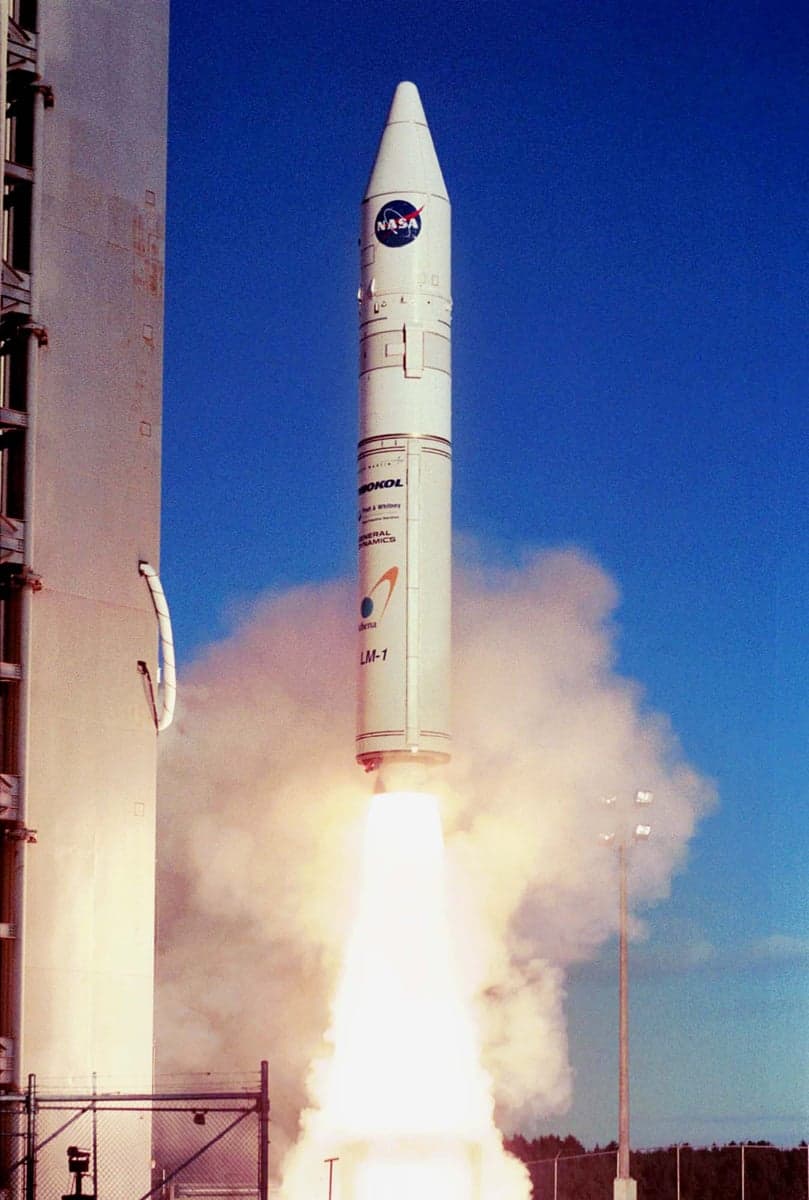
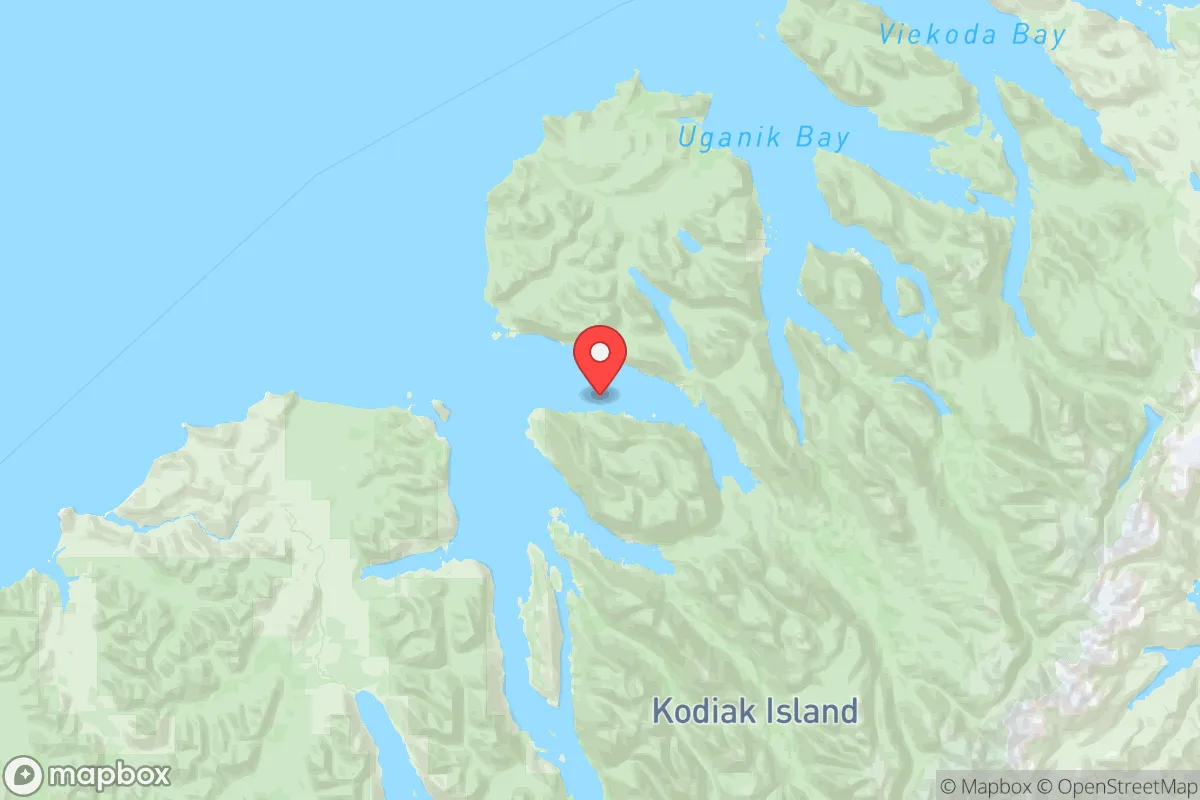

Photo: Wikipedia
Demographics of Kodiak Island County
Affluence Level in Kodiak Island County
A middle-class area roughly in line with national averages across income, home values, education, and employment.
People of Kodiak Island County
The people of Kodiak Island County, Alaska, today form a distinctive blend of the island’s original Alutiiq (Sugpiaq) inhabitants, a long-standing white commercial fishing and military community, and a large East/Southeast Asian population drawn by the seafood industry. With a population of 12,878, the county is 46.0% white, 22.1% East/Southeast Asian, 8.2% Hispanic, and 0.6% Black, with 9.8% foreign-born. The county seat of Kodiak is the demographic and economic hub, while smaller settlements like Port Lions, Old Harbor, and Akhiok remain predominantly Alutiiq villages. The county’s identity is shaped by its isolation, its working waterfront, and a conservative-leaning, self-reliant culture that prizes fishing, hunting, and military service.
Settlement & growth (pre-1960)
The human history of Kodiak Island County begins with the Alutiiq people, who have inhabited the archipelago for at least 7,500 years. They lived in coastal villages, subsisting on marine mammals, fish, and shellfish, and developed a complex social and trade network across the Gulf of Alaska. Russian fur traders, led by Grigory Shelikhov, established the first permanent Russian settlement in Alaska at Three Saints Bay on Kodiak Island in 1784. This marked the beginning of a brutal colonial period: the Russians forced Alutiiq men to hunt sea otters and took Alutiiq women as concubines, decimating the native population through violence and disease. The Russian-American Company moved its headquarters to Kodiak (then called Pavlovskaya Gavan) in 1792, making it the first capital of Russian Alaska. Russian Orthodox missionaries arrived in the 1790s, and the faith remains a strong cultural marker among Alutiiq communities today, with historic churches in Kodiak and Ouzinkie.
The United States purchased Alaska in 1867, but Kodiak Island remained sparsely populated by white settlers for decades. The first major American wave came with the salmon canning industry, which exploded in the 1880s and 1890s. Canneries were built at Karluk, Larsen Bay, and Uganik, drawing seasonal workers from Scandinavia, Italy, and the U.S. West Coast. Many of these workers stayed year-round, intermarrying with Alutiiq families and forming the core of the modern white population. The 1912 eruption of Novarupta on the Alaska Peninsula devastated Kodiak’s villages with ashfall, but the canneries rebuilt and expanded. By the 1920s, Kodiak’s economy was dominated by salmon, with a small but stable white population centered in Kodiak town and the cannery villages.
World War II transformed the county. The U.S. military built Naval Air Station Kodiak in 1941, bringing thousands of servicemen and civilian contractors to the island. The base, now Coast Guard Air Station Kodiak, became the largest employer in the region. The war also led to the forced evacuation of Alutiiq villagers from Akhiok, Old Harbor, and Kaguyak to internment camps in Southeast Alaska, a traumatic event that still shapes community memory. After the war, many military families settled permanently, and the 1964 Good Friday earthquake and tsunami destroyed several villages, prompting the relocation of Port Lions and Ouzinkie to new sites. By 1960, the county’s population was roughly 8,000, overwhelmingly white and Alutiiq, with a small Filipino community working in the canneries.
Modern era (post-1965)
The 1965 Hart-Cellar Act opened the door for new immigration, but Kodiak’s modern demographic shift was driven primarily by the seafood industry’s labor demands. Starting in the 1970s, the king crab boom brought a wave of Filipino and Vietnamese workers to Kodiak, many of whom had experience in commercial fishing. They settled in Kodiak’s Near Island and downtown neighborhoods, forming the foundation of the county’s East/Southeast Asian community. By the 1990s, the fishery had diversified into pollock, cod, and halibut, and processing plants began recruiting workers from Mexico and Central America. The Hispanic population grew from negligible in 1980 to 8.2% today, concentrated in Kodiak’s west side and in seasonal housing near the processing plants.
The East/Southeast Asian population, now 22.1% of the county, is the most visible immigrant group. Filipinos are the largest subgroup, followed by Vietnamese and smaller numbers of Chinese and Korean families. Many have become boat owners, processors, and small business operators, and they maintain active cultural organizations, including the Kodiak Filipino-American Association. The Asian community is heavily concentrated in Kodiak city, where they own restaurants, grocery stores, and fishing supply businesses. Unlike many mainland Asian enclaves, Kodiak’s Asian population is deeply integrated into the fishing economy rather than clustered in professional or tech sectors.
Domestic migration since 1965 has been modest compared to Alaska’s urban centers. The county has attracted a steady stream of white families from the Lower 48, drawn by the Coast Guard base, the fishing industry, and the conservative, outdoor-oriented lifestyle. Many are from the Pacific Northwest and Midwest, and they tend to settle in Kodiak’s suburban-style neighborhoods like Buskin River and Chiniak. The Alutiiq population, now about 15% of the county, has experienced a cultural revival since the 1970s, with the Kodiak Area Native Association and the Alutiiq Museum leading language and heritage programs. However, many young Alutiiq people leave for college and jobs in Anchorage, contributing to an aging native demographic in villages like Akhiok (population 63) and Old Harbor (population 216).
The future
Kodiak Island County’s population is projected to remain stable or decline slightly over the next decade, as the fishing industry faces challenges from climate change, quota reductions, and competition from farmed salmon. The East/Southeast Asian community is likely to plateau, as second-generation Filipino and Vietnamese youth increasingly leave for Anchorage or the Lower 48 for education and professional careers. The Hispanic population may grow modestly, driven by continued recruitment for processing plant labor, but it remains a small share of the total. The white population, anchored by the Coast Guard base and the fishing fleet, is aging, and the county has struggled to attract young families due to high housing costs and limited economic diversity.
The Alutiiq villages face the most uncertain future. Port Lions, Ouzinkie, and Akhiok have seen steady population decline since the 1990s, and without economic development or improved infrastructure, they risk becoming ghost towns within a generation. The county’s cultural identity is likely to become more homogenized around the fishing and Coast Guard economy, with the Alutiiq and Asian communities assimilating into a broader Kodiak identity rather than maintaining distinct enclaves. The Russian Orthodox faith, once a unifying force across ethnic lines, is also declining among younger generations.
For someone moving to Kodiak Island County now, the place is becoming a smaller, older, and more economically fragile version of its 1980s peak. The population is stable but not growing, and the county’s character remains defined by the sea, the base, and a conservative, self-sufficient ethos. New arrivals will find a tight-knit community where fishing connections and military ties matter more than ethnic background, but they should also expect limited job options outside the seafood industry and a high cost of living. The county’s future depends on whether it can diversify its economy and retain its young people, or whether it will slowly shrink into a retirement and tourism destination for those who can afford the isolation.

* Values derived from national, state, county, city and local statistics and may differ in a specific area. Last updated: 2026-05-12T08:25:31.000Z
Narrative content on this page is AI-generated and may contain mistakes. Verify any details that matter before acting on them.
ReloMaps may earn a commission from affiliate links at no extra cost to you.

