
Photo: Wikipedia
Strategic Assessment of Kodiak Island County
Strong survivability profile. Good buffer from population centers, with manageable environmental and tactical risks.
What does the Strategic Assessment tell us?
Our Strategic Assessment grades tactical survivability of an area. Major population centers, military targets, fallout zones, natural disasters, and border exposure all drive risk — lower exposure means a more defensible position in a crisis.
This is heavily inspired by Joel Skousen's Strategic Relocation book. Highly recommended you checkout the book ($)What does this tell us?
Our Strategic Assessment grades tactical survivability of an area. Major population centers, military targets, fallout zones, natural disasters, and border exposure all drive risk — lower exposure means a more defensible position in a crisis.
This is heavily inspired by Joel Skousen's Strategic Relocation book. Highly recommended you checkout the book ($)Strategic Pillars

Key Distances
Strategic Assessment Analysis
Kodiak Island County, Alaska, offers a strategic relocation option for those prioritizing physical separation from the mainland's population centers and potential fallout zones. Its location, roughly 250 miles southwest of Anchorage across the Gulf of Alaska, places it far from the continental US's major industrial and military targets, while its deep-water port and robust fishing economy provide a foundation for long-term self-sufficiency. For a conservative-leaning individual or family concerned with civic unrest, mass casualty events, or broader societal collapse, Kodiak presents a unique mix of natural barriers and practical resources that few other American counties can match.
Geographic isolation and natural defensive advantages
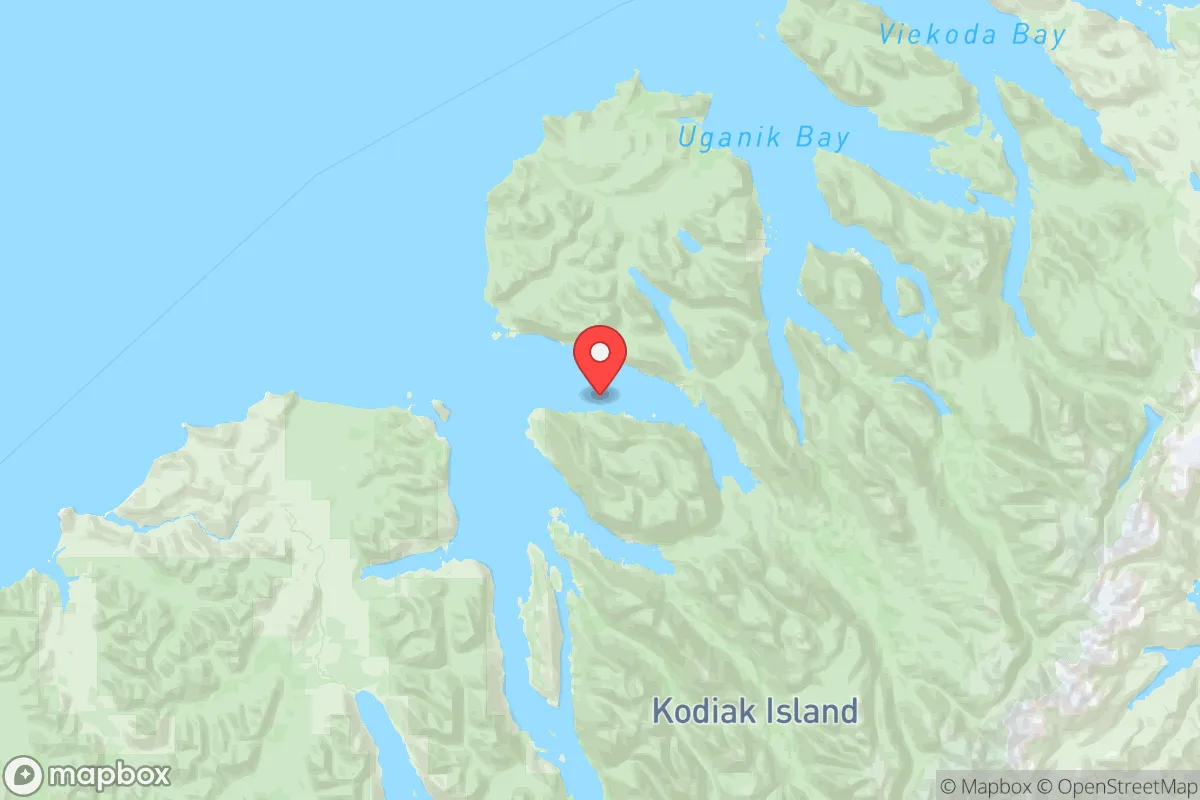
Kodiak Island County encompasses the entire Kodiak Archipelago, with the city of Kodiak as its only significant population hub—home to roughly 6,000 of the county's 13,000 residents. The island's position in the Gulf of Alaska means it is buffered by hundreds of miles of open ocean from any mainland threat, whether that be civil unrest in Anchorage or a cascading failure in the Lower 48. The terrain itself is rugged, with the Kodiak National Wildlife Refuge covering much of the interior, limiting road networks to a single paved highway system that runs about 50 miles from the city of Kodiak to the village of Pasagshak. This limited infrastructure naturally funnels movement and makes the area highly defensible. The Coast Guard's Base Kodiak, located on the island's northeast coast, is the largest Coast Guard base in the country and provides a stabilizing federal presence, though it also represents the county's most likely target in a conflict scenario—a trade-off worth noting. For a relocator, the key advantage is simple: getting to Kodiak requires either a flight or a multi-day ferry ride from Homer or Seward, creating a natural choke point that can be monitored and controlled.
Risks, exposures, and proximity to potential fallout zones
While Kodiak's isolation is its greatest strength, it is not without exposure. The island sits near the Aleutian Trench, a seismically active zone that produces frequent earthquakes and the occasional tsunami threat—the 1964 Good Friday earthquake generated a 30-foot wave that devastated the city of Kodiak's waterfront. For a prepper, this means any retreat plan must account for seismic hardening and elevation. More critically, Kodiak's proximity to the Pacific theater means it is within a few hundred miles of major Russian naval and air assets based in Petropavlovsk-Kamchatsky, and the island's Coast Guard base and radar installations could be secondary targets in a broader conflict. However, compared to mainland alternatives, Kodiak is far removed from the primary fallout dangers: there are no nuclear power plants, no major oil refineries (the nearest being in Nikiski on the Kenai Peninsula, 200 miles away), and no large military bases with strategic nuclear capabilities. The closest significant target is Joint Base Elmendorf-Richardson near Anchorage, which is 250 miles northeast—far enough to avoid direct fallout but close enough to feel secondary effects like supply chain disruption. For a relocator, the calculus is clear: Kodiak avoids the dense target sets of the Lower 48 while accepting a moderate seismic and geopolitical risk that can be mitigated with preparation.
Practical resilience for a relocator: food, water, energy, and defensibility
Kodiak's practical resilience is anchored in its natural resource base. The island's waters are among the most productive fisheries in the world, with the city of Kodiak consistently ranking as one of the top fishing ports in the US by volume—primarily salmon, halibut, and crab. For a family or individual, this means a reliable, year-round protein source that can be harvested, preserved, and traded. The island also supports a small but active agricultural community, with farms near the villages of Larsen Bay and Old Harbor producing vegetables, eggs, and meat, though the short growing season limits large-scale crop production. Freshwater is abundant, with numerous lakes and streams fed by the island's high annual rainfall—about 80 inches per year in the city of Kodiak, tapering to 60 inches in the drier interior. Energy is a mixed picture: the Kodiak Electric Association has invested heavily in hydroelectric and wind power, with the Terror Lake Hydroelectric Project providing roughly 80% of the island's electricity, supplemented by wind turbines near Pillar Mountain. This decentralized grid is less vulnerable to cascading failures than mainland systems, but it still relies on diesel backup for peak loads. Defensibility is excellent: the island's road network is limited to the Kodiak road system, which hugs the northeast coast and can be easily monitored from elevated positions. The interior is largely roadless, accessible only by boat or bush plane, making it ideal for a dispersed retreat. For a relocator, the practical takeaway is that Kodiak offers a rare combination of abundant wild food, renewable energy, and natural barriers that reduce reliance on fragile supply chains.
Overall, Kodiak Island County presents a compelling strategic picture for those willing to trade convenience for security. Its isolation from mainland unrest and fallout zones is unmatched in the US, and its natural resources provide a foundation for long-term survival without constant resupply. The trade-offs are real: a harsh climate, seismic risk, and limited access to medical care and goods require serious preparation and a tolerance for remote living. But for a conservative-leaning individual or family looking to step off the grid and into a defensible, self-sufficient position, Kodiak is one of the few places in America where the geography itself does most of the work. The key is to move early, build relationships with the local fishing and farming communities, and treat the island's isolation as an asset rather than a liability.

* Values derived from national, state, county, city and local statistics and may differ in a specific area. Last updated: 2026-05-12T08:25:31.000Z
Narrative content on this page is AI-generated and may contain mistakes. Verify any details that matter before acting on them.
ReloMaps may earn a commission from affiliate links at no extra cost to you.

