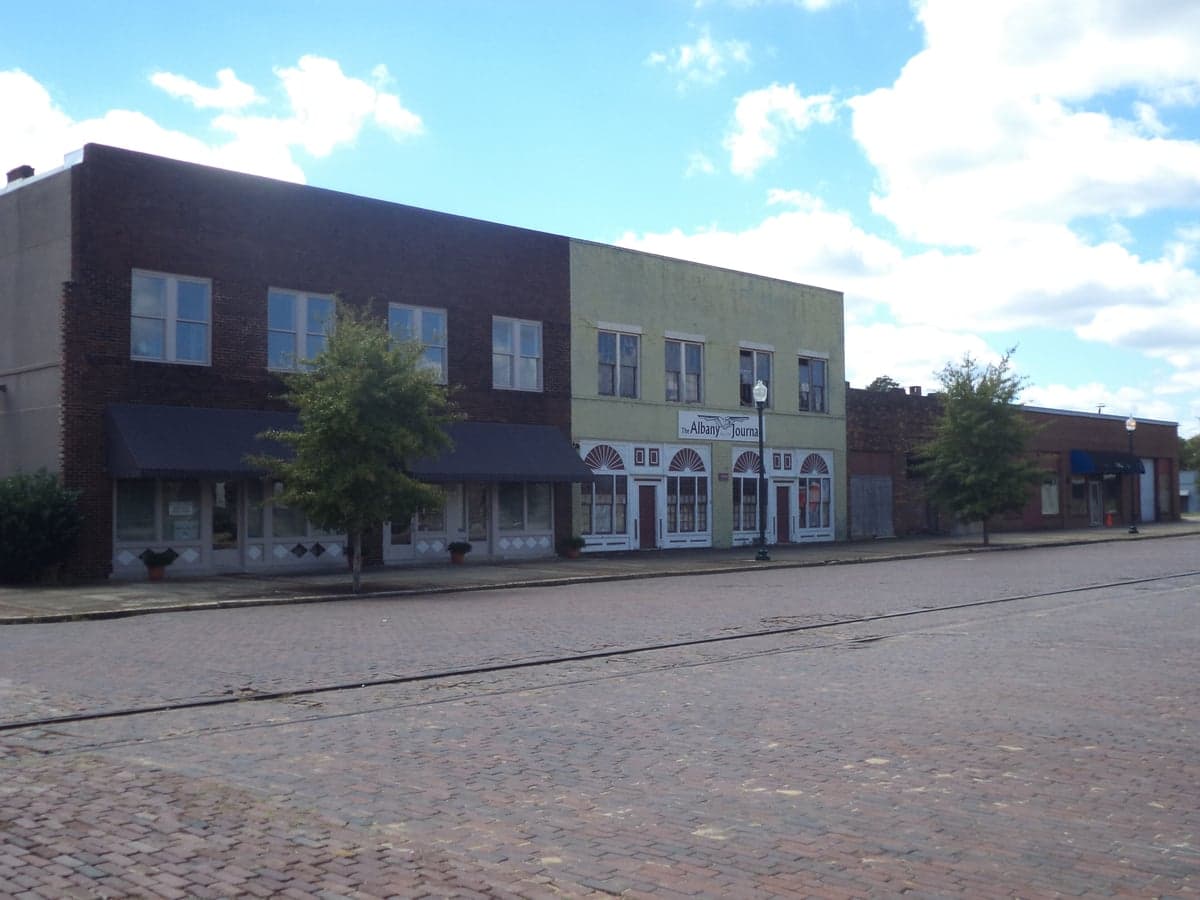
Photo: Wikipedia
Quality of Life in Albany, GA
Above-average quality of iife. The area offers a reasonable cost of living, decent mobility, and a mix of neighborhood amenities.
What does Quality of Life tell us?
Quality of Life blends cost of living, nearby amenities, socioeconomic signals, and neighborhood character. City-level scores represent the whole municipality; individual neighborhoods can differ.
What does this tell us?
Quality of Life blends cost of living, nearby amenities, socioeconomic signals, and neighborhood character. City-level scores represent the whole municipality; individual neighborhoods can differ.
Cost of Living
37% below national average
The Real Cost of Living in Albany, GA for 2026
| Tier | Individual | Family (4) |
|---|---|---|
| Survival | $14k | $27k |
| Comfortable | $23k | $34k |
| Luxury | $79k+ | $123k+ |
| Elite (Top 5%) | $93k+ | $144k+ |
132%
The Area Signal
A metric tracking the socioeconomic signals of the area.
Hobbies
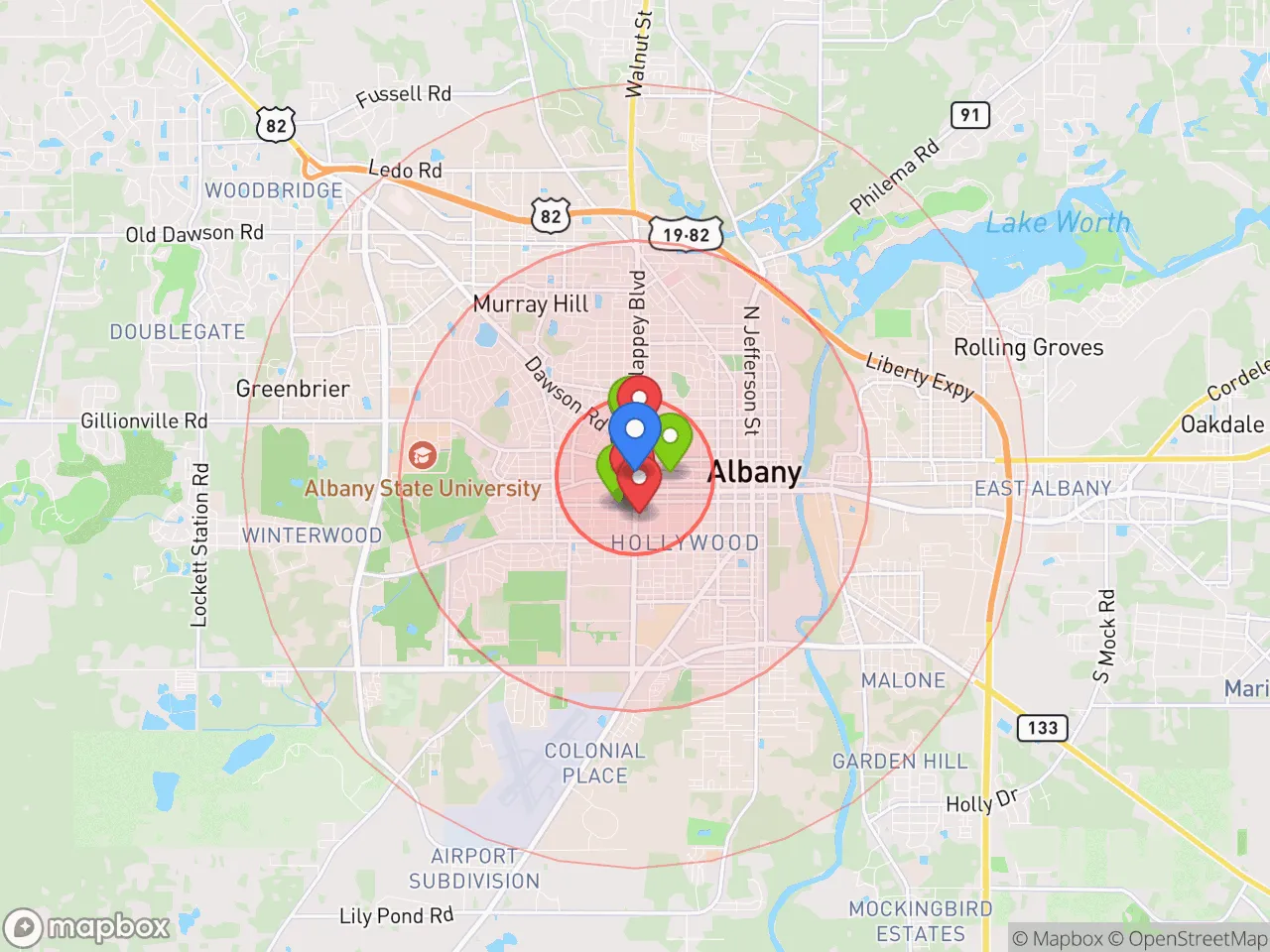
Explore the areaGroceries
7 within 10 miles
Gas
20 within 10 miles
Hospital
2 within 20 miles
Airport
ATL — Hartsfield–Jackson Atlanta International
Post Office
USPS — Albany, GA
Critical Amenities
Quality-of-Life Analysis
Albany, Georgia, presents a notably affordable quality of life, with a cost of living index of 63—well below the national average of 100—making it one of the more budget-friendly mid-sized cities in the Southeast. The area is home to a mix of long-standing families, military personnel connected to nearby Marine Corps Logistics Base Albany, and professionals in healthcare and education, creating a community that values stability and practicality over high-paced urban living. While the city faces economic challenges reflected in a median household income below the state average, the low housing costs and short commutes offer a tangible trade-off for residents seeking financial breathing room.
Cost of living, housing affordability, and how Albany compares to nearby cities
Albany’s housing market is a standout feature for affordability. The median home value sits at $118,700, roughly one-third of the national median, while the median rent is $898 per month. This places Albany well below nearby cities like Columbus (median home value around $145,000) and Macon (around $130,000), and dramatically cheaper than Atlanta, where median values exceed $350,000. The average commute time of just under 20 minutes further reduces daily expenses, as residents spend less on fuel and vehicle maintenance compared to those in larger metro areas. Property taxes in Dougherty County are moderate, and overall utility costs align with the low COL index, making Albany a viable option for first-time homebuyers, retirees on fixed incomes, and remote workers seeking to stretch their earnings.
What daily life is like: amenities, schools, and local rhythm
Daily life in Albany revolves around a slower, community-oriented pace. The city offers essential amenities such as the Albany Museum of Art, the Flint RiverQuarium, and the RiverFront Trail for outdoor recreation. For families, the Dougherty County School System provides several magnet and specialized programs, though many residents also consider private options like Deerfield-Windsor School or Sherwood Christian Academy. Healthcare access is anchored by Phoebe Putney Memorial Hospital, the region’s largest employer and a Level II trauma center. Shopping and dining are concentrated along Dawson Road and Slappey Boulevard, with a mix of national chains and local eateries. The city’s cultural calendar includes events like the Albany Mardi Gras and the National Fair, which draw residents together. However, those seeking vibrant nightlife or extensive public transit will find Albany limited; a car is essential, and entertainment options are more subdued than in larger Georgia cities.
Albany is best suited for individuals and families who prioritize low housing costs, short commutes, and a tight-knit community over urban excitement. Retirees, remote workers, and military-affiliated households often find the affordability and slower rhythm appealing. Prospective residents should weigh the limited job market—dominated by healthcare, education, and logistics—against the financial freedom that comes with a COL index 37% below the national average. For those who value a quiet, cost-effective lifestyle with access to basic amenities and regional outdoor spaces, Albany offers a solid, no-frills quality of life.

Crime in Albany, GA
Higher crime rates than 65% of comparable U.S. locations.
Violent CrimeViolent Crime Analysis
Property CrimeProperty Crime Analysis
Crime Analysis
Albany, Georgia, reports a violent crime rate of 731.9 incidents per 100,000 residents and a property crime rate of 1,630.1 per 100,000, placing it among the higher-crime cities in the state. These figures significantly exceed both the Georgia state averages and national benchmarks, indicating a safety environment that requires careful consideration for potential residents. The city's location in Dougherty County, while not a large metro area, is part of a region where progressive judicial philosophies have influenced sentencing and prosecution patterns, contributing to concerns about recidivism and public safety.
Crime in context
Albany's violent crime rate is roughly double the national average of approximately 380 per 100,000, while its property crime rate is about 20% higher than the U.S. median. Compared to other Georgia cities of similar size, Albany ranks near the top for violent offenses, driven largely by aggravated assault and robbery. Property crimes—including larceny-theft, burglary, and motor vehicle theft—are also elevated. The presence of progressive district attorneys and judges in the Southwest Georgia judicial circuit has been cited by local law enforcement as a factor in lenient plea deals and reduced sentences, which critics argue fails to deter repeat offenders and undermines victim justice.
What residents experience
Residents report that crime is not evenly distributed across the city but is concentrated in specific corridors and neighborhoods. Areas near the downtown core and along the Slappey Boulevard corridor see higher frequencies of both violent and property incidents, while outlying residential zones like those near the Albany State University campus or the Radium Springs area tend to be quieter. Day-to-day precautions are common: many locals avoid walking alone after dark, use alarm systems, and participate in neighborhood watch programs. The property crime rate of 1,630.1 per 100,000 means that burglaries and vehicle break-ins are a routine concern, particularly in areas with easy highway access. The influence of progressive judicial policies—such as diversion programs and reduced cash bail—has led to frustration among residents who see repeat property offenders cycling through the system without meaningful accountability.
Neighborhood-level variation
Safety varies sharply by neighborhood. The northwest side, including the Lake Park and Doublegate subdivisions, generally reports lower crime rates and is considered safer, with more private security and community patrols. In contrast, the east side and parts of south Albany experience higher crime densities, often linked to socioeconomic stressors and gang activity. Prospective residents are advised to consult local crime mapping tools and speak with real estate agents familiar with block-level trends. While Albany is not a large metro area, its judicial environment—marked by progressive sentencing reforms—amplifies safety concerns, as leniency toward offenders is perceived to directly increase the number of criminals on the street, negatively impacting both victim justice and public confidence.
* Values derived from national, state, county, city and local statistics and may differ in a specific area. Last updated: 2026-04-30T00:52:30.000Z
Narrative content on this page is AI-generated and may contain mistakes. Verify any details that matter before acting on them.
ReloMaps may earn a commission from affiliate links at no extra cost to you.

