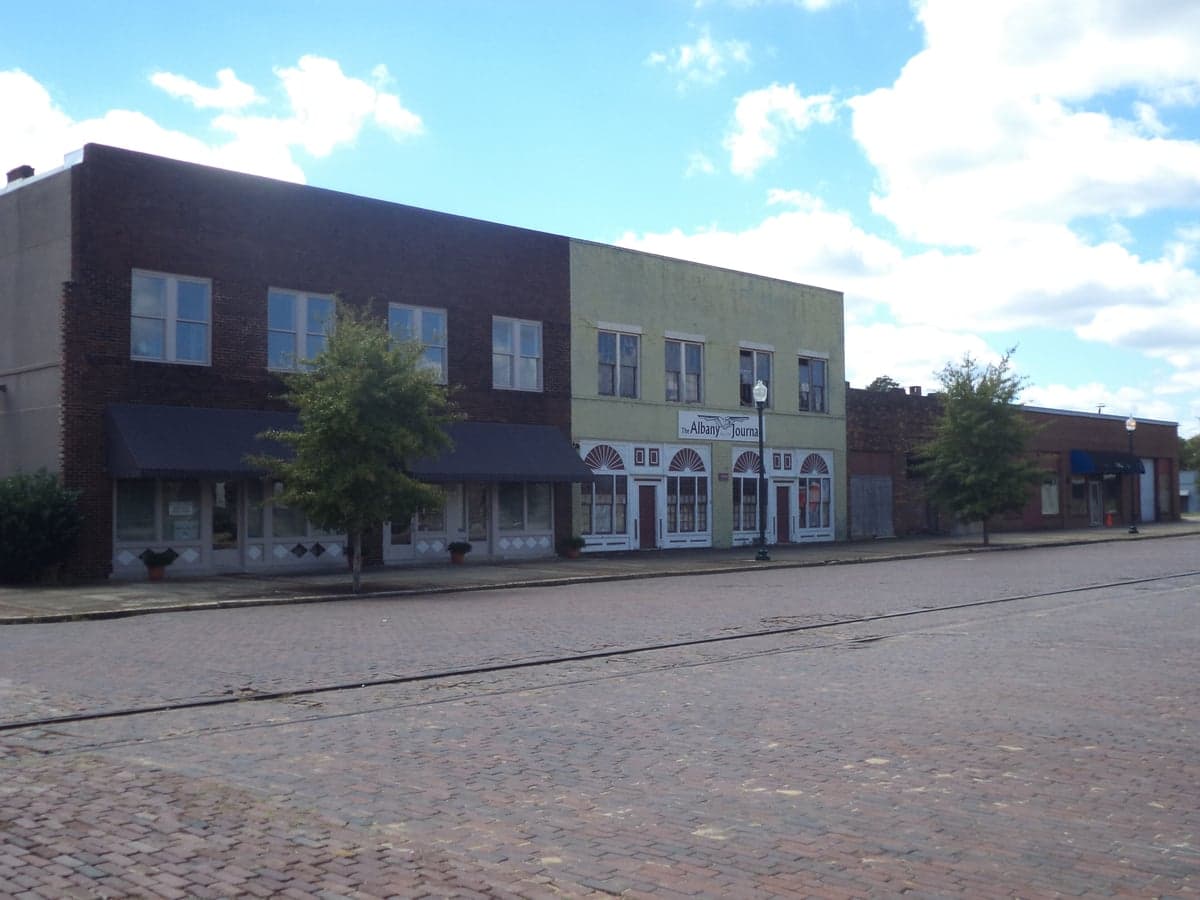
Photo: Wikipedia
Political ClimatePolitical Climate in Albany, GA
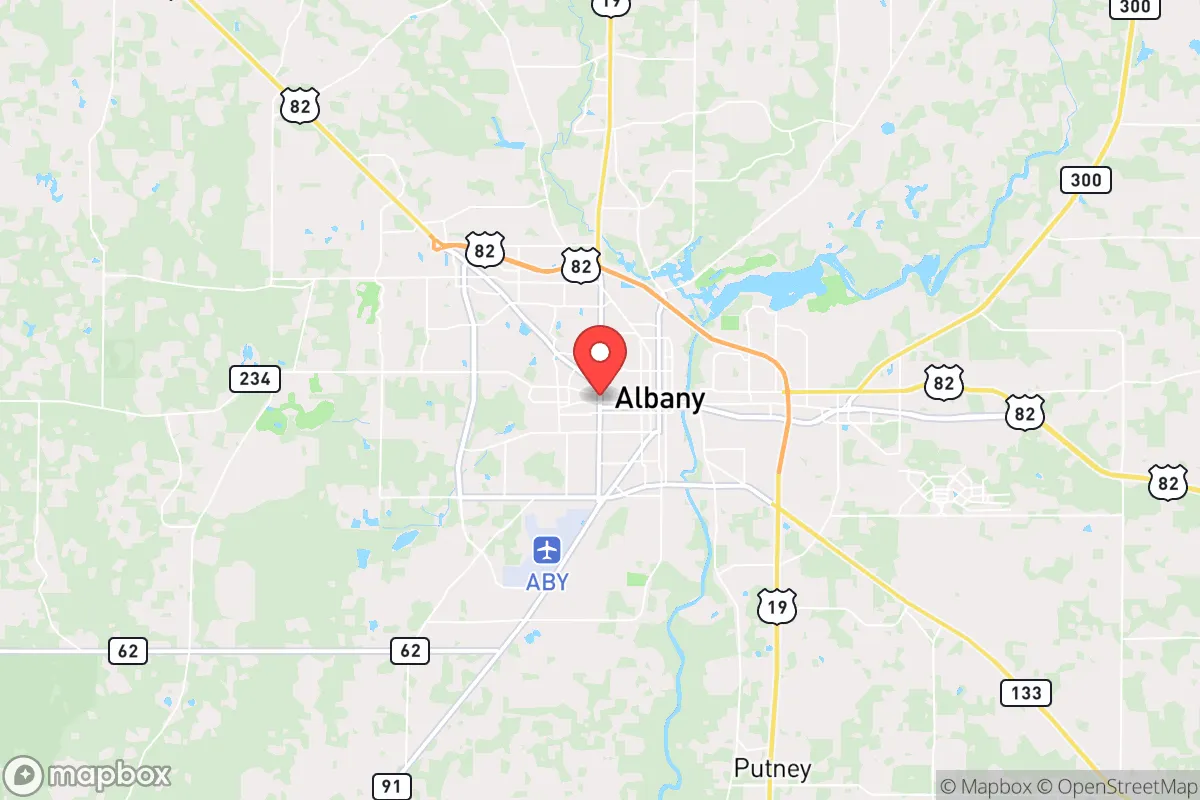
District shown is the primary district for this city’s centroid. Cities may span multiple districts.
Local Political AnalysisPolitical Analysis of Albany, GA
Albany, Georgia, sits in a political landscape that has shifted noticeably over the past decade. The Cook PVI rating of D+4 tells you it leans Democratic, but that number doesn't capture the full story. A generation ago, this area was reliably conservative, with local elections often decided by common-sense, limited-government candidates. Now, you see a steady drift toward progressive policies, especially in city hall and the county commission. It's not a radical overnight change, but it's a real one, and it's something folks who value personal freedoms and local control are keeping a close eye on.
How it compares
Drive just 30 minutes north to Lee County, and you're in a completely different world politically. Leesburg and the surrounding area vote reliably Republican, with a focus on low taxes, gun rights, and minimal government interference. Head east to Worth County or west to Terrell County, and you'll find similar conservative strongholds. Albany itself, as the urban center, is the outlier. The contrast is stark: while the suburbs and rural counties push back against state-level mandates and federal overreach, Albany's leadership has embraced things like diversity, equity, and inclusion initiatives and stricter local ordinances that can feel like government creeping into your daily life. It's a tale of two Georgias, and Albany is firmly on the progressive side of that divide.
What this means for residents
For a long-time resident, the most noticeable change is in how the city handles basic services and personal choices. There's been a push for more regulations on small businesses, from zoning rules to health code enforcement that feels less about safety and more about control. Property taxes have crept up to fund programs that sound good on paper but often miss the mark in practice. The school board has also leaned into progressive curriculum changes that many parents find intrusive. If you value the freedom to run your own life without a government official telling you how to do it, Albany's trajectory is a concern. The local elections are where the real fight is now, because state-level politics still lean conservative, but city hall is where the rubber meets the road on issues like Second Amendment rights, business licensing, and how much say parents have in their kids' education.
One cultural distinction that stands out is the city's relationship with its own history. Albany has a deep, proud Southern heritage, but you see a growing effort to rebrand that heritage as something to be managed or downplayed. The annual festivals and local traditions that used to bring everyone together now sometimes feel like they're being scrutinized for not being "inclusive" enough. The push for a more progressive identity has led to debates over street names, public monuments, and even the way local history is taught. It's a shift that feels less like organic change and more like a top-down effort to reshape the community's character. For someone who remembers when Albany was a place where neighbors looked out for each other without government programs, it's a quiet but persistent erosion of the local culture that made this area special.

State Political ClimatePolitical Climate in Georgia
State Political AnalysisPolitical Environment in the State
Georgia has shifted from a reliably conservative stronghold to a genuine battleground state over the past two decades, with its current partisan lean sitting at roughly a 50-50 split in statewide races. The state’s political trajectory is defined by the explosive growth of the Atlanta metro area, which now drives Democratic gains, while the rest of the state—particularly the rural south and north Georgia mountains—remains deeply Republican. For a conservative considering relocation, the key question is whether Georgia’s traditional culture and limited-government ethos can withstand the demographic and ideological pressures reshaping its politics.
Urban vs. rural divide
The political map of Georgia is starkly divided between a handful of urban counties and everything else. Metro Atlanta’s core—Fulton, DeKalb, Cobb, Gwinnett, and Clayton counties—accounts for roughly 60% of the state’s population and votes overwhelmingly Democratic. In 2020, Fulton County alone gave Joe Biden a margin of over 300,000 votes, enough to flip the state blue for the first time since 1992. Meanwhile, rural counties like Bacon, Jeff Davis, and Towns routinely deliver 75-80% of their votes to Republican candidates. The suburbs are where the real tension lives: Gwinnett County flipped from red to blue between 2016 and 2020, driven by an influx of diverse, college-educated professionals. Forsyth County, once a byword for racial homogeneity, is now a fast-growing, increasingly purple suburb. Outside Atlanta, Augusta and Savannah lean Democratic but are surrounded by deep-red rural areas, while Columbus and Macon are more competitive but trending left. The Georgia coast around Brunswick and St. Simons Island remains reliably conservative, but even there, in-migration from out of state is slowly shifting the balance.
Policy environment
Georgia’s policy environment is a mixed bag for conservatives. On the plus side, the state has a flat income tax rate of 5.49%, which is being phased down to 4.99% by 2029 under legislation passed in 2022. There is no state-level estate or inheritance tax, and property taxes are relatively low, though local rates vary widely. The state’s regulatory posture is generally business-friendly, with a right-to-work law on the books and no state-level minimum wage above the federal $7.25. On education, Georgia has a robust school choice program—the Georgia Promise Scholarship Act, passed in 2024, provides up to $6,500 per student for private school tuition or homeschooling expenses. However, the state also expanded Medicaid under the Affordable Care Act in 2023, a move many conservatives opposed as a step toward government-run healthcare. Election laws have been a flashpoint: the 2021 Election Integrity Act (SB 202) tightened voter ID requirements, limited drop boxes, and banned mobile voting units, drawing fierce criticism from the left but earning praise from conservatives who see it as a safeguard against fraud. Gun rights are strong—Georgia is a permitless carry state as of 2022 (SB 319)—and the state has a preemption law preventing local governments from enacting stricter gun ordinances.
Trajectory & freedom
Georgia’s trajectory on personal freedom is a tug-of-war. On the positive side, the state has expanded gun rights significantly with permitless carry, and the 2024 passage of the Georgia Promise Scholarship Act gave parents more control over their children’s education. The state also passed a parental rights bill in 2022 (HB 1178), which requires schools to notify parents of any medical or counseling services provided to their children. However, there are concerning trends. The expansion of Medicaid in 2023, while framed as a compromise, adds hundreds of thousands of Georgians to a federal program, increasing dependency on government healthcare. The state’s medical cannabis program remains highly restrictive, with no legal dispensaries operating as of 2026, frustrating advocates of medical freedom. On property rights, Georgia has a strong right-to-farm law protecting agricultural operations from nuisance lawsuits, but local zoning battles in fast-growing suburbs like Fayetteville and Peachtree City have seen homeowners push back against high-density development. The biggest freedom concern for conservatives is the Atlanta city government’s progressive agenda, which includes sanctuary city policies and a push for rent control, though state preemption laws limit their reach.
Civil unrest & political movements
Georgia has been a focal point for political activism on both sides. The 2020 election cycle saw massive protests in Atlanta following the killing of George Floyd, with some demonstrations turning violent and leading to property damage downtown. The Stop Cop City movement—opposing the construction of a police training facility in DeKalb County—has been a persistent source of tension, with activists engaging in arson and vandalism, and the state responding with a controversial anti-riot law (HB 289) that increased penalties for certain protest activities. On the right, the Georgia Republican Party has been energized by election integrity concerns, with grassroots groups like the Georgia Election Integrity Coalition pushing for stricter voting laws. Immigration politics are heated: Gwinnett County has seen a surge in Hispanic population, and while the state has no sanctuary policies, local governments in Atlanta have resisted cooperation with federal immigration enforcement. The Georgia Security and Immigration Compliance Act (SB 529) remains on the books, requiring employers to verify worker status, but enforcement is uneven. A new resident would notice the political polarization in everyday life—yard signs, bumper stickers, and local news coverage are heavily partisan, and conversations about politics can quickly become tense.
Projection
Over the next 5-10 years, Georgia is likely to become more competitive, not less. The Atlanta metro area is projected to add another 1-2 million residents by 2035, with most of that growth coming from domestic migration and international immigration. These newcomers tend to be younger, more diverse, and more liberal, which will continue to shift the state’s political center of gravity leftward. However, the rural and exurban areas are also growing, driven by families fleeing high-cost states like California and New York. Counties like Cherokee, Paulding, and Jackson are booming and remain reliably red. The wild card is whether the state’s Republican leadership can hold the line on key issues like school choice, gun rights, and tax cuts, or whether the pressure to accommodate a more diverse electorate will lead to compromises that erode conservative principles. The 2024 election results showed that Georgia is still a toss-up at the presidential level, but down-ballot races remain more conservative. For a new resident, the practical takeaway is that Georgia offers a relatively low-tax, business-friendly environment with strong gun rights and school choice, but the political culture is increasingly divided, and the state’s long-term trajectory depends on which demographic trend wins out.
For a conservative moving to Georgia, the bottom line is that you’re getting a state with a solid foundation of limited government and traditional values, but one that is under constant pressure from the Atlanta metro’s progressive drift. If you’re looking for a place where your vote still matters and your values are respected, the exurbs and rural areas offer a stronghold. But don’t expect the state to stay as conservative as it was a decade ago—the battle for Georgia’s soul is far from over, and you’ll need to be engaged if you want to keep it from sliding further left.
* Values derived from national, state, county, city and local statistics and may differ in a specific area. Last updated: 2026-04-30T00:52:30.000Z
Narrative content on this page is AI-generated and may contain mistakes. Verify any details that matter before acting on them.
ReloMaps may earn a commission from affiliate links at no extra cost to you.

