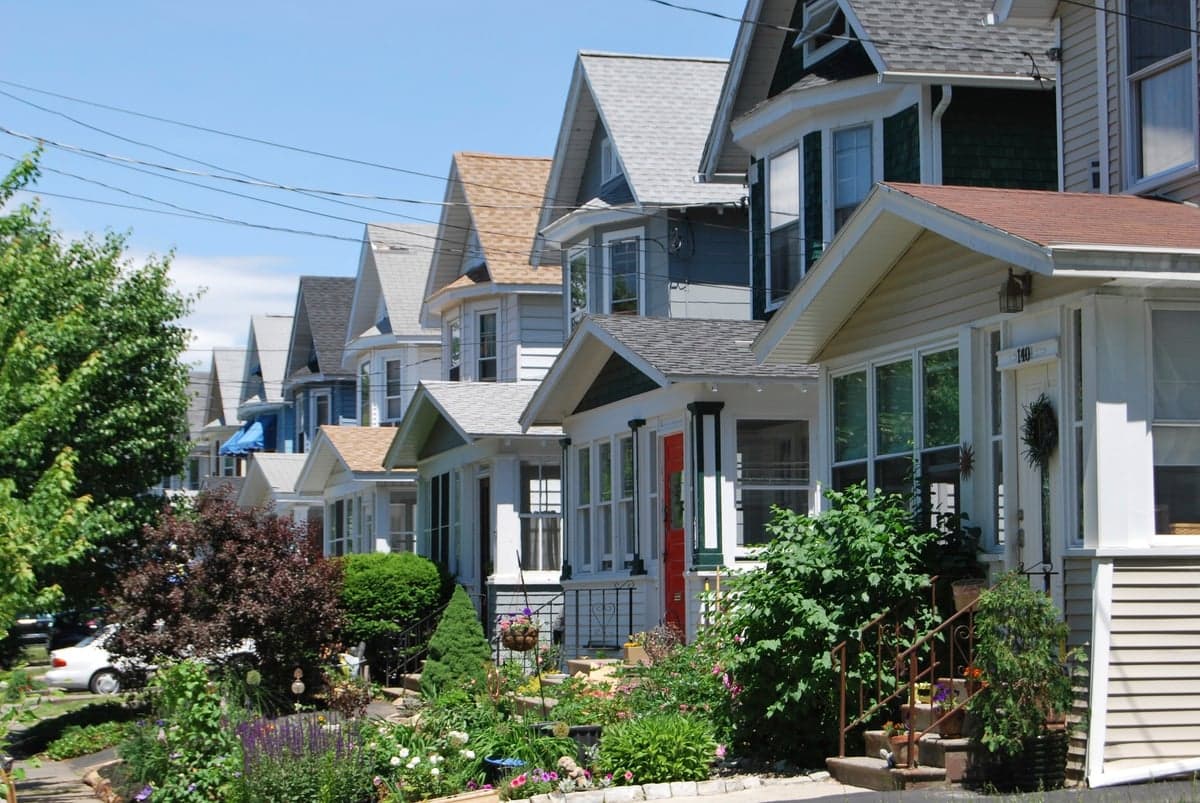
Photo: Wikipedia
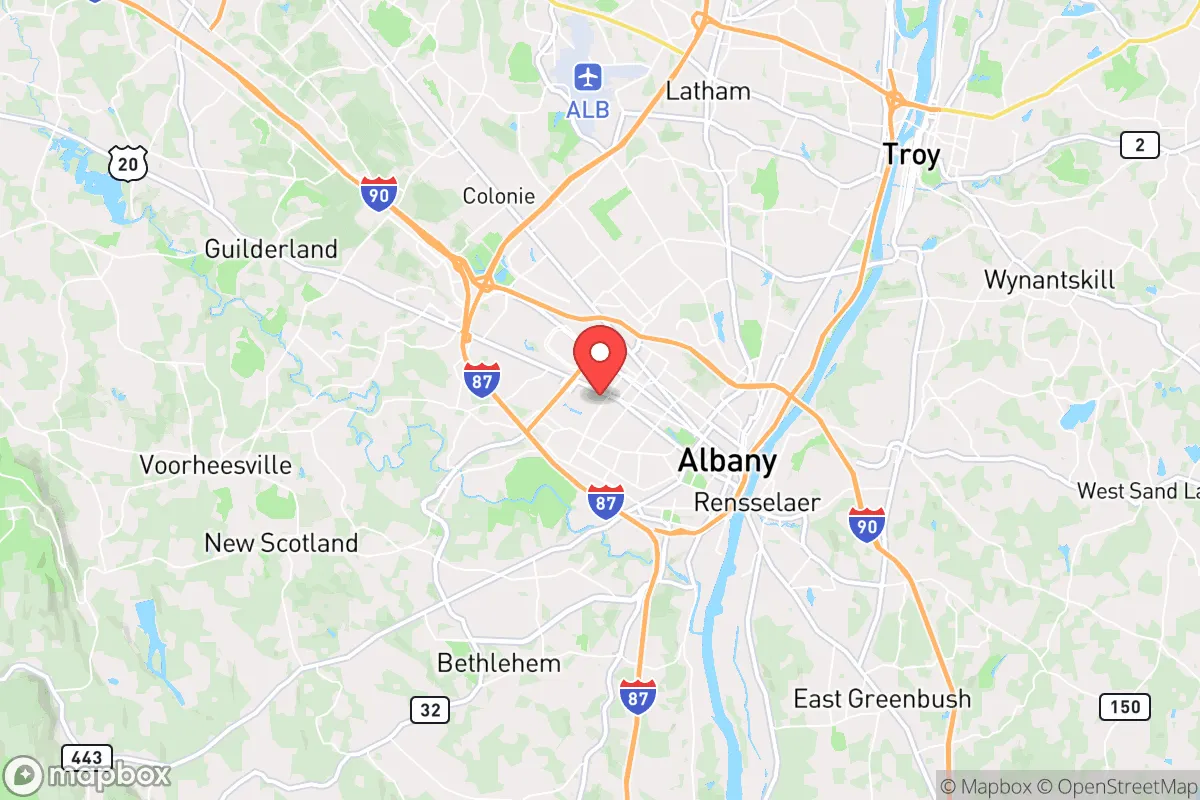
Personal Sovereignty in Albany, NY
Moderate friction. Expect trade-offs in some aspect of personal liberty and independence.
What does Personal Sovereignty tell us?
Personal Sovereignty measures your capacity for self-reliance and independence with minimal government friction. Higher scores mean fewer barriers between you and the way you want to live... but it assumes you have the space you need and good neighbors.
What does this tell us?
Personal Sovereignty measures your capacity for self-reliance and independence with minimal government friction. Higher scores mean fewer barriers between you and the way you want to live... but it assumes you have the space you need and good neighbors.
State Policy
Energy independence: Importer (12% of energy produced in-state)
Personal Liberty
Homesteading

Personal Liberty Analysis
Albany, New York, presents a challenging environment for personal sovereignty, particularly for those with a survivalist or prepper mindset who prioritize autonomy and self-reliance. As the state capital, it sits at the epicenter of New York's expansive regulatory framework, which consistently ranks among the most restrictive in the nation for individual freedoms. For a conservative-leaning individual or family considering relocation, the core question isn't whether Albany offers a high degree of personal liberty—it largely does not—but rather how its specific constraints on taxes, self-defense, property use, and medical autonomy compare to other regions, and whether strategic workarounds exist within the city's boundaries or its immediate exurbs.
Tax burden and regulatory posture: How much of your income and property stays yours?
New York State's tax posture is aggressively extractive, and Albany is no exception. The combined state and local tax burden is among the highest in the country, with a state income tax that can reach nearly 11% for top earners and a property tax rate that, while slightly below the state average, still lands well above the national median. For a prepper focused on capital accumulation and land acquisition, this means a significant portion of your earnings is diverted to state programs before you can allocate it to supplies, property improvements, or off-grid infrastructure. The regulatory environment compounds this: New York's building codes, environmental conservation laws, and land-use regulations are dense and enforced by state agencies with little local discretion. For example, the Adirondack Park Agency's jurisdiction extends into parts of the greater Capital Region, imposing strict limits on timber harvesting, water use, and construction near wetlands. For someone wanting to build a self-sufficient homestead, every permit, variance, and inspection becomes a potential choke point. The state's regulatory posture is fundamentally one of oversight, not enablement, making it a high-friction environment for those seeking to operate outside the mainstream utility grid or engage in small-scale agriculture without bureaucratic approval.
Self-defense and gun law specifics: What can you legally own and carry?
New York's gun laws are among the most restrictive in the nation, and Albany residents live under the full weight of the SAFE Act and the 2022 Concealed Carry Improvement Act (CCIA). The practical effect for a prepper is severe: semi-automatic rifles with "military-style" features are heavily regulated, requiring a separate permit and registration, and the state maintains a ban on magazines holding more than ten rounds. Concealed carry is now a "may-issue" system in practice, despite the Bruen decision, because the CCIA requires applicants to demonstrate "proper cause" beyond general self-defense—a standard that local licensing officers in Albany County apply with considerable discretion. The city itself has a history of restrictive issuance, meaning even law-abiding residents may face months of processing and denial. Furthermore, the "sensitive locations" provision bans firearms in virtually all public spaces, including parks, public transportation, and businesses that haven't posted explicit signage allowing carry. For a survivalist, this creates a legal landscape where your ability to defend your home and person is heavily circumscribed by state and local licensing authorities. The only bright spot is that New York is a castle doctrine state, meaning there is no duty to retreat in your home, but the legal aftermath of a defensive shooting in a state with such a strong anti-gun culture can still be financially and legally draining.
Self-reliance and homesteading viability: Lot sizes, zoning, and off-grid feasibility
Within Albany's city limits, homesteading is largely a non-starter. The city's zoning code is oriented toward dense, urban residential development, with minimum lot sizes typically around 5,000 square feet and strict prohibitions on keeping livestock, poultry, or bees in most residential districts. Rainwater collection is technically legal but subject to state health department guidelines that discourage it for potable use, and composting is allowed only if it doesn't create a nuisance—a subjective standard that neighbors can weaponize. The real opportunity for self-reliance lies in the surrounding towns of the Capital District, such as Berne, Knox, or Westerlo in Albany County, or across the river in Rensselaer County's rural towns like Stephentown. Here, zoning is far more permissive: lot sizes of two to five acres are common, and keeping chickens, goats, or even a small herd of cattle is generally allowed without a special permit. Off-grid feasibility, however, is limited by state building codes that require connection to a septic system (no composting toilets) and adherence to the New York State Energy Code, which effectively mandates a grid-tied electrical system or a very expensive, fully permitted solar array with battery storage. True off-grid living—no power lines, no water hookup, no septic permit—is effectively illegal in any habitable structure in New York State. For a prepper, this means the best you can achieve legally is a "grid-tied with backup" setup, not full independence.
Personal liberties: Parental rights, medical autonomy, speech, and property
Parental rights in New York are under consistent pressure from state mandates. The state's compulsory vaccination laws for school attendance are among the strictest in the nation, with no philosophical exemption and a religious exemption that is narrowly interpreted and frequently challenged in court. For parents who want to opt out of standard medical protocols or educational curricula, the path is narrow: homeschooling is legal but requires annual submission of an Individualized Home Instruction Plan (IHIP) to the local school district, which must be approved. Medical autonomy is similarly constrained; New York's public health law gives the state broad emergency powers, as demonstrated during the COVID-19 pandemic, when mandates for masks, vaccines, and business closures were enforced aggressively. On speech and property, the First Amendment is generally protected, but the state's anti-discrimination laws and hate crime statutes create a legal environment where certain forms of political or religious expression—particularly those deemed "harassing" or "intimidating"—can lead to civil liability or criminal charges. Property rights are further eroded by the state's rent stabilization laws, which apply to many multi-family buildings in Albany, limiting a landlord's ability to set market rates or evict tenants. For a conservative individual, this creates a sense that the state apparatus is actively working against traditional notions of family autonomy, medical choice, and property control.
In the broader landscape of American personal sovereignty, Albany ranks near the bottom for those seeking maximum individual freedom. It is a jurisdiction where the state's regulatory and tax apparatus is deeply embedded in daily life, from the gun you can carry to the way you heat your home. For a survivalist or prepper, the strategic calculus is clear: if you must be in the Capital Region for work or family, your best bet is to locate in a rural town in an adjacent county with more permissive zoning and a less aggressive local government, while accepting that full off-grid independence is legally unattainable. Compared to states like Texas, Idaho, or New Hampshire, Albany offers a fundamentally different—and far more constrained—vision of personal sovereignty, one where the state is a constant partner in your decisions, not a distant referee.

* Values derived from national, state, county, city and local statistics and may differ in a specific area. Last updated: 2026-04-21T10:08:08.000Z
Narrative content on this page is AI-generated and may contain mistakes. Verify any details that matter before acting on them.
ReloMaps may earn a commission from affiliate links at no extra cost to you.

