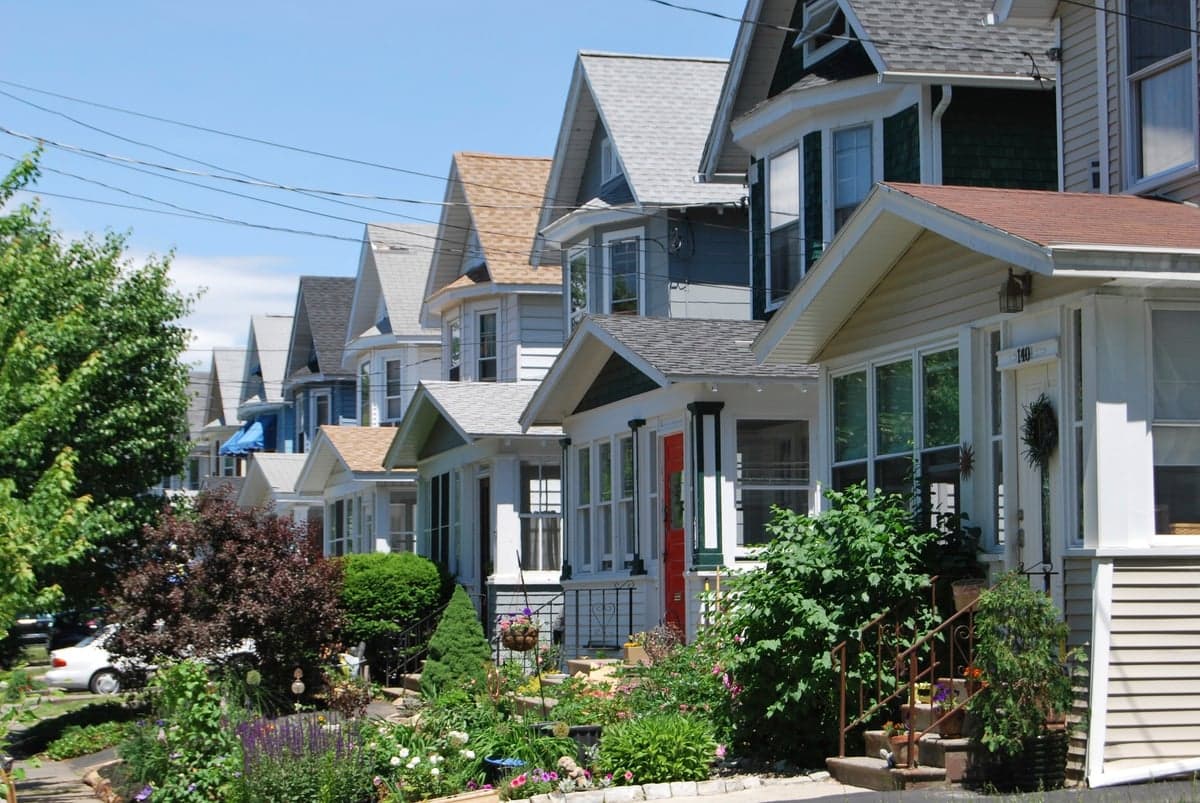
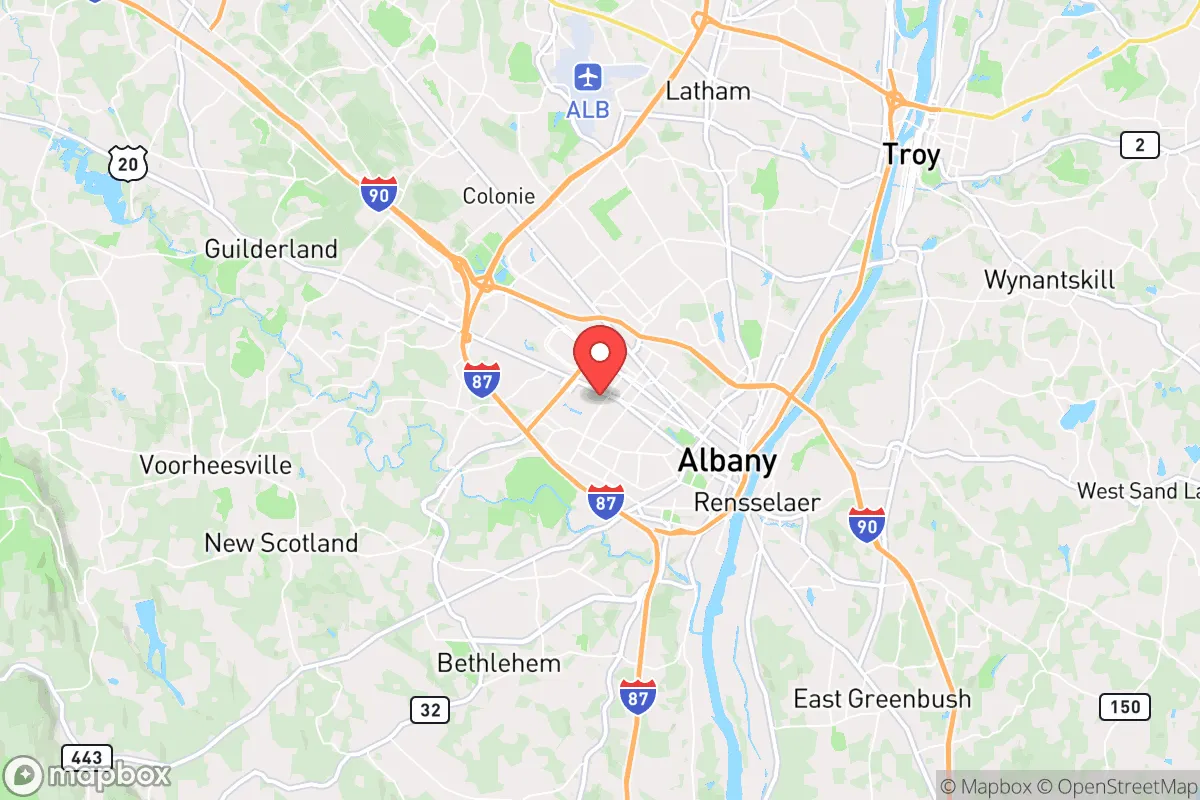
Photo: Wikipedia
Quality of Life in Albany, NY
Above-average quality of iife. The area offers a reasonable cost of living, decent mobility, and a mix of neighborhood amenities.
What does Quality of Life tell us?
Quality of Life blends cost of living, nearby amenities, socioeconomic signals, and neighborhood character. City-level scores represent the whole municipality; individual neighborhoods can differ.
What does this tell us?
Quality of Life blends cost of living, nearby amenities, socioeconomic signals, and neighborhood character. City-level scores represent the whole municipality; individual neighborhoods can differ.
Cost of Living
8% below national average
The Real Cost of Living in Albany, NY for 2026
| Tier | Individual | Family (4) |
|---|---|---|
| Survival | $19k | $35k |
| Comfortable | $43k | $64k |
| Luxury | $107k+ | $167k+ |
| Elite (Top 5%) | $131k+ | $203k+ |
93%
The Area Signal
A metric tracking the socioeconomic signals of the area.
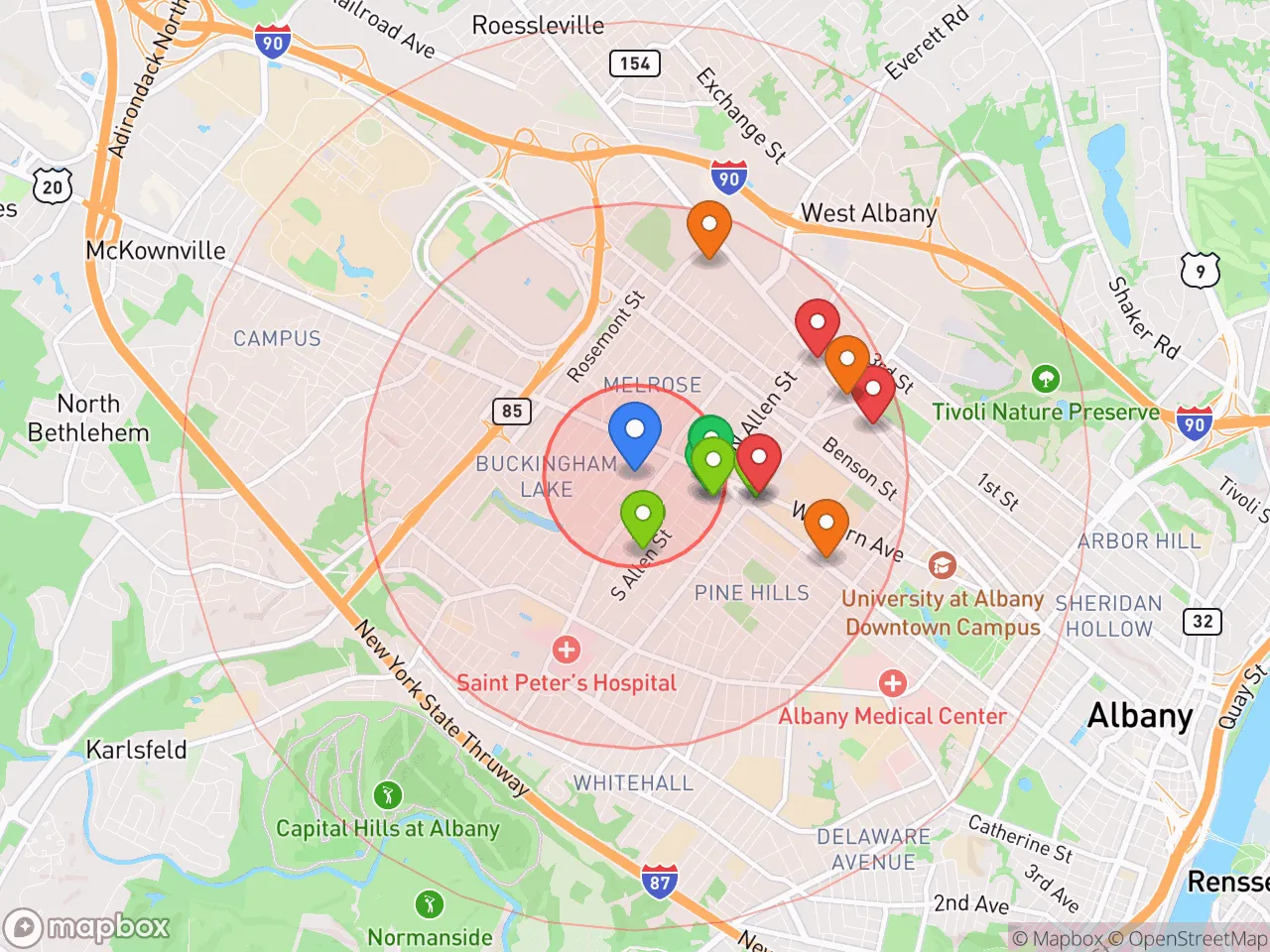
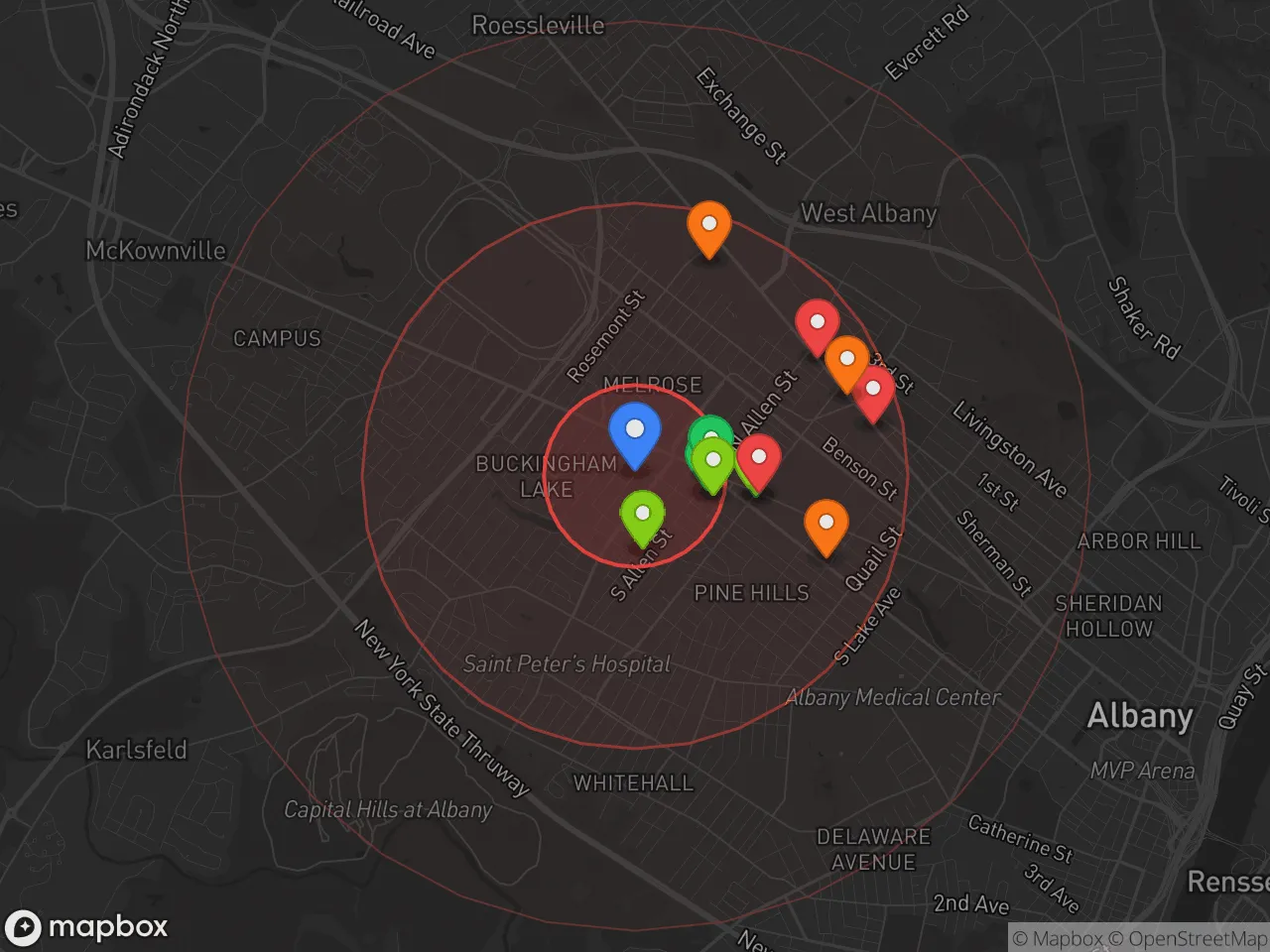
Hobbies
Explore the areaGroceries
6 within 10 miles
Gas
20 within 10 miles
Hospital
12 within 20 miles
Airport
EWR — Newark Liberty International
Post Office
USPS — Albany, NY
Critical Amenities
Quality-of-Life Analysis
Albany, New York, presents a quality of life defined by solid middle-class stability, a strong public-sector employment base, and a cost of living that undercuts most of the Northeast. The city’s population of roughly 100,000 skews toward government workers, healthcare professionals, and students from the region’s dense network of colleges, creating a mix of long-term residents and transient academic populations. With a cost-of-living index of 92 (8 percent below the national average), Albany offers an affordability that is increasingly rare in the Capital Region, though its economic profile is more modest than the affluent suburbs of Guilderland or Slingerlands.
Cost of living, housing affordability, and how Albany compares to nearby areas
Albany’s cost advantage is most visible in its housing market. The median home value of $223,000 is roughly half the median in nearby Saratoga Springs ($450,000) and significantly below the New York state median of $380,000. Median rent sits at $1,178, which is about $300 less than the national median and nearly $500 less than the average in the Hudson Valley. This affordability allows a household earning the area’s median income of roughly $60,000 to comfortably afford a mortgage or rent without being cost-burdened. However, property taxes in Albany County are among the highest in the nation—averaging around 2.5 percent of assessed value—which partially offsets the low purchase price. The average commute of 19.5 minutes is notably shorter than the national average of 26 minutes, a reflection of the city’s compact geography and the concentration of state government jobs in downtown office towers. For comparison, commuters in the outer suburbs of Clifton Park or East Greenbush often face 30- to 40-minute drives.
What daily life is like for families: schools, amenities, and neighborhood rhythm
Daily life in Albany revolves around a walkable downtown core, a robust park system, and a calendar of cultural events tied to the state capital. The Albany City School District serves roughly 9,000 students and includes Albany High School, which offers International Baccalaureate and STEM programs, though the district’s overall graduation rate of 78 percent trails the state average of 86 percent. Many families with school-age children opt for private or parochial options, such as the Albany Academy or Christian Brothers Academy, or move to the higher-performing suburban districts of North Colonie or Bethlehem. For amenities, the city offers the Albany Pine Bush Preserve (3,200 acres of hiking and cross-country skiing), the Washington Park neighborhood with its Victorian row houses, and the Empire State Plaza’s free summer concert series. The restaurant scene is anchored by Lark Street’s independent eateries and the warehouse district’s breweries, though nightlife is quieter than in larger metros. The presence of the state capitol, SUNY Albany (17,000 students), and Albany Medical Center (the region’s largest employer with 12,000 staff) creates a steady, year-round rhythm that avoids the boom-and-bust cycles of smaller upstate cities.
Albany is best suited for professionals in government, healthcare, or education who value short commutes and a lower cost of living over the cultural intensity of a New York City or Boston. Retirees on fixed incomes benefit from the affordable housing and walkable downtown, while young families may find the school district trade-offs a deciding factor. The city’s political and institutional stability—driven by its role as the state capital—insulates it from the economic volatility seen in manufacturing-dependent upstate cities like Schenectady or Troy. For those who prioritize financial breathing room and a manageable daily routine over high-end amenities or top-tier public schools, Albany delivers a quality of life that is both practical and understatedly pleasant.

Crime in Albany, NY
Significantly higher crime rates than 77% of comparable U.S. locations.
Violent CrimeViolent Crime Analysis
Property CrimeProperty Crime Analysis
Crime Analysis
Albany, New York, presents a crime and safety profile that warrants serious consideration for potential residents, particularly given its status as a mid-sized state capital. With a violent crime rate of 778.4 incidents per 100,000 residents and a property crime rate of 2,427.2 per 100,000, the city's overall safety picture is significantly more concerning than both state and national averages. These figures place Albany among the higher-crime cities in New York State, a reality shaped in part by the progressive criminal justice policies prevalent in the Capital Region.
Crime in context
To understand Albany's safety landscape, it is essential to compare its crime rates to broader benchmarks. The city's violent crime rate is roughly double the national average and more than triple the average for New York State outside of New York City. Property crime, while less extreme, still exceeds national rates by a notable margin. This elevated crime environment is consistent with patterns seen in many large metro areas where liberal prosecutorial and judicial philosophies prioritize rehabilitation and diversion over incarceration. In Albany County, the influence of progressive district attorneys and judges has been linked to higher rates of recidivism and a perception that repeat offenders face minimal consequences, directly contributing to the city's elevated crime statistics.
What residents experience
For those living in Albany, the high crime rates translate into tangible daily concerns. Violent offenses, including aggravated assault, robbery, and, less frequently, homicide, are concentrated in specific areas but can occur throughout the city. Property crimes such as burglary, larceny, and motor vehicle theft are more widespread, with car break-ins and package thefts being common complaints. The progressive justice system's focus on reducing jail populations and implementing "catch-and-release" policies for non-violent offenders has, in practice, led to a revolving door for property criminals. Residents often report a sense of frustration, as individuals arrested for theft or vandalism are frequently back on the streets within hours, eroding trust in the system's ability to protect victims and the public.
Neighborhood-level variation is significant, however. Areas like the Pine Hills and West Hill neighborhoods experience the highest concentrations of violent crime, while the Center Square and Washington Park districts see more property-related issues, particularly vehicle break-ins. In contrast, the Helderberg and Buckingham Pond neighborhoods, along with suburban enclaves like Guilderland and Bethlehem just outside the city limits, report crime rates much closer to state averages. For those considering a move, choosing a neighborhood with a strong community watch presence and avoiding areas with high rental turnover can mitigate some risks, but the overarching influence of progressive criminal justice policies remains a citywide concern that directly impacts safety for all residents.
* Values derived from national, state, county, city and local statistics and may differ in a specific area. Last updated: 2026-04-21T10:08:08.000Z
Narrative content on this page is AI-generated and may contain mistakes. Verify any details that matter before acting on them.
ReloMaps may earn a commission from affiliate links at no extra cost to you.

