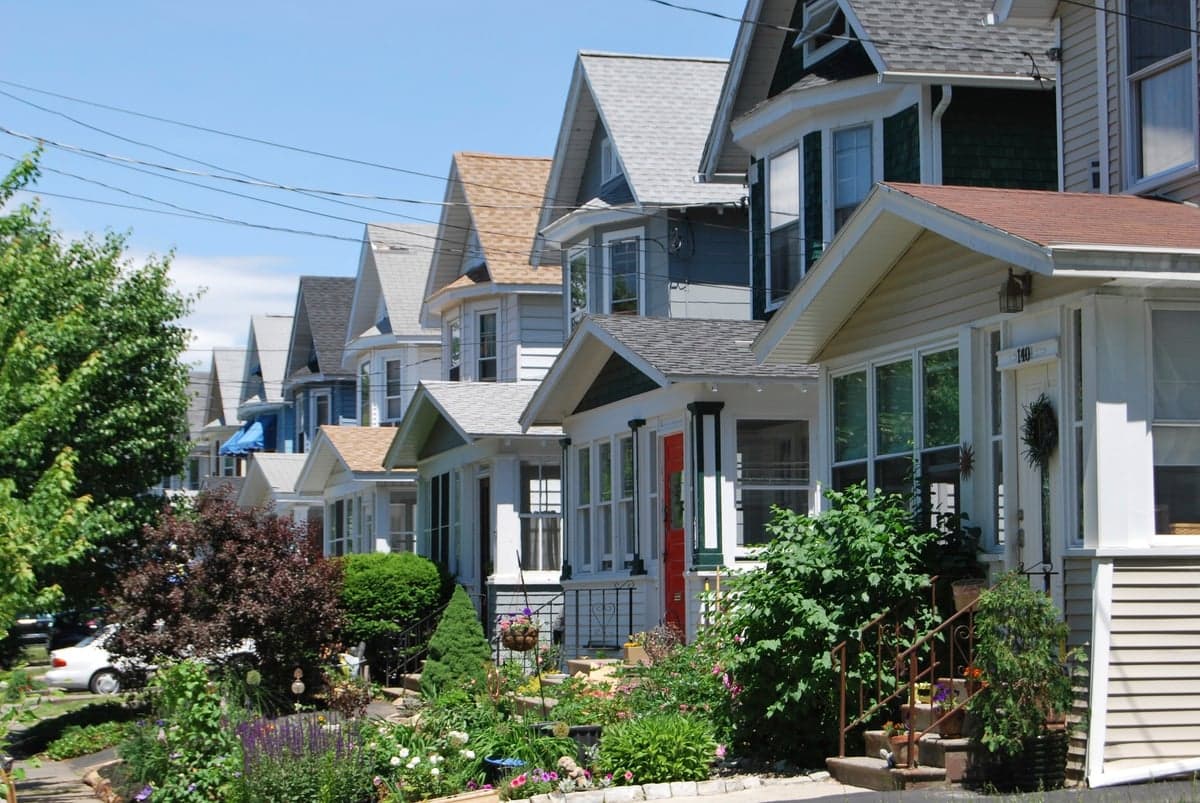
Photo: Wikipedia
Political ClimatePolitical Climate in Albany, NY
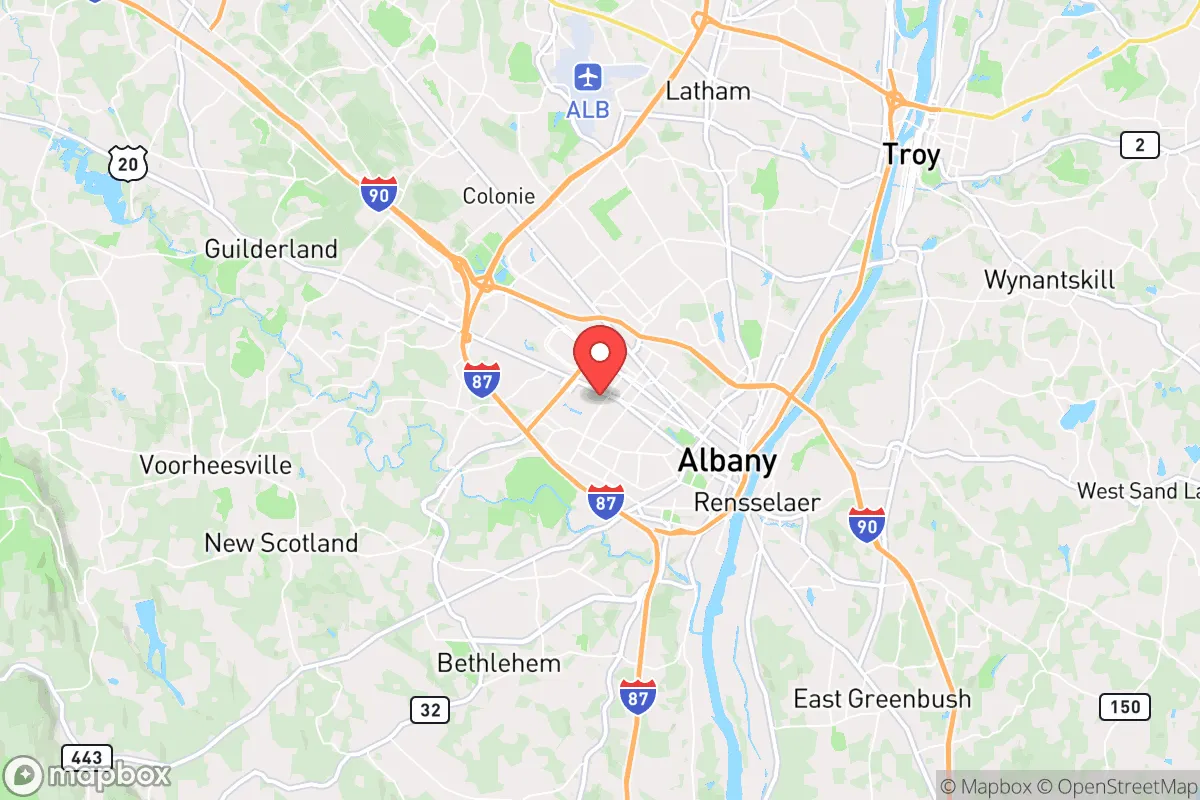
District shown is the primary district for this city’s centroid. Cities may span multiple districts.
Local Political AnalysisPolitical Analysis of Albany, NY
Albany, New York, has long been a deep blue stronghold, and honestly, it’s only gotten more lopsided over the years. The Cook PVI rating of D+8 tells you the basics, but it doesn’t capture how the city’s politics have shifted from a more pragmatic, working-class Democratic machine to a place where progressive ideology really runs the show. If you’re looking at the Capital Region, you’ll find that the city itself votes overwhelmingly for Democrats, while the surrounding suburbs and rural areas—like Colonie, Guilderland, and especially the towns further out in Rensselaer and Saratoga counties—tend to be more mixed or even lean conservative. That contrast used to create a healthy balance, but lately, the city’s leadership seems to be pushing a one-size-fits-all agenda that doesn’t leave much room for folks who value personal freedom and local control.
How it compares
Compared to its neighbors, Albany is in a political bubble. Drive 15 minutes south to the town of Bethlehem or east to East Greenbush, and you’ll find school boards and town councils that still debate budgets and zoning without the heavy ideological overlay you see in city hall. In Albany, the conversation has shifted to things like defunding police programs, sanctuary city policies, and rent control expansions that go way beyond what most residents in the surrounding areas would tolerate. Even compared to other upstate cities like Rochester or Buffalo, Albany feels more insulated from the real-world consequences of its policies because it’s the state capital—there’s a lot of government money and influence flowing in. That cushion lets local politicians chase progressive goals without feeling the immediate pinch that a smaller town would. It’s a stark contrast to places like Clifton Park or even parts of Troy, where you still hear people talking about property taxes and public safety as the top priorities.
What this means for residents
For the average person living here, the political climate translates into a few concrete headaches. First, there’s the constant push for higher taxes and fees to fund programs that sound good on paper but often miss the mark in practice—like the city’s ambitious but costly green energy mandates. Second, you’ve got a local government that’s increasingly comfortable telling you how to run your business, what kind of car you can drive, and even what you can build on your own property. The city’s zoning and land-use policies have become a maze of regulations that make it tough for small contractors and landlords to operate without running afoul of some new ordinance. And if you value your Second Amendment rights, well, Albany has been at the forefront of pushing state-level gun control measures that go far beyond what most of the country sees. It’s the kind of environment where personal responsibility takes a backseat to government mandates, and that’s a tough pill to swallow if you’re used to a more hands-off approach.
Culturally, Albany has always had a bit of a bureaucratic, “company town” feel because of all the state government jobs, but that’s evolved into something more ideological. The old-school, union-friendly Democrats who used to run things have been replaced by a younger, more activist crowd that sees government as the solution to everything. You’ll see it in the city’s embrace of “sanctuary” policies, its push for ranked-choice voting, and its willingness to use taxpayer money for social experiments. The long-term trajectory, if you ask me, is more of the same: a city that doubles down on progressive policies while the people who can afford to leave—or who just want more freedom—head for the suburbs or smaller towns. It’s not a bad place to live if you’re on board with the program, but if you’re the type who likes to make your own choices without a lot of government interference, you’ll want to keep a close eye on what’s coming out of city hall.

State Political ClimatePolitical Climate in New York
State Political AnalysisPolitical Environment in the State
New York State has shifted from a moderate-to-liberal purple state into a solidly blue stronghold over the past two decades, with Democrats now holding every statewide office and supermajorities in both legislative chambers. The state’s partisan lean has moved roughly 15 points left since 2000, driven by explosive growth in New York City and its inner suburbs, while upstate and rural regions have grown more Republican but lost population and political clout. For a conservative considering relocation, the reality is stark: statewide elections are effectively decided in the five boroughs and a handful of suburban counties, leaving the rest of the state with little say in Albany’s direction.
Urban vs. rural divide
The political map of New York is a tale of two states. New York City alone accounts for roughly 40% of the state’s population and delivers a Democratic margin of 70-80 points in presidential elections. The city’s outer boroughs—Brooklyn, Queens, and the Bronx—are among the most reliably Democratic jurisdictions in the country. The immediate suburbs, particularly Westchester County and Nassau County on Long Island, have also trended sharply left; Nassau, which voted for George W. Bush in 2004, gave Joe Biden a 15-point win in 2020. Meanwhile, the vast rural expanse north and west of the Hudson Valley—places like Oneida County, Steuben County, and the North Country around Plattsburgh—vote Republican by 20-30 points but lack the population to offset the metro areas. The Buffalo and Rochester metros are Democratic strongholds, while Syracuse and Albany lean blue but have conservative exurbs like Onondaga Hill and Clifton Park that provide some balance. The result is a state where a Republican candidate for governor hasn’t won since 2002, and the GOP is effectively confined to a shrinking rural base.
Policy environment
Albany’s policy posture is aggressively progressive, and it shows in the tax code. New York has the highest combined state and local tax burden in the nation, with a top income tax rate of 10.9% and property taxes that average over $5,000 annually—double the national median. The state’s regulatory environment is among the most restrictive in the country, particularly for energy (a de facto ban on fracking since 2015), housing (the rent stabilization laws in NYC and its suburbs), and business (a minimum wage of $16 per hour, rising annually). Education policy is dominated by teachers’ unions and progressive curriculum mandates, including the state’s “Dignity for All Students Act” and expansive social-emotional learning requirements. Healthcare is heavily regulated, with the state running its own health insurance exchange and imposing strict certificate-of-need laws that limit new hospital construction. Election laws are among the most permissive: no-excuse absentee voting, early voting, automatic voter registration, and same-day registration were all enacted in the last decade. For a conservative, the policy environment feels like a one-party state where dissent is structurally discouraged.
Trajectory & freedom
New York is becoming less free by almost any measure, and the trend has accelerated since 2019. The SAFE Act of 2013 imposed some of the nation’s strictest gun control—including a ban on standard-capacity magazines and a requirement to register “assault weapons”—and was followed by the 2022 “Concealed Carry Improvement Act,” which effectively ended public carry by designating most public spaces as “sensitive locations.” Parental rights have been curtailed by the state’s “Gender Expression Non-Discrimination Act” and subsequent guidance that allows schools to withhold a child’s gender identity from parents. Medical autonomy took a hit with the state’s COVID-19 vaccine mandates for healthcare workers and school employees, which remained in effect longer than in nearly any other state. Property rights are constrained by rent control laws that have been tightened repeatedly, most recently in 2019 with the “Housing Stability and Tenant Protection Act,” which eliminated vacancy decontrol and limited rent increases. On the tax front, the 2021 budget raised the top income tax rate to 10.9% and added a new millionaire’s bracket. The only area where freedom has expanded is recreational marijuana, legalized in 2021, but the rollout has been chaotic and heavily regulated. For a conservative, the trajectory is unmistakably toward more government control over daily life.
Civil unrest & political movements
New York has been a flashpoint for political activism on both sides. The 2020 Black Lives Matter protests in New York City were among the largest and most sustained in the country, leading to the defunding of the NYPD by $1 billion and the passage of police reform laws like the “Eric Garner Anti-Chokehold Act.” On the right, the “Second Amendment Sanctuary” movement has gained traction in upstate counties like Allegany and Wyoming, where local sheriffs have refused to enforce certain provisions of the SAFE Act. Immigration politics are a constant source of tension: New York is a sanctuary state under the 2017 “New York State DREAM Act” and the 2019 “Green Light Law,” which allows undocumented immigrants to obtain driver’s licenses and limits cooperation with federal immigration authorities. The influx of asylum seekers to New York City since 2022 has strained shelters and schools, sparking backlash in working-class neighborhoods in Queens and Staten Island. Election integrity remains a live issue: the 2020 election saw widespread use of no-excuse absentee ballots, and the state’s 2022 redistricting was struck down by courts as a partisan gerrymander. A new resident would notice that political signs are rare in the city but common in rural areas, and that conversations about politics can quickly turn heated.
Projection
Over the next 5-10 years, New York is likely to become even more Democratic and more progressive. Demographic trends favor the left: New York City continues to attract young, college-educated, left-leaning migrants from abroad and from other states, while upstate’s population is aging and declining. The state’s in-migration from other states is negative—New York lost over 300,000 residents to other states between 2020 and 2023—and those leaving tend to be more conservative and higher-income, accelerating the leftward shift. The state’s tax base is eroding, which will likely lead to either higher taxes on the remaining population or cuts to services, or both. The Democratic supermajority in Albany is unlikely to be broken, as the state’s legislative districts are drawn to protect incumbents. A conservative moving in now should expect that the policy environment will continue to tighten: more gun control, higher taxes, more regulation of housing and business, and less parental autonomy in education. The only wildcard is a potential federal shift: if a Republican administration in Washington withholds funding or challenges state laws, it could slow the trend, but it won’t reverse it.
For a conservative considering New York, the bottom line is this: the state’s political trajectory is firmly leftward, and the cost—in taxes, regulation, and personal freedom—is high and rising. If you value low taxes, gun rights, school choice, and local control, you will find yourself increasingly at odds with Albany. The upstate rural areas offer a more conservative lifestyle, but they come with high property taxes, cold winters, and limited economic opportunity. The suburbs are trending blue, and the city is a progressive fortress. New York is a beautiful state with world-class culture and natural scenery, but for a conservative, it’s a place where you’ll be fighting an uphill battle against a government that sees your values as obstacles to be overcome.
* Values derived from national, state, county, city and local statistics and may differ in a specific area. Last updated: 2026-04-21T10:08:08.000Z
Narrative content on this page is AI-generated and may contain mistakes. Verify any details that matter before acting on them.
ReloMaps may earn a commission from affiliate links at no extra cost to you.

