 Popular
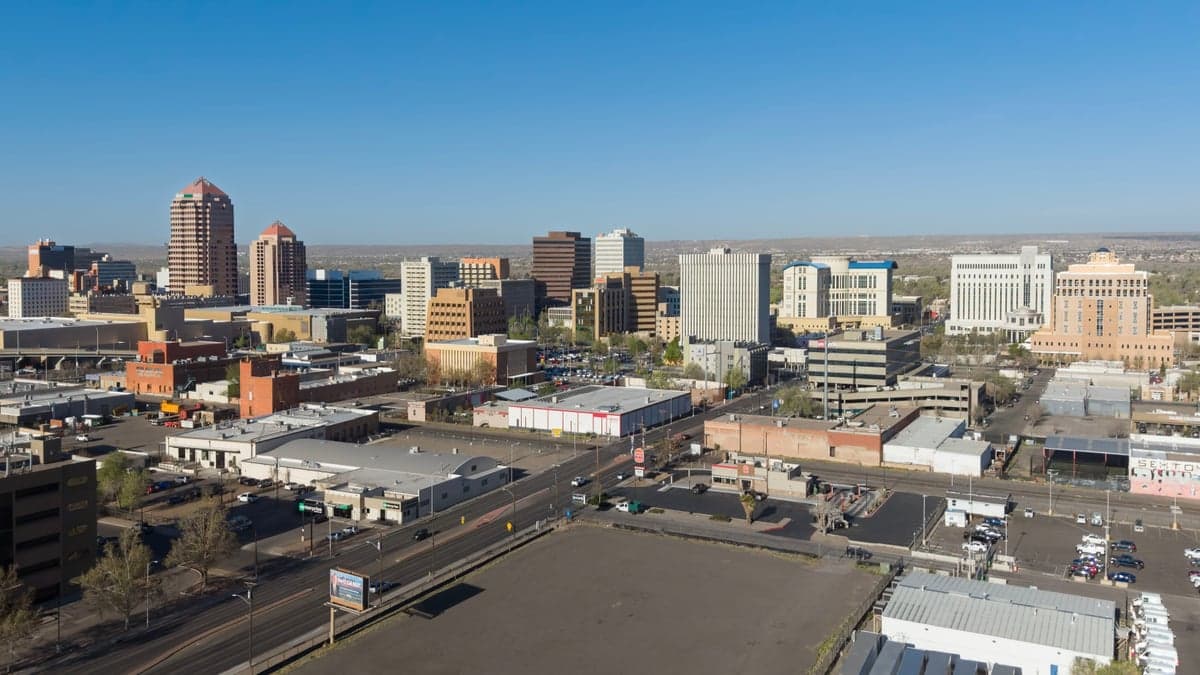
Photo: Wikipedia
Personal Sovereignty in Albuquerque, NM
Viable for self-reliance. Generally workable, though some barriers may limit total independence.
What does Personal Sovereignty tell us?
Personal Sovereignty measures your capacity for self-reliance and independence with minimal government friction. Higher scores mean fewer barriers between you and the way you want to live... but it assumes you have the space you need and good neighbors.
What does this tell us?
Personal Sovereignty measures your capacity for self-reliance and independence with minimal government friction. Higher scores mean fewer barriers between you and the way you want to live... but it assumes you have the space you need and good neighbors.
State Policy
Energy independence: Net exporter (250% of energy produced in-state)
Personal Liberty
Homesteading

Personal Liberty Analysis
Albuquerque offers a mixed bag for those prioritizing personal sovereignty, with New Mexico’s constitutional protections for self-defense and property rights clashing against a state-level regulatory environment that can feel intrusive to survivalist-minded individuals. While the state’s “Land of Enchantment” reputation masks a growing bureaucratic footprint, the city itself provides a relatively low-cost base for those willing to navigate local ordinances and state-level overreach. For the strategic relocator, Albuquerque’s autonomy environment is best described as a frontier of opportunity tempered by progressive governance—a place where individual initiative can still thrive, but only if you’re prepared to push back against government encroachment.
Tax burden and regulatory posture: How much of your money and freedom does the state take?
New Mexico’s tax structure is a double-edged sword for sovereignty-minded residents. The state levies a progressive income tax with rates from 1.7% to 5.9%, which is moderate compared to high-tax states like California but still a direct claim on your earnings. Property taxes are a bright spot: the effective rate in Bernalillo County (Albuquerque) hovers around 0.67% of assessed value, among the lowest in the nation, meaning you keep more equity in your land and home. However, the state’s gross receipts tax (GRT)—essentially a sales tax on nearly everything, including services—can hit 7.875% or higher in Albuquerque, adding a hidden cost to daily life and business operations. Regulatory posture is where the friction intensifies. New Mexico has adopted California-style environmental mandates, including a statewide clean fuel standard and aggressive renewable energy targets, which can complicate off-grid energy setups or diesel vehicle ownership. Building permits in Albuquerque require city approval for most structural changes, and the city’s zoning code is detailed, limiting some homesteading activities in residential zones. For the prepper, this means you can own land cheaply, but you’ll need to navigate a permitting maze for anything beyond basic repairs—a subtle erosion of property rights that demands vigilance.
Self-defense and gun law specifics: Can you protect your home and family without government interference?
New Mexico is a constitutional carry state as of 2021, meaning any law-abiding adult 21 or older can carry a concealed firearm without a permit—a significant win for personal sovereignty. Albuquerque itself has no additional city-level gun restrictions beyond state law, so you can legally carry in most public spaces, including parks and restaurants that serve alcohol (unless posted). However, the state has enacted red flag laws (Extreme Risk Protection Orders) that allow law enforcement or family members to petition a court to temporarily seize firearms from someone deemed a risk. This law, passed in 2020, is a point of contention: it bypasses due process and can be weaponized by bad actors or overzealous officials. Stand-your-ground protections are strong—New Mexico law does not require a duty to retreat before using deadly force in self-defense, both inside and outside the home. Magazine capacity and firearm types are unrestricted, so you can own standard AR-15s and high-capacity magazines without state interference. For the survivalist, the gun laws are favorable, but the red flag mechanism is a vulnerability that requires careful legal awareness and possibly a preemptive legal defense plan.
Self-reliance and homesteading viability: Lot sizes, zoning, and off-grid feasibility
Albuquerque’s urban core is not ideal for serious homesteading, but the surrounding areas offer real potential. Within city limits, standard residential lots range from 6,000 to 10,000 square feet, and zoning restricts livestock to chickens (hens only, no roosters) and prohibits larger animals like goats or pigs in most neighborhoods. Rainwater harvesting is legal but regulated—you can collect up to 200 gallons per property without a permit, but larger systems require approval from the state engineer, a bureaucratic hurdle that discourages full water independence. Off-grid solar is feasible: New Mexico has abundant sun, and net metering allows you to sell excess power back to the grid, but the state’s utility, PNM, has pushed for reduced compensation rates, making true energy independence more expensive. For those willing to move 20-30 minutes outside Albuquerque—into areas like the East Mountains (Tijeras, Cedar Crest) or the South Valley—zoning loosens considerably. There, you can find 1- to 5-acre parcels where chickens, goats, and even small-scale agriculture are permitted without city interference. Septic systems are standard for rural properties, and well drilling is possible but requires a state permit and can cost $10,000-$20,000. The bottom line: Albuquerque itself is a launching pad, not a homesteading destination, but the surrounding county offers viable off-grid living if you’re willing to commute and navigate state water rights.
Personal liberties: Parental rights, medical autonomy, speech, and property
Parental rights in New Mexico are under pressure. The state has mandatory vaccination laws for school attendance with limited exemptions (medical only, no philosophical or religious exemption), which directly challenges parental medical autonomy. During the COVID-19 pandemic, the governor imposed sweeping mask and vaccine mandates that were enforced in Albuquerque, and the state retains emergency powers that could be used similarly in future crises. Medical autonomy is further constrained by strict prescription drug monitoring and a state-run health insurance exchange that limits private options. On speech, New Mexico generally protects free expression, but Albuquerque has seen local ordinances targeting “hate speech” in public spaces, which can chill political discourse. Property rights are a mixed bag: the state has a strong eminent domain framework that has been used for infrastructure projects, and the city’s historic zoning board has broad authority to deny land-use changes. However, New Mexico is a “right-to-work” state, meaning you cannot be forced to join a union as a condition of employment—a small but meaningful protection for individual economic freedom. For the conservative relocator, these liberties require constant defense: the legal framework is permissive in some areas (gun rights, property taxes) but actively hostile in others (medical mandates, parental school choice).
Overall, Albuquerque’s personal sovereignty profile is a study in contrasts. It offers constitutional carry, low property taxes, and affordable land—tangible assets for the survivalist or prepper seeking a base of operations. But it also carries the weight of a state government that has shown willingness to override individual rights during emergencies, enforce vaccine mandates, and regulate property use with a heavy hand. Compared to states like Texas or Arizona, New Mexico is less friendly to full-spectrum autonomy; compared to the Pacific Coast or Northeast, it’s a relative haven. For the strategic relocator, Albuquerque is a viable option if you’re prepared to engage in local politics, secure legal protections (like a trust for your firearms), and choose your neighborhood carefully—preferably outside city limits. It’s not a fortress of liberty, but it’s a place where a determined individual can carve out a sovereign life, provided they stay vigilant against the creeping reach of state power.

* Values derived from national, state, county, city and local statistics and may differ in a specific area. Last updated: 2026-04-14T21:50:20.000Z
Narrative content on this page is AI-generated and may contain mistakes. Verify any details that matter before acting on them.
ReloMaps may earn a commission from affiliate links at no extra cost to you.

