 Popular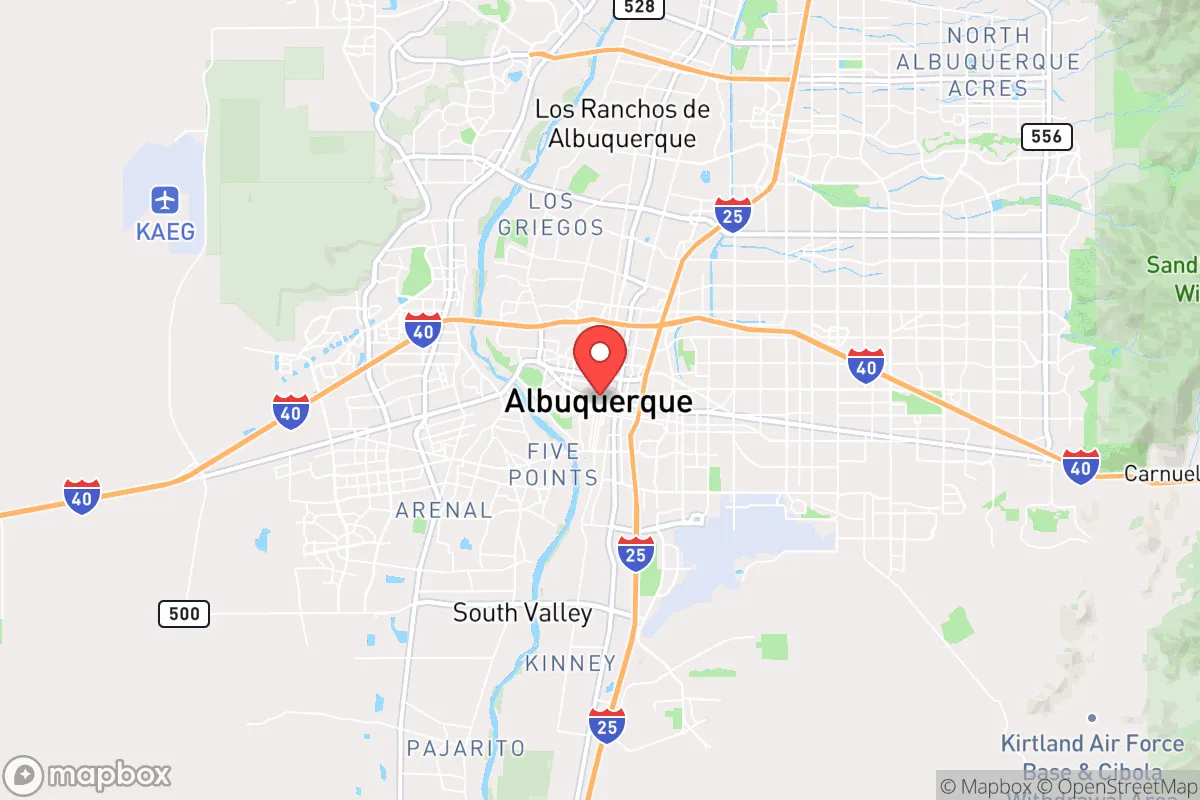
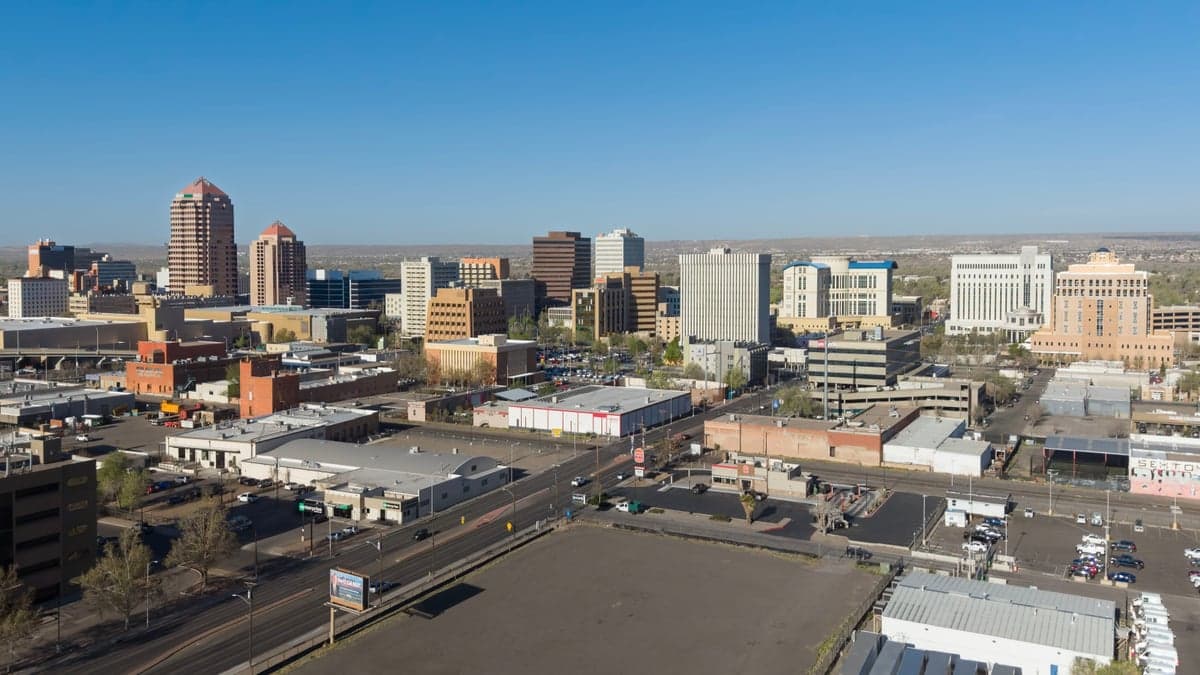
Photo: Wikipedia
Strategic Assessment of Albuquerque, NM
Multiple tactical vulnerabilities. Population density, target proximity, or disaster risk are likely compounding. A retreat property and exit planning is required.
What does the Strategic Assessment tell us?
Our Strategic Assessment grades tactical survivability of an area. Major population centers, military targets, fallout zones, natural disasters, and border exposure all drive risk — lower exposure means a more defensible position in a crisis.
This is heavily inspired by Joel Skousen's Strategic Relocation book. Highly recommended you checkout the book ($)What does this tell us?
Our Strategic Assessment grades tactical survivability of an area. Major population centers, military targets, fallout zones, natural disasters, and border exposure all drive risk — lower exposure means a more defensible position in a crisis.
This is heavily inspired by Joel Skousen's Strategic Relocation book. Highly recommended you checkout the book ($)Strategic Pillars

Key Distances
Regional Safe Places
Below is our recommended "safe zones" in New Mexico and the surrounding area based on our strategic heuristics. For most people, it's unrealistic to live in a “safe zone” full-time due to work, family or other personal reasons. They tend to be more rural. However, many of these areas are perfect for second homes and retreat properties that double as a vacation home or even a short-term rental.

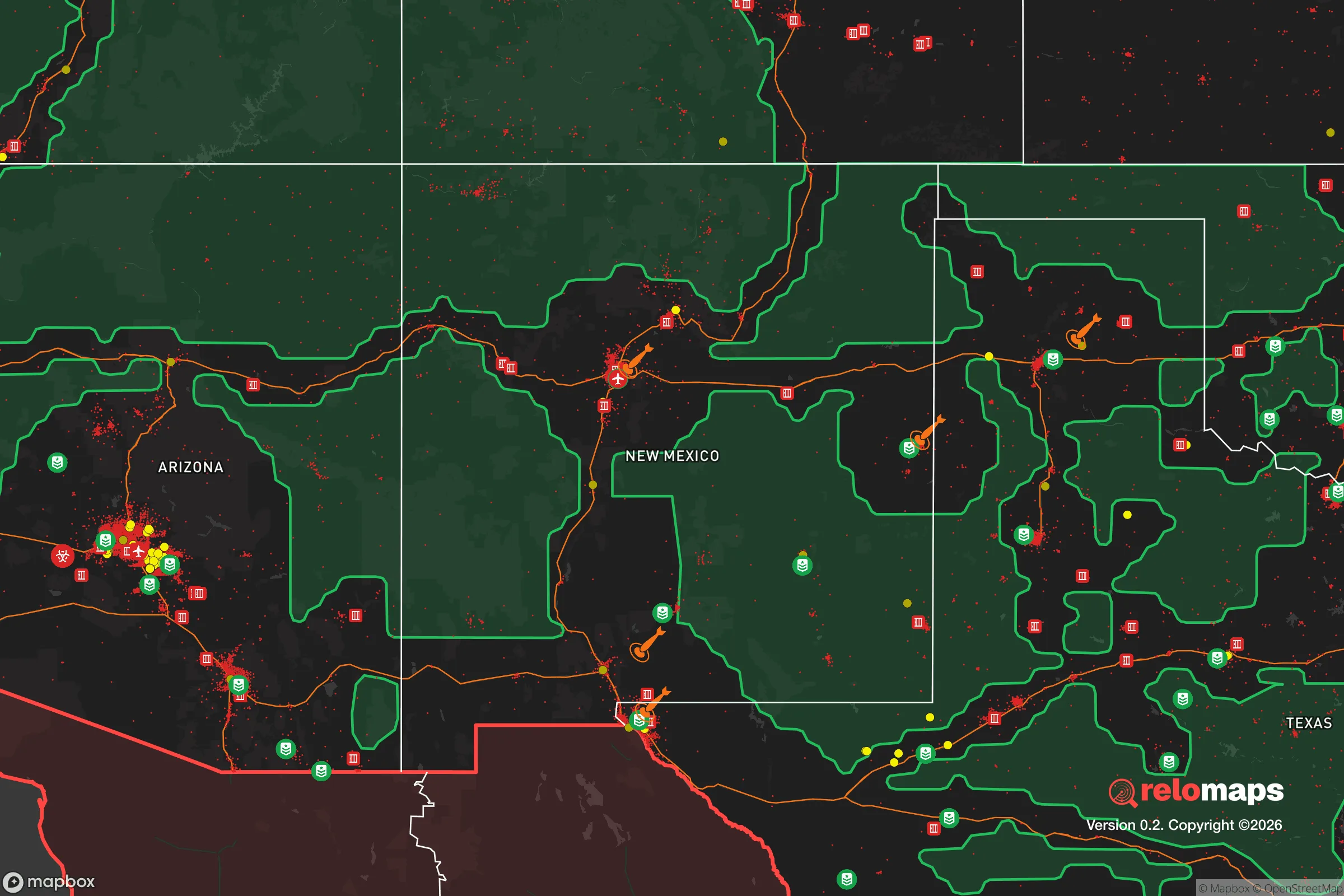


Important Note: For informational purposes only. This does not mean nothing bad ever happens in the green zones. Please use common sense. This is based on public data and modeled with AI. We tried to take a conservative approach but mistakes happen. We update this regularly as new information becomes available.
Solar Generator Recommendations
Backup power matters more here than in safer locations. We've picked three solar generators across budgets and capacity tiers — start with the budget unit if you only need a few essentials, or step up if you want to run a fridge and HVAC for days at a time.

Jackery Portable Power Station Explorer 300
Budget OptionPower on the Go: Weighing only 11 lbs, it's convenient to set up and store with book-sized foldable solar panels

BLUETTI Portable Power Station AC180
Designed for both indoor and outdoor scenarios, AC180 is highly capable as it has a robost capacity and continuous output power.

EF ECOFLOW DELTA Pro Ultra Power Station
Upgraded PickEcoFlow DELTA Pro Ultra is a whole-home energy system designed to grow with your family. Integrated with the Smart Home Panel 2, it scales to meet your evolving energy needs — keeping your home powered, intelligent, and secure through every stage of life.
We earn a commission, at no additional cost to you.
Strategic Assessment Analysis
Albuquerque, New Mexico, sits at a strategic crossroads that offers genuine resilience advantages for those thinking long-term about civic unrest, supply chain disruptions, and natural disasters. Its high desert location—roughly 5,000 feet in elevation—provides a natural buffer against coastal flooding, hurricane storm surges, and the worst of sea-level rise scenarios that threaten major population centers on both coasts. The city’s position along the Rio Grande Valley also gives it access to a perennial water source, a critical asset when many Western cities face tightening water restrictions. For a conservative-leaning relocator weighing preparedness and self-sufficiency, Albuquerque presents a mixed picture: strong geographic isolation from the most vulnerable coastal zones, but real proximity to federal nuclear infrastructure and a city government whose policies may not align with survivalist priorities.
Geographic position and natural advantages for long-term security
Albuquerque’s location in central New Mexico places it roughly 60 miles south of Santa Fe and 230 miles south of Denver, putting it within a day’s drive of multiple states while remaining far enough from the most congested urban corridors to offer genuine escape routes. The Sandia Mountains to the east and the Rio Grande to the west create natural chokepoints that could be leveraged for perimeter defense or evacuation planning. The high desert climate means average annual precipitation is only about 9 inches, which reduces risks of flooding and mold-related infrastructure failures, but also demands careful water storage planning. The area’s elevation and dry air make it less hospitable to many insect-borne diseases, and the low humidity preserves stored food and equipment longer than in humid regions. For those concerned with EMP or solar flare events, the region’s relatively low population density outside the city limits means fewer cascading failures from a grid collapse—though the city itself remains a potential target due to its size and infrastructure.
Risks, exposures, and proximity to fallout-relevant landmarks
The most significant risk for a prepper considering Albuquerque is its proximity to Kirtland Air Force Base, which houses the Air Force Research Laboratory and the Manzano Nuclear Weapons Storage Facility. This makes the city a potential target in any major conflict involving strategic nuclear assets. Additionally, Los Alamos National Laboratory, about 90 miles north, is a primary nuclear weapons design facility, and Sandia National Laboratories—headquartered in Albuquerque itself—conducts nuclear weapons engineering and nonproliferation work. In a worst-case scenario, these sites could be primary or secondary targets, and fallout patterns from a strike on any of them could affect the metro area depending on prevailing winds. The city also sits near the Rio Grande Rift, a seismically active zone, though major earthquakes are rare. For those prioritizing fallout avoidance, the prevailing westerly winds mean that areas east of the city, toward the Sandia foothills, would be less exposed to fallout from a strike on Kirtland or Los Alamos than areas west or south. The city’s location along Interstate 25 and the Rio Grande corridor also means it could become a chokepoint for refugee flows from the West Coast during a collapse scenario, potentially straining local resources.
Practical resilience for a relocator: food, water, energy, and defensibility
Water is the single most critical factor for long-term survival in Albuquerque. The city draws from the Rio Grande and the San Juan-Chama Drinking Water Project, but the aquifer is under stress, and drought cycles are intensifying. A relocator should plan for at least two weeks of stored water per person as a baseline, and consider rainwater catchment systems—though New Mexico law allows rainwater harvesting, it’s subject to permitting for larger systems. The growing season is short but productive: the Rio Grande Valley supports chiles, beans, squash, and fruit trees, and the local soil is workable with amendments. For energy, solar is viable—Albuquerque averages 278 sunny days per year—but the high altitude means UV degradation of panels is faster, and winter snow can temporarily reduce output. Battery storage and a backup generator are wise investments. Defensibility varies by neighborhood: the North Valley and East Mountains areas offer more rural layouts with good sightlines and limited access points, while the urban core near the university or downtown is harder to secure. The city’s crime rate is above the national average—property crime rates are roughly double the national average—so a relocator should prioritize a home with a secure perimeter, good lighting, and a neighborhood watch culture. The local gun culture is strong, with many residents owning firearms for hunting and self-defense, and New Mexico is a shall-issue state for concealed carry permits, which aligns with preparedness priorities.
Overall, Albuquerque offers a mixed strategic picture for the conservative prepper. Its geographic isolation from coastal threats, abundant sunshine, and access to a perennial river are genuine assets. But the concentration of nuclear weapons facilities within a 100-mile radius introduces a risk profile that many other inland cities—like Boise, Idaho, or Spokane, Washington—do not share. For those willing to accept that risk and invest in water storage, solar backup, and a defensible property in the foothills or North Valley, Albuquerque can serve as a viable base of operations. The city’s political leanings are predominantly Democratic, but the surrounding rural areas lean conservative, offering a cultural buffer and potential allies. The key is to treat Albuquerque as a hub for supplies and medical access, not as a final retreat—and to have a bug-out plan for the mountains to the east if the worst happens. For the serious relocator, it’s a location worth a hard look, but only with eyes wide open to the specific dangers that come with living near the heart of America’s nuclear complex.

* Values derived from national, state, county, city and local statistics and may differ in a specific area. Last updated: 2026-04-14T21:50:20.000Z
Narrative content on this page is AI-generated and may contain mistakes. Verify any details that matter before acting on them.
ReloMaps may earn a commission from affiliate links at no extra cost to you.

