 Popular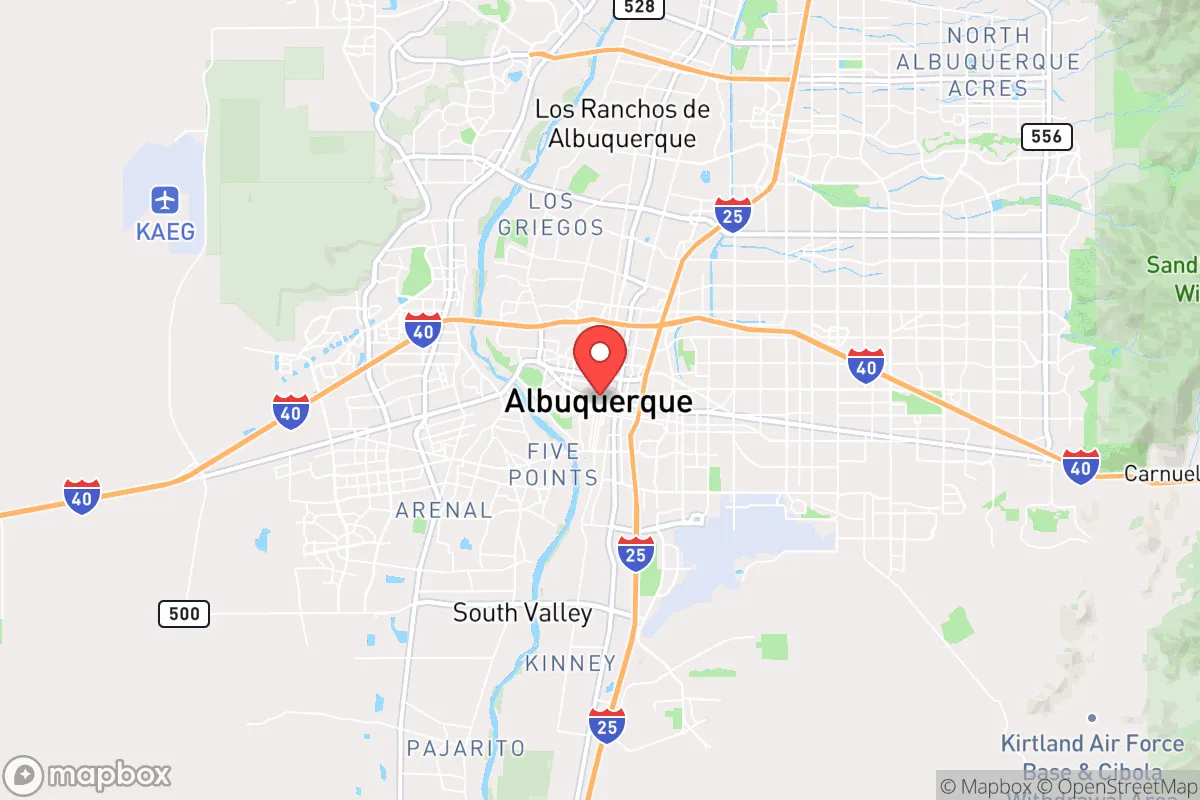
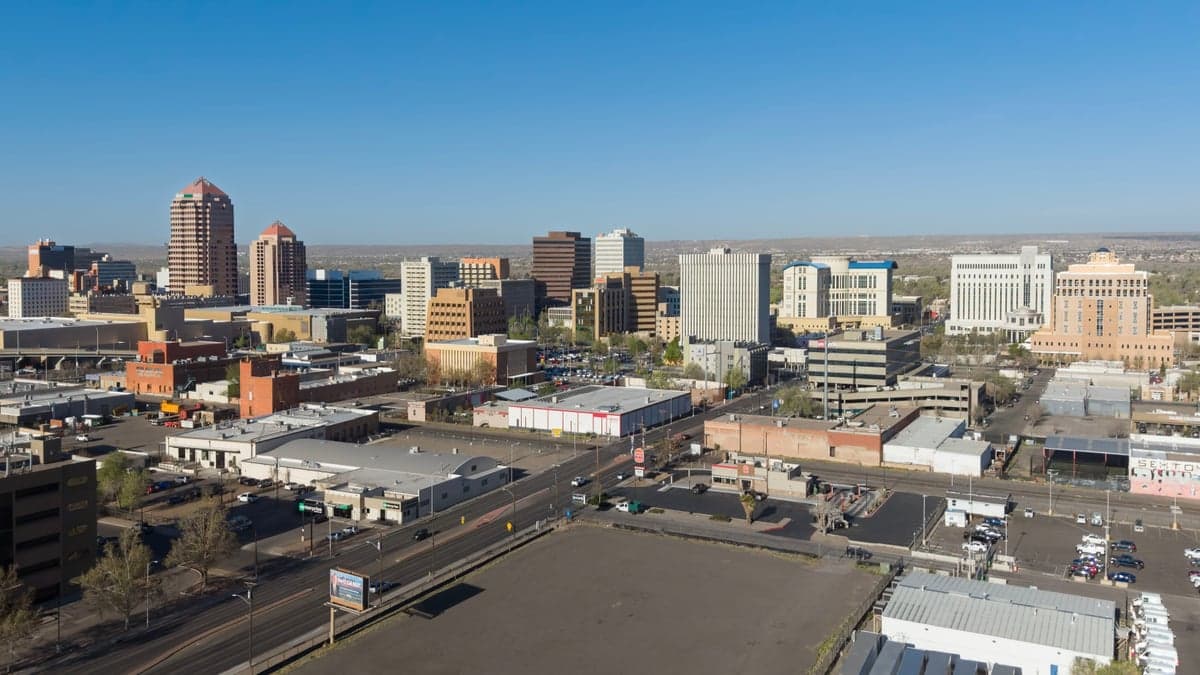
Photo: Wikipedia
Political ClimatePolitical Climate in Albuquerque, NM
District shown is the primary district for this city’s centroid. Cities may span multiple districts.
Local Political AnalysisPolitical Analysis of Albuquerque, NM
Albuquerque leans heavily Democratic, with a Cook PVI of D+7, but that number doesn't tell you the whole story of how things have shifted here over the last decade. I've lived here long enough to remember when this was a more balanced place politically—you could have a reasonable conversation with a neighbor without it turning into a debate about the latest city council ordinance. Now, the city government and county commission are firmly in the hands of progressive Democrats, and the trajectory has been a steady march leftward, especially since around 2020. If you're coming from a place where local government minds its own business, you might find the level of intervention in daily life here a bit jarring.
How it compares
Drive just 45 minutes south to Los Lunas or Belen in Valencia County, and you'll feel like you've entered a different state politically. Those areas vote reliably Republican, and the local governments there take a much more hands-off approach to things like business regulations and property rights. Up north in Santa Fe, you get an even more intense version of Albuquerque's politics—think higher taxes, more mandates, and a general attitude that the government knows best. The contrast is stark: Albuquerque's city council has pushed through things like paid sick leave mandates and strict rental ordinances that would never fly in the more conservative outlying towns. Even within the metro, the Northeast Heights and parts of the West Side tend to vote more moderately, but they're consistently outnumbered by the progressive strongholds in the North Valley, Downtown, and the University area.
What this means for residents
For a regular person just trying to live their life, the biggest practical effect is the constant feeling of government creep into personal decisions. The city has gotten aggressive with things like short-term rental restrictions, noise ordinances that can be enforced subjectively, and a push for "equity" policies that often mean different rules for different people. Property taxes have climbed steadily, and there's always a new fee or permit requirement being proposed for something that used to be simple—like putting a fence in your backyard or running a small home-based business. The police department has been under constant political pressure, and you can see the results in slower response times and a general sense that law enforcement has been told to back off on certain types of crime. Meanwhile, the city keeps expanding social programs and adding new layers of bureaucracy, which sounds good on paper but means your tax dollars are going to more administrators rather than fixing potholes or keeping parks clean.
The cultural shift is probably the most noticeable if you've been here a while. Albuquerque used to have a pretty live-and-let-live vibe—a mix of old-school New Mexico libertarianism, military families from Kirtland Air Force Base, and a strong Hispanic Catholic tradition that values family and community over government programs. That's been slowly replaced by a more activist, progressive culture that's less tolerant of dissenting views. You see it in school board meetings, in neighborhood association politics, and even in which local businesses get promoted by the city. The long-term trend worries me: as the state government in Santa Fe and the city government in Albuquerque both push harder on things like energy regulations, gun control, and land-use restrictions, the people who can afford to leave are heading to places like Rio Rancho or the East Mountains, where the politics are more conservative and the government stays out of your business. That only concentrates the progressive vote further, making it harder to turn things around. If you're considering a move here, just know what you're signing up for—it's a beautiful place with amazing outdoor access and a unique culture, but the political climate is increasingly one-size-fits-all progressive, and that's not going to change anytime soon.

State Political ClimatePolitical Climate in New Mexico
State Political AnalysisPolitical Environment in the State
New Mexico has long been a reliably blue state in presidential elections, with Democrats holding a structural advantage thanks to a coalition of urban progressives, Hispanic voters in the northern and central counties, and a growing number of out-of-state transplants. Over the past 10-20 years, the state has shifted noticeably leftward on cultural and economic issues, driven largely by the dominance of Albuquerque and Santa Fe, while rural and oil-patch counties like Lea and Eddy have become Republican strongholds. The overall partisan lean is now roughly D+8 to D+10, but that masks a deep and growing urban-rural chasm that any conservative considering a move here needs to understand.
Urban vs. rural divide
The political map of New Mexico is essentially a tale of two states. The Albuquerque metro area (Bernalillo County) and Santa Fe (Santa Fe County) account for nearly half the state’s population and vote overwhelmingly Democratic — often by 20-30 points. These cities are home to the state’s largest government employers, the University of New Mexico, and a dense network of nonprofits and progressive activists. Meanwhile, the southeastern corner — cities like Hobbs, Carlsbad, and Roswell — are deeply red, driven by the oil and gas industry in the Permian Basin. Lea County, anchored by Hobbs, voted +40 for Trump in 2020. The same pattern holds in the rural north: Los Alamos County, home to the national lab, is a moderate swing area, while Las Cruces in Doña Ana County leans blue but is more competitive than Santa Fe. The key takeaway: if you want a conservative community, you’re looking at the southeast or the eastern plains — not the Rio Grande corridor.
Policy environment
New Mexico’s policy environment has become increasingly progressive over the last decade. The state has a progressive income tax with rates up to 5.9%, and a gross receipts tax (essentially a sales tax) that can exceed 8% in some cities. Property taxes are relatively low, but the state makes up for it with high fees and a complex regulatory code. On education, the state has moved toward universal pre-K and expanded funding for public schools, but school choice remains limited — there is no robust voucher or charter school system. Healthcare is dominated by the state’s Medicaid expansion, which covers nearly half the population, and the state has passed laws protecting abortion access and gender-affirming care. Election laws are among the most permissive in the country: same-day voter registration, no-excuse absentee voting, and automatic voter registration are all in place. For a conservative, the policy environment feels like a one-party state where the legislature routinely overrides local control — especially on gun rights and energy regulation.
Trajectory & freedom
Over the past five years, New Mexico has become less free by most conservative measures. In 2021, the legislature passed the Firearm Transfer Act, requiring background checks on nearly all private gun sales — a significant expansion of state control. In 2023, Governor Michelle Lujan Grisham signed a red flag law allowing courts to temporarily seize firearms from individuals deemed a threat. On parental rights, the state has moved in the opposite direction of Texas and Arizona: it passed a law prohibiting conversion therapy for minors and has resisted any form of parental notification for school-based health services. Property rights have also eroded — the state’s Oil and Gas Act was amended in 2023 to give regulators more power to deny drilling permits, directly impacting landowners in the Permian Basin. On taxation, the state has not followed the national trend toward flat or zero income taxes; instead, it raised the top marginal rate in 2021. The trajectory is clearly toward more government intervention, not less.
Civil unrest & political movements
New Mexico has seen its share of political flashpoints. In 2020, protests in Albuquerque over the murder of George Floyd turned violent, with property damage and clashes with police. The state’s sanctuary policies are among the strongest in the nation — in 2019, the legislature passed a law prohibiting state and local law enforcement from asking about immigration status or cooperating with federal immigration authorities. This has created tension in border communities like Deming and Las Cruces, where residents report increased cartel activity and human trafficking. On the right, the New Mexico Civil Guard, a militia group, has been active in the southern border region, drawing both support and criticism. Election integrity has been a persistent concern: in 2022, the state’s Secretary of State, a Democrat, was criticized for allowing ballot drop boxes without chain-of-custody protocols, and a 2024 audit found thousands of duplicate voter registrations. For a new resident, the political climate feels polarized and occasionally volatile, especially in the Albuquerque metro.
Projection
Looking ahead 5-10 years, New Mexico is likely to continue its leftward drift. The state’s demographic trends favor Democrats: the Hispanic population, which leans Democratic, is growing, while the rural white population is shrinking. In-migration from California and Colorado is accelerating, particularly to Santa Fe and Albuquerque, bringing more progressive voters. The oil and gas industry in the southeast remains a counterweight, but the state’s regulatory environment is making it harder to drill, and the industry is increasingly looking to Texas. The 2026 gubernatorial race will be a key test — if a Republican can’t win in a midterm environment, the state may be locked in for a generation. For a conservative moving in now, expect to see more gun control, higher taxes, and a continued erosion of local control. The best bet for a like-minded community is the southeast corner, but even there, state-level policies will constrain your freedom.
For a conservative considering relocation, New Mexico offers a mixed bag. The low property taxes and stunning natural beauty are real draws, but the state’s policy environment is increasingly hostile to gun rights, school choice, and limited government. If you’re willing to live in a red pocket like Hobbs or Carlsbad and drive to Texas for major purchases or medical care, you can make it work. But if you value personal freedom and a government that stays out of your life, you’ll find more alignment in neighboring states like Texas or Arizona. The bottom line: New Mexico is a beautiful state with a political trajectory that should give any conservative pause.
* Values derived from national, state, county, city and local statistics and may differ in a specific area. Last updated: 2026-04-14T21:50:20.000Z
Narrative content on this page is AI-generated and may contain mistakes. Verify any details that matter before acting on them.
ReloMaps may earn a commission from affiliate links at no extra cost to you.

