 Popular
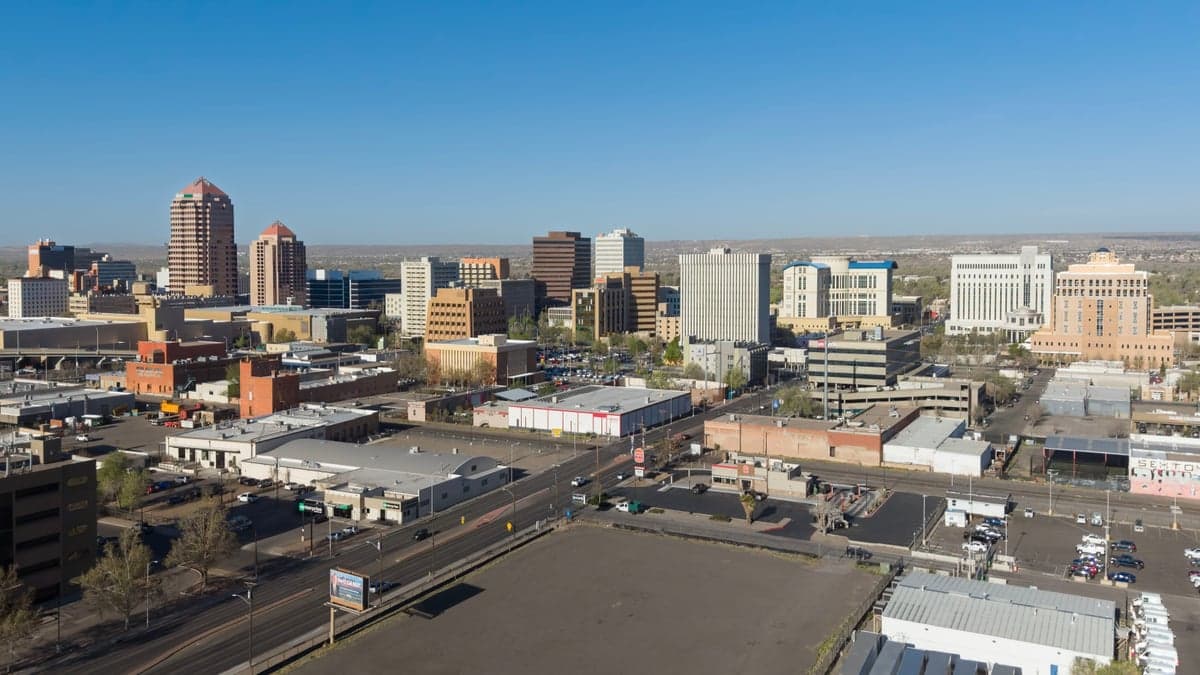
Photo: Wikipedia
Quality of Life in Albuquerque, NM
Above-average quality of iife. The area offers a reasonable cost of living, decent mobility, and a mix of neighborhood amenities.
What does Quality of Life tell us?
Quality of Life blends cost of living, nearby amenities, socioeconomic signals, and neighborhood character. City-level scores represent the whole municipality; individual neighborhoods can differ.
What does this tell us?
Quality of Life blends cost of living, nearby amenities, socioeconomic signals, and neighborhood character. City-level scores represent the whole municipality; individual neighborhoods can differ.
Cost of Living
6% below national average
The Real Cost of Living in Albuquerque, NM for 2026
| Tier | Individual | Family (4) |
|---|---|---|
| Survival | $33k | $61k |
| Comfortable | $76k | $112k |
| Luxury | $119k+ | $184k+ |
| Elite (Top 5%) | $142k+ | $220k+ |
59%
The Area Signal
A metric tracking the socioeconomic signals of the area.


Hobbies
Explore the areaGroceries
5 within 10 miles
Gas
0 within 10 miles
Hospital
3 within 20 miles
Airport
LAS — Las Vegas Municipal
Post Office
USPS — Albuquerque, NM
Critical Amenities
Quality-of-Life Analysis
Albuquerque presents a distinctive quality-of-life profile shaped by its status as New Mexico’s largest city and a regional economic hub, yet its affluence levels and demographic composition differ markedly from national averages. The city’s cost of living index sits at 94 (6% below the U.S. average), attracting a mix of middle-income families, remote workers, and retirees seeking affordability without sacrificing urban amenities. The population skews younger than the national median, with a significant concentration of professionals in government, healthcare, and the University of New Mexico system, alongside a growing cohort of creatives drawn to the city’s low barriers to entry for small businesses and arts ventures.
Cost of living, housing affordability, and how Albuquerque compares to Santa Fe and Las Cruces
Albuquerque’s housing market remains one of the most accessible among U.S. metro areas of comparable size, with a median home value of $266,700 and median rent of $1,085—roughly half the cost of nearby Santa Fe, where the median home value exceeds $500,000. This price gap makes Albuquerque a practical alternative for workers employed in Santa Fe’s tourism and government sectors who are willing to commute 60–90 minutes. Compared to Las Cruces, Albuquerque offers higher median incomes (around $58,000 vs. $46,000) but also slightly higher home prices; however, the trade-off includes a broader job market and more diverse housing stock, from historic adobes in the North Valley to newer subdivisions on the West Mesa. The average commute of 22.2 minutes is notably shorter than the national average of 26 minutes, reducing transportation costs and freeing time for family or recreation. Utility costs run about 5% below the U.S. norm, and New Mexico’s property tax rates are among the lowest in the Southwest, typically 0.6–0.8% of assessed value.
Everyday amenities, school quality, and the daily rhythm of life in Albuquerque
Daily life in Albuquerque revolves around a mix of outdoor access, cultural events, and a laid-back pace that contrasts with larger Sun Belt cities. The city’s over 400 miles of multi-use trails, including the Paseo del Bosque along the Rio Grande, support year-round cycling, running, and walking. The public school system, Albuquerque Public Schools, is the largest in the state, with notable magnet programs at schools like Albuquerque High School’s Advanced Placement Academy and the School of Excellence in the Arts; however, overall proficiency rates in math and reading hover around 35–40%, leading many families to consider charter schools such as Cottonwood Classical Preparatory School or private options like Sandia Preparatory School. Grocery access is strong, with multiple co-ops, farmers’ markets (the Downtown Growers’ Market runs Saturdays April–November), and national chains. The city’s rhythm is notably slow by East Coast standards—restaurants often close by 9 p.m. on weeknights—but the craft brewery scene (over 30 breweries) and events like the International Balloon Fiesta provide regular social anchors. Healthcare access is robust, anchored by the University of New Mexico Hospital and Presbyterian Healthcare Services, both offering specialized care that reduces the need to travel to Denver or Phoenix for most procedures.
Albuquerque is best suited for individuals and families who prioritize affordable homeownership, short commutes, and outdoor recreation over high-end retail, elite public schools, or a 24-hour nightlife scene. Remote workers and retirees on fixed incomes will find the low cost of living especially attractive, while professionals in healthcare, education, and government will benefit from the city’s stable employment base. Those seeking a vibrant, walkable urban core may find downtown and Nob Hill lacking compared to Austin or Denver, but the trade-off in reduced financial pressure and access to the Sandia Mountains and Rio Grande Valley is a compelling draw for the right resident.

Crime in Albuquerque, NM
Significantly higher crime rates than 86% of comparable U.S. locations.
Violent CrimeViolent Crime Analysis
Property CrimeProperty Crime Analysis
Crime Analysis
Albuquerque, New Mexico, faces a severe public safety crisis, with violent crime rates more than double the national average and property crime rates among the highest in the country. The city's 2023 crime statistics—1,013.1 violent crimes per 100,000 residents and 3,968.9 property crimes per 100,000 residents—place it in the top tier of dangerous U.S. cities. These figures reflect systemic issues tied to progressive criminal justice policies, including lenient sentencing and district attorney practices that prioritize offender rehabilitation over public safety, contributing to a revolving-door justice system.
Crime in context
Albuquerque's violent crime rate is roughly 2.7 times the national average of approximately 380 per 100,000, while its property crime rate is about 2.5 times the national average of roughly 1,950 per 100,000. Compared to New Mexico's statewide violent crime rate of 780 per 100,000, Albuquerque is significantly worse, driving the state's overall ranking as one of the most dangerous in the nation. The city's crime problem is exacerbated by a progressive district attorney's office that has been criticized for declining to prosecute many felony cases, including property crimes and drug offenses, under a "restorative justice" framework. This approach, while sympathetic to offenders, has resulted in thousands of dismissed cases annually, leaving repeat offenders on the streets and eroding deterrence.
What residents experience
For Albuquerque residents, daily life is marked by high vigilance. Car theft is rampant—the city consistently ranks among the top five nationally for auto theft—and property crimes like burglary and larceny are common, even in middle-class neighborhoods. Violent crimes, including aggravated assault and robbery, occur frequently in areas near Central Avenue and the International District. Residents report feeling unsafe walking alone at night, and many businesses in high-crime corridors have installed fortified barriers and hired private security. The city's police department, while understaffed, has struggled to keep up with calls for service, partly due to a lack of support from the district attorney's office, which has been accused of failing to hold violent offenders accountable through plea deals and dropped charges.
Neighborhood-level variation is stark. The affluent Northeast Heights and parts of the North Valley experience lower crime rates, with violent crime roughly half the city average. In contrast, the Southeast Heights, International District, and areas near the University of New Mexico see crime rates two to three times higher. Even in safer neighborhoods, property crime remains a concern, and residents often install security systems and participate in neighborhood watch programs. For prospective movers, the safest choices are gated communities or suburban areas like Rio Rancho, just across the Rio Grande, where crime rates are significantly lower. However, the overarching influence of progressive judicial policies means that even in better areas, the risk of encountering property crime or repeat offenders remains elevated compared to cities with tougher sentencing practices.
* Values derived from national, state, county, city and local statistics and may differ in a specific area. Last updated: 2026-04-14T21:50:20.000Z
Narrative content on this page is AI-generated and may contain mistakes. Verify any details that matter before acting on them.
ReloMaps may earn a commission from affiliate links at no extra cost to you.

