Photo: Wikipedia
Demographics of Allen, TX
Affluence Level in Allen, TX
An upper-middle-class area. Household wealth, education levels, and homeownership run ahead of national benchmarks.
People of Allen, TX
The people of Allen, Texas today form a dense, upwardly mobile suburban population of 107,684, characterized by a striking ethnic diversity that is rare among North Texas suburbs. The city is 51.2% white, 11.8% Hispanic, 10.6% Black, 10.7% East/Southeast Asian, and 8.9% Indian (subcontinent), with 56.1% of adults holding a college degree. Distinctive identity markers include a strong family-oriented culture centered on top-rated Allen Independent School District schools, a robust local economy anchored by corporate headquarters like those of Experian and Raytheon, and a politically moderate-to-conservative tilt that reflects its rapid growth from a rural crossroads into a major employment hub.
How the city was settled and grew
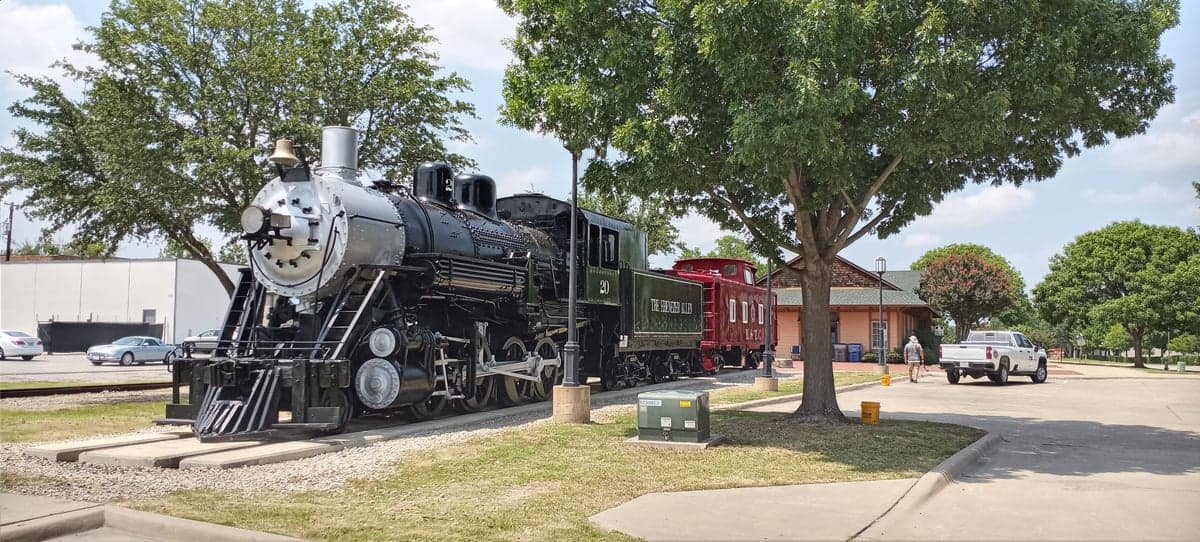
Allen was founded in 1872 as a railroad stop along the Houston and Texas Central Railway, named after a railroad executive. The original population was overwhelmingly Anglo-American, drawn by cotton farming and the rail depot. The town remained a small agricultural community of fewer than 500 residents through the early 1900s. The first distinct neighborhood, Historic Downtown Allen, grew around the depot and Main Street, housing merchants, farmers, and railroad workers. A second early cluster, the Allen Heights area north of the tracks, developed in the 1920s and 1930s as a modest residential enclave for local tradesmen and their families. The population remained almost entirely white and native-born until the post-World War II era, when a trickle of veterans and their families began settling in new subdivisions like Greenville Estates (built in the 1950s), but the city still counted fewer than 3,000 residents by 1960.
Modern era (post-1965)
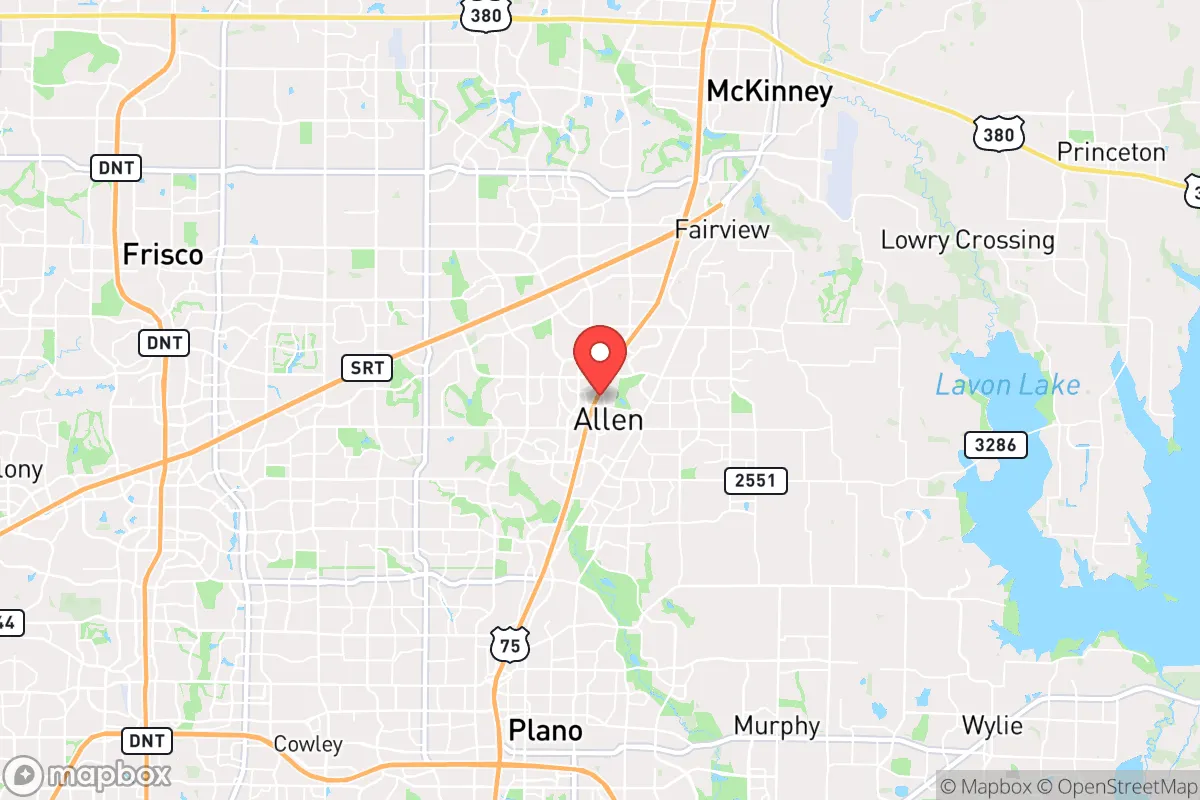
The 1965 Hart-Cellar Immigration Act and the subsequent expansion of Dallas-Fort Worth’s technology and corporate sectors transformed Allen’s population. The city’s location along U.S. Highway 75, midway between Dallas and McKinney, made it a prime destination for white-collar migrants. The first major wave of domestic in-migration came in the 1970s and 1980s, as white families from the Dallas metro area moved into master-planned subdivisions like Bent Tree and Oakwood Estates, drawn by new schools and lower crime rates. By 1990, Allen’s population had surged to 18,000, still predominantly white (over 90%).
The 1990s and 2000s brought a dramatic ethnic shift. The expansion of the telecom and semiconductor industries in nearby Richardson and Plano attracted a wave of East/Southeast Asian professionals—Chinese, Korean, Vietnamese, and Filipino families—who settled in newer neighborhoods like Village Creek and Bridlewood. Simultaneously, Indian (subcontinent) professionals, many working in IT and engineering at companies like Texas Instruments and EDS, began moving into the Watters Branch area and the St. Mary’s subdivision. Hispanic families, drawn by construction and service jobs, concentrated in the Allen Crossing district and older parts of the city near the railroad tracks. Black families, many relocating from Dallas and southern Collin County, settled throughout the city but formed a visible presence in the Greenville Estates and Bent Tree neighborhoods. By 2020, Allen had become one of the most ethnically balanced suburbs in Texas, with no single group holding a majority.
The future
Allen’s population is likely to continue diversifying, but the pace of change may slow as the city approaches build-out. The foreign-born share currently stands at 9.0%, lower than in neighboring Plano (22%) or Frisco (18%), suggesting that Allen is still primarily a destination for domestic migrants rather than new immigrants. The East/Southeast Asian and Indian communities, both highly educated and economically established, are expected to grow through natural increase and continued in-migration from other U.S. cities, but are unlikely to form majority enclaves. Hispanic and Black populations are growing steadily but remain below the national average for a city of this size. The city is not tribalizing into distinct ethnic enclaves; rather, neighborhoods like Bridlewood and Watters Branch are becoming increasingly mixed, with white, Asian, Indian, and Hispanic families living side by side. The next 10-20 years will likely see Allen become a stable, majority-minority suburb where no single group dominates, but where the white share continues to decline gradually.
For a conservative-leaning individual or family moving in now, Allen offers a rare combination: a high-achieving school district, a safe environment, and a population that is diverse yet culturally cohesive, with strong civic engagement and a low crime rate. The city is becoming a model of the American suburban melting pot, where ethnic diversity coexists with traditional family values and a robust local economy.

* Values derived from national, state, county, city and local statistics and may differ in a specific area. Last updated: 2026-04-21T10:28:52.000Z
Narrative content on this page is AI-generated and may contain mistakes. Verify any details that matter before acting on them.
ReloMaps may earn a commission from affiliate links at no extra cost to you.

