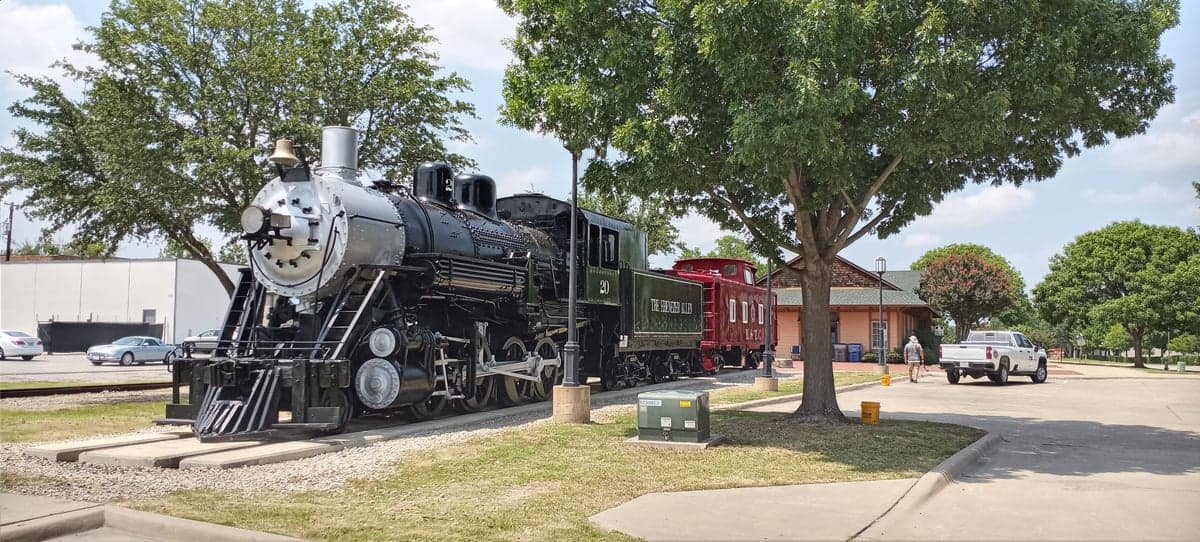
Photo: Wikipedia
Strategic Assessment of Allen, TX
Multiple tactical vulnerabilities. Population density, target proximity, or disaster risk are likely compounding. A retreat property and exit planning is required.
What does the Strategic Assessment tell us?
Our Strategic Assessment grades tactical survivability of an area. Major population centers, military targets, fallout zones, natural disasters, and border exposure all drive risk — lower exposure means a more defensible position in a crisis.
This is heavily inspired by Joel Skousen's Strategic Relocation book. Highly recommended you checkout the book ($)What does this tell us?
Our Strategic Assessment grades tactical survivability of an area. Major population centers, military targets, fallout zones, natural disasters, and border exposure all drive risk — lower exposure means a more defensible position in a crisis.
This is heavily inspired by Joel Skousen's Strategic Relocation book. Highly recommended you checkout the book ($)Strategic Pillars

Key Distances
Regional Safe Places
Below is our recommended "safe zones" in Texas and the surrounding area based on our strategic heuristics. For most people, it's unrealistic to live in a “safe zone” full-time due to work, family or other personal reasons. They tend to be more rural. However, many of these areas are perfect for second homes and retreat properties that double as a vacation home or even a short-term rental.

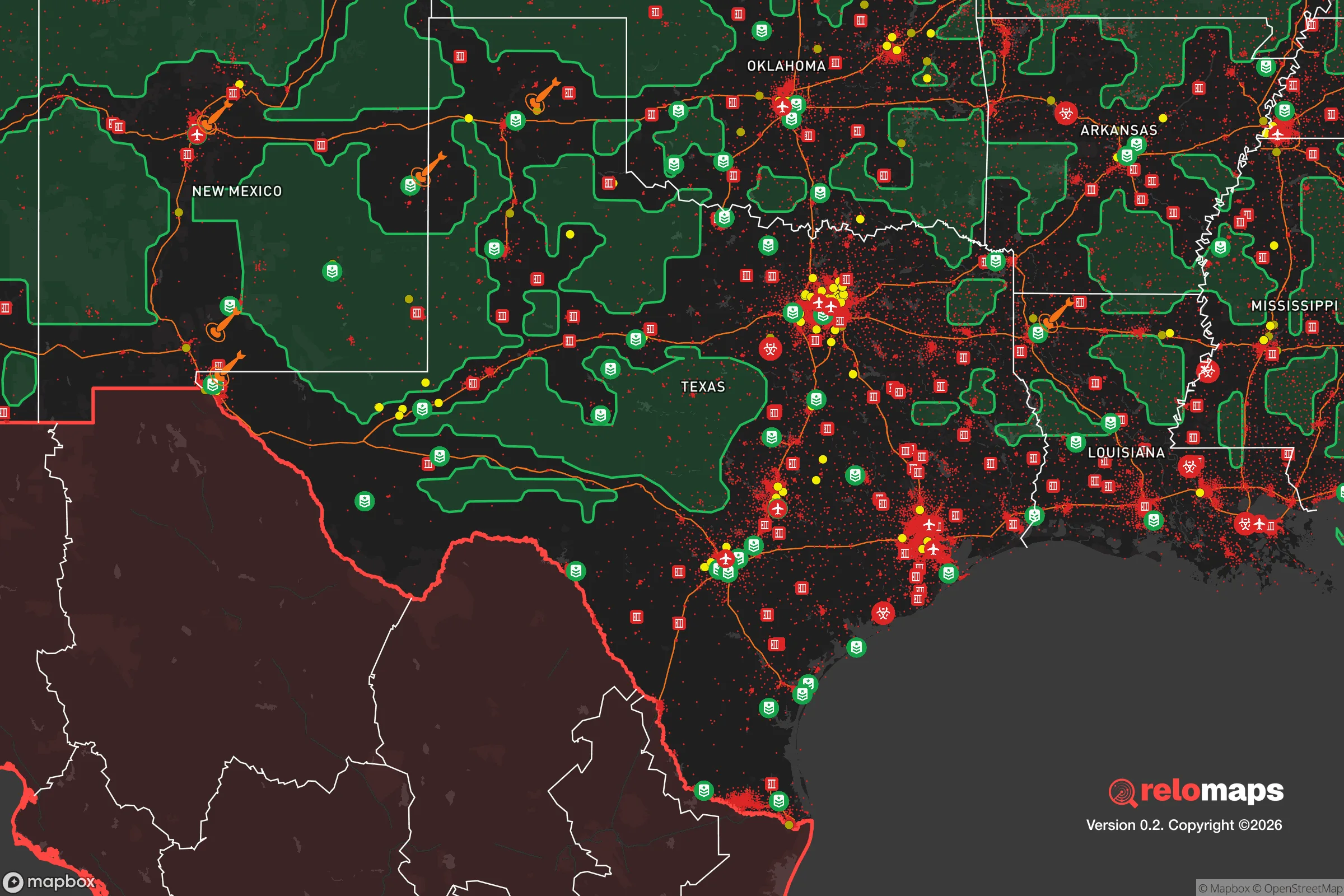


Important Note: For informational purposes only. This does not mean nothing bad ever happens in the green zones. Please use common sense. This is based on public data and modeled with AI. We tried to take a conservative approach but mistakes happen. We update this regularly as new information becomes available.
Solar Generator Recommendations
Backup power matters more here than in safer locations. We've picked three solar generators across budgets and capacity tiers — start with the budget unit if you only need a few essentials, or step up if you want to run a fridge and HVAC for days at a time.

Jackery Portable Power Station Explorer 300
Budget OptionPower on the Go: Weighing only 11 lbs, it's convenient to set up and store with book-sized foldable solar panels

BLUETTI Portable Power Station AC180
Designed for both indoor and outdoor scenarios, AC180 is highly capable as it has a robost capacity and continuous output power.

EF ECOFLOW DELTA Pro Ultra Power Station
Upgraded PickEcoFlow DELTA Pro Ultra is a whole-home energy system designed to grow with your family. Integrated with the Smart Home Panel 2, it scales to meet your evolving energy needs — keeping your home powered, intelligent, and secure through every stage of life.
We earn a commission, at no additional cost to you.
Strategic Assessment Analysis
Allen, Texas, presents a mixed bag for the strategic relocator operating from a prepper mindset. On one hand, its position within the booming Collin County corridor offers robust economic resilience and a deep pool of local resources; on the other, its proximity to the Dallas-Fort Worth metroplex introduces significant vulnerabilities that cannot be ignored. For the conservative individual or family prioritizing self-reliance and security, Allen is less a standalone fortress and more a well-stocked forward operating base—one that requires a clear-eyed understanding of its choke points and exposure to the chaos of a major urban collapse.
Geographic position and natural advantages for long-term security
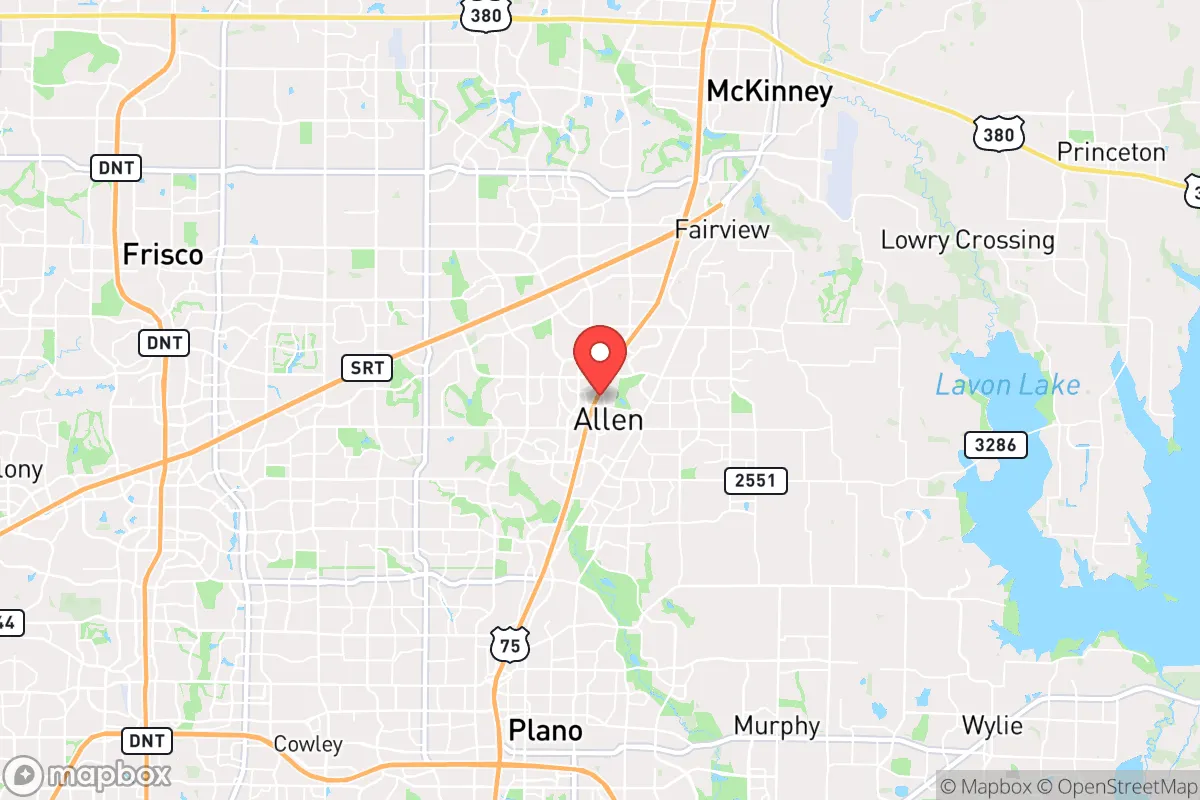
Allen sits roughly 25 miles north of downtown Dallas, squarely within the fast-growing I-75/US 75 corridor. Its primary natural advantage is its location on the Blackland Prairie, a region of deep, fertile soils that historically supported agriculture. While most of that land is now developed, the surrounding areas—particularly to the east and north toward McKinney and Melissa—still contain pockets of rural acreage that could be leveraged for small-scale food production or as a buffer. The area’s relatively flat terrain offers good line-of-sight for security, though it lacks the natural defensibility of hills or dense forests. The climate is a double-edged sword: hot summers and occasional severe weather (tornadoes, hail, flash floods) are realities, but the region is not prone to earthquakes, wildfires, or hurricanes. The Trinity River basin lies to the south and west, but Allen itself is not in a floodplain, which is a meaningful plus for long-term infrastructure stability. The city’s grid of major highways—including Sam Rayburn Tollway (121) and Central Expressway (75)—provides excellent internal mobility, but these same arteries become evacuation chokepoints during a crisis. For the prepper, the key takeaway is that Allen’s geographic strength is its economic and logistical connectivity, not its natural fortifications.
Risks, exposures, and proximity to fallout-relevant landmarks
The single greatest strategic liability of Allen is its proximity to the Dallas-Fort Worth metroplex, a population center of over 7.5 million people. In the event of a major civic unrest event, mass casualty incident, or a breakdown of civil order, Allen sits directly in the path of any northbound exodus from Dallas. The city is also within 30 miles of several high-value targets: Love Field and DFW International Airports, major rail yards, and the telecom infrastructure hub in Richardson (the "Telecom Corridor"). A coordinated attack or EMP event targeting these nodes would likely disrupt power, communications, and supply chains across the entire region. Additionally, the proximity to the Texas Instruments and defense contractor facilities in the area makes this corridor a plausible secondary target. On a more mundane level, Allen’s rapid growth has strained local water resources; the city relies on a mix of surface water from the North Texas Municipal Water District and groundwater from the Trinity Aquifer. A prolonged drought or contamination event could stress supply. The presence of multiple large-scale data centers and industrial parks along the 75 corridor also means that a localized disaster (chemical spill, fire, or grid failure) could cascade quickly. For the strategic relocator, the calculus is clear: Allen offers excellent day-to-day amenities, but its position in the shadow of a major metroplex means that any large-scale event will bring the chaos of the city directly to its doorstep.
Practical resilience for a relocator: food, water, energy, and defensibility
For the individual or family looking to establish a resilient household in Allen, the practical picture is one of high convenience but low inherent self-sufficiency. Food security is a mixed story: the city has numerous grocery stores, big-box retailers (Costco, Sam’s Club, Walmart), and a thriving farmers’ market scene during growing season. However, the area is heavily dependent on just-in-time delivery logistics. A supply chain disruption would empty shelves within 48–72 hours. The soil is workable for gardening, but most residential lots are small (0.25–0.5 acres), limiting serious food production. Community gardens exist but are not widespread. Water security is the more pressing concern. The municipal supply is reliable under normal conditions, but the system is vulnerable to power outages (pumps fail) and contamination. A well is not feasible for most suburban lots due to HOA restrictions and shallow water tables. Rainwater catchment is legal in Texas but is often restricted by local covenants. Energy resilience is a bright spot: Texas’s deregulated grid means homeowners can install solar panels with battery backup (e.g., Tesla Powerwall) without the bureaucratic hurdles seen in other states. Natural gas is widely available for backup generators, and many newer homes are built with gas lines already run. The ERCOT grid’s fragility is well-documented, but individual preparedness can largely mitigate this. Defensibility is the weakest link. Allen is a typical suburban grid of cul-de-sacs and arterial roads, with no natural chokepoints or defensible terrain. A determined group could easily move through the city. The local police department is well-funded and professional, but in a widespread collapse, they would be overwhelmed. The best strategy for a relocator is to treat Allen as a base of operations—a place to stockpile supplies, maintain a low profile, and build a network of like-minded neighbors—rather than a final redoubt. The city’s strong economy and low crime rate (relative to Dallas) make it a good place to prepare and wait, but not to hold out against a prolonged crisis.
The overall strategic picture for Allen, Texas, is one of calculated trade-offs. It offers the economic stability, quality schools, and community infrastructure that make it an attractive place to build a life and raise a family—factors that are themselves forms of resilience. The local culture is broadly conservative, with a strong emphasis on self-reliance, church communities, and neighborhood watch programs. However, the city’s very success—its growth, its connectivity, its wealth—makes it a target and a funnel for chaos during a major event. For the strategic relocator, the prudent path is to use Allen as a staging area: secure a home with a good layout for storage and defensibility, invest in off-grid energy and water systems, build relationships with neighbors who share your mindset, and have a clear evacuation plan to a more remote secondary location (e.g., rural East Texas or the Hill Country) if the situation deteriorates. Allen is not a bug-out location; it is a high-functioning base camp for those who understand that preparation is a lifestyle, not a destination. The city’s strengths are real, but they are contingent on the stability of the larger system. For the conservative prepper who wants to live well while staying ready, Allen is a viable option—provided you never forget that the freeway runs both ways.

* Values derived from national, state, county, city and local statistics and may differ in a specific area. Last updated: 2026-04-21T10:28:52.000Z
Narrative content on this page is AI-generated and may contain mistakes. Verify any details that matter before acting on them.
ReloMaps may earn a commission from affiliate links at no extra cost to you.

