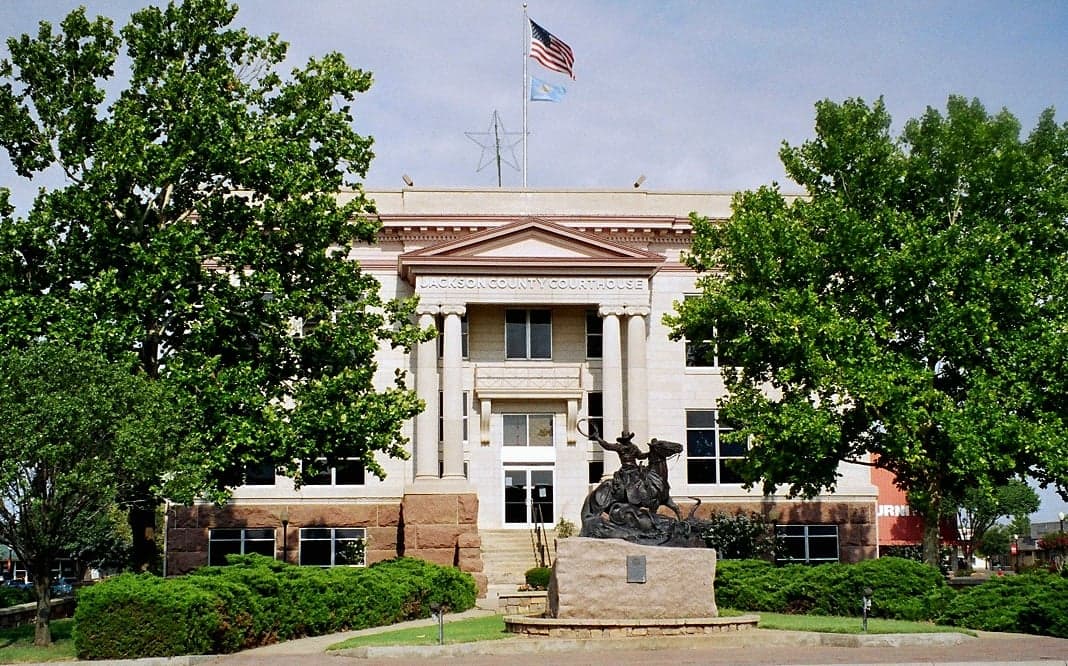
Photo: Wikipedia
Demographics of Altus, OK
Affluence Level in Altus, OK
A low-income area with significant economic hardship. Household wealth and educational attainment are well below national averages.
People of Altus, OK
Altus, Oklahoma, is a city of 18,670 residents shaped by its roots as a railroad and agricultural hub in the southwestern part of the state. The population today is predominantly White (57.4%) with a substantial Hispanic minority (27.5%), a smaller Black community (7.4%), and a modest East/Southeast Asian presence (2.0%). The city’s character is defined by a tight-knit, family-oriented atmosphere, a strong military influence from nearby Altus Air Force Base, and a notably low foreign-born share of just 3.8%, reflecting limited recent international immigration.
How the city was settled and grew
Altus was founded in 1886 as a stop on the Kansas City, Mexico and Orient Railway, which drew the first wave of settlers—primarily Anglo-American farmers and merchants from the Midwest and South. The 1901 opening of the Kiowa-Comanche-Apache Reservation to non-Native settlement accelerated growth, with homesteaders claiming land for cotton and wheat farming. The original town center, now known as Historic Downtown Altus, was built by these early Anglo settlers, who erected brick storefronts and churches along Main Street. A second wave arrived during the 1930s Dust Bowl, when displaced farmers from the Oklahoma Panhandle and Texas Panhandle moved into the North Altus neighborhood, establishing a working-class community near the railroad tracks. By 1940, the population had reached roughly 8,000, almost entirely White and native-born.
Modern era (post-1965)
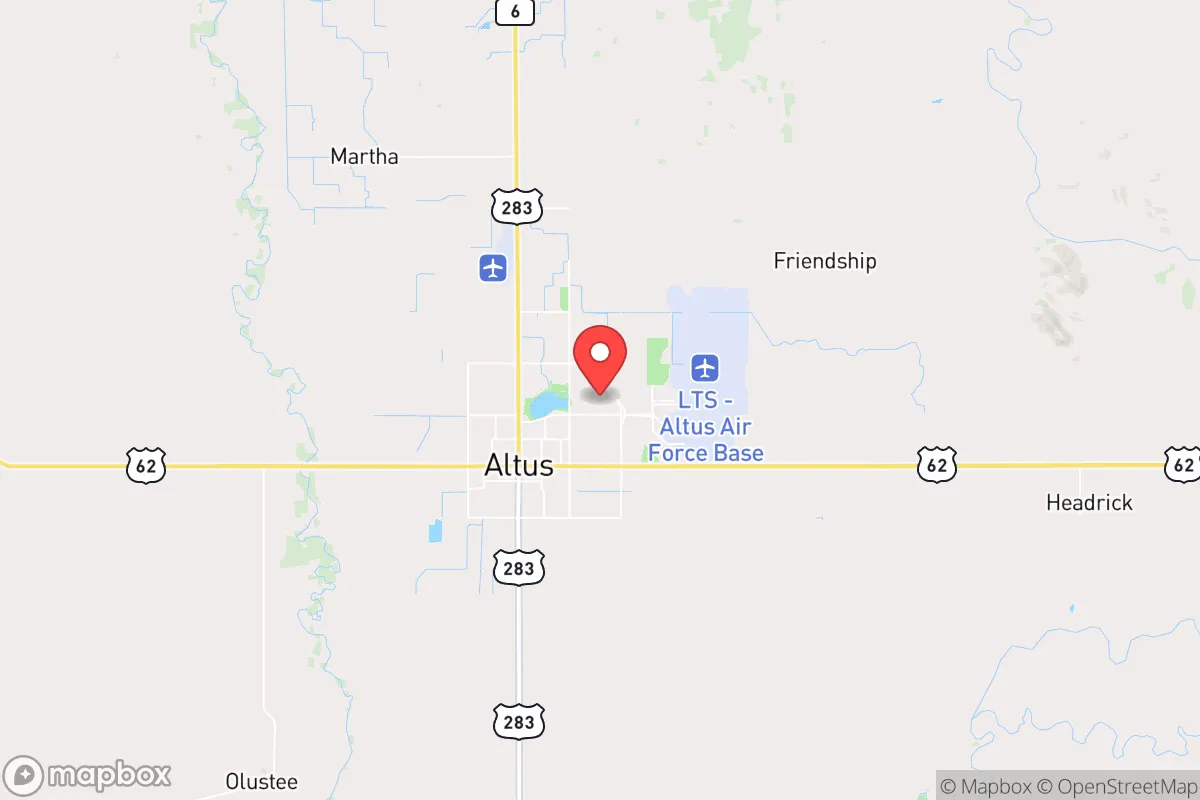
The post-1965 period brought two major demographic shifts. First, the 1967 opening of Altus Air Force Base as a permanent training facility for C-5 and later C-17 aircraft drew a steady influx of military personnel and their families. This military presence created the Base Housing District near the base’s main gate, a neighborhood with a transient, racially diverse population that includes Black, Hispanic, and East/Southeast Asian service members. Second, agricultural labor demands—particularly in cotton and peanut farming—attracted a growing Hispanic population starting in the 1970s. These families settled primarily in South Altus, an area south of Broadway Street where older homes and rental properties offered affordable housing. By 2020, the Hispanic share had risen to 27.5%, making Altus one of the most Hispanic cities in western Oklahoma. The Black population (7.4%) is concentrated in the East Altus neighborhood, a historically segregated area that has become more integrated since the 1990s. The East/Southeast Asian community (2.0%) is small and largely tied to military families stationed at the base, with no distinct ethnic enclave.
The future
Altus’s population is projected to remain stable or grow slowly, driven primarily by natural increase among the Hispanic population and continued military rotations. The city is not homogenizing into a single identity; instead, it is tribalizing into distinct enclaves: North Altus remains predominantly White and working-class, South Altus is heavily Hispanic and family-oriented, and East Altus is a mixed-race area with a notable Black presence. The Hispanic community is growing through higher birth rates and some internal migration from Texas, but the foreign-born share (3.8%) is low, indicating that most growth comes from U.S.-born Hispanic families rather than new immigrants. The East/Southeast Asian population is plateauing, as it depends on base assignments rather than chain migration. The White population is aging and declining slightly, as younger adults leave for college or jobs in Oklahoma City or Dallas. Over the next 10–20 years, Altus will likely become more Hispanic (approaching 35–40%) while remaining a small, conservative-leaning city with a strong military and agricultural base.
For someone moving in now, Altus is becoming a more diverse but still predominantly White and Hispanic community, where neighborhoods reflect distinct economic and ethnic histories. The city offers a stable, low-cost environment with a strong sense of local identity, but limited ethnic diversity beyond the Hispanic and Black communities. New residents should expect a place where military and agricultural rhythms dominate daily life, and where the population is slowly shifting toward a younger, more Hispanic demographic.

* Values derived from national, state, county, city and local statistics and may differ in a specific area. Last updated: 2026-04-21T11:45:43.000Z
Narrative content on this page is AI-generated and may contain mistakes. Verify any details that matter before acting on them.
ReloMaps may earn a commission from affiliate links at no extra cost to you.

