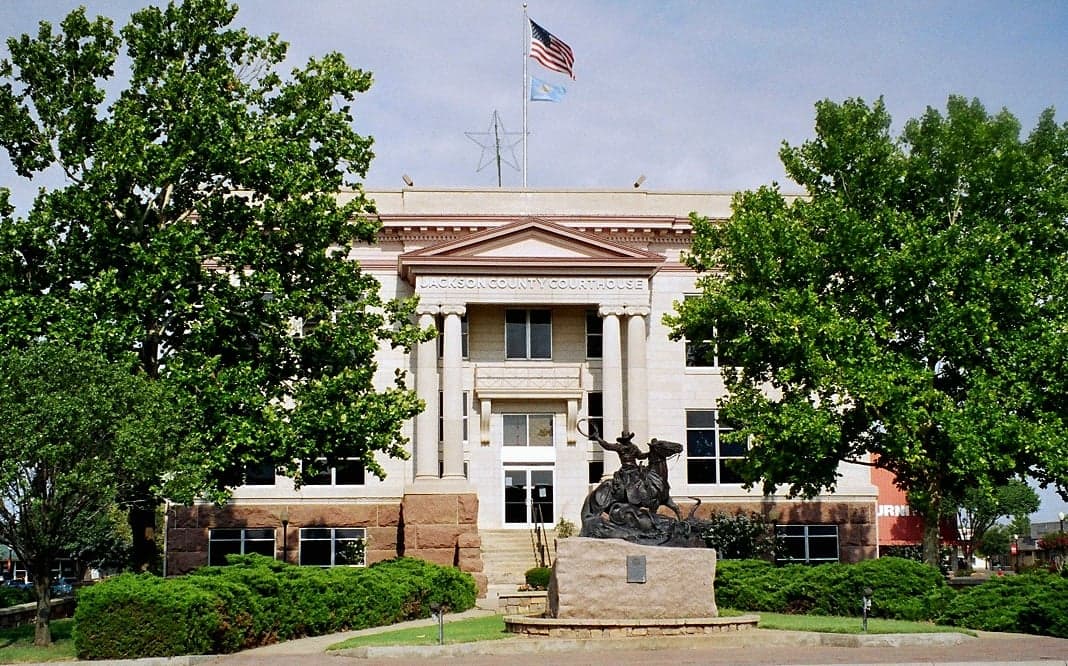
Photo: Wikipedia
Strategic Assessment of Altus, OK
Workable tactical position. Some exposure to population density or targets, but generally defensible in a crisis.
What does the Strategic Assessment tell us?
Our Strategic Assessment grades tactical survivability of an area. Major population centers, military targets, fallout zones, natural disasters, and border exposure all drive risk — lower exposure means a more defensible position in a crisis.
This is heavily inspired by Joel Skousen's Strategic Relocation book. Highly recommended you checkout the book ($)What does this tell us?
Our Strategic Assessment grades tactical survivability of an area. Major population centers, military targets, fallout zones, natural disasters, and border exposure all drive risk — lower exposure means a more defensible position in a crisis.
This is heavily inspired by Joel Skousen's Strategic Relocation book. Highly recommended you checkout the book ($)Strategic Pillars

Key Distances
Regional Safe Places
Below is our recommended "safe zones" in Oklahoma and the surrounding area based on our strategic heuristics. For most people, it's unrealistic to live in a “safe zone” full-time due to work, family or other personal reasons. They tend to be more rural. However, many of these areas are perfect for second homes and retreat properties that double as a vacation home or even a short-term rental.
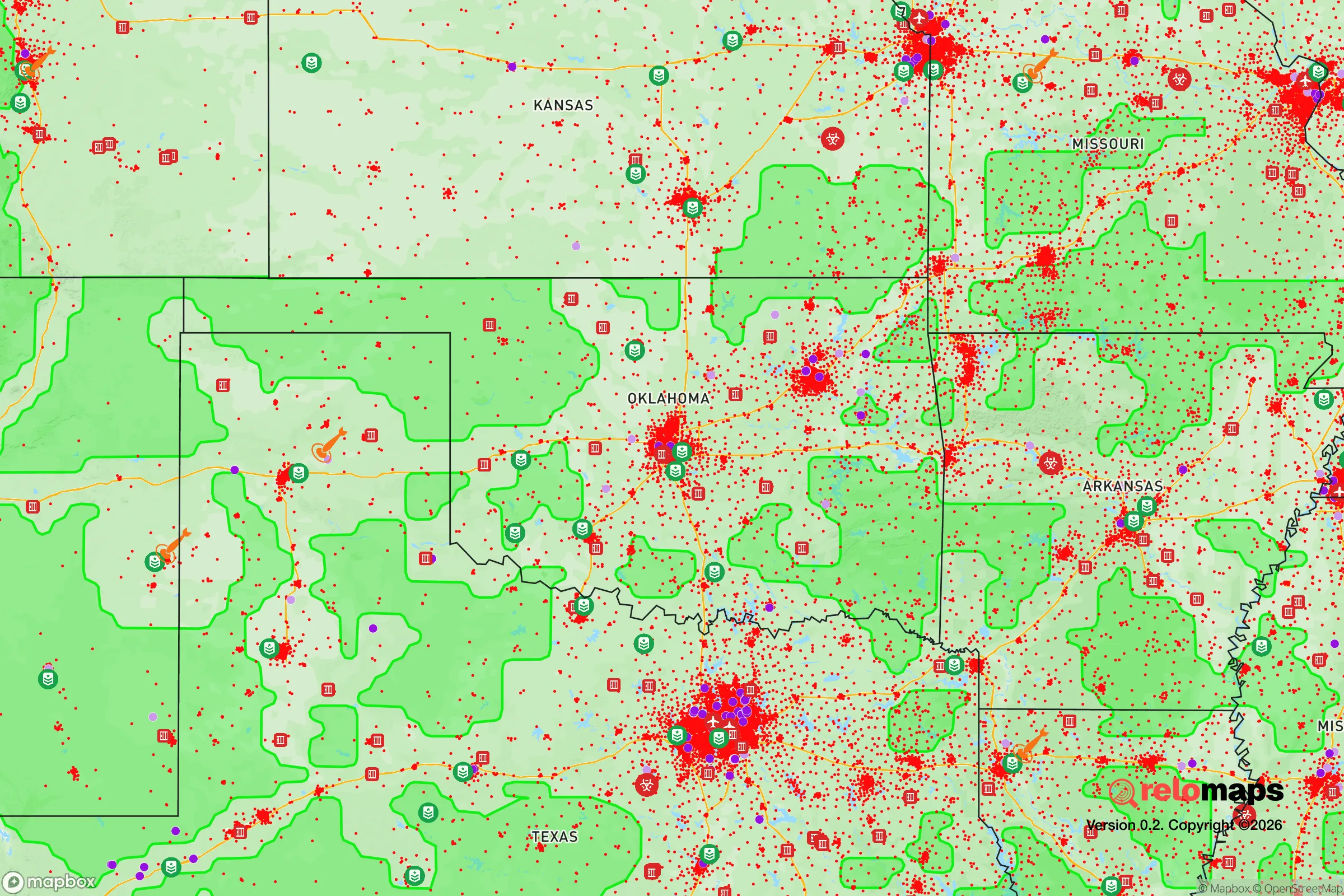
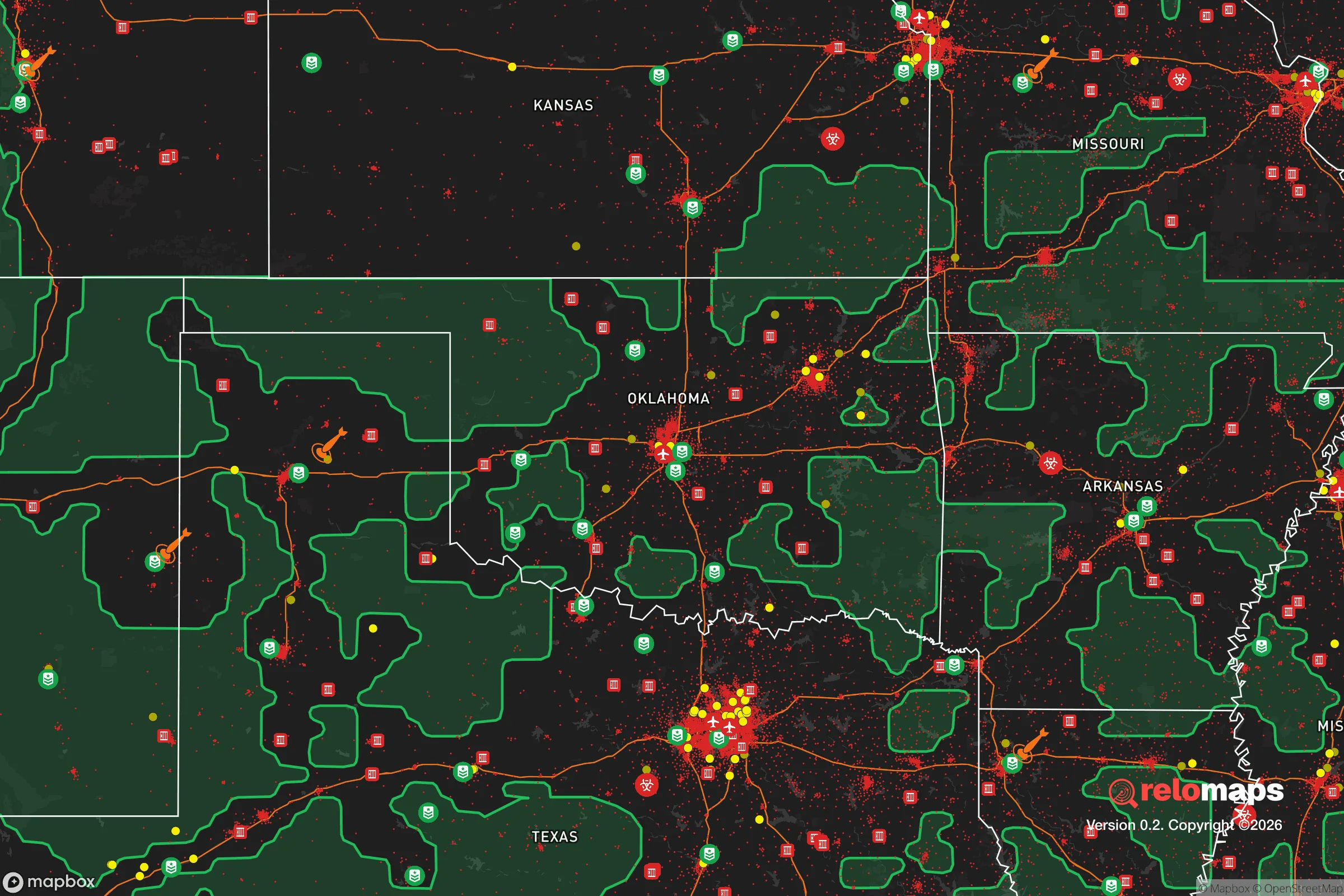


Important Note: For informational purposes only. This does not mean nothing bad ever happens in the green zones. Please use common sense. This is based on public data and modeled with AI. We tried to take a conservative approach but mistakes happen. We update this regularly as new information becomes available.
Solar Generator Recommendations
Backup power matters more here than in safer locations. We've picked three solar generators across budgets and capacity tiers — start with the budget unit if you only need a few essentials, or step up if you want to run a fridge and HVAC for days at a time.

Jackery Portable Power Station Explorer 300
Budget OptionPower on the Go: Weighing only 11 lbs, it's convenient to set up and store with book-sized foldable solar panels

BLUETTI Portable Power Station AC180
Designed for both indoor and outdoor scenarios, AC180 is highly capable as it has a robost capacity and continuous output power.

EF ECOFLOW DELTA Pro Ultra Power Station
Upgraded PickEcoFlow DELTA Pro Ultra is a whole-home energy system designed to grow with your family. Integrated with the Smart Home Panel 2, it scales to meet your evolving energy needs — keeping your home powered, intelligent, and secure through every stage of life.
We earn a commission, at no additional cost to you.
Strategic Assessment Analysis
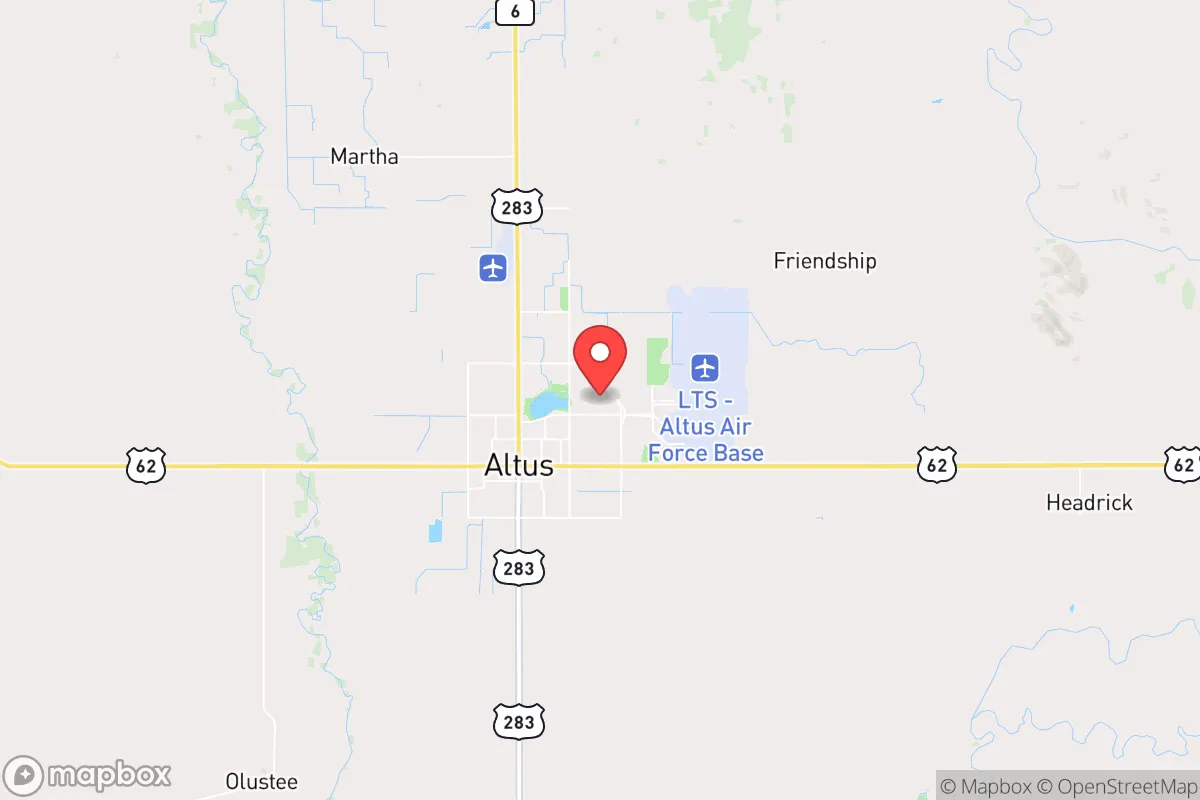
Altus, Oklahoma, sits in a part of the country that most people overlook, and that’s precisely its strategic value. It’s not a flashy place, but it offers a combination of geographic isolation, agricultural self-sufficiency, and a low-key population that makes it a serious candidate for anyone thinking about long-term resilience. The town’s position in the southwestern corner of the state, roughly 150 miles from both Oklahoma City and the Dallas-Fort Worth metroplex, puts it far enough from major population centers to avoid the worst of any cascading collapse, yet close enough to access resources if things stabilize. For a relocator with a prepper mindset, Altus represents a quiet, defensible base of operations in a region that doesn’t make headlines—and that’s exactly the point.
Geographic position and natural advantages for long-term survival
Altus sits on the edge of the High Plains, a region defined by flat, open terrain and a semi-arid climate. The immediate advantage here is space and visibility. You can see threats coming from miles away, whether that’s a weather event or something more human-caused. The area is part of the Red River watershed, with the North Fork of the Red River running nearby, providing a surface water source that’s not heavily contested. The Ogallala Aquifer lies beneath much of this region, and while it’s being drawn down for agriculture, it still offers a deep groundwater reserve that a prepared individual could tap with a well. The local economy is heavily agricultural—wheat, cotton, cattle—which means food production is literally happening in the backyards of the community. In a grid-down scenario, Altus residents would have a much easier time bartering for or procuring staples than someone in a dense suburb. The terrain is also favorable for solar and wind energy; the area averages over 260 sunny days per year, and the constant wind makes small-scale turbine setups viable. For a relocator, this means you can generate your own power without relying on a fragile grid.
Risks, exposures, and proximity to fallout-relevant landmarks
No location is perfect, and Altus has its share of strategic liabilities. The most obvious is Altus Air Force Base, which sits just east of town. This is a major training hub for the C-17 and KC-135, meaning it’s a high-value military target in any peer-level conflict. If things go hot, the base could draw a kinetic or cyber attack, and the fallout—both literal and figurative—could affect the town. That said, the base is not a nuclear weapons storage site, so the risk of a catastrophic detonation is lower than at, say, Minot or Whiteman. The more pressing concern is proximity to the Dallas-Fort Worth metroplex, about 150 miles southeast. In a major societal disruption, that population center (over 7 million people) would become a massive source of refugees, disease, and resource competition. Altus is far enough that most people won’t walk here, but close enough that a vehicle-based exodus could reach the area within a day or two. The same logic applies to Oklahoma City. The town itself is also in Tornado Alley, and while the risk is real, the flat terrain means you can see storms coming and have time to take shelter. The bigger natural risk is drought and extreme heat, which could stress water supplies and agriculture in a prolonged collapse scenario.
Practical resilience for a relocator: food, water, energy, and defensibility
For someone serious about self-sufficiency, Altus offers a surprisingly workable foundation. Water is the first concern, and the area’s groundwater is accessible with a well drilled to 100-300 feet. The North Fork of the Red River is a backup, but it’s seasonal and can run low in drought years. Rainwater catchment is viable, with an average of 24 inches of precipitation annually—not great, but enough for a household with storage. Food production is the real strength. The surrounding farmland grows wheat, corn, and sorghum, and there are local livestock operations. A relocator with a few acres could raise chickens, goats, or even a small herd of cattle. The growing season is about 200 days, long enough for a serious garden. Energy independence is achievable with solar panels and a battery bank; the grid here is rural and prone to outages in storms, so off-grid capability is a practical necessity, not a luxury. Defensibility is mixed. The open terrain makes it hard to hide, but it also makes it hard for anyone to approach unseen. The town itself is small (population around 18,000), and the surrounding county (Jackson) has a low population density. In a crisis, a small, tight-knit community like this can organize for mutual defense more effectively than a sprawling suburb. The local gun culture is strong, and the sheriff’s office is responsive, but in a total breakdown, you’d be relying on your own network. The biggest practical downside is medical access. The local hospital, Jackson County Memorial, is a small facility. For anything serious, you’re looking at a 90-minute drive to Lawton or a 2.5-hour drive to Oklahoma City. In a collapse, that’s a critical vulnerability.
The overall strategic picture for a conservative relocator
Altus is not a bug-out location for the weekend warrior. It’s a place to build a life that’s already resilient, not one you have to flee to. The conservative values here are baked into the culture—self-reliance, community, and a general distrust of federal overreach. You won’t find the political tensions of a coastal city; people here are more concerned with the price of diesel and the next wheat harvest than with national culture wars. That’s a strategic asset in itself: a population that’s not easily panicked and that knows how to work with its hands. The biggest strategic question is whether the Air Force base is a net positive or negative. In a conventional war, it’s a target. But in a long-term societal unraveling, the base also brings infrastructure—a runway, fuel storage, and a population of trained personnel who might be assets in a community defense scenario. The bottom line: Altus offers a low-profile, high-resilience option for someone who wants to be prepared without living in a bunker. It’s not perfect, but it’s a solid base camp for the kind of future that looks increasingly uncertain. If you’re looking for a place where you can grow your own food, drill your own water, and keep your head down while the world sorts itself out, this corner of Oklahoma deserves a serious look.

* Values derived from national, state, county, city and local statistics and may differ in a specific area. Last updated: 2026-04-21T11:45:43.000Z
Narrative content on this page is AI-generated and may contain mistakes. Verify any details that matter before acting on them.
ReloMaps may earn a commission from affiliate links at no extra cost to you.

