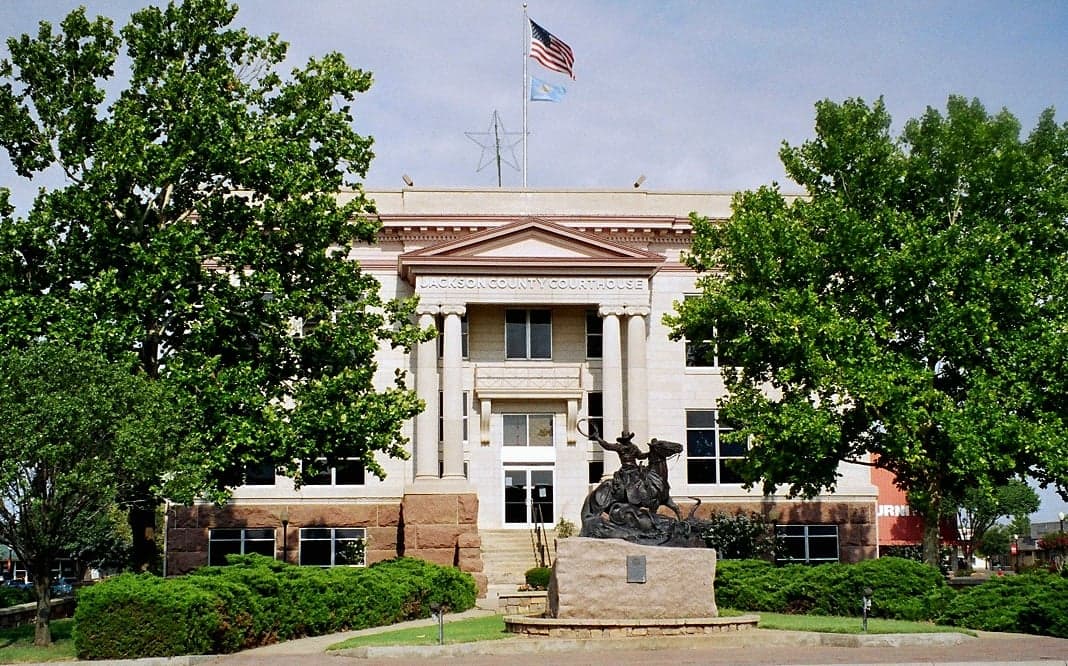
Photo: Wikipedia
Political ClimatePolitical Climate in Altus, OK
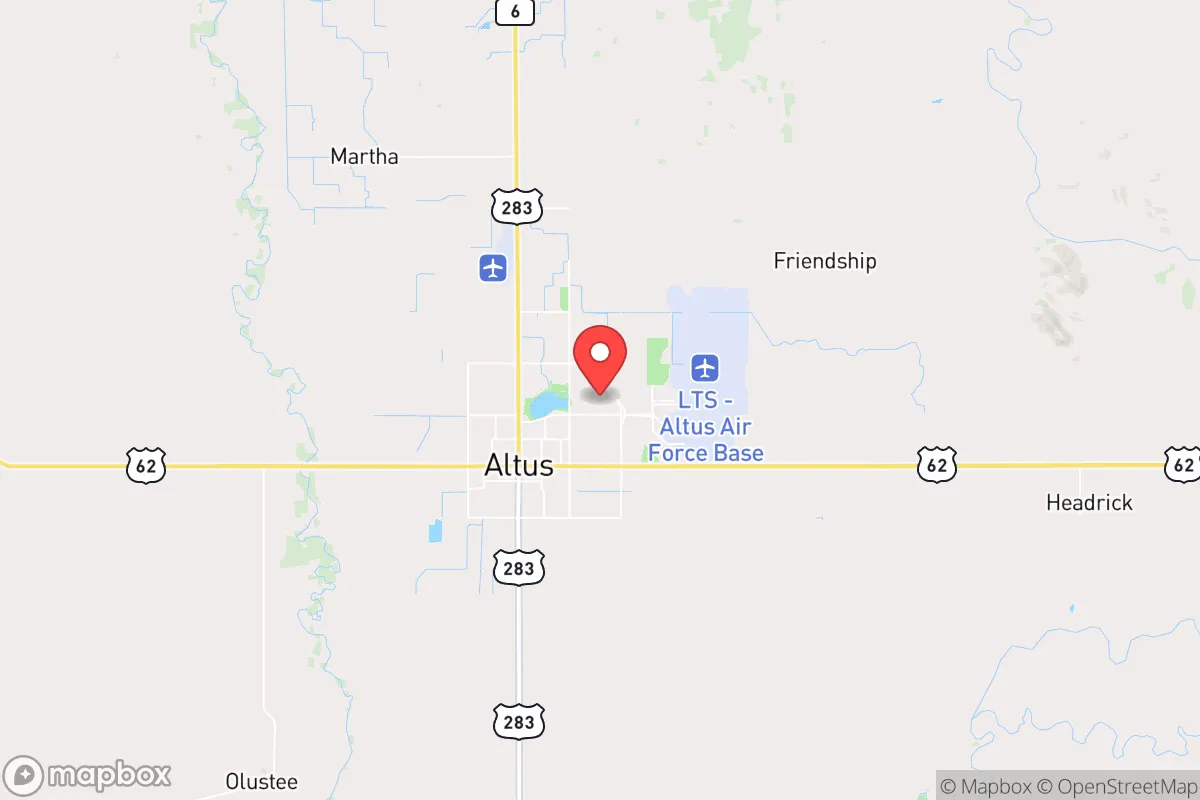
District shown is the primary district for this city’s centroid. Cities may span multiple districts.
Local Political AnalysisPolitical Analysis of Altus, OK
Altus, Oklahoma, sits deep in the heart of a solidly conservative region, and that’s not changing anytime soon. The Cook Partisan Voting Index (PVI) for the area is a robust R+23, meaning the district votes about 23 points more Republican than the national average. If you’ve lived here a while, you know that’s not just a number—it’s the way of life. People here value personal responsibility, limited government, and the freedom to live without a bunch of red tape or outside interference. The political trajectory has been steady for decades, and if anything, it’s gotten a little more settled as folks from more liberal parts of the state or country drift in and quickly realize this isn’t the place for big-government ideas.
How it compares
Altus sits in Jackson County, and the contrast with some nearby towns is worth noting. Drive an hour east to Lawton, and you’ll find a more mixed political scene—Lawton’s got a larger military and minority population, and it leans a bit more purple, especially in local races. Head north to Elk City or west to Vernon, Texas, and you’re back in deep-red territory, but Altus is the anchor of that conservative corridor. The R+23 rating puts it in the same league as places like Enid or Woodward, but Altus feels a little more insulated from the progressive drift you see in bigger Oklahoma cities like Oklahoma City or Tulsa. Those places have their pockets of liberal thought, but here in Altus, the local elections, school board races, and county commissions are almost always decided by candidates who run on traditional values and limited government. It’s a place where the Second Amendment isn’t debated—it’s assumed.
What this means for residents
For someone moving here, the political climate means you’re not going to see a lot of government overreach in your daily life. Property taxes are low, zoning is minimal, and there’s no push for the kind of progressive social policies that have crept into other parts of the country. The local government tends to stay out of the way—no mask mandates that last for years, no heavy-handed business closures, and no talk of defunding the police. If you’re the kind of person who gets nervous when the government starts telling you what to do, Altus is a breath of fresh air. The downside? If you’re hoping for a lot of public transit, bike lanes, or government-funded programs, you’ll be disappointed. The community expects you to pull your own weight, and that’s how most folks like it. The long-term trend looks stable—young families and retirees moving here are often looking for exactly this kind of freedom, so the conservative tilt should hold for the foreseeable future.
Culturally, Altus stands out for its strong sense of community and self-reliance. There’s a local rodeo, a strong agricultural base, and a military presence from Altus Air Force Base that reinforces a disciplined, patriotic mindset. You won’t find a lot of political protests or activist groups here—people are more focused on church, family, and work. The biggest policy distinction is probably the lack of any serious push for progressive tax hikes or social engineering. The city council and county commissioners keep things simple: keep taxes low, keep regulations light, and let people live their lives. If you’re looking for a place where the government doesn’t feel like it’s breathing down your neck, Altus is about as good as it gets in Oklahoma.

State Political ClimatePolitical Climate in Oklahoma
State Political AnalysisPolitical Environment in the State
Oklahoma has been a reliably red state for decades, but the political landscape is more layered than a simple party label suggests. The state leans heavily Republican, with every statewide office held by the GOP and a 65% Trump vote in 2020, but the coalition is a mix of rural conservatives, suburban moderates, and a growing libertarian streak. Over the last 10-20 years, Oklahoma has shifted from a purple-ish state (voting for Clinton in 1996) to a deep red one, driven by the exodus of rural Democrats and the consolidation of evangelical and oil-and-gas interests. However, recent in-migration from blue states and a rising youth population in Oklahoma City and Tulsa are beginning to introduce subtle cracks in that monolith.
Urban vs. rural divide
The political map of Oklahoma is a classic tale of two worlds. The rural expanse—counties like Texas, Cimarron, and Beaver in the Panhandle, plus the southeastern timber country—votes overwhelmingly Republican, often by 80% or more. These areas are the backbone of the state’s conservative identity, driven by agriculture, energy, and a deep distrust of federal authority. In contrast, the two major metros, Oklahoma City and Tulsa, are more politically diverse. Oklahoma County (OKC) has been trending purple, with Democratic candidates winning the county in recent gubernatorial races, though it still leans red overall. Tulsa County is more reliably Republican but has pockets of blue in the city core, especially around the University of Tulsa and the arts districts. The suburbs—Edmond, Norman, Broken Arrow, and Jenks—are solidly red but with a more moderate, business-friendly flavor than the rural areas. The real outlier is Stillwater, home to Oklahoma State University, which leans conservative but with a younger, more transient population that occasionally votes for Democratic candidates in local races.
Policy environment
Oklahoma’s policy environment is a laboratory for conservative governance, with a strong emphasis on low taxes, limited regulation, and cultural conservatism. The state has a flat income tax of 4.75% (down from 5% in 2022) and no estate tax, making it attractive for high-earners and retirees. Property taxes are among the lowest in the nation, averaging about 0.9% of home value. The regulatory posture is business-friendly, with right-to-work laws and minimal environmental restrictions on oil and gas extraction. Education policy is a flashpoint: the state has a robust school choice program, including a refundable tax credit for private school tuition, but public school funding per pupil remains near the bottom nationally. Healthcare is a mixed bag—Oklahoma expanded Medicaid in 2021 via a ballot initiative, which was a rare progressive win, but the state still has some of the highest uninsured rates. Election laws are strict: voter ID is required, early voting is limited to three days, and absentee ballots require a notary or two witnesses. The state legislature has also passed laws banning ranked-choice voting and limiting ballot initiatives, a direct response to the Medicaid expansion and medical marijuana legalization that bypassed the GOP-controlled legislature.
Trajectory & freedom
Oklahoma is on a trajectory of expanding personal freedom in several key areas, but with some concerning caveats. On gun rights, the state is a standout: permitless carry was signed into law in 2019, and there are no restrictions on magazine capacity or assault weapons. The Second Amendment is treated as a near-absolute right. Parental rights have been strengthened with the 2022 "Parents’ Bill of Rights," which requires schools to notify parents of any changes to a child’s health or well-being and prohibits instruction on sexual orientation or gender identity in K-5. Medical autonomy took a hit with the 2024 near-total abortion ban, which has no exceptions for rape or incest—a move that many libertarians see as government overreach into personal medical decisions. Property rights are strong, with no statewide zoning laws in most rural areas, but the state has aggressively used eminent domain for oil and gas pipelines. Taxation has been trending downward, with the legislature passing incremental income tax cuts each year, but the state’s reliance on oil and gas revenue makes it vulnerable to boom-and-bust cycles. The biggest red flag for freedom advocates is the state’s growing use of "emergency powers" to bypass the legislature, a trend that accelerated during COVID and has not fully receded.
Civil unrest & political movements
Oklahoma has a history of political movements that range from the radical to the mainstream. The state was a hotbed of the Tea Party in the early 2010s, and that energy has evolved into a strong libertarian and constitutionalist presence. The "Oklahoma Freedom Caucus" in the state legislature is a vocal force, pushing for further tax cuts, school choice, and restrictions on federal overreach. On the left, protests have been smaller but persistent, particularly around racial justice in Tulsa (the 1921 Tulsa Race Massacre site) and reproductive rights in Oklahoma City. The 2022 abortion ban sparked a series of protests at the state capitol, but they were largely peaceful and did not disrupt daily life. Immigration politics are less heated than in border states, but there is a growing concern about illegal immigration in the Panhandle and along I-35, with some counties passing symbolic "sanctuary for the unborn" ordinances that also target undocumented immigrants. Election integrity is a live issue: the 2020 election saw no major fraud in Oklahoma, but the legislature passed a law requiring all ballots to be hand-counted in future elections, a move that has drawn both praise and criticism. The most visible flashpoint for a new resident would be the constant presence of political signage—"Let’s Go Brandon" flags, pro-life billboards, and "Don’t Tread on Me" decals are common in rural areas and suburbs alike.
Projection
Over the next 5-10 years, Oklahoma is likely to remain solidly red, but the margins will narrow in urban areas. In-migration from California and Texas is bringing a mix of conservatives fleeing high taxes and liberals seeking lower cost of living, which will create a more politically diverse electorate in Oklahoma City and Tulsa. The suburbs—Edmond, Norman, Broken Arrow—will remain Republican but may shift toward a more moderate, pro-business conservatism that prioritizes economic growth over cultural battles. Rural areas will stay deep red, but population decline could reduce their political clout. The biggest wildcard is the state’s education system: if school choice continues to expand, it could attract more families from blue states, but if public schools continue to underperform, it could drive out younger families. On the freedom front, expect more tax cuts and deregulation, but also more battles over medical autonomy and emergency powers. The state’s reliance on oil and gas revenue means that any shift toward green energy could destabilize the budget, potentially forcing a tax increase that would be politically toxic.
For a new resident, the bottom line is this: Oklahoma offers a high degree of personal freedom in many areas—low taxes, strong gun rights, and minimal government interference in daily life—but it comes with trade-offs. The education system is underfunded, healthcare access is limited in rural areas, and the state’s political culture can feel insular and resistant to change. If you value low regulation, a conservative social environment, and a cost of living that lets you keep more of what you earn, Oklahoma is a solid bet. Just be prepared for a state that is fiercely independent, sometimes to a fault, and where the politics are as much about culture as they are about policy.
* Values derived from national, state, county, city and local statistics and may differ in a specific area. Last updated: 2026-04-21T11:45:43.000Z
Narrative content on this page is AI-generated and may contain mistakes. Verify any details that matter before acting on them.
ReloMaps may earn a commission from affiliate links at no extra cost to you.

