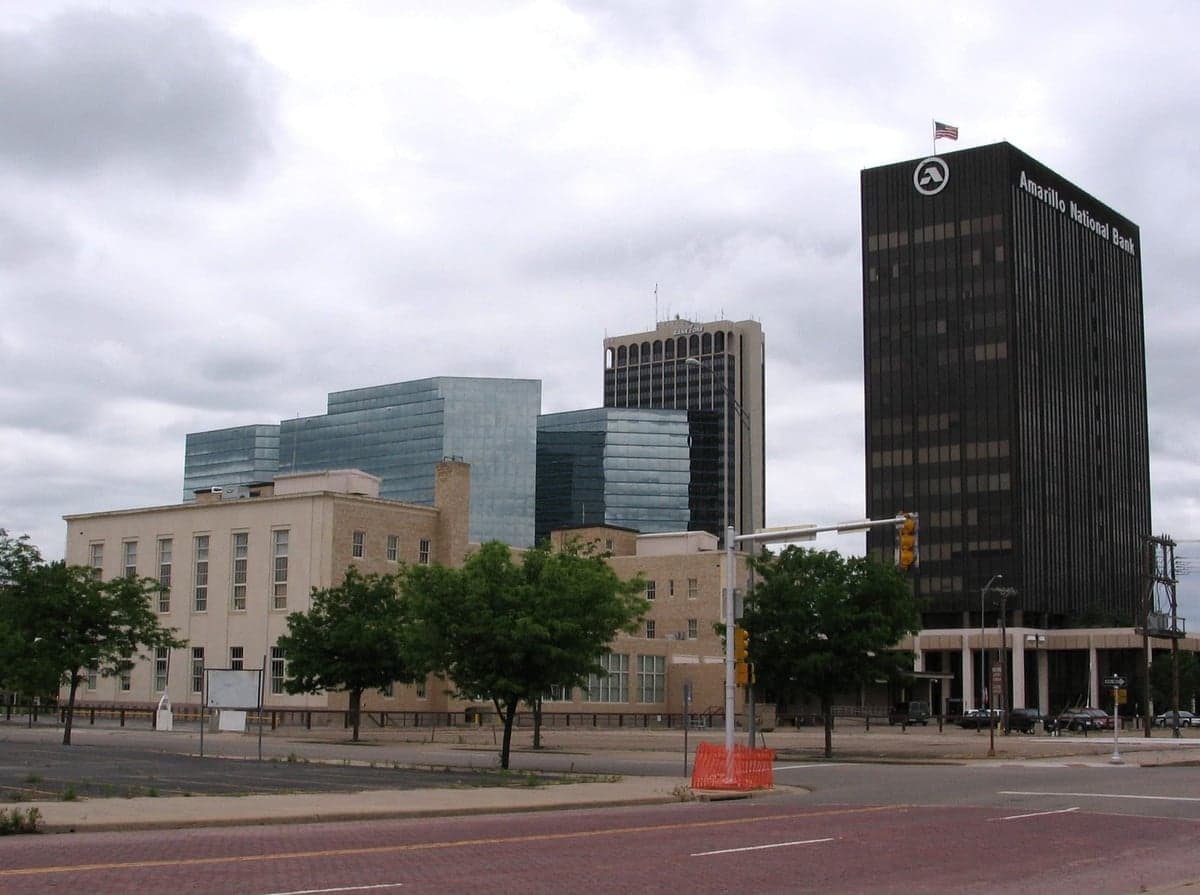
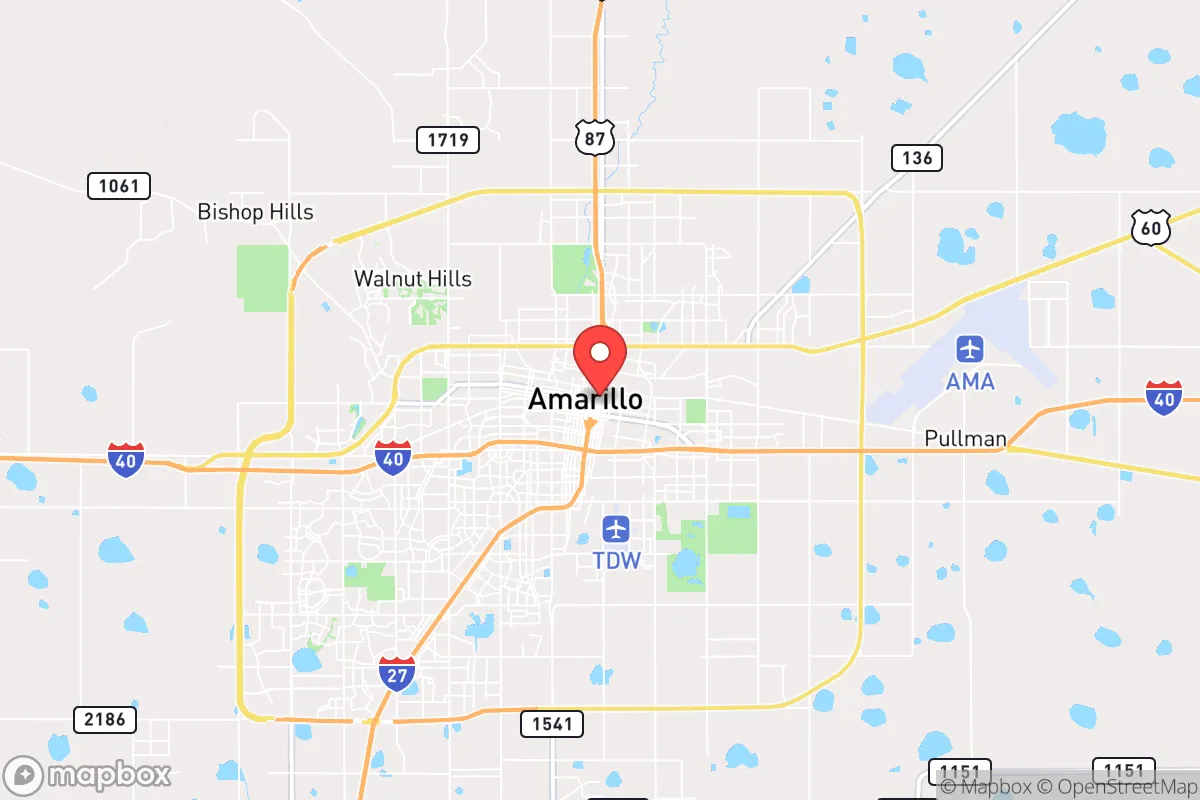
Photo: Wikipedia
Strategic Assessment of Amarillo, TX
Workable tactical position. Some exposure to population density or targets, but generally defensible in a crisis.
What does the Strategic Assessment tell us?
Our Strategic Assessment grades tactical survivability of an area. Major population centers, military targets, fallout zones, natural disasters, and border exposure all drive risk — lower exposure means a more defensible position in a crisis.
This is heavily inspired by Joel Skousen's Strategic Relocation book. Highly recommended you checkout the book ($)What does this tell us?
Our Strategic Assessment grades tactical survivability of an area. Major population centers, military targets, fallout zones, natural disasters, and border exposure all drive risk — lower exposure means a more defensible position in a crisis.
This is heavily inspired by Joel Skousen's Strategic Relocation book. Highly recommended you checkout the book ($)Strategic Pillars

Key Distances
Regional Safe Places
Below is our recommended "safe zones" in Texas and the surrounding area based on our strategic heuristics. For most people, it's unrealistic to live in a “safe zone” full-time due to work, family or other personal reasons. They tend to be more rural. However, many of these areas are perfect for second homes and retreat properties that double as a vacation home or even a short-term rental.

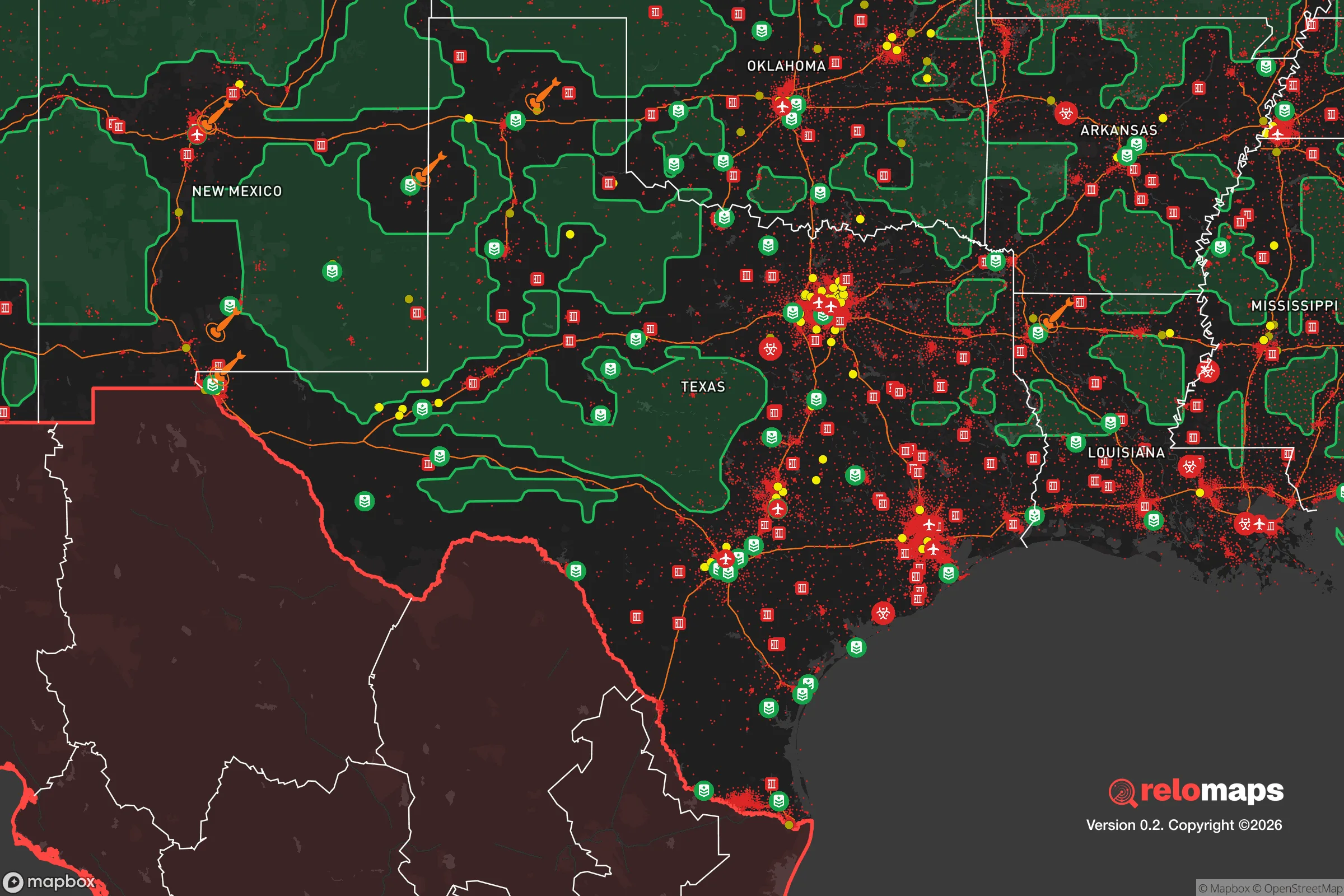


Important Note: For informational purposes only. This does not mean nothing bad ever happens in the green zones. Please use common sense. This is based on public data and modeled with AI. We tried to take a conservative approach but mistakes happen. We update this regularly as new information becomes available.
Solar Generator Recommendations
Backup power matters more here than in safer locations. We've picked three solar generators across budgets and capacity tiers — start with the budget unit if you only need a few essentials, or step up if you want to run a fridge and HVAC for days at a time.

Jackery Portable Power Station Explorer 300
Budget OptionPower on the Go: Weighing only 11 lbs, it's convenient to set up and store with book-sized foldable solar panels

BLUETTI Portable Power Station AC180
Designed for both indoor and outdoor scenarios, AC180 is highly capable as it has a robost capacity and continuous output power.

EF ECOFLOW DELTA Pro Ultra Power Station
Upgraded PickEcoFlow DELTA Pro Ultra is a whole-home energy system designed to grow with your family. Integrated with the Smart Home Panel 2, it scales to meet your evolving energy needs — keeping your home powered, intelligent, and secure through every stage of life.
We earn a commission, at no additional cost to you.
Strategic Assessment Analysis
Amarillo sits at a strategic crossroads in the Texas Panhandle, offering a resilience profile that stands apart from most other relocation options in the lower 48. Its location—roughly 350 miles from Dallas, 280 miles from Denver, and 100 miles from the New Mexico border—places it far from the coastal population centers, major fault lines, and the worst of hurricane alley. For someone thinking in terms of long-term preparedness, Amarillo’s isolation is its primary asset: it is not a primary target for any likely adversary, and its distance from the chaos of megacities gives a relocator a genuine buffer against cascading social and economic collapse. The city’s economy has historically been anchored by agriculture, energy, and transportation, which means the local workforce is accustomed to hard, practical labor rather than service-sector fragility. That cultural baseline matters when you are assessing whether a community can hold together under stress.
Geographic position and natural advantages for long-term survival
Amarillo occupies the southern edge of the High Plains, an area defined by flat, open terrain, low population density, and a semi-arid climate that discourages the kind of humidity-driven mold and pest problems found in the Southeast. The elevation sits at roughly 3,600 feet, which provides a moderate altitude advantage for communications and line-of-sight observation, though not so high as to create severe winter survival challenges. The region receives about 20 inches of precipitation annually, mostly in spring and summer, which is enough to support dryland farming and ranching but not so much that flooding becomes a recurring threat. The Ogallala Aquifer lies beneath much of the Panhandle, and while it is a finite resource, it remains one of the most significant groundwater reserves in the country. For a relocator thinking about water security, that is a major plus—surface water is limited, but the aquifer provides a buffer that many other inland areas lack. The prevailing winds are strong and consistent, making small-scale wind generation a viable option for off-grid power, and the abundant sunshine supports solar as well. The flat terrain also means that a property with a well and a few acres can be surprisingly defensible, with clear sightlines in all directions.
Risks, exposures, and proximity to fallout-relevant landmarks
No location is without risk, and Amarillo has its share. The most obvious concern is the Pantex Plant, the nation’s primary nuclear weapons assembly and disassembly facility, located about 17 miles northeast of downtown Amarillo. Pantex is a high-value strategic asset, and in a major conflict or terrorist scenario, it would be a plausible target. That said, the facility is hardened, heavily guarded, and sits in a relatively remote area. The risk of a catastrophic detonation is extremely low—the weapons are not stored fully assembled—but the symbolic and strategic value of the site cannot be ignored. A relocator should be aware that living within 30 miles of Pantex means being in a potential fallout zone if the facility were ever compromised. The other major exposure is the proximity to Interstate 40 and the BNSF Railway mainline, both of which run through Amarillo. These are critical transportation corridors that could become chokepoints or targets during civil unrest or supply chain disruptions. The city itself has a population of about 200,000, which is large enough to have infrastructure and services but small enough that a complete breakdown of civil order would be manageable compared to Houston or Dallas. The biggest natural risk is wildfire, particularly in the grasslands to the west and south, and the occasional severe thunderstorm with hail and straight-line winds. Tornadoes are a known hazard, but the Panhandle is less active than the traditional Tornado Alley further east.
Practical resilience for a relocator: food, water, energy, and defensibility
For someone serious about self-sufficiency, Amarillo offers a mix of advantages and trade-offs. Food production is viable: the growing season is short (about 180 days), but the soil is fertile for grains, beans, and root vegetables, and the region is one of the top cattle-feeding areas in the country. A relocator with a few acres can raise chickens, goats, or a small herd of beef cattle without much trouble. The local food culture is already oriented toward meat and potatoes, which means that even in a crisis, the remaining supply chains will prioritize staples over perishable luxuries. Water is the critical variable. The Ogallala Aquifer is being drawn down faster than it recharges, but for a single household or a small community, a properly drilled well can provide decades of supply. Municipal water in Amarillo comes from Lake Meredith and the Canadian River, both of which are subject to drought and allocation disputes. A relocator should plan on having their own well and storage capacity. Energy is straightforward: natural gas is abundant and cheap, and the electrical grid in the Panhandle is more stable than the ERCOT system further south, though it is still vulnerable to winter storms. Solar and wind are practical for backup, but the grid itself is reasonably reliable. Defensibility is where Amarillo shines. The open terrain means that any approach to a rural property is visible from a distance. The local population is heavily armed and culturally inclined toward self-reliance, which means that in a breakdown scenario, you are more likely to find neighbors who will band together than neighbors who will loot. The city itself has a strong law enforcement presence and a relatively low crime rate compared to other Texas cities of similar size, but the real value is in the surrounding rural areas where a relocator can establish a buffer of distance and privacy.
The overall strategic picture for Amarillo is one of cautious optimism for the prepared relocator. It is not a perfect hideout—the Pantex risk is real, and the water situation requires active management—but it offers a combination of isolation, natural resources, and cultural alignment that is hard to find elsewhere. The city’s economy is diversified enough to survive a downturn, and its population is small enough that social cohesion is still possible. For someone looking to get out of the coastal chaos, away from the megacities, and into a place where the neighbors are more likely to help than to harm, Amarillo deserves serious consideration. The key is to arrive with a plan: secure a property with water access, establish a food production system, and build relationships with the local community before you need them. If you do that, this part of the Texas Panhandle can serve as a solid base for weathering whatever comes next.

* Values derived from national, state, county, city and local statistics and may differ in a specific area. Last updated: 2026-04-19T07:24:17.000Z
Narrative content on this page is AI-generated and may contain mistakes. Verify any details that matter before acting on them.
ReloMaps may earn a commission from affiliate links at no extra cost to you.

