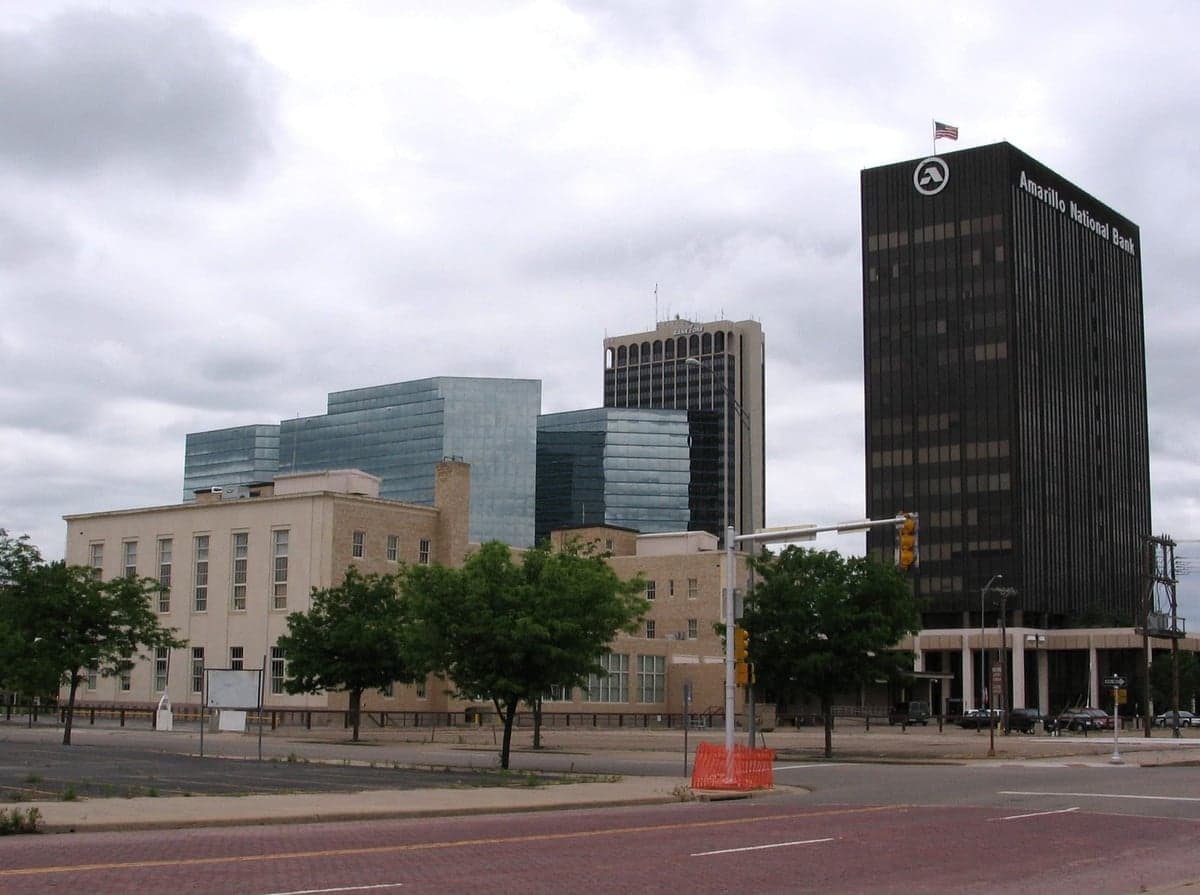
Photo: Wikipedia
Political ClimatePolitical Climate in Amarillo, TX
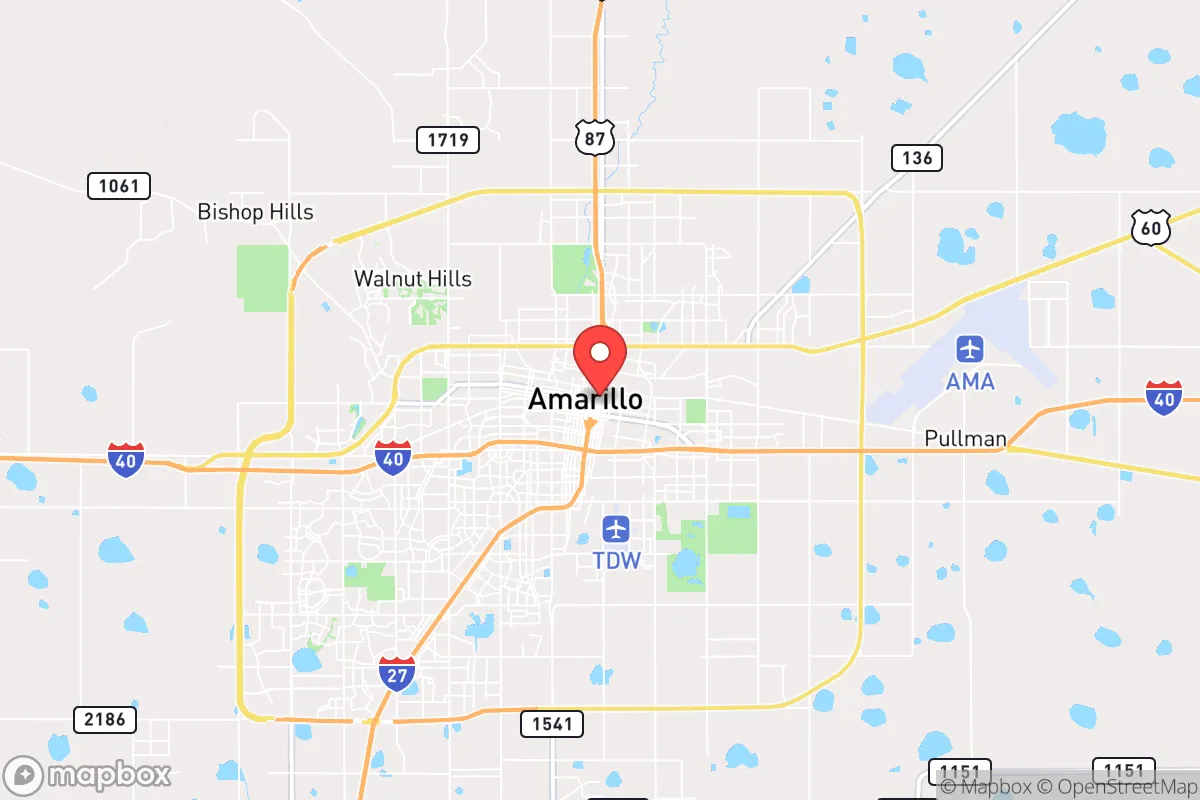
District shown is the primary district for this city’s centroid. Cities may span multiple districts.
Local Political AnalysisPolitical Analysis of Amarillo, TX
Amarillo is about as solidly conservative as a city gets in Texas, and that’s not changing anytime soon. The Cook PVI sits at R+24, meaning the district votes 24 points more Republican than the national average, and in 2024, Potter and Randall counties both went red by comfortable margins. But if you’ve lived here a while, you’ve seen the political landscape shift under the surface—not in who wins elections, but in how the local culture and policy debates are playing out. The old Amarillo was a place where folks minded their own business and the government stayed out of the way. Today, there’s a growing tension between that live-and-let-live conservative tradition and a newer, more activist brand of politics that wants to regulate everything from school libraries to backyard chickens.
How it compares
Drive an hour south to Lubbock, and you’ll find a similar conservative vibe, but with a stronger libertarian streak—fewer zoning fights, less fuss over property rights. Head west to the smaller towns like Dumas or Borger, and the politics are even more hands-off, with local governments that barely have the staff to enforce much of anything. The real contrast is east, toward Oklahoma City or even just to the Panhandle’s own rural counties. In places like Hereford or Pampa, the political culture is older-school: folks vote Republican but don’t spend much time worrying about what their neighbors are doing. Amarillo, by comparison, has seen a push from some city council members and school board candidates who want to bring in progressive policies—things like diversity initiatives in schools or tighter environmental rules on businesses. That’s a red flag for anyone who values personal freedom. When government starts dictating what you can teach your kids or how you can use your land, it’s a slippery slope, and Amarillo’s current trajectory has some of us watching closely.
What this means for residents
For the average Amarilloan, the political climate means you still have a lot of freedom to live your life without heavy-handed government interference—for now. Property taxes are a perennial headache, but the state’s lack of an income tax and relatively light business regulations keep the economy humming. The city’s leadership has mostly resisted the kind of zoning overreach you see in places like Austin or Dallas, so if you want to run a small shop out of your garage or keep a few goats on a residential lot, you can usually find a way. But the warning signs are there: a few years back, the city council debated a “safe outdoor lighting” ordinance that would have told homeowners what kind of bulbs they could use. It didn’t pass, but the fact it was even proposed shows how quickly government can creep into your personal space. The school board has also seen heated fights over library books and curriculum, with some parents worried that progressive ideas are being pushed on their kids without their consent. If you value local control and minimal government, Amarillo is still a good bet, but you need to stay engaged—because the folks pushing for more regulation are organized and persistent.
Culturally, Amarillo remains a place where the Second Amendment is respected, churches are full on Sunday, and the phrase “government overreach” gets people riled up at the dinner table. The city’s rodeo heritage and cattle industry keep it grounded in old-school Texas values. But there’s a growing divide between the long-time residents who remember when the biggest political fight was over a new highway interchange and the newer arrivals from blue states who bring different ideas about what a city should look like. The near-term outlook is stable—Amarillo will stay red for the foreseeable future—but the long-term trend depends on whether the conservative majority stays active in local elections. If they don’t, you could see the same kind of slow-motion shift that turned places like Fort Worth from conservative to purple over a couple of decades. For now, though, it’s still a place where you can live your life the way you see fit, as long as you keep an eye on the city council agenda.

State Political ClimatePolitical Climate in Texas
State Political AnalysisPolitical Environment in the State
Texas remains a solidly Republican state, but the margin has been tightening over the past decade. In 2024, Donald Trump won Texas by roughly 9 points, down from 11 points in 2020 and 16 points in 2012. The dominant coalition is still a mix of rural conservatives, suburban moderates, and business-minded fiscal conservatives, but explosive growth in the blue-leaning metros of Austin, Dallas, Houston, and San Antonio is slowly shifting the state’s center of gravity. If you’re moving here for lower taxes and less government, you need to understand that the political landscape is not uniform—and the fight over what Texas will look like in 2035 is already underway.
Urban vs. rural divide
The political map of Texas is a tale of two worlds. The vast rural and exurban areas—places like Lubbock, Amarillo, Tyler, and the Permian Basin—vote Republican by 30 to 50 points. These are the counties that keep the state red. Meanwhile, the major urban cores are deep blue: Austin (Travis County) votes Democratic by 40+ points, El Paso is reliably blue, and Houston (Harris County) flipped to Biden in 2020 and stayed Democratic in 2024. The real battleground is the suburban ring around these cities. Collin County (north of Dallas) and Fort Bend County (southwest of Houston) have shifted from +20 Republican to single-digit margins. Tarrant County (Fort Worth) flipped to Biden in 2020 and barely went for Trump in 2024. If you’re looking for a politically stable conservative area, you’re better off in the smaller cities or the exurbs—places like Katy, Frisco, or New Braunfels—where the culture is still distinctly Texan and the politics lean right.
Policy environment
Texas has no state income tax, which is the single biggest draw for conservatives looking to keep more of their own money. Property taxes are high (around 1.6-2.5% of assessed value) to compensate, but the state legislature has been slowly compressing rates and increasing the homestead exemption. The regulatory posture is light—no state-level OSHA, no state minimum wage above the federal $7.25, and a right-to-work law that keeps unions weak. On education, Texas has a robust school choice program through charter schools and a new Education Savings Account (ESA) program passed in 2023, though it’s capped and means-tested. Healthcare is a mixed bag: Texas did not expand Medicaid under Obamacare, which keeps costs lower for the state but leaves many rural hospitals struggling. Election laws tightened after 2020 with Senate Bill 1, which added ID requirements for mail-in ballots and limited drive-through voting. For a conservative, the policy environment is generally friendly—but you need to watch local city councils, especially in blue metros, where they’re passing their own minimum wage hikes and zoning restrictions.
Trajectory & freedom
On the freedom front, Texas has been a mixed bag over the last five years. On the positive side for conservatives: permitless carry (constitutional carry) became law in 2021, meaning you can carry a handgun without a license. The Heartbeat Act (SB 8) banned abortion after about six weeks in 2021, and the trigger law (HB 1280) effectively banned it entirely after Dobbs. Parental rights were strengthened with the 2023 law requiring school libraries to get parental consent for certain materials and banning “critical race theory” instruction. On the concerning side: the state government has grown significantly—the 2023 budget was over $300 billion, a 30% increase from 2019. Property taxes, while compressed, are still rising in dollar terms because home values have skyrocketed. There’s also been a push for more surveillance and data collection at the border, which some see as necessary and others as overreach. The biggest freedom concern for new residents is local overreach: cities like Austin and Dallas have passed their own plastic bag bans, tree ordinances, and short-term rental restrictions that can feel like a patchwork of nanny-state rules. If you want maximum personal liberty, you’re better off in an unincorporated county area or a small city that hasn’t gone full progressive.
Civil unrest & political movements
Texas has seen its share of political flashpoints. The 2020 Black Lives Matter protests in Austin and Houston were large and sometimes violent, leading to property damage and a lasting sense of insecurity in downtown areas. On the right, the “Trump Train” convoys and border militia movements have been active, especially in El Paso and the Rio Grande Valley. Immigration politics are front and center: Governor Abbott’s Operation Lone Star has bused migrants to northern cities, and the state has sued the Biden administration over border policies. There’s been serious talk of secession or nullification—the Texas Nationalist Movement has some grassroots support, though it’s not mainstream. Election integrity remains a hot-button issue: after 2020, there were widespread audits and calls for reform, leading to the passage of SB 1. A new resident will notice the political tension most in the suburbs—yard signs, bumper stickers, and heated Nextdoor debates are common. The vibe is not civil war, but it’s not polite disagreement either. It’s a state where politics is personal.
Projection
Over the next 5-10 years, Texas will continue to trend purple. The in-migration from California and the Northeast is bringing more Democratic-leaning voters, especially to the suburbs of Austin, Dallas, and Houston. The Hispanic vote, once reliably Democratic, is shifting right—Trump improved his margins in the Rio Grande Valley in 2024, and that trend could keep the state competitive. But the urban cores are growing faster than the rural areas, and if the Democratic Party ever figures out how to turn out its base in midterms, Texas could flip to a swing state by 2032. For a conservative moving here now, expect the state legislature to remain Republican-controlled through at least 2030 due to gerrymandering, but expect more fights over school choice, property taxes, and local control. The biggest wildcard is the border: if the federal government doesn’t secure it, Texas will continue to spend billions on its own enforcement, which could drive up state spending and taxes. The bottom line: Texas is still a great place for a conservative, but it’s not the lock it was 20 years ago.
For a new resident, the practical takeaway is this: choose your location carefully. If you want the full Texas experience—low taxes, gun rights, school choice, and a conservative culture—look at the exurbs or smaller cities like New Braunfels, Katy, or Frisco. Avoid the urban cores if you’re worried about progressive local policies. And keep an eye on the state budget—the freedom you’re moving for could be eroded by a government that grows faster than the economy. Texas is still freer than most states, but freedom requires vigilance.
* Values derived from national, state, county, city and local statistics and may differ in a specific area. Last updated: 2026-04-19T07:24:17.000Z
Narrative content on this page is AI-generated and may contain mistakes. Verify any details that matter before acting on them.
ReloMaps may earn a commission from affiliate links at no extra cost to you.

