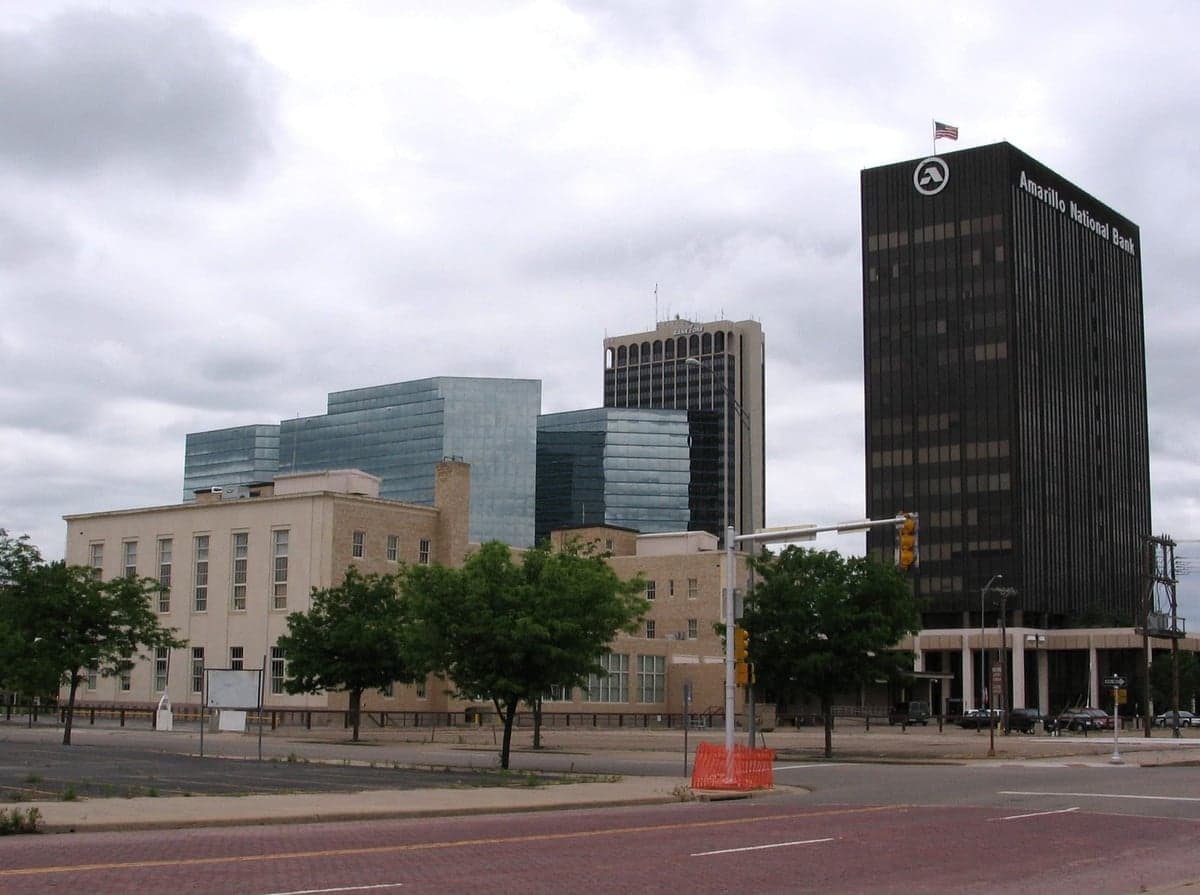
Photo: Wikipedia
Quality of Life in Amarillo, TX
Above-average quality of iife. The area offers a reasonable cost of living, decent mobility, and a mix of neighborhood amenities.
What does Quality of Life tell us?
Quality of Life blends cost of living, nearby amenities, socioeconomic signals, and neighborhood character. City-level scores represent the whole municipality; individual neighborhoods can differ.
What does this tell us?
Quality of Life blends cost of living, nearby amenities, socioeconomic signals, and neighborhood character. City-level scores represent the whole municipality; individual neighborhoods can differ.
Cost of Living
19% below national average
The Real Cost of Living in Amarillo, TX for 2026
| Tier | Individual | Family (4) |
|---|---|---|
| Survival | $17k | $31k |
| Comfortable | $36k | $53k |
| Luxury | $113k+ | $175k+ |
| Elite (Top 5%) | $143k+ | $222k+ |
117%
The Area Signal
A metric tracking the socioeconomic signals of the area.


Hobbies
Explore the areaGroceries
4 within 10 miles
Gas
0 within 10 miles
Hospital
3 within 20 miles
Airport
LAS — Las Vegas Municipal
Post Office
USPS — Amarillo, TX
Critical Amenities
Quality-of-Life Analysis
Amarillo offers a notably affordable quality of life that attracts a mix of working families, retirees, and professionals seeking a lower cost of living without sacrificing access to urban amenities. The city’s cost of living index sits at 81—19 points below the national average—making it one of the most budget-friendly metro areas in Texas. Residents tend to be pragmatic and community-oriented, with a strong presence of healthcare, energy, and agriculture workers, alongside a growing number of remote professionals drawn by the low housing costs and short commutes.
How affordable is Amarillo compared to Lubbock and other Texas cities?
Amarillo’s housing market is a standout for affordability. The median home value is $186,800, roughly half the Texas state median of around $340,000, and significantly lower than in Lubbock ($210,000) or Midland ($280,000). Median rent is $1,049 per month, well below the national average of $1,400. For context, a two-bedroom apartment in Amarillo typically rents for $900–$1,100, compared to $1,300–$1,600 in Austin or Dallas. The average commute is just 19 minutes, which is 8–10 minutes shorter than the national average and saves residents both time and transportation costs. Utility costs are slightly below average due to the region’s natural gas production, though summer cooling bills can spike. Property taxes in Potter and Randall counties average 2.3–2.5% of assessed value, which is typical for Texas but partially offset by the low home prices. Overall, a family earning $55,000 per year can comfortably afford a median-priced home here, a ratio that is increasingly rare in larger Texas metros.
What daily life is like for families and professionals in Amarillo
Daily life in Amarillo centers on a relaxed, car-dependent rhythm with easy access to outdoor recreation and cultural staples. The Amarillo Independent School District and nearby Canyon ISD both offer strong programs, with Palo Duro High School and Randall High School consistently rated above state averages in college readiness. For higher education, Amarillo College provides affordable two-year degrees and workforce training, while West Texas A&M University in Canyon is a 15-minute drive. The city’s signature amenity is Palo Duro Canyon State Park, the second-largest canyon in the U.S., offering hiking, mountain biking, and the outdoor musical “Texas” each summer. Medical care is anchored by the BSA Amarillo Medical Center and Northwest Texas Healthcare System, both providing specialized services that reduce the need to travel to Dallas or Oklahoma City. Dining leans toward classic Texas steakhouse fare—The Big Texan is a tourist draw—but the city also has a growing craft beer scene and a handful of farm-to-table restaurants. The climate is semi-arid with hot summers (average July high 92°F) and cold, windy winters (average January low 24°F), so residents adapt to temperature swings and occasional dust storms. The city’s low crime rate relative to similarly sized metros (violent crime is about 20% below the national average) adds to its appeal for families.
This combination of low costs, short commutes, and solid public services makes Amarillo a strong fit for budget-conscious families, early-career professionals, and retirees on fixed incomes. People who value a slower pace, wide-open spaces, and a community where neighbors know each other will find the city welcoming. Those seeking dense nightlife, walkable urban cores, or coastal proximity should look elsewhere, but for anyone prioritizing financial breathing room and a straightforward daily routine, Amarillo delivers consistently.

Crime in Amarillo, TX
Higher crime rates than 65% of comparable U.S. locations.
Violent CrimeViolent Crime Analysis
Property CrimeProperty Crime Analysis
Crime Analysis
Amarillo, Texas, reports a violent crime rate of 550.5 incidents per 100,000 residents and a property crime rate of 2,420.7 per 100,000, placing it above both state and national averages for overall crime. While the city is not among the most dangerous in the country, these figures indicate a notably higher risk of victimization compared to the typical U.S. city, particularly for property offenses. The local criminal justice environment, shaped by elected officials in Potter and Randall counties, plays a significant role in these outcomes, as progressive judicial philosophies that prioritize offender rehabilitation over strict accountability can contribute to higher recidivism and more criminals remaining on the street.
Crime in context
Amarillo’s violent crime rate of 550.5 per 100,000 is roughly 40% higher than the national average of about 380 per 100,000 and significantly exceeds the Texas state average of approximately 445 per 100,000. The property crime rate of 2,420.7 per 100,000 is also elevated, coming in about 25% above the national average of roughly 1,950 per 100,000. These numbers place Amarillo in a higher-risk tier compared to peer cities in the Texas Panhandle, such as Lubbock (which reports lower violent crime rates) and Midland. The disparity is partly attributable to the area’s justice system: district attorneys and judges in Potter County, which encompasses much of Amarillo, have at times adopted policies emphasizing diversion programs and reduced sentences for non-violent offenders, a progressive approach that critics argue fails to deter repeat property crimes and violent acts.
What residents experience
Residents commonly report property crimes like vehicle break-ins, theft from yards, and burglary as the most frequent safety concerns. Violent crime, while less common, is concentrated in specific areas and often involves aggravated assault and robbery. The presence of a progressive judicial philosophy in local courts means that offenders, particularly those charged with drug-related or lower-level violent offenses, may receive lighter sentences or alternative sentencing, leading to quicker returns to the community. This cycle directly impacts public safety: repeat offenders account for a disproportionate share of Amarillo’s crime, and lenient plea deals or early releases undermine victim confidence in the justice system. Residents in neighborhoods near the downtown core and along the Interstate 40 corridor report the highest levels of concern, while suburban areas like those in Randall County to the south experience comparatively lower crime rates due to stricter prosecutorial policies.
Neighborhood-level variation is significant. Areas west of Coulter Street and south of Interstate 27, including the Wolflin and Puckett districts, generally see lower crime rates, while the central and east sides of Amarillo, particularly around the Barrio and San Jacinto neighborhoods, report elevated incidents. The contrast is sharp: violent crime rates in the highest-risk zip codes (e.g., 79107) can be triple the city average, driven by poverty, gang activity, and a justice system that is perceived as soft on repeat offenders. For prospective residents, choosing a home in Randall County or the far west side offers a notably safer daily experience, though the citywide data underscores the importance of understanding local judicial trends when evaluating long-term safety.
* Values derived from national, state, county, city and local statistics and may differ in a specific area. Last updated: 2026-04-19T07:24:17.000Z
Narrative content on this page is AI-generated and may contain mistakes. Verify any details that matter before acting on them.
ReloMaps may earn a commission from affiliate links at no extra cost to you.

