Photo: Wikipedia
Find The Best Places To Live
in Amarillo
PRO TIP! You can paste a Zillow or Redfin link to get info on that property.
What It's Like Living in Amarillo, TX
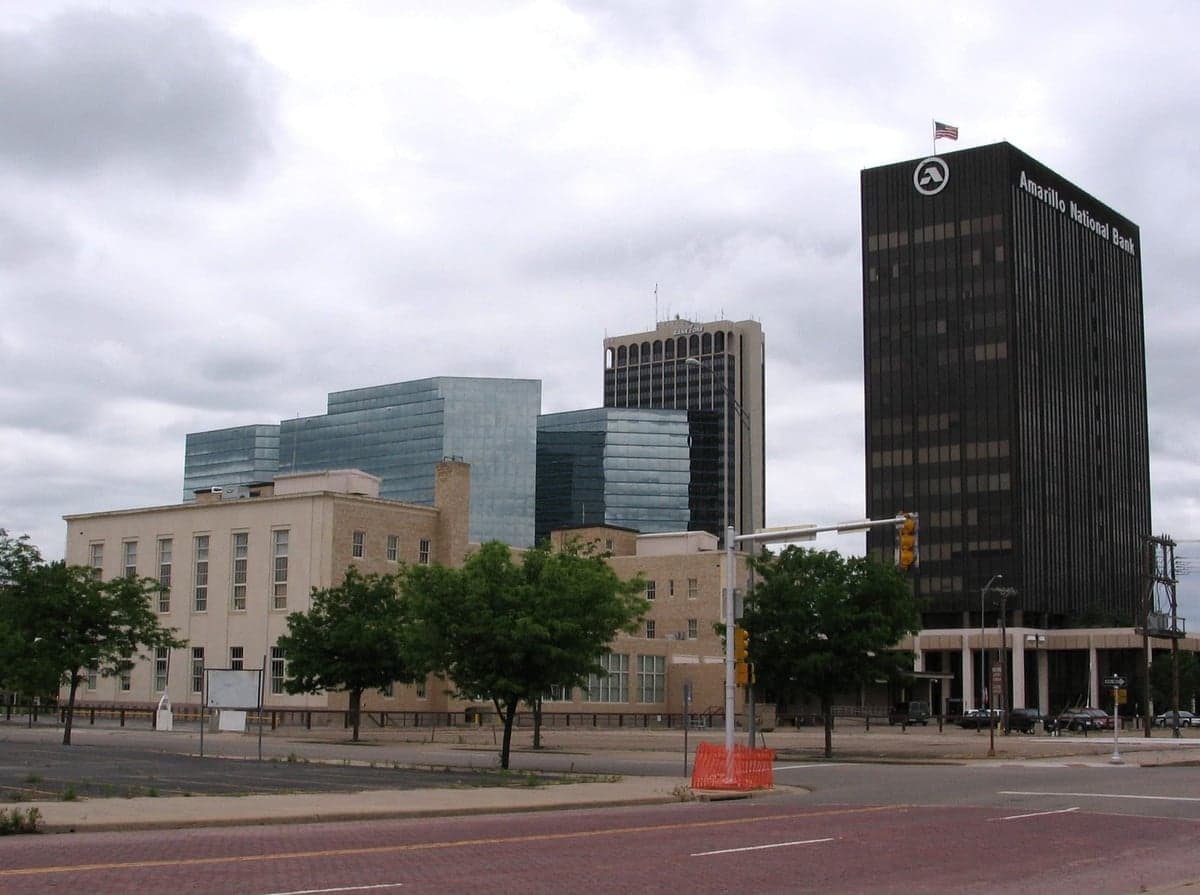
Amarillo is a place that wears its identity on its sleeve—a wide-open, wind-swept city where the Texas Panhandle meets the High Plains, and where people tend to be as straightforward as the landscape. It’s not trying to be Austin or Dallas; it’s a working town with a quiet, self-reliant rhythm, where you’re more likely to run into someone you know at the grocery store than to fight for a parking spot. For the right person—someone who values space, affordability, and a no-nonsense pace—it can feel like a well-kept secret.
Daily Rhythm and Who Fits In
Life here moves at a deliberate, unhurried pace. The average commute clocks in at just over 19 minutes, which means you can live in a quiet neighborhood on the southwest side and still be at your desk in under half an hour. That short drive is a genuine luxury for anyone coming from a congested metro area. The median age is 35, and the median household income sits at $62,469—enough to afford a median home value of $186,800, which is roughly half the national average. That combination of income and housing cost is the city’s biggest practical draw: a family can buy a three-bedroom house on a single salary without stretching.
The kind of person who thrives here is often someone who works in healthcare, energy, agriculture, or logistics—major employers like BSA Health System, Pantex (the nuclear weapons assembly plant), and Tyson Foods anchor the local economy. It’s also a magnet for people who want to be near outdoor recreation without living in a resort town. You’ll find a lot of families with school-age kids, retirees who want to stretch their savings, and younger singles who work in the trades or at the local colleges. The college-educated rate is 25.1%, which is below the national average, but that reflects the blue-collar backbone of the city more than any lack of ambition.
Sports, Community, and What People Actually Do
High school football is a genuine religion here. On Friday nights in the fall, the stands at Dick Bivins Stadium are packed for Amarillo High and Tascosa High games, and the energy rivals what you’d see at a small college matchup. The Amarillo Sod Poodles—the Double-A affiliate of the Arizona Diamondbacks—draw solid crowds at Hodgetown, a downtown ballpark that opened in 2019 and gave the city a legitimate entertainment anchor. Hockey fans follow the Amarillo Wranglers, a junior team that plays at the Amarillo Civic Center, and the games are rowdy, affordable, and family-friendly.
Beyond sports, weekends often revolve around Palo Duro Canyon State Park, the second-largest canyon in the U.S., just 20 minutes south of town. Locals hike the Lighthouse Trail, mountain bike the Groom Creek Loop, or just drive through to watch the sunset paint the red rock. The city’s cultural calendar is anchored by the annual Tri-State Fair & Rodeo in September and the Amarillo Symphony, which punches above its weight for a city this size. For a night out, locals gravitate to the 6th Street Historic District for bars like The Golden Light Cantina (a dive bar with a legendary burger) or the more polished Crush Wine Bar. The restaurant scene is heavy on steak and Tex-Mex—places like The Big Texan Steak Ranch are tourist magnets, but locals know to hit Macaroni Joe’s for Italian or El Tejavan for authentic Mexican.
Honest Pros and Cons of Living Here
The upsides are straightforward: cost of living is 19% below the national average, housing is genuinely affordable, and the pace of life leaves room for family, hobbies, and rest. The weather is sunny more than 260 days a year, though the wind is constant—locals joke that if you don’t like the weather, wait five minutes, but the wind never stops. The downside is that the city feels isolated. The nearest major metro (Oklahoma City) is four hours away, and Dallas is five. That isolation means fewer shopping options, a smaller dating pool for singles, and a limited job market outside of the dominant industries.
The violent crime rate of 550.5 per 100,000 is higher than the national average, and property crime is a real concern in certain older neighborhoods near downtown. Longtime residents will tell you to avoid the area around East Amarillo Boulevard after dark and to keep your car locked even in a good part of town. On the flip side, the schools—particularly in the Amarillo Independent School District—are deeply woven into community life. Parent involvement is high, and the district’s magnet programs (like the Amarillo High School International Baccalaureate program) draw families who prioritize education.
A cultural quirk you’ll notice: Amarilloans are fiercely proud of the “Helium Capital of the World” legacy, and the city’s official slogan is “The Yellow Rose of Texas.” There’s a quiet, unshowy confidence here—people don’t brag about their city, but they’ll defend it if an outsider dismisses it. If you’re looking for a place where you can own a home, raise kids, and actually know your neighbors, Amarillo delivers. If you crave nightlife, career variety, or cultural density, you’ll likely feel the flatness of the plains in more ways than one.

Similar small cities to Amarillo
* Values derived from national, state, county, city and local statistics and may differ in a specific area. Last updated: 2026-04-19T07:24:17.000Z
Narrative content on this page is AI-generated and may contain mistakes. Verify any details that matter before acting on them.
ReloMaps may earn a commission from affiliate links at no extra cost to you.

