Photo: Wikipedia
Demographics of Ammon, ID
Affluence Level in Ammon, ID
A middle-class area roughly in line with national averages across income, home values, education, and employment.
People of Ammon, ID
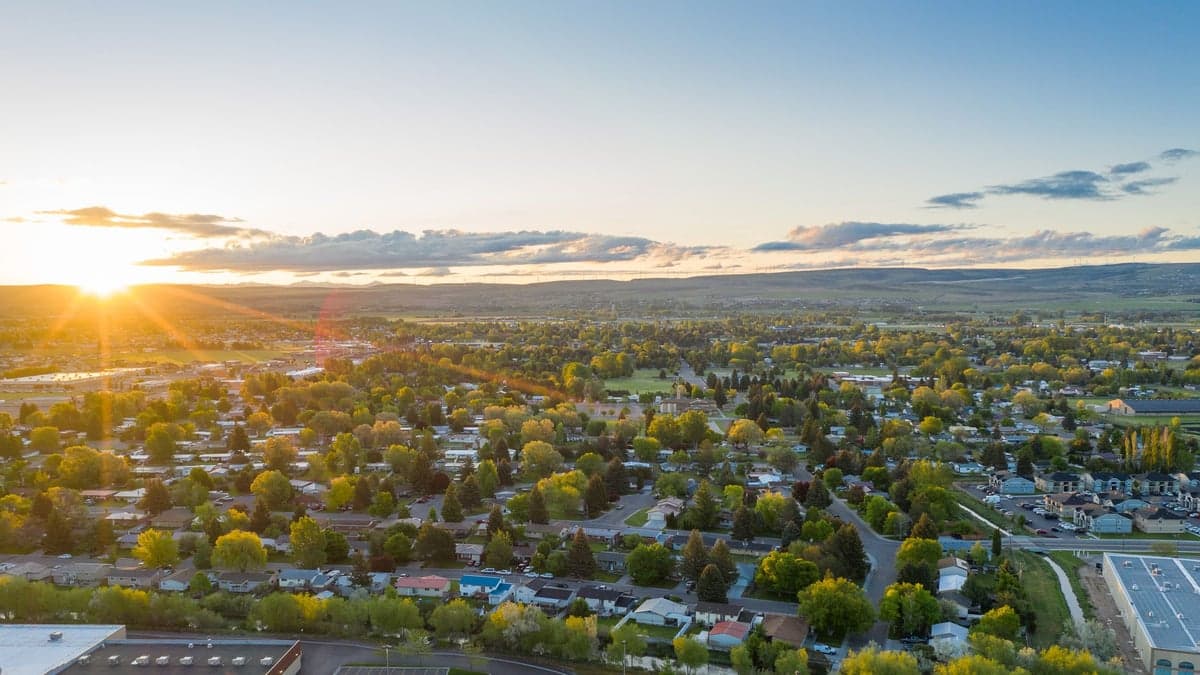
The people of Ammon, Idaho, today form a densely Mormon, family-oriented community of 18,496, characterized by a strong Latter-day Saint (LDS) cultural identity, low crime, and a rapidly growing suburban character. With a population that is 85.3% white, 11.9% Hispanic, and only 1.2% foreign-born, Ammon is one of the most ethnically homogeneous cities in the rapidly diversifying Boise region. Its distinctive identity is rooted in a pioneer-era LDS settlement pattern, a modern wave of conservative in-migration from California and the Pacific Northwest, and a high concentration of young families drawn to its safe neighborhoods and strong school system.
How the city was settled and grew
Ammon was founded in the 1880s as an agricultural outpost of the LDS Church’s Mormon Corridor, settled by Mormon pioneers from Utah and the eastern United States who were called by church leaders to colonize the Snake River Plain. The original settlers were almost exclusively white, English-speaking LDS families who established dry farms and small dairies. The historic Old Ammon District, centered around Ammon Road and Lincoln Drive, contains the original pioneer-era homes and the Ammon Ward chapel, still a community anchor. A second early wave arrived in the 1910s and 1920s, drawn by the expansion of irrigation from the nearby Snake River, which turned the area into a productive potato and grain region. These families settled in the Pioneer Park area, where many of the original farmsteads have been subdivided into modern subdivisions. The city remained a small, overwhelmingly white LDS farming community of fewer than 2,000 residents through the 1960s, with virtually no foreign-born population.
Modern era (post-1965)
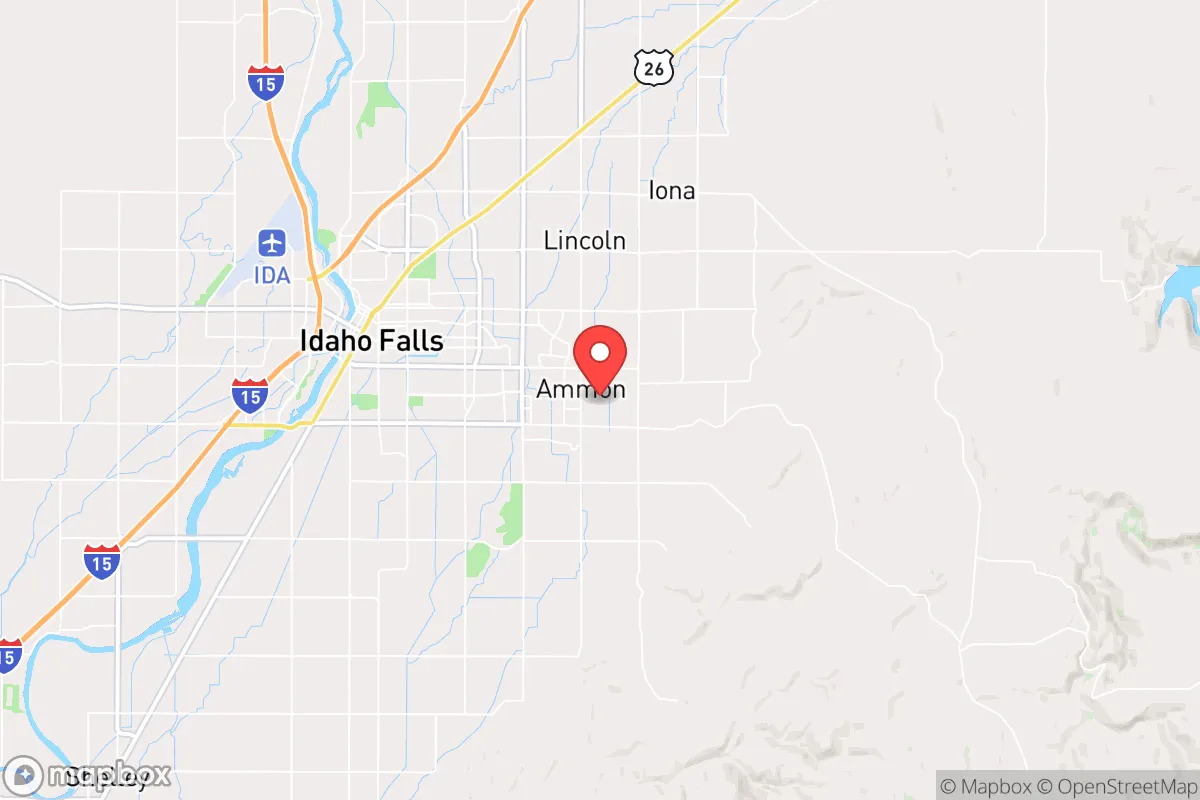
After the 1965 Hart-Cellar Act, Ammon saw negligible direct immigration—its foreign-born share remains just 1.2%—but experienced a dramatic domestic in-migration wave beginning in the 1990s. The primary driver was the expansion of the Idaho National Laboratory (INL) and the growth of the greater Idaho Falls metro area, which drew white-collar professionals, engineers, and LDS families from across the West. A second, larger wave began around 2010 as Californians and Pacific Northwesterners—many of them LDS families seeking lower costs, conservative governance, and safer communities—relocated to Ammon. These newcomers concentrated in the Sand Creek Commons and Mountain View Estates subdivisions, which feature large new homes on half-acre lots. The Hispanic population, now 11.9%, grew primarily through domestic migration from other parts of Idaho and the West, not direct immigration, and is concentrated in the Ammon Heights area near the city’s southern edge, where more affordable housing stock exists. The city’s Black population (0.1%), East/Southeast Asian population (0.6%), and Indian-subcontinent population (0.3%) remain extremely small, reflecting the area’s limited draw for non-LDS or non-white professionals. The South Ammon district, near the border with Idaho Falls, has absorbed most of the recent commercial and multifamily development, including apartments that house younger single workers and some Hispanic families.
The future
Ammon’s population is projected to continue growing at a steady pace of 2-3% annually, driven by domestic in-migration from high-cost, high-crime states. The city is not tribalizing into distinct ethnic enclaves but is instead homogenizing around a white, LDS, conservative identity, with the Hispanic population plateauing as a stable minority. The foreign-born share is unlikely to rise significantly given the city’s lack of industrial or service-sector jobs that attract immigrants. The next 10-20 years will likely see continued suburban expansion into the North Ammon and East Ammon areas, where large tracts of farmland are being zoned for single-family homes. The city’s demographic future is one of slow, steady growth among a culturally cohesive population, with little ethnic or religious diversification.
For a conservative individual or family moving in now, Ammon is becoming a denser, more suburban version of its pioneer-era self—safe, LDS-dominant, and politically conservative, with a growing but stable Hispanic minority and virtually no other ethnic or immigrant communities. The city offers a predictable, family-oriented environment where the population is largely native-born and shares a common cultural and religious framework.

* Values derived from national, state, county, city and local statistics and may differ in a specific area. Last updated: 2026-04-21T09:46:27.000Z
Narrative content on this page is AI-generated and may contain mistakes. Verify any details that matter before acting on them.
ReloMaps may earn a commission from affiliate links at no extra cost to you.

