Photo: Wikipedia
Political ClimatePolitical Climate in Ammon, ID
District shown is the primary district for this city’s centroid. Cities may span multiple districts.
Inherited from parent state — no local data available.
Local Political AnalysisPolitical Analysis of Ammon, ID
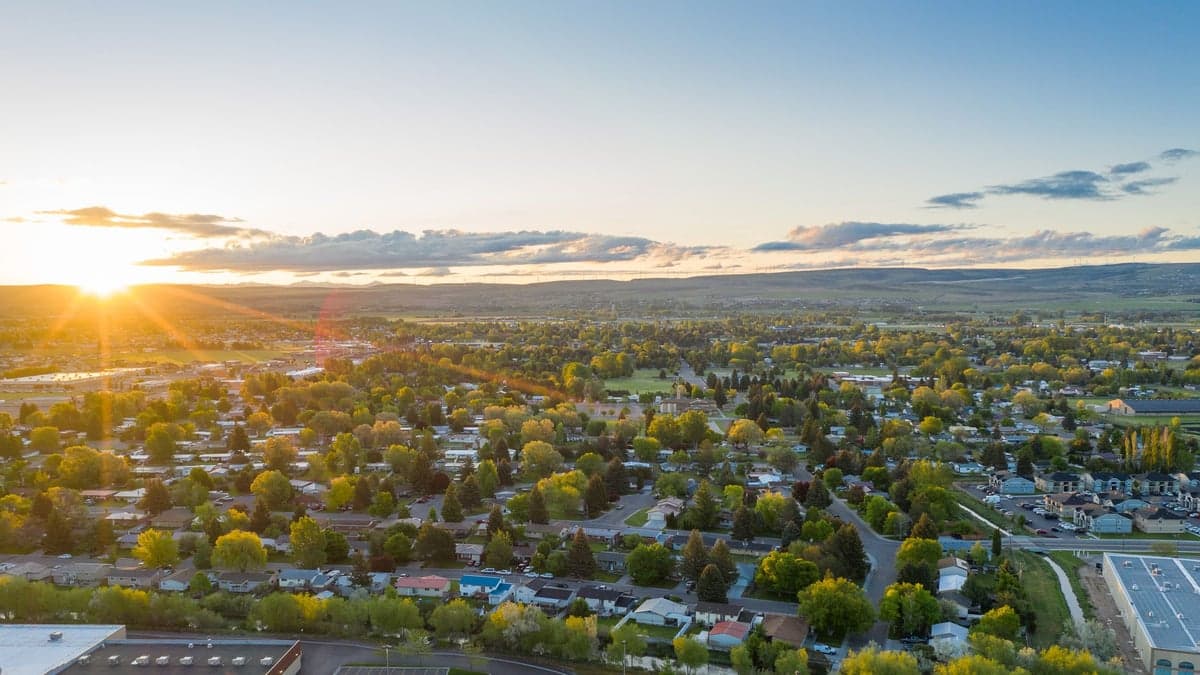
Ammon, Idaho, sits deep in reliably conservative territory, and that’s not changing anytime soon. The Cook PVI of R+13 tells you the math, but the feel on the ground is even more solid—this is a place where the Republican primary is the real election, and most folks I know wouldn’t dream of voting any other way. The political lean here isn’t just about party labels; it’s a genuine cultural commitment to limited government, personal responsibility, and keeping the state out of your business. You see it in the low-key zoning, the strong support for local schools that actually teach kids how to think, not what to think, and the general attitude that your home is your castle.
How it compares
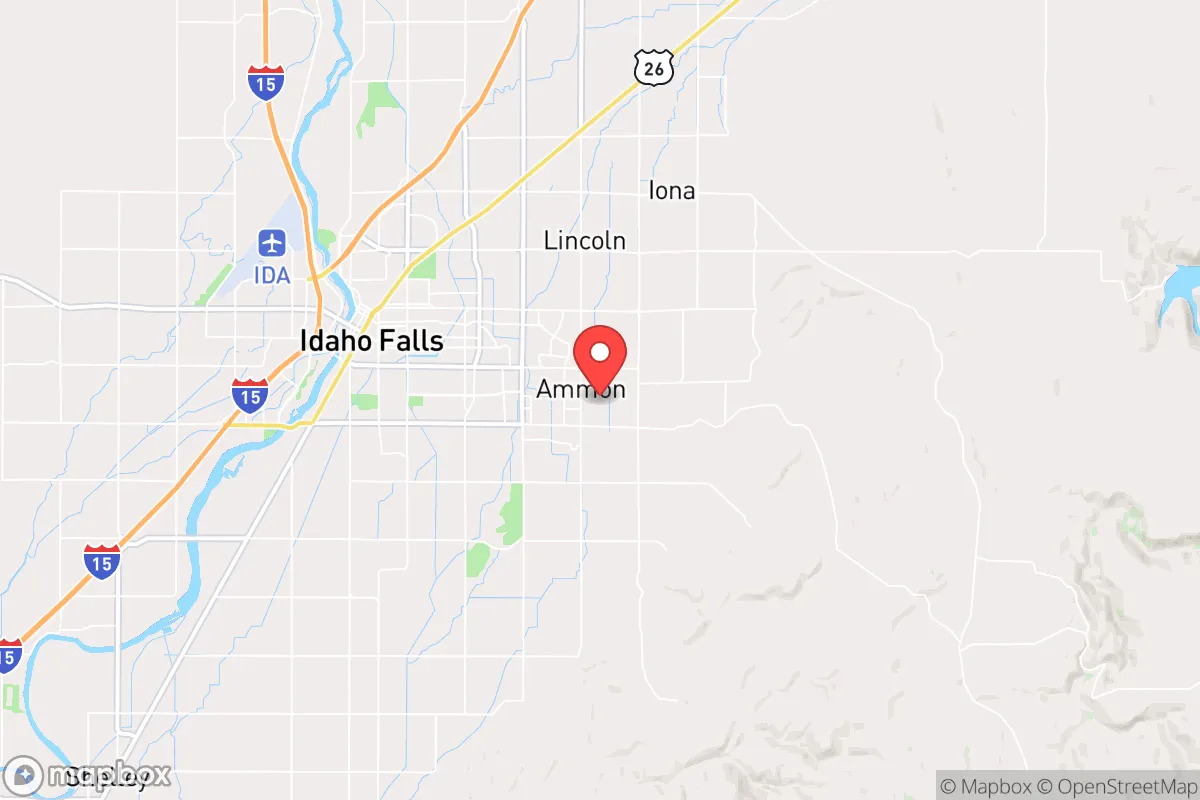
Drive ten miles west to Idaho Falls, and you’ll find a slightly more moderate vibe—still conservative, but with a bigger city mix that brings in a few more independent voters and even a handful of Democrats. The difference is subtle but real: Idaho Falls has a more active arts scene and a younger professional crowd that sometimes leans a little less red. Head south to Pocatello, and the contrast sharpens. Pocatello’s got a university influence that pulls it toward the center-left on social issues, and you’ll hear more talk about environmental regulations and public transit there. Ammon, by contrast, feels like the old guard—the place where people moved specifically to get away from that kind of government overreach. It’s a deliberate choice, not an accident.
What this means for residents
For daily life, the conservative climate means you’re not constantly fighting city hall over property rights or school curriculum. The local government tends to take a hands-off approach, which is a breath of fresh air if you’ve ever dealt with overbearing HOA rules or a county that wants to tell you what color to paint your fence. Taxes stay low, and the permitting process for building a shop or adding a fence is usually straightforward. That said, there’s a growing concern among long-time residents about the influx of newcomers from blue states. Some of them bring progressive ideas about zoning, density, and “equity” that could slowly shift the local culture if we’re not careful. So far, the old guard has held the line, but it’s something to keep an eye on—especially in school board and city council races, where the stakes are highest for our kids’ education.
The real cultural distinction here is the strong Latter-day Saint influence, which shapes the community’s values around family, self-reliance, and neighborly support. You won’t find a lot of loud political protests or divisive rhetoric—people here prefer to solve problems quietly, through church networks and personal connections. That’s both a strength and a potential blind spot. It means less government meddling, but it also means that if progressive ideas do start creeping in through the school system or county planning, they might slip under the radar until it’s too late. My advice: stay engaged, vote in every local election, and don’t assume the conservative character of Ammon will protect itself. It didn’t in places like Boise, and it won’t here unless we keep an eye on the ball.

State Political ClimatePolitical Climate in Idaho
State Political AnalysisPolitical Environment in the State
Idaho has long been one of the most reliably conservative states in the nation, with a Republican trifecta controlling the governorship, legislature, and both U.S. Senate seats. Over the past 20 years, the state has shifted from a moderate, libertarian-leaning conservatism to a more assertive, culturally conservative posture, driven largely by an influx of out-of-state transplants seeking lower taxes, less regulation, and a slower pace of life. The 2024 election saw Donald Trump carry Idaho by a 30-point margin, with every single county voting red except for Blaine County (home to Sun Valley) and a sliver of Latah County (Moscow). This isn’t a purple state flirting with blue—it’s a deep-red stronghold that’s only getting redder as California and Washington refugees pour into the Treasure Valley and North Idaho.
Urban vs. rural divide
The political map of Idaho is starkly divided between its fast-growing urban corridors and its vast, sparsely populated rural expanse. The Treasure Valley—anchored by Boise, Meridian, Nampa, and Caldwell—is the state’s population center and the engine of its economic growth. While Boise itself has a noticeable progressive tilt in its downtown core (Ada County voted 52% for Trump in 2024, down from 58% in 2020), the surrounding suburbs like Meridian and Eagle are deeply conservative, often voting 65-70% Republican. The real red wall is in the rural counties: Lemhi, Custer, Butte, and Clark counties routinely deliver 80-90% of their votes to GOP candidates. The northern panhandle, anchored by Coeur d’Alene and Post Falls, has become a magnet for conservative refugees from Washington and California, flipping Kootenai County from a competitive 55% Republican in 2016 to a solid 63% in 2024. The only blue dot of note is Blaine County (Sun Valley), a wealthy resort area that votes consistently Democratic, but it’s an island in a sea of red. The urban-rural split isn’t just about votes—it’s about culture. Boise’s downtown feels like a mini-Portland in some pockets, while a 20-minute drive east to Kuna feels like stepping back into 1985.
Policy environment
Idaho’s policy environment is a case study in conservative governance, with a strong emphasis on limited government, low taxation, and individual liberty—at least in theory. The state has a flat income tax of 5.8% (down from 6.5% in 2022), no corporate income tax on pass-through entities, and property taxes that are among the lowest in the West. The legislature has aggressively pursued school choice, passing the Idaho Parental Choice Tax Credit in 2025, which provides up to $5,000 per child for private school tuition or homeschooling expenses. On healthcare, Idaho rejected Medicaid expansion initially but accepted it via ballot initiative in 2018; since then, the legislature has added work requirements and premium assistance for able-bodied adults. Election integrity is a hot topic: Idaho now requires photo ID to vote, has banned ballot harvesting, and mandates that all absentee ballots be returned by 8 PM on Election Day—no postmark grace period. The state also passed a constitutional carry law in 2016, allowing permitless concealed carry for anyone 18 or older who can legally possess a firearm. For conservatives, the policy environment is largely a win, though some grumble about the state’s growing reliance on sales tax (6% state rate, plus local options up to 8.5%) and the creeping influence of federal dollars in education and transportation.
Trajectory & freedom
Idaho’s trajectory on personal freedom is a mixed bag, trending in opposite directions depending on the issue. On the positive side for conservatives, the state has been a national leader in parental rights, passing the Idaho Parental Rights Act in 2023, which requires schools to notify parents of any curriculum involving sexuality or gender identity and prohibits instruction on these topics in grades K-3. The Idaho Defense of Life Act (2020) effectively bans abortion at conception, with no exceptions for rape or incest, and the state has resisted federal pressure to fund Planned Parenthood. Gun rights remain robust: the Idaho Firearms Freedom Act (2012) asserts that firearms made and kept in Idaho are not subject to federal regulation, and the state has a Second Amendment Preservation Act that prohibits state resources from enforcing federal gun laws. However, there are concerning trends. The influx of new residents has driven up housing costs, leading to a property tax revolt in 2024 that forced the legislature to cap annual increases at 3%. More troubling for liberty-minded folks is the Idaho Health Freedom Act (2021), which bans vaccine passports and mandates, but also includes a carve-out for employers—meaning your job can still require a COVID shot. The state’s medical marijuana push has been repeatedly blocked by the legislature, despite a 2024 poll showing 68% support. On balance, Idaho is becoming more free on cultural and Second Amendment issues, but less free on economic and housing fronts due to rapid growth.
Civil unrest & political movements
Idaho has a long history of anti-government sentiment, from the Ruby Ridge standoff in 1992 to the modern Constitutionalist movement centered in North Idaho. The North Idaho Patriots and similar groups hold regular rallies in Coeur d’Alene and Sandpoint, often protesting federal land management, mask mandates, and election integrity. In 2020, Boise saw significant Black Lives Matter protests that turned violent on two occasions, with property damage and clashes with police—a shock to a city that prides itself on civility. The Idaho Freedom Foundation, a powerful conservative think tank, has successfully pushed for school choice and tax cuts, but also draws fire for its hardline stance on immigration. On that front, Idaho has no sanctuary cities; in fact, Canyon County (Nampa, Caldwell) has a 287(g) agreement with ICE, allowing local deputies to enforce federal immigration law. The election integrity movement is strong here: in 2022, the Idaho Secretary of State’s office conducted a hand-count audit of 10% of precincts, finding a 99.97% accuracy rate, yet some activists still push for a full hand-count system. A new resident would notice the “Don’t Tread on Me” flags flying from pickup trucks in rural areas and the occasional “Secede from the US” bumper sticker in Boundary County. It’s not a hotbed of daily unrest, but the undercurrent of distrust in federal authority is palpable.
Projection
Over the next 5-10 years, Idaho is likely to become more conservative, more crowded, and more culturally divided between its urban and rural halves. The in-migration wave shows no signs of slowing: Idaho added 100,000 new residents between 2020 and 2024, with the Treasure Valley absorbing the bulk. These newcomers are overwhelmingly conservative-leaning—many fleeing California, Oregon, and Washington—but they bring higher expectations for services, infrastructure, and housing, which will strain the state’s low-tax model. Expect the legislature to continue pushing school choice expansion, further tax cuts (possibly eliminating the income tax entirely by 2030), and tougher immigration enforcement. The housing affordability crisis will likely force the state to confront zoning reform, which could pit property rights advocates against neighborhood preservationists. On the cultural front, the parental rights movement will keep gaining steam, and Idaho may become a test case for constitutional carry reciprocity with other states. The wildcard is the federal public lands issue: Idaho is 62% federally owned, and the state is actively pursuing a land transfer lawsuit to gain control of these acres, which could reshape the economy and politics of rural counties. For a conservative moving in now, expect a state that is doubling down on its red identity, but also grappling with the growing pains of popularity.
Bottom line for a new resident: If you’re a conservative looking for a state that respects your gun rights, your parental authority, and your wallet, Idaho is a top-tier choice. You’ll find a government that largely stays out of your personal life, a tax burden that’s manageable, and a community that shares your values—especially if you settle in Meridian, Eagle, or Coeur d’Alene. Just be prepared for sticker shock on housing, traffic that’s worse than you expected in Boise, and a political scene that’s increasingly polarized between the libertarian-leaning old guard and the culturally conservative newcomers. It’s still a great place to raise a family, but the days of Idaho being a cheap, sleepy secret are long gone.
* Values derived from national, state, county, city and local statistics and may differ in a specific area. Last updated: 2026-04-21T09:46:27.000Z
Narrative content on this page is AI-generated and may contain mistakes. Verify any details that matter before acting on them.
ReloMaps may earn a commission from affiliate links at no extra cost to you.

