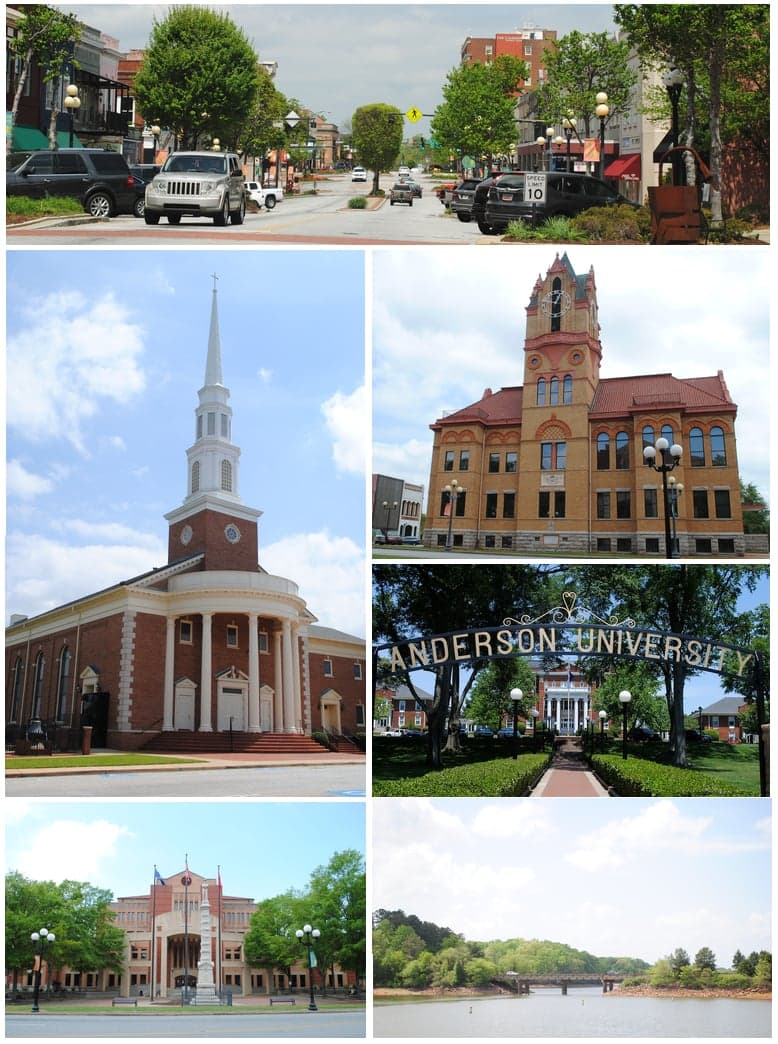
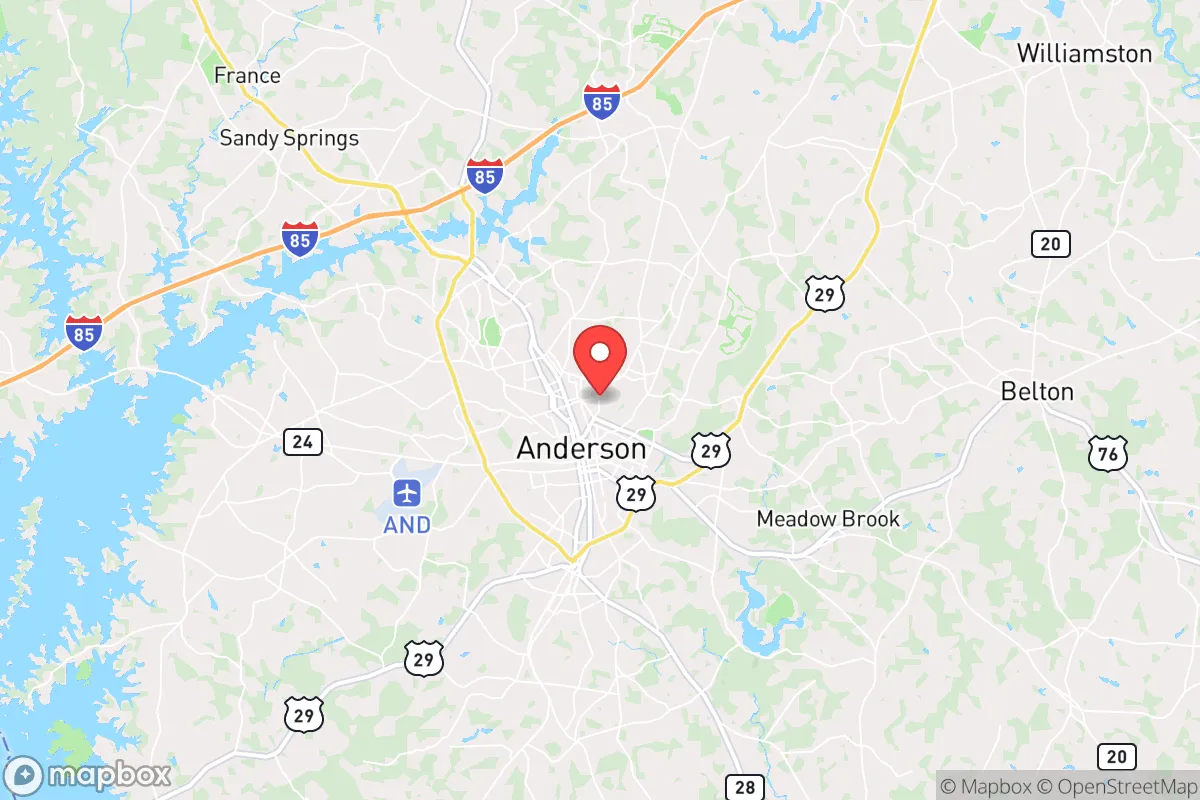
Photo: Wikipedia
Quality of Life in Anderson, SC
A high quality of life with strong walkability, manageable living costs, healthy neighborhood signals, and solid amenity access.
What does Quality of Life tell us?
Quality of Life blends cost of living, nearby amenities, socioeconomic signals, and neighborhood character. City-level scores represent the whole municipality; individual neighborhoods can differ.
What does this tell us?
Quality of Life blends cost of living, nearby amenities, socioeconomic signals, and neighborhood character. City-level scores represent the whole municipality; individual neighborhoods can differ.
Cost of Living
22% below national average
The Real Cost of Living in Anderson, SC for 2026
| Tier | Individual | Family (4) |
|---|---|---|
| Survival | $15k | $29k |
| Comfortable | $39k | $57k |
| Luxury | $80k+ | $124k+ |
| Elite (Top 5%) | $103k+ | $159k+ |
78%
The Area Signal
A metric tracking the socioeconomic signals of the area.
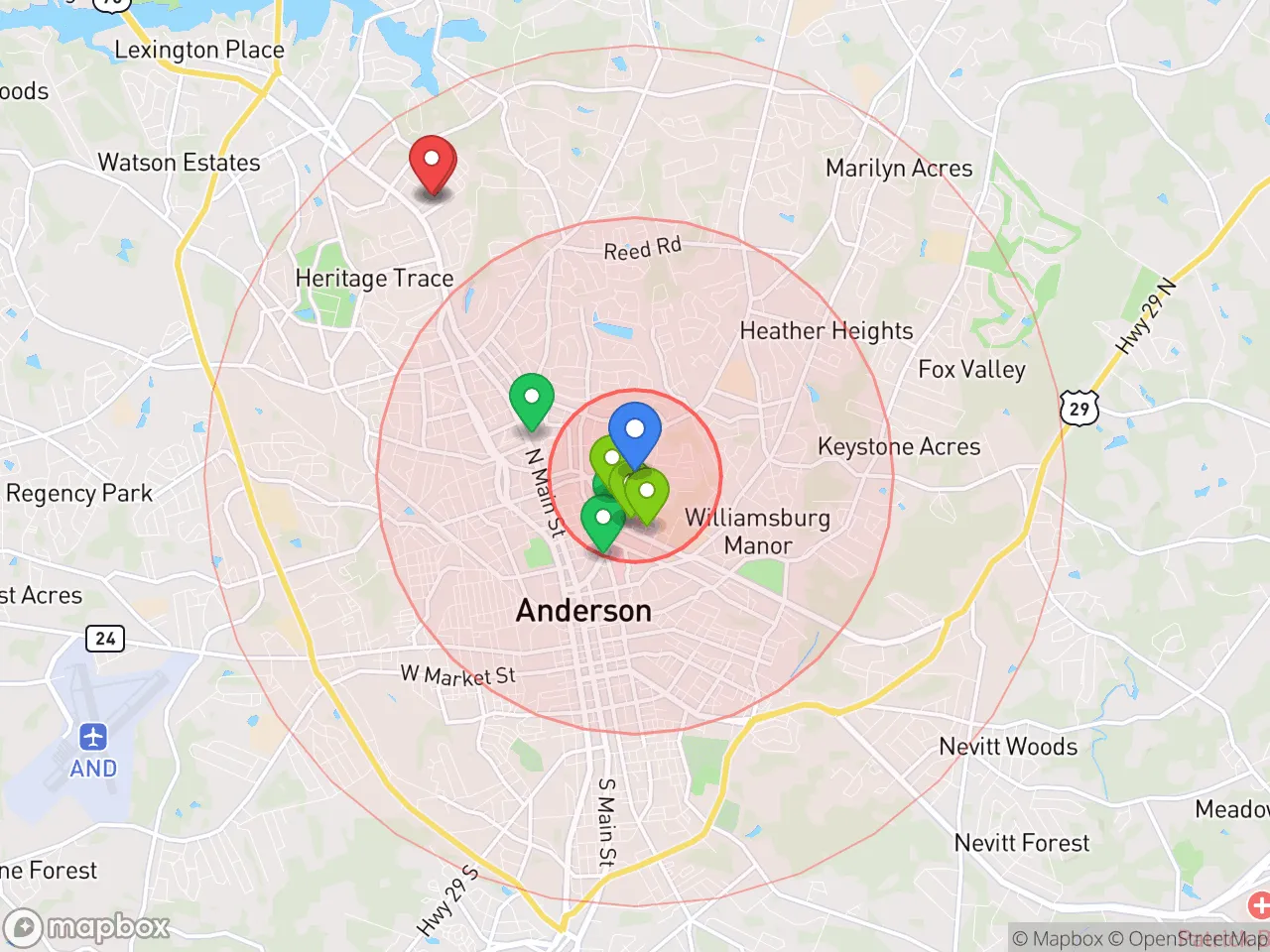
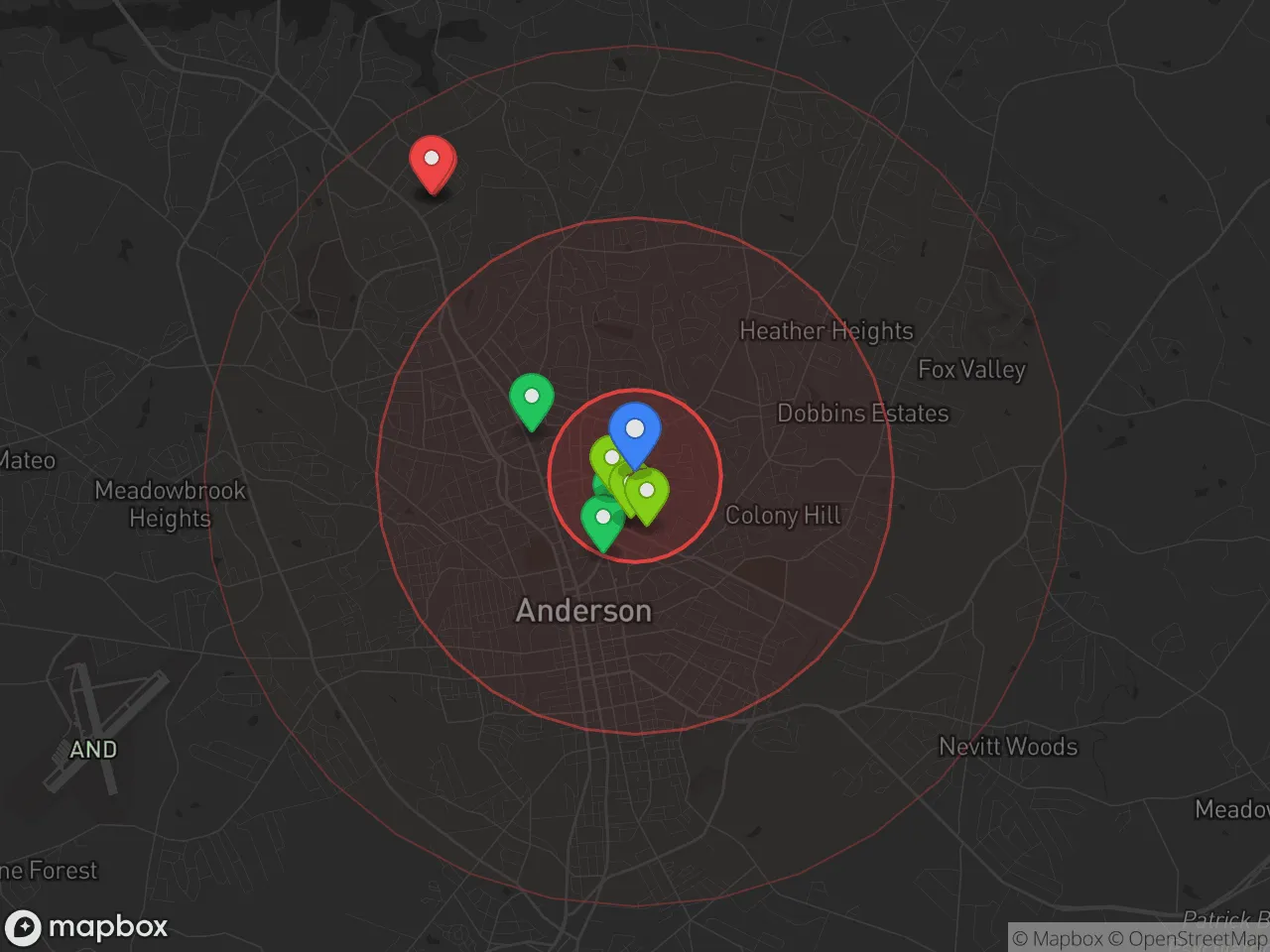
Hobbies
Explore the areaGroceries
6 within 10 miles
Gas
20 within 10 miles
Hospital
4 within 20 miles
Airport
CLT — Charlotte Douglas International
Post Office
USPS — Anderson, SC
Critical Amenities
Quality-of-Life Analysis
Anderson, South Carolina, offers a quality of life defined by a cost of living that is 22 percent below the national average, attracting a mix of young families, retirees, and remote workers seeking a slower pace without sacrificing urban access. The city’s population of roughly 30,000 leans middle-class and family-oriented, with a growing number of professionals commuting to Greenville or commuting from nearby Clemson University. Its affordability and proximity to Lake Hartwell make it a practical alternative to pricier Upstate hubs.
Cost of living, housing, and how Anderson compares to Greenville and Clemson
Anderson’s overall cost of living index sits at 78 (100 = US average), making it significantly cheaper than the national norm and notably more affordable than nearby Greenville (index ~92) or Clemson (index ~88). The median home value is $199,600, roughly $80,000 less than the Greenville metro median, while the median rent of $965 undercuts Greenville’s average by about $300 per month. Utility costs and grocery prices also run below state averages, and property taxes in Anderson County remain low—around 0.5 percent of assessed value—which keeps monthly housing expenses manageable. The trade-off is a slower appreciation rate; home values have risen only about 8 percent over the past three years compared to Greenville’s 15 percent, but for buyers prioritizing cash flow over speculation, Anderson delivers strong value.
Everyday amenities, schools, and the daily rhythm of life
The average commute in Anderson is 21.5 minutes, well under the national average of 26 minutes, which frees up time for outdoor recreation or family activities. Daily life centers around the downtown square—anchored by the historic Anderson County Courthouse and a growing roster of local restaurants and breweries—and the nearby Lake Hartwell shoreline, where boating and fishing are year-round draws. The Anderson School District 5 system earns mixed reviews: its high schools (T.L. Hanna and Westside) offer strong Advanced Placement programs and athletic programs, but elementary school ratings vary by neighborhood. For groceries and errands, residents rely on the Clemson Boulevard corridor, which hosts big-box retailers and chain restaurants, while specialty shopping requires a 30-minute drive to Greenville’s Woodruff Road. Healthcare access is solid, with AnMed Health Medical Center providing a Level II trauma center and a network of primary care clinics within a 15-minute radius.
Anderson is best suited for buyers who want a low-cost, low-stress base with easy access to outdoor recreation and a 30-minute commute to Greenville’s job market. Retirees on fixed incomes will appreciate the tax-friendly environment—South Carolina exempts Social Security and offers a $15,000 retirement income deduction—while remote workers benefit from fiber-optic internet availability in most newer subdivisions. Families should vet school zones carefully, as district boundaries shift near the city limits. The city’s slower growth means fewer traffic headaches and a tighter-knit community feel, but those seeking nightlife, high-end dining, or rapid home appreciation will find Anderson too quiet. For value-focused buyers who prioritize square footage and lake access over urban polish, Anderson delivers a compelling trade-off.

Crime in Anderson, SC
Higher crime rates than 69% of comparable U.S. locations.
Violent CrimeViolent Crime Analysis
Property CrimeProperty Crime Analysis
Crime Analysis
Anderson, South Carolina, presents a crime picture that warrants serious consideration for potential movers. The city's violent crime rate stands at 571.5 incidents per 100,000 residents, while property crime reaches 4,134.9 per 100,000—both figures significantly exceeding national averages and placing Anderson among the more challenging public safety environments in the Upstate region.
Crime in context
To understand Anderson's safety landscape, comparison with broader benchmarks is essential. The national violent crime rate hovers around 380 per 100,000, making Anderson's rate roughly 50% higher than the U.S. average. Property crime nationally sits near 2,000 per 100,000, meaning Anderson's rate is more than double that baseline. Against South Carolina's statewide violent crime rate of approximately 490 per 100,000, Anderson still exceeds the state figure by about 17%. These numbers place Anderson in a higher-risk tier compared to nearby cities like Clemson or Greenville, though it remains below the most dangerous municipalities in the state. The elevated rates reflect broader challenges common to small cities situated near large metro areas, where population transience and economic disparities can strain local law enforcement resources.
What residents experience
For those living in Anderson, the statistical reality translates into tangible daily concerns. Property crime—including burglary, larceny-theft, and motor vehicle theft—is the most prevalent issue, with residents reporting break-ins and vehicle-related thefts as recurring problems in certain neighborhoods. Violent crime, while less frequent, includes aggravated assault as the most common category, with robbery and homicide occurring at rates that cause unease. The city's proximity to Interstate 85, a major regional corridor, contributes to property crime patterns as transient offenders move through the area. Local law enforcement has implemented community policing initiatives and crime prevention programs, but the underlying factors—including the influence of progressive judicial philosophies in nearby larger jurisdictions—mean that offenders often face lenient sentencing, reducing deterrent effects and allowing repeat criminals to remain active in the community.
Neighborhood-level variation
Safety in Anderson is not uniform across the city. Areas west of Main Street and near the downtown core tend to report higher concentrations of both violent and property offenses, while neighborhoods like Centerville and the outskirts along Highway 81 generally experience lower crime rates. Gated communities and newer subdivisions on the city's periphery offer more security, though they come at a premium. Prospective residents should examine block-level crime maps and consult with local police precincts before choosing a specific address, as the difference between a relatively safe street and a high-risk block can be stark within the same zip code. Overall, Anderson demands heightened awareness and proactive safety measures compared to smaller, more isolated towns in the region.
* Values derived from national, state, county, city and local statistics and may differ in a specific area. Last updated: 2026-04-24T02:49:45.000Z
Narrative content on this page is AI-generated and may contain mistakes. Verify any details that matter before acting on them.
ReloMaps may earn a commission from affiliate links at no extra cost to you.

