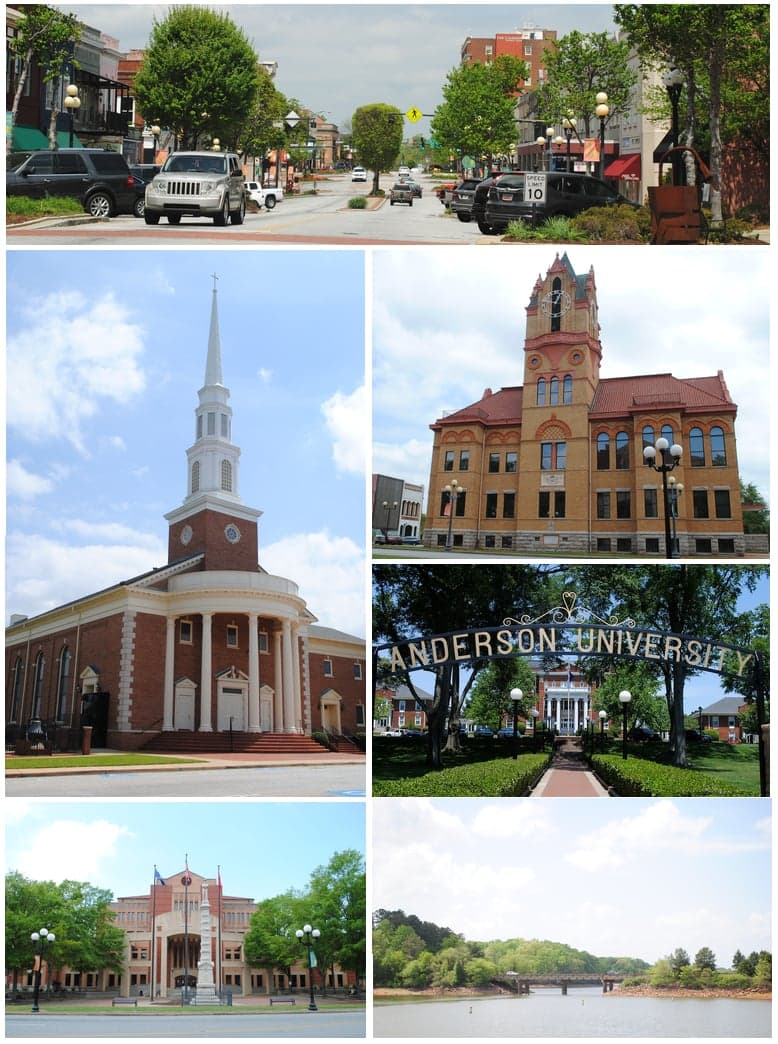
Photo: Wikipedia
Political ClimatePolitical Climate in Anderson, SC
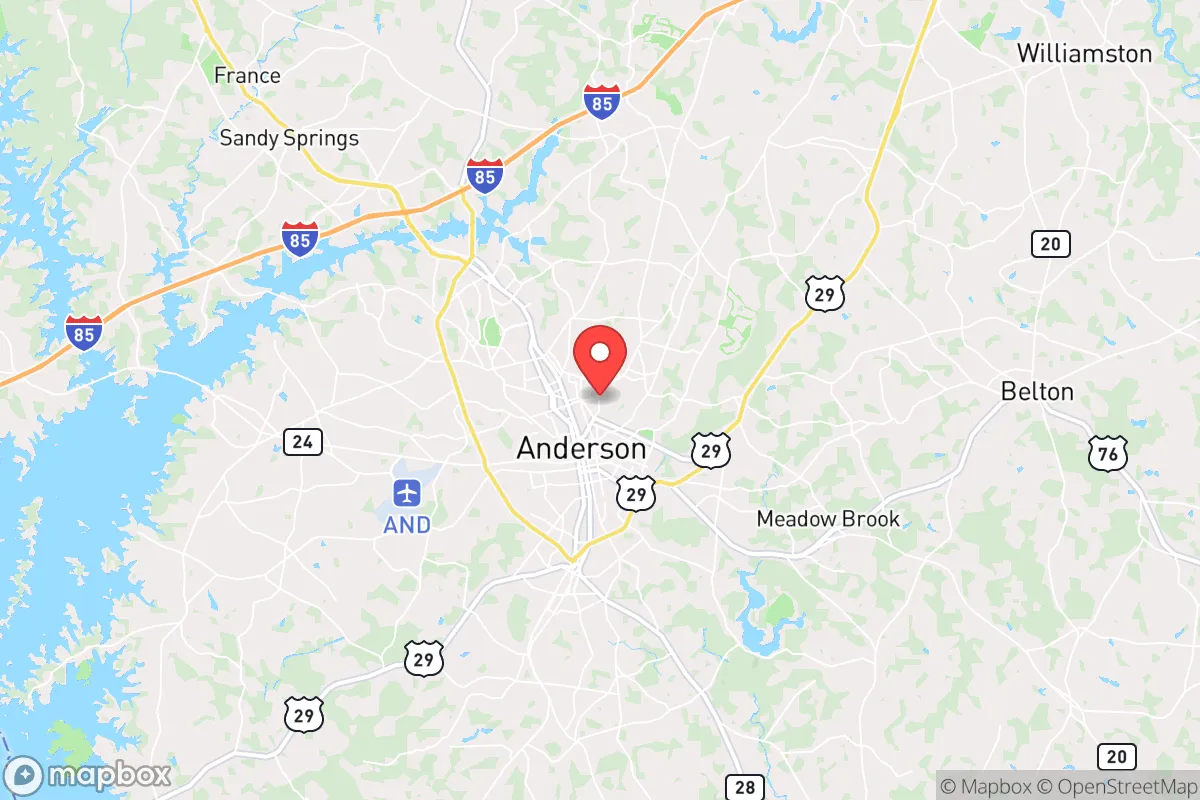
District shown is the primary district for this city’s centroid. Cities may span multiple districts.
Local Political AnalysisPolitical Analysis of Anderson, SC
Anderson, South Carolina, has long been a rock-solid conservative stronghold, and that hasn't changed much. The area's Cook Partisan Voting Index (PVI) of R+21 tells you everything you need to know about the baseline — this isn't a purple district that flips back and forth. In the 2024 presidential election, Anderson County went for the Republican candidate by a margin of roughly 68% to 30%, a spread that's been consistent for decades. You'll see "Trump" and "MAGA" signs on lawns year-round, not just during election season, and local offices from sheriff to county council are held by folks who run on a platform of limited government and personal responsibility. That said, there's a quiet undercurrent of change, mostly driven by newcomers from places like Greenville and Charlotte who are priced out of those booming metros. They bring different habits and voting patterns, and while Anderson isn't flipping blue anytime soon, the cultural tone is shifting in subtle ways that long-time residents notice.
How it compares
If you drive 30 minutes east to Greenville, you'll feel the difference immediately. Greenville County has a PVI of R+18, but its city proper is trending more moderate, with a younger, more transient population that's pushed local elections closer to the center. Anderson, by contrast, is still deeply rural and traditional. Head south to Clemson or Pendleton, and you'll find a mix — Clemson's college-town vibe leans left of Anderson, but Pendleton's historic districts vote much like Anderson does. The real contrast is with the state's coastal areas like Charleston (R+8) or Beaufort, where tourism and transplants have created a more libertarian-leaning, live-and-let-live atmosphere. In Anderson, the political conversation is still about gun rights, school choice, and keeping property taxes low — not about bike lanes or zoning reform. The biggest worry among locals isn't that Anderson will turn blue; it's that the steady trickle of out-of-state money and influence will slowly erode the small-town, hands-off government culture that's made this a good place to raise a family without a lot of bureaucratic hassle.
What this means for residents
For someone living here, the R+21 lean translates directly into daily life. You won't see mask mandates or business shutdowns from the county government — that kind of overreach is dead on arrival. The local school board is conservative, so curriculum fights over critical race theory or gender ideology are largely absent; the focus stays on basics and vocational training. Property taxes are among the lowest in the Upstate, and there's no city income tax. The downside? If you're hoping for rapid transit, bike lanes, or a vibrant downtown nightlife scene, you'll be disappointed. The county commission prioritizes keeping the government small and out of your wallet, which means infrastructure improvements move slowly unless they're tied to economic development deals. The biggest cultural shift that concerns me is the slow creep of progressive ideas through the school system — not from local leadership, but from state-level mandates and federal funding strings. It's something to watch, because once those ideas get a foothold in the classroom, they're hard to root out.
One thing that sets Anderson apart from its neighbors is a strong, almost stubborn, sense of self-reliance. You see it in the number of small businesses that have been family-run for generations, in the volunteer fire departments, and in the way neighbors handle problems without calling the county. There's a healthy skepticism of any new tax or regulation, and that's kept the area from adopting the kind of progressive zoning or environmental rules that have driven up housing costs in Greenville. The local paper, the Anderson Independent Mail, still runs letters to the editor complaining about federal overreach, and the county council meetings are sparsely attended unless someone proposes a new fee or ordinance. For now, Anderson remains a place where you can live your life without the government breathing down your neck — but keeping it that way means staying engaged and voting in every local election, not just the presidential ones.

State Political ClimatePolitical Climate in South Carolina
State Political AnalysisPolitical Environment in the State
South Carolina has long been a reliably red state, but its political climate is more layered than a simple partisan label suggests. The state leans solidly Republican at the statewide level, with Donald Trump winning by 18 points in 2024, but the coalition is shifting—driven by explosive growth in the Lowcountry and Upstate, a shrinking rural base, and a small but vocal progressive presence in the capital. Over the last 20 years, the GOP has tightened its grip on the legislature and governor’s mansion, but the nature of that control is evolving as new residents bring different priorities.
Urban vs. rural divide
The political map of South Carolina is a study in contrasts. The rural “Corridor of Shame” counties along I-95—like Allendale, Bamberg, and Marlboro—vote overwhelmingly Democratic, but their populations are shrinking and aging. Meanwhile, the booming suburbs of Greenville and Spartanburg in the Upstate are the engine of the state’s Republican majority. Greenville County alone cast over 200,000 votes in 2024, with Trump winning by 20 points. Charleston and its surrounding areas are the real battleground: the city itself leans left, but the suburbs of Mount Pleasant, Summerville, and Goose Creek are reliably red. The real wildcard is Horry County (Myrtle Beach), which has seen a massive influx of retirees and remote workers from blue states—it still votes Republican, but the margin has narrowed from +30 in 2016 to +22 in 2024. The Columbia metro area is a microcosm: Richland County (the city) is deep blue, while Lexington County (the suburbs) is deep red, and the gap is widening as more families flee the city for lower taxes and better schools.
Policy environment
South Carolina’s policy posture is broadly conservative, but with some notable wrinkles. The state has a flat income tax of 6.2%, which is being phased down to 6.0% by 2026—a modest but real reduction. Property taxes are among the lowest in the Southeast, thanks to a 2006 law that capped assessment increases. There is no state-level rent control, and zoning is largely local, which has kept housing costs relatively manageable compared to Florida or Texas. On education, the state passed a universal school choice program in 2024 (the Education Scholarship Trust Fund), allowing any family to use state funds for private or homeschool expenses. This was a major win for parental rights, but implementation has been slow due to bureaucratic hurdles. Healthcare is a mixed bag: the state did not expand Medicaid, but it also has some of the loosest scope-of-practice laws for nurse practitioners in the region. Election laws are strict—voter ID is required, and the state purges inactive voters regularly. There is no early voting by mail without an excuse, and absentee ballot drop boxes were banned in 2023. This has drawn criticism from the left, but the system has produced no major scandals.
Trajectory & freedom
On balance, South Carolina is moving in a more libertarian direction on some fronts and a more restrictive one on others. The 2024 session saw the passage of a permitless carry law (Constitutional Carry), which allows any law-abiding adult to carry a concealed firearm without a permit. This was a clear expansion of Second Amendment rights. On parental rights, the state passed a “Parents’ Bill of Rights” in 2023, requiring schools to notify parents of any curriculum changes and to obtain consent before teaching about sexuality or gender identity. This has been a flashpoint, with some districts resisting. On the other hand, the state has tightened abortion restrictions: a 2023 law bans the procedure after six weeks, with no exceptions for rape or incest. This is popular with the base but has created a healthcare access problem in rural areas. Medical freedom took a hit during COVID—the state had a mask mandate and some business closures, but it was one of the first to reopen schools and lift restrictions in 2021. Property rights are generally strong, but there is no statewide ban on rent control, and some municipalities have flirted with inclusionary zoning. The biggest concern for freedom-minded residents is the state’s heavy reliance on sales tax (6% state + up to 3% local), which is regressive and hits low-income families hardest.
Civil unrest & political movements
South Carolina has a history of civil rights struggles, but modern political activism is more subdued than in neighboring Georgia or North Carolina. The most visible flashpoint in recent years was the 2020 protests in Columbia and Charleston following the George Floyd killing. These were largely peaceful, but there were isolated incidents of property damage in the Five Points district of Columbia. The state’s response was measured—the governor deployed the National Guard but did not invoke the Insurrection Act. On the right, the “Moms for Liberty” movement has been very active in Lexington and Greenville counties, successfully pushing for book bans and curriculum reviews. Immigration politics are less heated than in border states, but there is a growing concern about the influx of migrants through the I-85 corridor. The state passed a law in 2024 requiring all employers to use E-Verify, and there is no sanctuary city policy anywhere in the state. The most controversial political movement is the “nullification” rhetoric around federal gun laws—some county sheriffs have declared they will not enforce any federal ban on “assault weapons,” and the state legislature passed a resolution in 2023 asserting the state’s right to nullify federal firearms laws. This is mostly symbolic, but it resonates with the base.
Projection
Over the next 5-10 years, South Carolina will likely become more Republican in statewide elections, but the nature of that Republicanism will shift. The in-migration from blue states—especially to Greenville, Charleston, and Myrtle Beach—is bringing a wave of fiscally conservative but socially moderate voters. These newcomers tend to support school choice and lower taxes but are less enthusiastic about culture war issues like book bans or bathroom bills. The rural Democratic vote will continue to shrink as the population ages and young people leave. The real battleground will be the suburbs of Charleston and Columbia, where the margin could narrow to single digits by 2032. The state’s biggest risk is overreach: if the legislature pushes too hard on social issues (like a total abortion ban or a ban on drag shows), it could alienate the moderate newcomers who are driving growth. Conversely, if the state stays focused on economic freedom and school choice, it could become a model for the rest of the South.
For a new resident, the bottom line is this: South Carolina offers a low-tax, low-regulation environment with strong gun rights and school choice, but you’ll need to be comfortable with a slower pace of life and a political culture that is still wrestling with its past. The state is not as free as Texas or Florida on every metric—the sales tax burden is real, and the healthcare system has gaps—but it is moving in the right direction on most fronts. If you’re looking for a place where your vote counts and your voice matters, the Upstate and the Lowcountry suburbs are your best bet. Just keep an eye on the legislature—they’re prone to overcorrecting when they feel threatened.
* Values derived from national, state, county, city and local statistics and may differ in a specific area. Last updated: 2026-04-24T02:49:45.000Z
Narrative content on this page is AI-generated and may contain mistakes. Verify any details that matter before acting on them.
ReloMaps may earn a commission from affiliate links at no extra cost to you.

