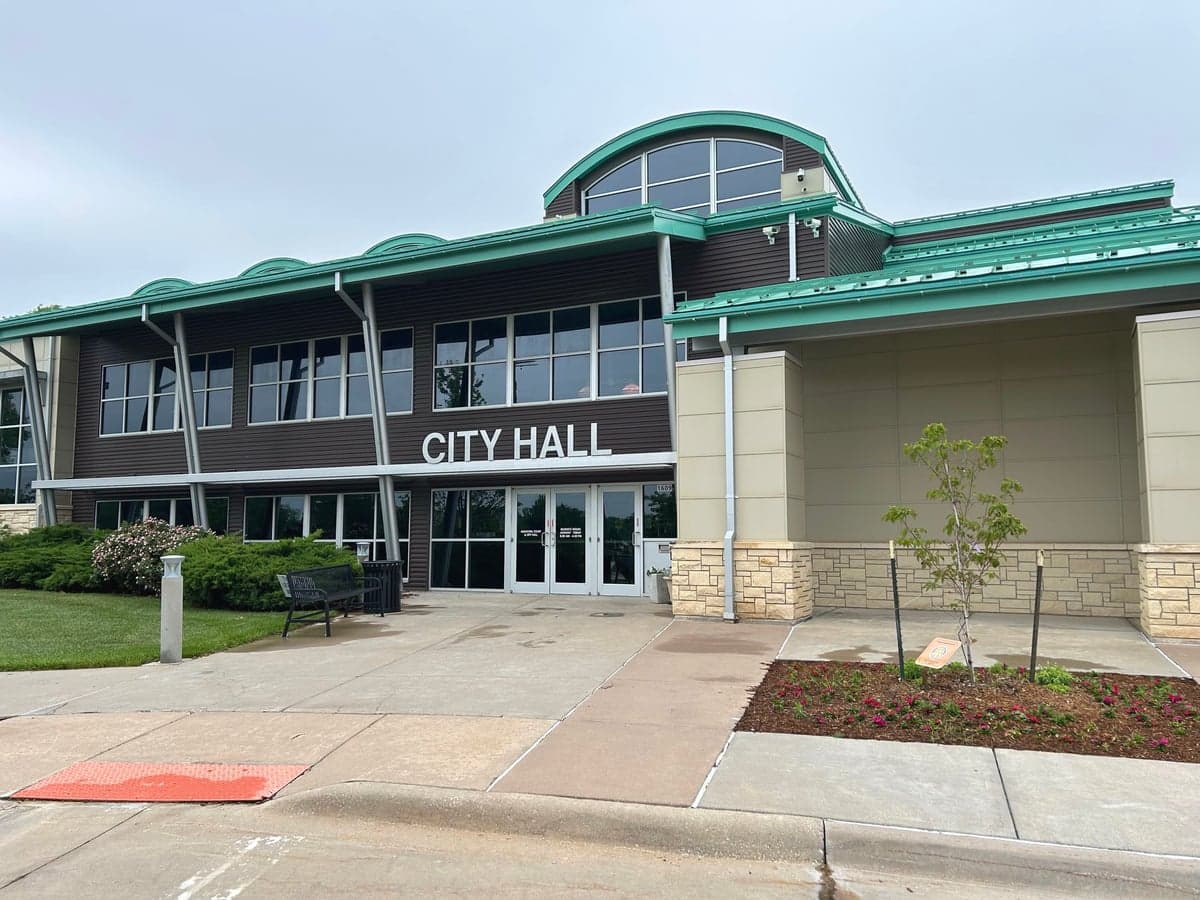
Photo: Wikipedia
Political ClimatePolitical Climate in Andover, KS
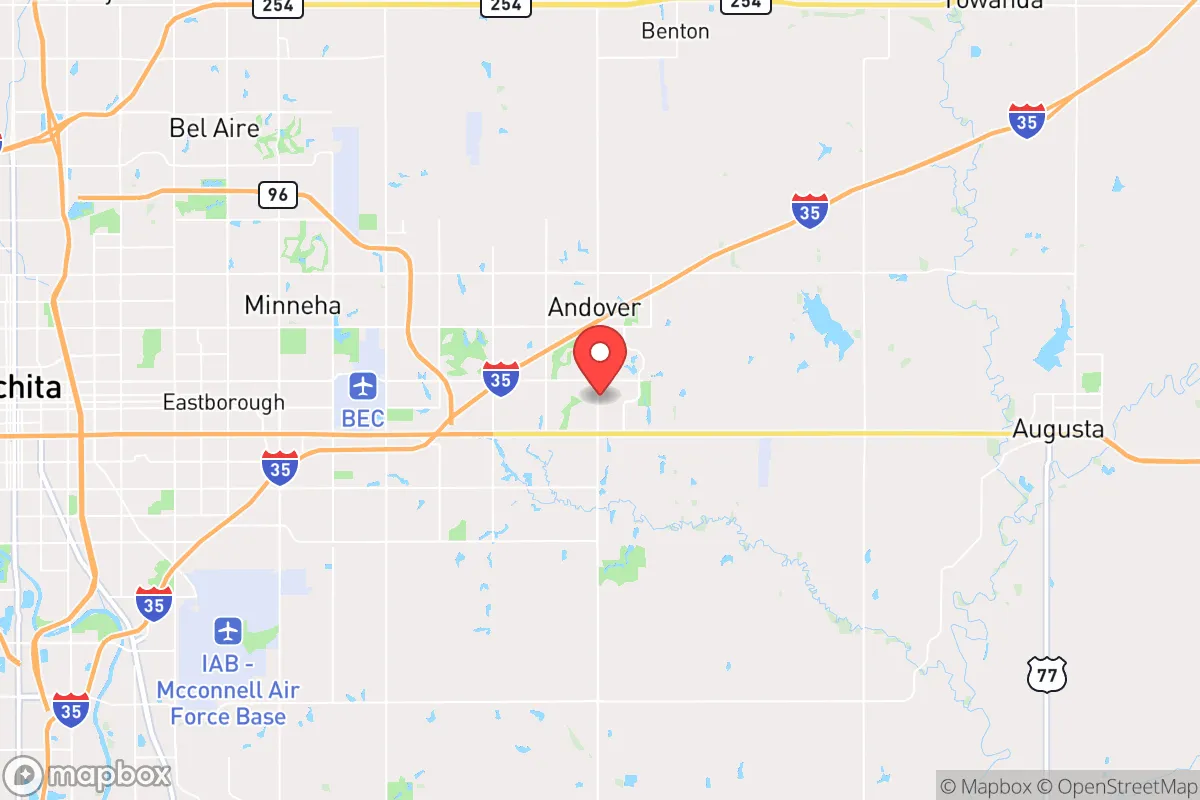
District shown is the primary district for this city’s centroid. Cities may span multiple districts.
Local Political AnalysisPolitical Analysis of Andover, KS
Andover, Kansas, has long been a solidly conservative community, and the numbers back that up with a Cook PVI of R+12. But if you've lived here for a while, you know it's not just about the voting stats—it's a way of life that values personal responsibility, limited government, and the freedom to live without a lot of bureaucratic nonsense. Over the last decade or so, the political lean here has stayed reliably red, but there's been a subtle shift as more folks move in from Wichita and other places, bringing with them some of the progressive ideas that have been creeping into the wider region. It's not a full-blown takeover, but you can feel the tension between the old guard who want to keep things simple and the newcomers who think more government oversight is the answer to every problem.
How it compares
Andover sits in Butler County, which is a deep-red stronghold compared to the more moderate or even left-leaning areas just a few miles away. Drive west into Wichita, and you'll hit Sedgwick County, which has been trending bluer in recent years, especially in the city core. Places like Derby and Rose Hill to the south are still conservative, but they've seen more of that "we know better" attitude from state-level bureaucrats. Andover, though, has held its ground better than most. The contrast is stark: while Wichita debates zoning laws and public spending on social programs, Andover's city council tends to focus on keeping taxes low and letting residents handle their own business. That R+12 rating isn't just a number—it reflects a community that's wary of government overreach and values the kind of local control that keeps decisions close to home.
What this means for residents
For the average person living here, the political climate means you get a lot of breathing room. You're not constantly looking over your shoulder for a new regulation or a mandate that tells you how to run your household or your business. Property taxes are reasonable, and the schools—while good—aren't being used as a testing ground for every progressive curriculum fad that comes down the pike. That said, there's a growing concern among longtime residents that the state government in Topeka is starting to meddle more, especially with things like land use and local ordinances. If you value your Second Amendment rights, your ability to choose your own healthcare, or just the freedom to live without a bunch of red tape, Andover is still a safe bet. But you've got to keep an eye on the local elections, because the quiet shift toward more government involvement is real, even if it's slow.
Culturally, Andover has a few distinctions that set it apart from the surrounding areas. There's a strong sense of community self-reliance here—people don't look to the government to solve every little problem. The local churches and civic groups are active, and there's a general expectation that you take care of your own. Policy-wise, the city has resisted some of the more aggressive housing density mandates and environmental regulations that have popped up in neighboring towns. It's not perfect—no place is—but if you're looking for a spot where the government stays out of your way and the conservative values of personal freedom and fiscal restraint are still the norm, Andover is one of the last holdouts in the region. Just don't expect that to last forever if the progressive tide keeps rising.

State Political ClimatePolitical Climate in Kansas
State Political AnalysisPolitical Environment in the State
Kansas has long been a reliably conservative state, but the picture is more nuanced than a simple red-state label suggests. Over the past 20 years, the state has shifted from a solidly Republican stronghold to a more competitive environment, though it still leans right overall. The dominant coalition is a mix of rural conservatives, suburban moderates, and a growing libertarian-leaning wing, but recent cycles have seen the GOP’s grip tighten in some areas while urban centers have become more reliably Democratic. The 2024 presidential election saw Kansas vote +18 for the Republican candidate, a slight dip from the +20 margin in 2020, reflecting a slow but steady trend toward polarization rather than a wholesale flip.
Urban vs. rural divide
The political map of Kansas is a textbook case of the urban-rural split. The state’s two major metros—Kansas City (Johnson and Wyandotte counties) and Wichita (Sedgwick County)—drive the Democratic vote, while the vast rural expanse and smaller cities like Topeka, Manhattan, and Lawrence lean heavily Republican. Johnson County, the state’s wealthiest and most populous, has been trending blue for a decade; it voted for Joe Biden in 2020 and Kamala Harris in 2024, a shift driven by suburban professionals and transplants from the Kansas City side. Wyandotte County, home to Kansas City proper, is a deep-blue stronghold. Meanwhile, Sedgwick County (Wichita) is a bellwether—it went for Trump in 2024 but by a narrower margin than in 2020, as the city’s growing Hispanic and younger populations push it left. The rural counties—like Sherman, Gove, and Wallace—routinely vote 80%+ Republican, creating a stark contrast that defines the state’s political geography. The suburbs of Overland Park and Olathe are where the real action is: these areas are increasingly split between moderate Republicans and Democrats, making them the key battlegrounds for state-level races.
Policy environment
Kansas’s policy environment is a mixed bag for conservatives. On the plus side, the state has no income tax on Social Security benefits, a flat income tax rate of 5.7% (down from a progressive system under Governor Sam Brownback’s 2012 tax cuts, which were partially reversed in 2017), and a relatively low corporate tax rate of 4%. Property taxes are moderate, though local levies vary widely. The state is a right-to-work state, and its regulatory posture is generally business-friendly, with no state-level minimum wage above the federal $7.25. On education, Kansas has a school choice program—the Tax Credit for Low-Income Students Scholarship Program—but it’s limited compared to states like Florida or Arizona. The state also has a constitutional amendment protecting the right to hunt and fish, and it’s a “shall issue” state for concealed carry. However, the state’s healthcare landscape is less conservative: Kansas expanded Medicaid under the Affordable Care Act in 2021 after years of legislative resistance, a move that rankled many conservatives. Election laws are moderately secure—voter ID is required, but there’s no strict absentee ballot signature verification like in some states. The state also has a 24-hour waiting period for abortions, but no trigger law banning the procedure after Roe v. Wade was overturned; instead, the Kansas Supreme Court ruled in 2019 that the state constitution protects abortion rights, a decision that has sparked ongoing legislative battles.
Trajectory & freedom
Kansas’s trajectory on personal freedom is a tug-of-war. On the positive side for conservatives, the state has expanded gun rights significantly: in 2021, it passed a permitless carry law (HB 2058), allowing any adult 21 or older to carry a concealed firearm without a license. The state also has a strong Castle Doctrine and Stand Your Ground law. Parental rights got a boost in 2023 with the passage of the Parents’ Bill of Rights (SB 83), which requires schools to notify parents about curriculum changes and medical services. However, the state has seen concerning encroachments on liberty. The Kansas Supreme Court’s 2019 abortion ruling (Hodes & Nauser v. Schmidt) effectively created a state-level right to abortion, and voters in 2022 rejected a constitutional amendment that would have overturned that ruling—a major loss for pro-life advocates. On medical autonomy, the state has not passed any COVID-19 vaccine mandates, but it also hasn’t banned them outright, leaving local governments and private employers to decide. Property rights are generally strong, with no statewide rent control or restrictive land-use policies, but some counties have imposed moratoriums on solar and wind farms, citing local control. The biggest red flag for freedom-minded residents is the state’s tax burden: while income taxes are flat, the overall tax burden (including sales and property) is above the national average, and the state has a history of budget volatility.
Civil unrest & political movements
Kansas has seen its share of political flashpoints, though they’re less dramatic than in coastal states. The most visible recent unrest was the 2022 abortion amendment campaign, which drew massive protests and counter-protests in Topeka and Lawrence. The “Value Them Both” coalition, backed by conservative churches and pro-life groups, was outspent by abortion-rights advocates, leading to the amendment’s defeat. Immigration politics are relatively quiet—Kansas is not a sanctuary state, and local law enforcement cooperates with ICE, but there’s no major enforcement controversy. The state has seen a rise in “parents’ rights” activism, particularly in Johnson County school board meetings, where groups like “Kansas Parents for Education” have pushed back against critical race theory and LGBTQ curriculum. On the left, the “Kansas People’s Action” coalition has organized around Medicaid expansion and tenant rights. Election integrity has been a minor issue: the 2020 and 2024 elections were certified without major controversy, but some rural counties have passed resolutions calling for hand-counting ballots, and the state legislature has debated stricter absentee ballot rules. There’s no serious secession or nullification movement, though some libertarian-leaning groups in Wichita have floated the idea of a “Free State” project, akin to New Hampshire’s. Overall, the political climate is tense but not volatile—most activism happens at the ballot box and in school board meetings, not in the streets.
Projection
Over the next 5-10 years, Kansas is likely to become more politically competitive, but not necessarily more liberal. The key demographic driver is the growth of Johnson County and the Kansas City suburbs, which are attracting younger, more educated, and more diverse residents from out of state. This will push the state’s overall lean toward purple, especially in state legislative races. However, the rural counties are not shrinking as fast as in some Plains states, thanks to agricultural stability and a growing meatpacking industry in places like Dodge City and Garden City, which are attracting Hispanic immigrants who tend to vote more conservative on social issues. The wildcard is the state’s abortion politics: if the Kansas Supreme Court is flipped by conservative appointments (the governor appoints justices, but the legislature confirms them), a new abortion ban could pass, which would energize both sides. On taxes, expect continued pressure to lower the income tax rate, but also resistance from moderates who remember the Brownback-era budget crises. The state’s school choice movement will likely expand, but so will calls for increased education funding. For a conservative moving in now, the state will remain a solid bet for the next decade, but the suburbs will become the battleground—expect more competitive races and a need to stay engaged locally.
For a new resident, the bottom line is this: Kansas offers a relatively low-cost, business-friendly environment with strong gun rights and parental control, but you’ll need to keep an eye on the state Supreme Court and the growing influence of Johnson County. If you’re looking for a place where your vote still counts and your values are respected, Kansas is a solid choice—just don’t expect it to stay as red as it was 20 years ago. The best bet is to settle in a smaller city like Manhattan or Hutchinson, where the politics are more stable, rather than the increasingly blue suburbs of Kansas City. And get involved in local school board races—that’s where the real fights are happening.
* Values derived from national, state, county, city and local statistics and may differ in a specific area. Last updated: 2026-05-01T04:18:31.000Z
Narrative content on this page is AI-generated and may contain mistakes. Verify any details that matter before acting on them.
ReloMaps may earn a commission from affiliate links at no extra cost to you.

