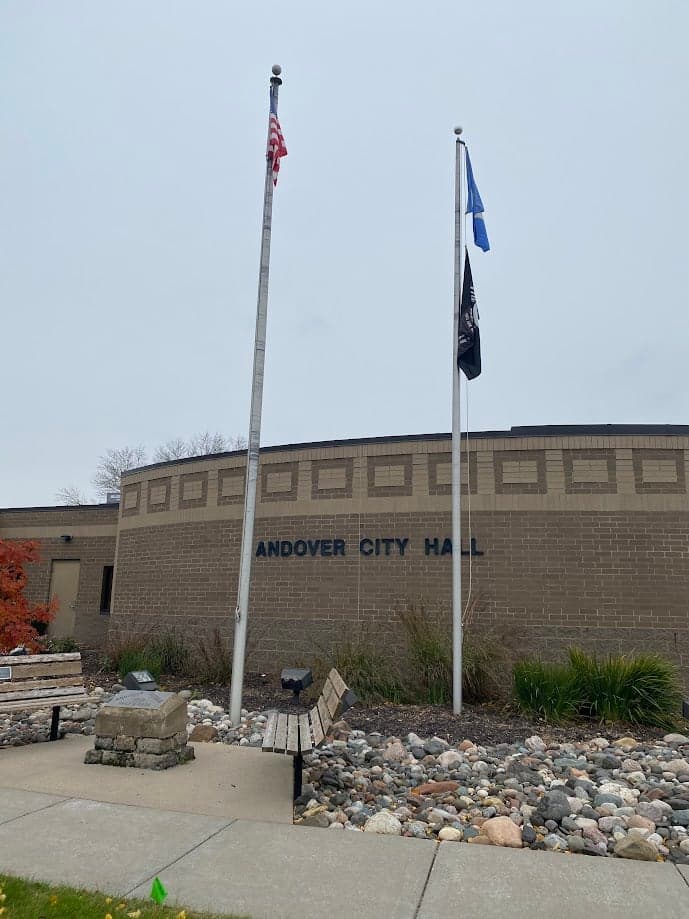
Photo: Wikipedia
Political ClimatePolitical Climate in Andover, MN
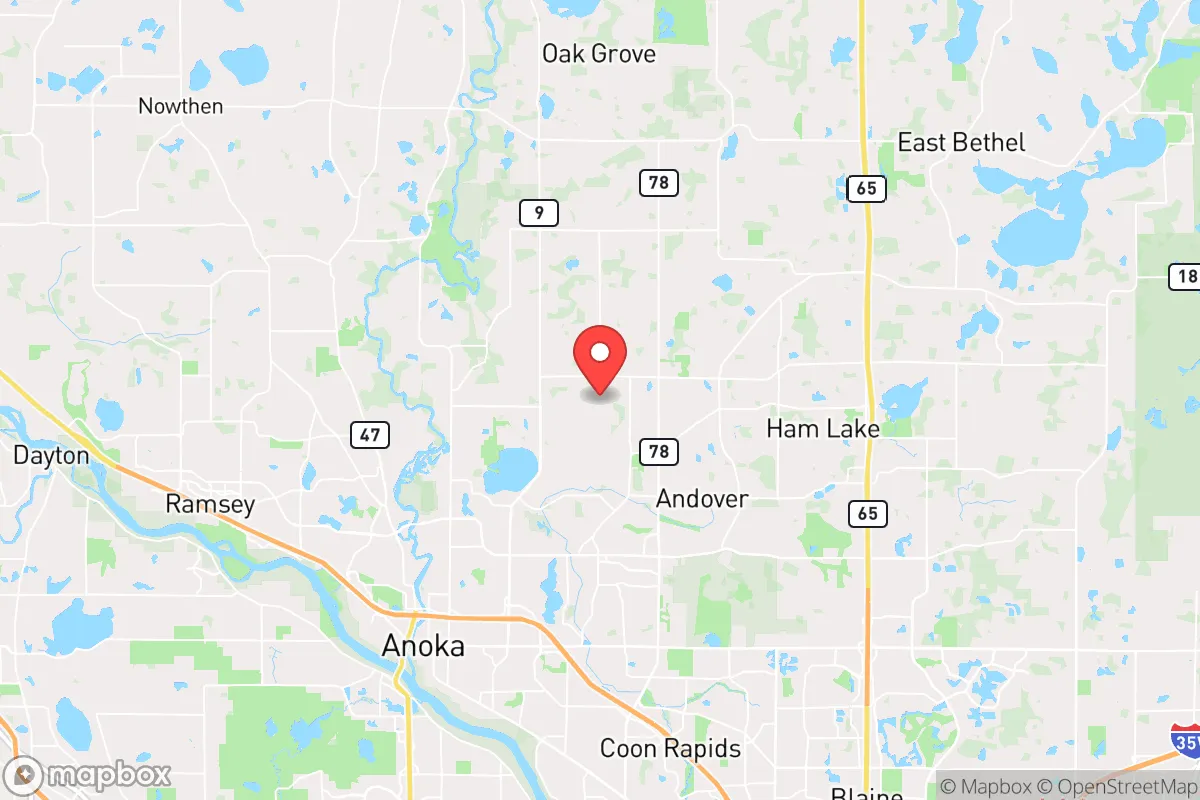
District shown is the primary district for this city’s centroid. Cities may span multiple districts.
Local Political AnalysisPolitical Analysis of Andover, MN
Andover, Minnesota, has long been a solidly conservative community, and that hasn't changed much despite the broader political shifts happening in the metro area. With a Cook Partisan Voting Index of R+10, the city leans reliably Republican, and that's reflected in local elections, school board races, and the general vibe around town. You still see more Trump signs than Harris signs in yards, and the local conversations at the coffee shop or the hardware store tend to focus on taxes, property rights, and keeping government out of people's business. That said, there's been a slow creep of progressive influence from the south, especially as folks move up from the more liberal suburbs like Blaine or Coon Rapids, and it's something longtime residents keep an eye on.
How it compares
Andover sits in a bit of a political sweet spot compared to its neighbors. Drive south to Anoka or Coon Rapids, and you'll find a much more mixed political landscape—those areas have been trending left for years, with higher support for Democratic candidates and more progressive policies on things like zoning and school curriculum. Head west to Ramsey or even further to Elk River, and you're back in more reliably conservative territory, though even there you'll see some purple patches. Andover itself has held steady, but the pressure is real: as the Twin Cities metro expands outward, you get more transplants who bring their urban voting habits with them. The school board and city council races here are where the rubber meets the road—if you see candidates pushing for diversity, equity, and inclusion initiatives or talking about "equity" in housing policy, that's a red flag that the old-school conservative values are being tested.
What this means for residents
For the average family in Andover, the political climate directly affects your wallet and your freedoms. Property taxes here are lower than in many surrounding communities, and the city has historically been reluctant to impose new fees or regulations on homeowners and small businesses. That's a direct result of a conservative council that believes in limited government. But if the political balance shifts even a few points, you could see more zoning restrictions, higher impact fees for new construction, or even talk of rent control—policies that sound good on paper but end up driving up costs and reducing personal choice. On the cultural side, the schools have managed to avoid the worst of the progressive curriculum battles, but it's a constant fight. Parents need to stay engaged, because the same groups pushing for critical race theory and gender ideology in Minneapolis schools are trying to make inroads up here.
One thing that sets Andover apart is its strong sense of local identity and resistance to being absorbed into the greater metro blob. The city has fought hard to maintain its own police department, its own planning authority, and its own character. You don't see the same kind of "regional cooperation" pressure that forces smaller towns to adopt county-wide policies on things like short-term rentals or solar panel mandates. That independence is worth protecting. Looking ahead, the long-term trend is concerning if the metro continues to expand and bring in more left-leaning voters. But for now, Andover remains a place where a person can still live their life without the government breathing down their neck—and that's something worth holding onto.

State Political ClimatePolitical Climate in Minnesota
State Political AnalysisPolitical Environment in the State
Minnesota has shifted from a classic purple battleground to a reliably blue state over the past two decades, with Democrats (DFL) now holding all statewide offices and both legislative chambers. The 2024 presidential race saw the state go blue by about 7 points, but that margin masks a deep and growing urban-rural chasm. For a conservative considering relocation, the state’s political trajectory is a mixed bag: the Twin Cities metro area drives the leftward lean, while Greater Minnesota remains a stronghold of traditional values, creating a tense and increasingly polarized environment.
Urban vs. rural divide
The political map of Minnesota is a tale of two nations. The Twin Cities metro—Minneapolis, St. Paul, and their inner-ring suburbs like Bloomington and Richfield—votes overwhelmingly Democratic, often by 30-40 point margins. This region alone accounts for over 55% of the state’s population, making it the engine of the state’s blue tilt. Meanwhile, Greater Minnesota—places like Rochester, Duluth, and the Iron Range—has been trending redder. The Iron Range (St. Louis, Itasca counties) was once a DFL stronghold but has flipped hard, with Trump winning many of those counties in 2020 and 2024. Even Rochester, home to the Mayo Clinic, is now a swing area, with its suburbs leaning conservative. The exurban ring—counties like Sherburne, Wright, and Chisago—has become a conservative bulwark, with many families fleeing the metro for lower taxes and more space. The divide is stark: drive 30 minutes outside the 494/694 beltway, and you’re in a different political universe.
Policy environment
Minnesota’s policy environment has taken a sharp progressive turn since the DFL trifecta took full control in 2023. The tax structure is among the most progressive in the nation, with a top income tax rate of 9.85% on income over $200,000 (single filers) and a statewide sales tax of 6.875% that local governments can pile on top. Property taxes are moderate but rising, especially in metro counties. The regulatory posture is heavy: the state has a strict environmental review law (the Minnesota Environmental Policy Act) that can delay projects for years, and a new paid family and medical leave program (effective 2026) imposes a 0.7% payroll tax split between employers and employees. Education policy is a flashpoint: the state has a universal school lunch program and recently passed a “trans refuge” law (HF 16) that shields gender-affirming care providers from out-of-state legal action, while also requiring schools to adopt policies that affirm transgender students’ identities—a major concern for parents who value local control. Election laws are among the most permissive: automatic voter registration, same-day registration, and no voter ID requirement. The state also restored felon voting rights upon release from prison in 2023. For a conservative, the policy environment feels like a one-party state imposing a top-down progressive agenda.
Trajectory & freedom
On the freedom scale, Minnesota is moving decisively in the wrong direction for conservatives. The 2023 legislative session was a firehose of progressive bills. Gun rights took a major hit with the passage of a “red flag” law (extreme risk protection order) and universal background checks for all firearm transfers, including private sales. Parental rights were eroded by the “trans refuge” law and a new law (HF 16) that allows minors to consent to gender-affirming care without parental notification in certain circumstances—a direct assault on family autonomy. Medical autonomy was further restricted by the codification of abortion rights (the PRO Act) and the elimination of most waiting periods and restrictions. Property rights are under pressure from a new “climate superfund” law that holds oil and gas companies liable for past emissions, which could trickle down to higher energy costs for homeowners. On the plus side, the state has no right-to-work law, but union membership has been declining. The tax burden is a constant drag: the state’s top marginal rate is the 4th highest in the nation, and a new “wealth tax” proposal (a 1% surcharge on investment income over $1 million) is being debated for 2025. The trajectory is clear: more regulation, higher taxes, and less personal liberty.
Civil unrest & political movements
Minnesota has been a national flashpoint for civil unrest. The 2020 George Floyd protests in Minneapolis caused over $500 million in property damage and led to a sustained “defund the police” movement that saw the Minneapolis City Council attempt to dismantle the police department. While that effort failed, the city’s police force has shrunk by over 30% since 2020, and violent crime remains elevated. Immigration politics are contentious: the state is a “sanctuary” state in practice, with a 2023 law (HF 19) that prohibits state and local law enforcement from cooperating with federal immigration authorities in most cases. This has led to tensions in suburbs like Brooklyn Park and Maple Grove, where immigrant populations have grown rapidly. Election integrity remains a sore spot: the 2020 election saw a record number of absentee ballots, and while no widespread fraud was found, the lack of voter ID and the state’s automatic registration system have fueled distrust among conservatives. Secession rhetoric is mostly fringe, but there is a growing “Greater Minnesota” movement that calls for more rural autonomy, with some counties (like Mille Lacs) passing symbolic resolutions declaring themselves “Second Amendment sanctuaries.” The political temperature is high, and a new resident will notice the tension between the progressive metro and the conservative countryside.
Projection
Over the next 5-10 years, Minnesota is likely to become even more polarized. Demographic trends favor the DFL: the Twin Cities metro is growing faster than the rest of the state, driven by immigration and young professionals. The 2020 census showed the state’s population becoming more diverse, with the white share dropping to 77%, and the Asian and Hispanic populations growing rapidly. This will likely keep the state blue at the presidential level, but the legislative map could shift if rural counties continue to lose population. The 2026 redistricting will be critical: if the DFL controls the process, they could gerrymander the metro to lock in their majority. However, there are signs of a conservative backlash: the 2022 governor’s race was closer than expected (Scott Jensen lost by 7 points), and the 2024 election saw Trump improve his margin in many rural counties. The exurban ring is growing fast, and if those areas continue to trend red, they could flip a few state House seats. But the overall trajectory is toward a one-party state, with the DFL consolidating power and pushing through a progressive agenda that will make life harder for conservatives who value low taxes, gun rights, and parental control.
For a conservative moving to Minnesota, the bottom line is this: you’ll find a strong community of like-minded people in the exurbs and rural areas, but you’ll be fighting an uphill battle against a state government that is increasingly hostile to your values. The tax burden is high, the regulatory environment is stifling, and the cultural climate in the metro is aggressively progressive. If you can live in a place like St. Michael or North Branch and work remotely, you can carve out a good life. But if you’re looking for a state that respects your freedom and your wallet, Minnesota is not the place it used to be.
* Values derived from national, state, county, city and local statistics and may differ in a specific area. Last updated: 2026-04-30T09:09:00.000Z
Narrative content on this page is AI-generated and may contain mistakes. Verify any details that matter before acting on them.
ReloMaps may earn a commission from affiliate links at no extra cost to you.

