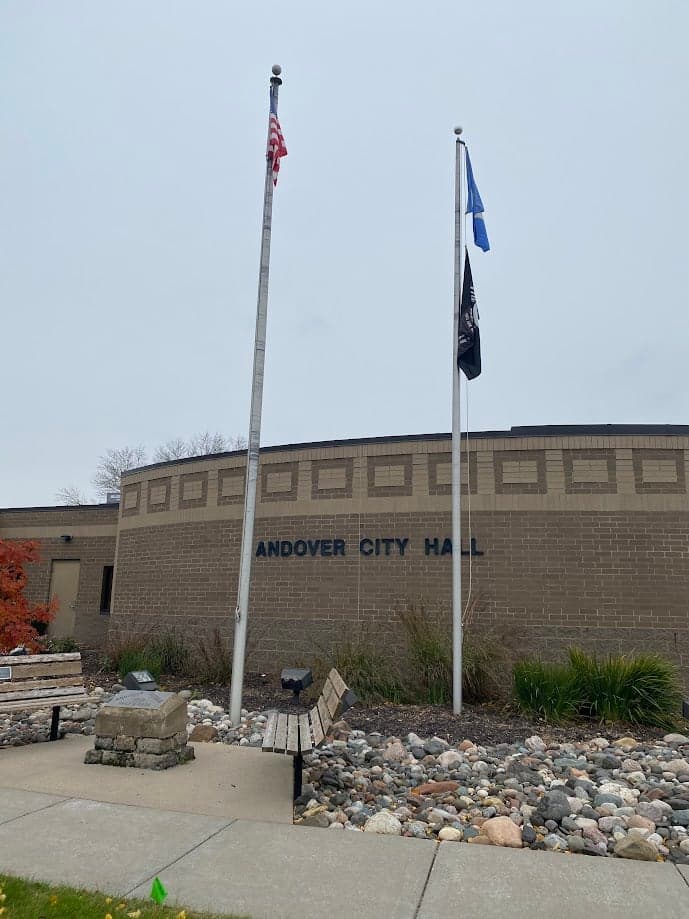
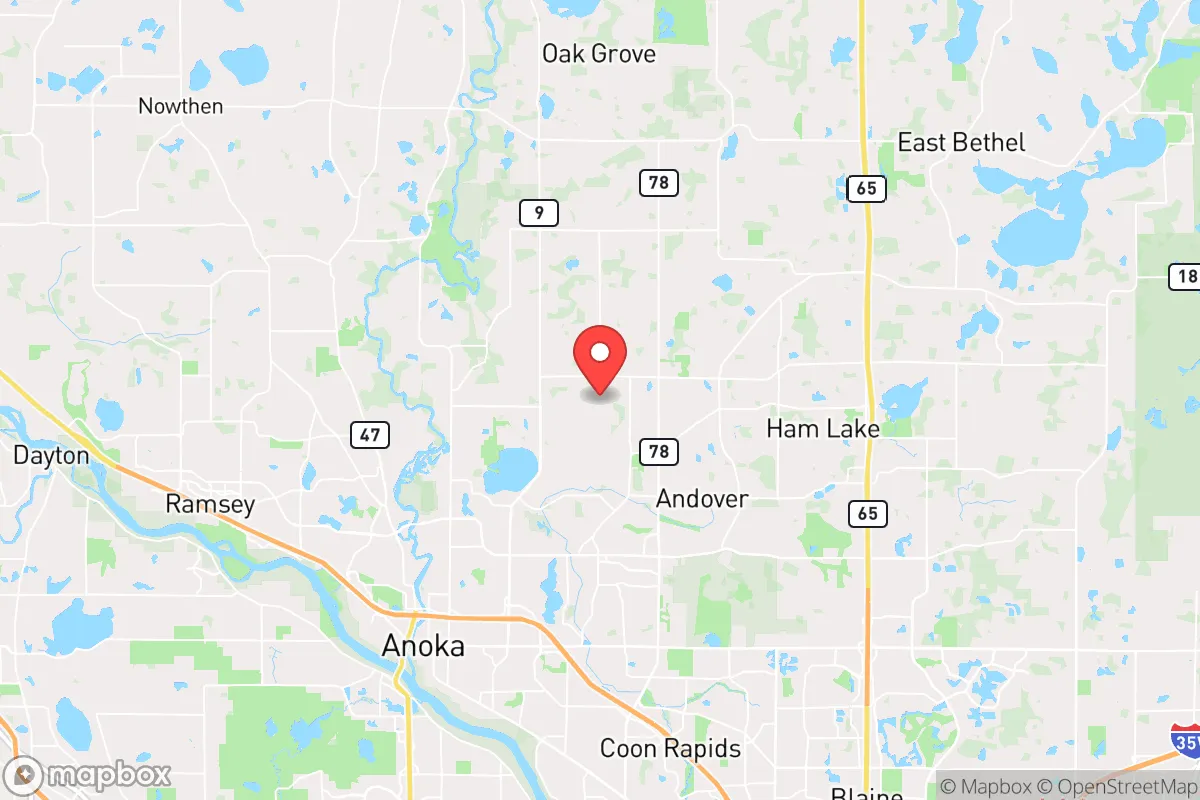
Photo: Wikipedia
Strategic Assessment of Andover, MN
Meaningful friction. Expect exposure to either population pressure, blast zones, or natural disaster risk. Consider buying a retreat property.
What does the Strategic Assessment tell us?
Our Strategic Assessment grades tactical survivability of an area. Major population centers, military targets, fallout zones, natural disasters, and border exposure all drive risk — lower exposure means a more defensible position in a crisis.
This is heavily inspired by Joel Skousen's Strategic Relocation book. Highly recommended you checkout the book ($)What does this tell us?
Our Strategic Assessment grades tactical survivability of an area. Major population centers, military targets, fallout zones, natural disasters, and border exposure all drive risk — lower exposure means a more defensible position in a crisis.
This is heavily inspired by Joel Skousen's Strategic Relocation book. Highly recommended you checkout the book ($)Strategic Pillars

Key Distances
Regional Safe Places
Below is our recommended "safe zones" in Minnesota and the surrounding area based on our strategic heuristics. For most people, it's unrealistic to live in a “safe zone” full-time due to work, family or other personal reasons. They tend to be more rural. However, many of these areas are perfect for second homes and retreat properties that double as a vacation home or even a short-term rental.
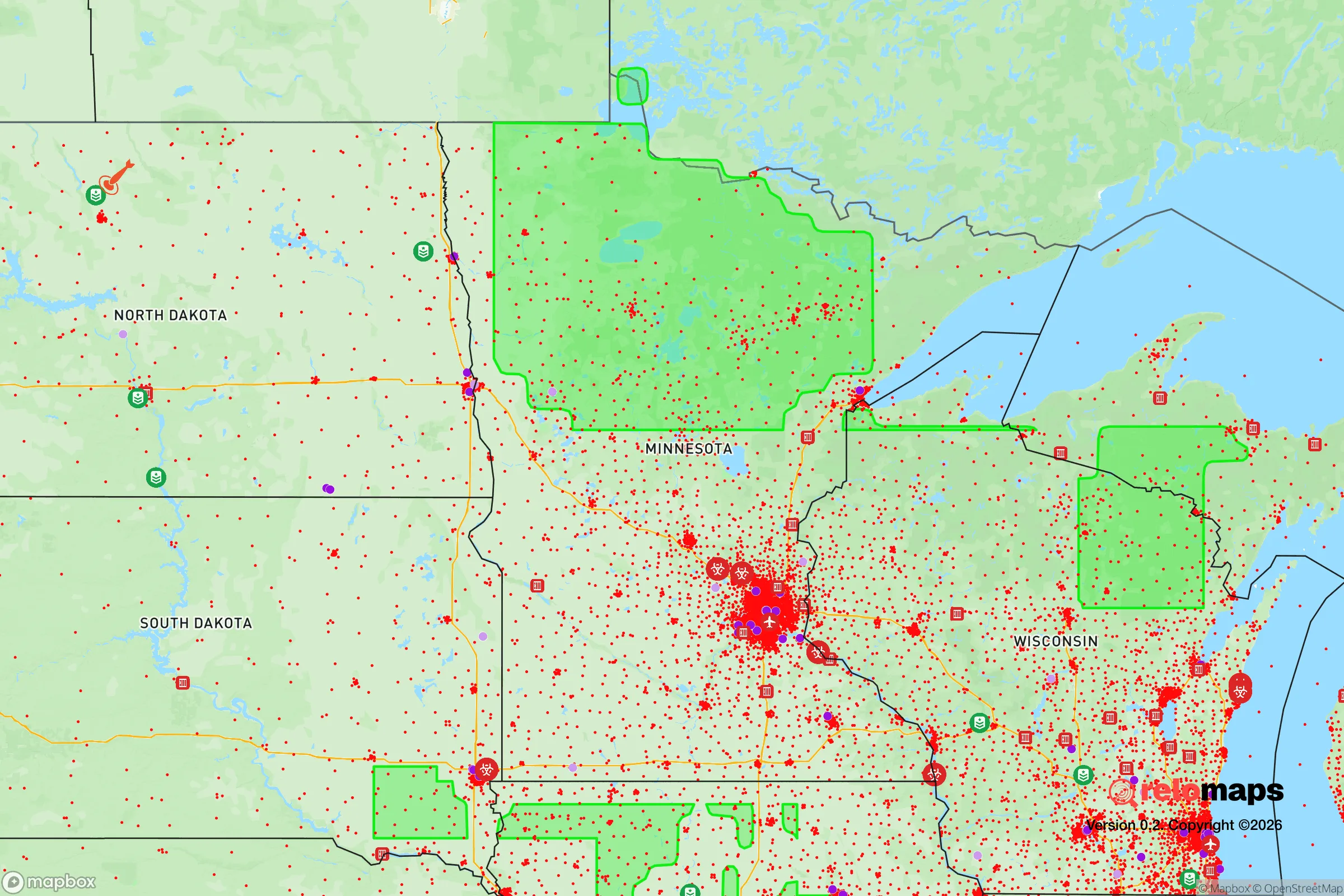
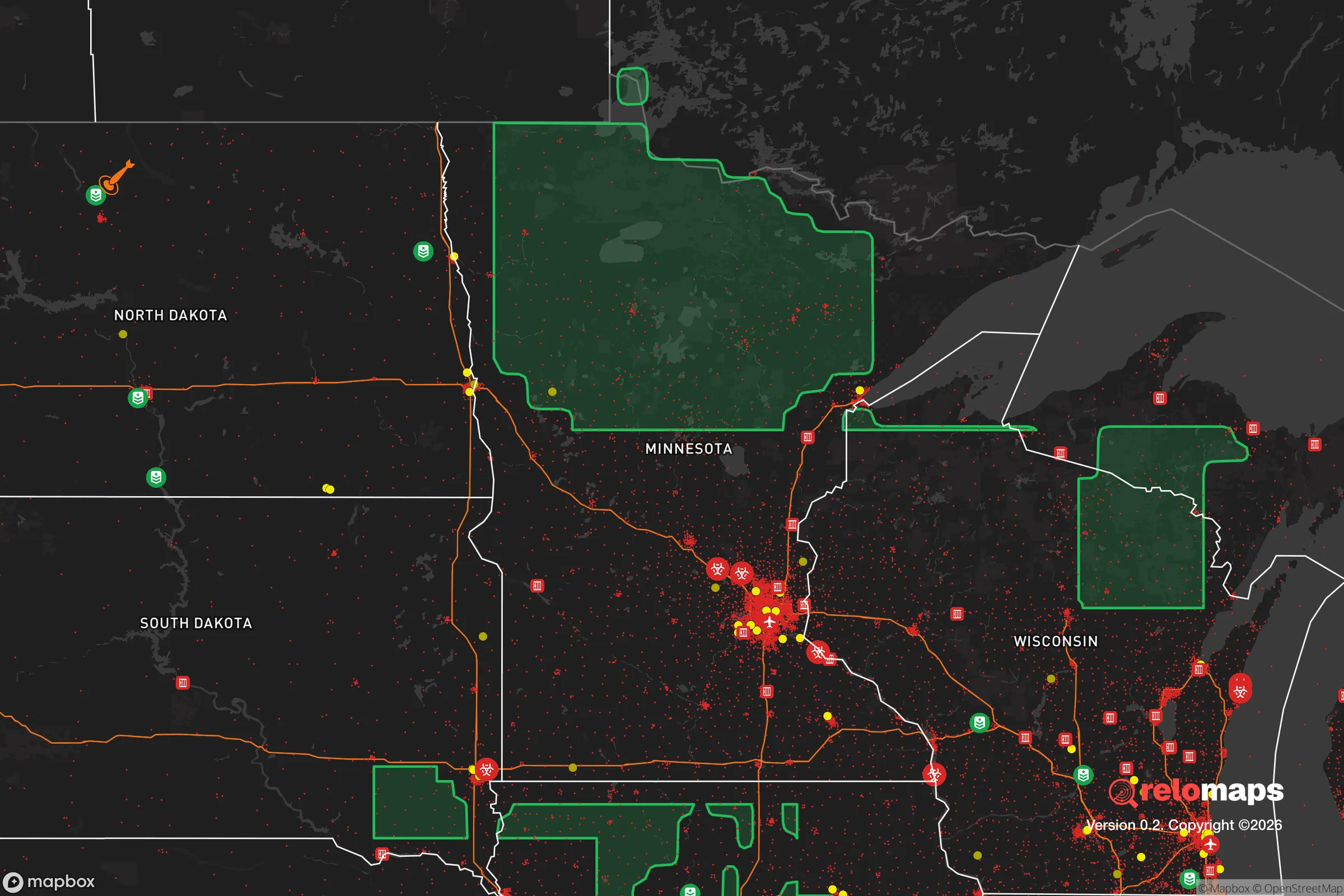


Important Note: For informational purposes only. This does not mean nothing bad ever happens in the green zones. Please use common sense. This is based on public data and modeled with AI. We tried to take a conservative approach but mistakes happen. We update this regularly as new information becomes available.
Solar Generator Recommendations
Backup power matters more here than in safer locations. We've picked three solar generators across budgets and capacity tiers — start with the budget unit if you only need a few essentials, or step up if you want to run a fridge and HVAC for days at a time.

Jackery Portable Power Station Explorer 300
Budget OptionPower on the Go: Weighing only 11 lbs, it's convenient to set up and store with book-sized foldable solar panels

BLUETTI Portable Power Station AC180
Designed for both indoor and outdoor scenarios, AC180 is highly capable as it has a robost capacity and continuous output power.

EF ECOFLOW DELTA Pro Ultra Power Station
Upgraded PickEcoFlow DELTA Pro Ultra is a whole-home energy system designed to grow with your family. Integrated with the Smart Home Panel 2, it scales to meet your evolving energy needs — keeping your home powered, intelligent, and secure through every stage of life.
We earn a commission, at no additional cost to you.
Strategic Assessment Analysis
Andover, Minnesota, sits in a strategic sweet spot that many relocators overlook: close enough to the economic engine of the Twin Cities to sustain a career, yet far enough north to offer genuine buffer from the worst-case scenarios of urban collapse. With a population hovering around 33,000 and a low-density suburban-to-rural layout, this Anoka County community provides a resilience profile that balances access with isolation. For those thinking in terms of civic unrest, supply chain disruptions, or mass casualty events, Andover’s location along the Rum River and its position relative to major infrastructure make it a place worth serious consideration—provided you understand both its strengths and its exposures.
Geographic position and natural advantages for long-term stability
Andover’s geography is its primary asset. The city sits roughly 25 miles north of downtown Minneapolis, placing it outside the immediate blast radius of any potential urban disaster while still within a reasonable commute for work or resupply. The Rum River cuts through the eastern edge of the city, providing a natural water source that isn’t dependent on municipal treatment plants—critical if grid water fails. The surrounding landscape is a mix of hardwood forests, wetlands, and agricultural fields, offering both cover and potential for subsistence farming. The area’s glacial till soils, while not the richest in the state, are workable for gardens and small-scale crops. Andover’s elevation is modest—around 900 feet—but the region’s rolling terrain provides natural drainage and defensible high points. The city is also within 10 miles of the Carlos Avery Wildlife Management Area, a 24,000-acre tract of public land that could serve as a hunting and foraging buffer in a prolonged crisis. For a relocator prioritizing self-sufficiency, the combination of river access, forest cover, and nearby public land is a significant advantage over more densely developed suburbs like Blaine or Coon Rapids.
Risks, exposures, and proximity to fallout-relevant landmarks
No location is without vulnerabilities, and Andover has several that a prepper must account for. The most immediate concern is proximity to the Twin Cities metro—specifically, the potential for refugee flow during a collapse. Interstate 35 runs just 10 miles west of Andover, and Highway 65 cuts directly through the city. Both are primary evacuation routes from Minneapolis. In a mass casualty event or civil unrest scenario, these roads could become chokepoints or vectors for looting parties. Andover is also within 30 miles of the Monticello Nuclear Generating Plant, a single-unit reactor that sits on the Mississippi River. While the plant has a solid safety record, any catastrophic failure—whether from sabotage, earthquake, or grid instability—would put Andover within the 10-mile plume exposure pathway zone for radioactive iodine. The prevailing winds in Minnesota are from the northwest, meaning fallout from Monticello would likely blow southeast, away from Andover, but that’s a statistical comfort, not a guarantee. Additionally, the city is roughly 40 miles from the Minneapolis–Saint Paul International Airport (MSP), a potential target for terrorism or military action. Andover’s own infrastructure—a single major hospital (Mercy Hospital in nearby Coon Rapids) and limited police force—means that a mass casualty event could quickly overwhelm local resources. The city’s reliance on the electrical grid and natural gas for heating (most homes use forced air) is another exposure; a prolonged winter blackout would be a serious test of preparedness.
Practical resilience for a relocator: food, water, energy, and defensibility
For someone serious about resilience, Andover offers a mixed bag. Water is the strongest point: the Rum River is perennial and generally clean, though it does carry agricultural runoff from upstream farms. A good well—many homes in Andover’s rural pockets already have them—is the gold standard. The city’s municipal water comes from the Prairie du Chien-Jordan aquifer, which is deep and reliable, but grid-dependent. For food, Andover’s agricultural base is thin within city limits, but the surrounding Anoka County is rich in small farms, u-pick operations, and farmers’ markets. The Anoka County Fairgrounds, just south in Anoka, could become a distribution hub in a crisis. Hunting is viable: deer, turkey, and small game are abundant in the Carlos Avery WMA and the Rum River State Forest. Fishing in the Rum River is decent for walleye, northern pike, and bass. Energy is the weak link. Andover is served by Xcel Energy, and while the grid is stable in normal times, it’s vulnerable to both cyberattack and physical sabotage. Solar panels are a viable option—Minnesota gets about 4.5 peak sun hours per day in summer, dropping to 1.5 in December—but battery storage is essential for winter. Natural gas is the primary heating fuel, and a propane backup with a 500-gallon tank is a wise investment. Defensibility is moderate. Andover’s layout is a mix of cul-de-sac subdivisions and acreage properties. The acreage parcels—typically 2 to 10 acres—offer better standoff distance and the ability to create a perimeter. The subdivisions, while more social, are harder to secure. The city’s police department has about 30 sworn officers, which is thin for a population of 33,000. In a prolonged crisis, community defense would likely fall to neighborhood watch groups or informal militias. Andover’s relatively low crime rate (violent crime is about 60% below the national average) suggests a stable population, but that could change rapidly under stress.
The overall strategic picture for Andover is one of cautious optimism. It’s not a hardened bunker location—there’s no mountain redoubt, no remote island—but it offers a realistic balance for someone who wants to stay connected to the economy while maintaining a fallback position. The key is to treat Andover as a base camp, not a fortress. Stockpile for 90 days minimum, invest in a well or water filtration, secure a backup heat source, and build relationships with neighbors who share your mindset. The proximity to the Twin Cities is a double-edged sword: it provides jobs and resources in good times, but it’s a liability in bad ones. If you’re willing to accept that trade-off, Andover can work. Just don’t expect to ride out a full societal collapse here without serious preparation. The Rum River won’t save you if you haven’t laid in the supplies and skills to use it.

* Values derived from national, state, county, city and local statistics and may differ in a specific area. Last updated: 2026-04-30T09:09:00.000Z
Narrative content on this page is AI-generated and may contain mistakes. Verify any details that matter before acting on them.
ReloMaps may earn a commission from affiliate links at no extra cost to you.

