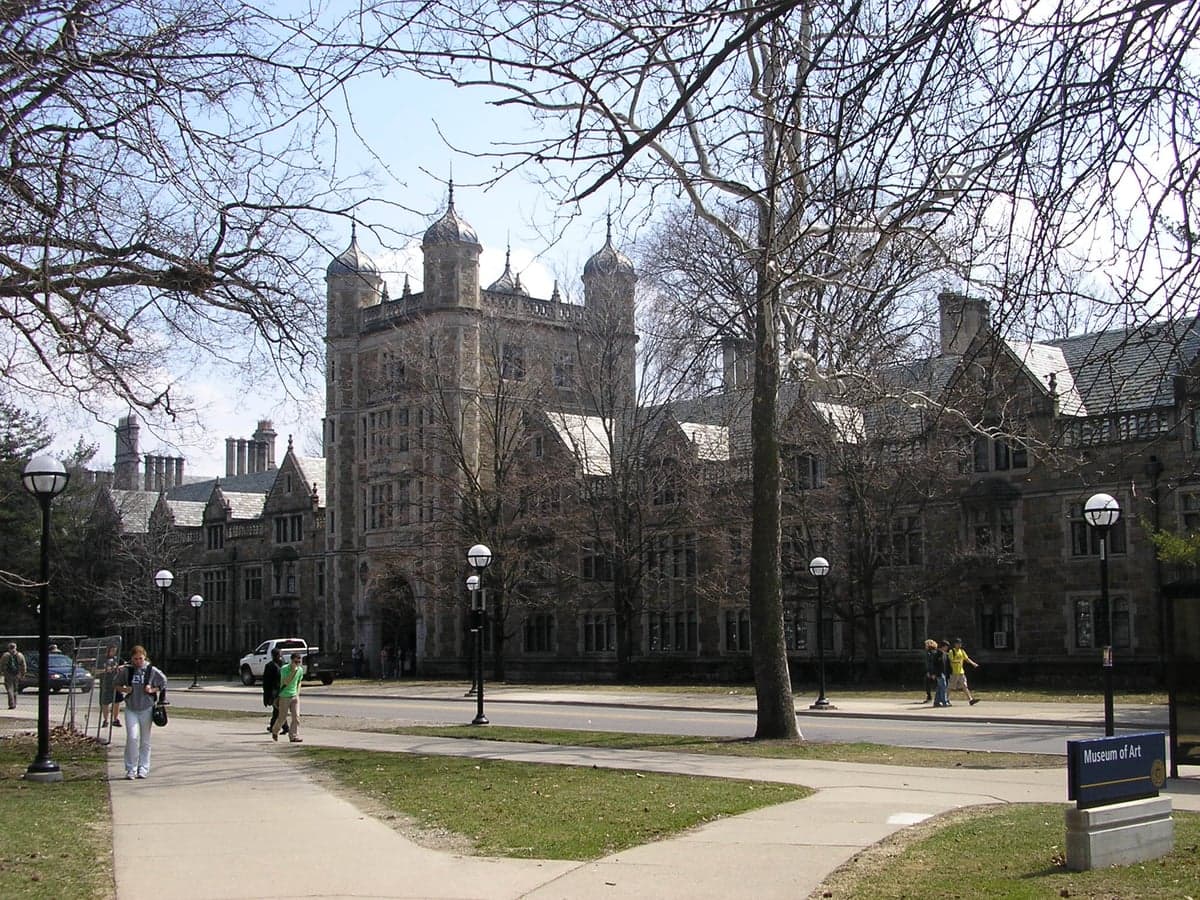
Photo: Wikipedia
Personal Sovereignty in Ann Arbor, MI
Strong independent fundamentals that actively favor personal liberty and low regulation.
What does Personal Sovereignty tell us?
Personal Sovereignty measures your capacity for self-reliance and independence with minimal government friction. Higher scores mean fewer barriers between you and the way you want to live... but it assumes you have the space you need and good neighbors.
What does this tell us?
Personal Sovereignty measures your capacity for self-reliance and independence with minimal government friction. Higher scores mean fewer barriers between you and the way you want to live... but it assumes you have the space you need and good neighbors.
State Policy
Energy independence: Importer (20% of energy produced in-state)
Personal Liberty
Homesteading

Personal Liberty Analysis
Ann Arbor, Michigan, presents a challenging environment for those prioritizing personal sovereignty, particularly from a survivalist or prepper perspective. While the city’s progressive governance and dense university culture foster a sense of intellectual freedom, they simultaneously impose significant constraints on individual autonomy through high taxes, restrictive regulations, and a legal framework that often prioritizes collective goals over personal liberty. For a conservative-leaning individual or family concerned with government overreach, Ann Arbor requires a careful, strategic evaluation of where your freedoms end and the state’s authority begins.
Tax burden and regulatory posture: What you pay for limited freedom
Ann Arbor’s tax burden is among the highest in Michigan, a direct reflection of its expansive municipal government and progressive policy priorities. The city’s income tax, at 2.5% for residents and 1.25% for non-residents, is a rare and significant local levy that funds a wide array of social programs, public transit, and environmental initiatives. Combined with Michigan’s flat 4.25% state income tax and property taxes that often exceed 2% of assessed value, the total effective tax rate can easily surpass 8-10% of gross income for a homeowner. This fiscal posture directly reduces the capital available for personal preparedness, land acquisition, or off-grid investments. The regulatory environment is equally dense: zoning codes are strict, building permits are rigorously enforced, and the city has a robust rental inspection program that can feel intrusive to property owners. Any attempt to modify a home for self-sufficiency—such as installing a large rainwater catchment system, a backup generator, or a substantial garden shed—will likely require multiple permits and face neighborhood association scrutiny. The city’s commitment to “green” initiatives, while laudable in principle, often translates into mandates that limit personal choice, such as restrictions on gas-powered lawn equipment and aggressive enforcement of energy codes.
Self-defense and gun law specifics: Navigating a restrictive legal landscape
For those who view the Second Amendment as a cornerstone of personal sovereignty, Ann Arbor is a jurisdiction of significant concern. While Michigan is a shall-issue state for concealed pistol licenses (CPLs), the city itself has a history of local ordinances that create friction. The University of Michigan campus, which dominates the city’s geography, is a gun-free zone by policy, and many public buildings, including city hall and libraries, post “no weapons” signs that carry legal weight. The state’s recent passage of universal background checks and safe storage laws—both supported by Ann Arbor’s political leadership—adds layers of bureaucratic compliance. Open carry is legal in Michigan but is practically discouraged in Ann Arbor by local law enforcement and social stigma; doing so will likely result in police contacts and public alarm. For a prepper, this means that storing firearms for home defense is straightforward, but carrying for personal protection outside the home is legally and socially constrained. Magazine capacity is not restricted by state law, but the city’s political climate makes it a target for future local restrictions. The Washtenaw County sheriff’s office, which serves Ann Arbor, is generally professional but operates under a county prosecutor who has publicly stated a focus on “gun violence prevention,” which can translate to aggressive charging in self-defense cases.
Self-reliance and homesteading viability: Lot sizes, zoning, and off-grid feasibility
Ann Arbor’s urban and near-urban character makes traditional homesteading or off-grid living extremely difficult. The typical residential lot size within the city limits is 0.1 to 0.25 acres, with most homes built on narrow, deep plots. Zoning regulations prohibit the keeping of livestock—chickens are allowed only with a permit and strict coop requirements, while goats, pigs, or larger animals are outright banned. Growing a substantial vegetable garden is possible, but the city’s soil is often contaminated with lead from historical industrial activity, requiring raised beds and imported soil. Off-grid energy systems are effectively illegal: the city requires connection to the municipal power grid, and solar panels must be grid-tied with no battery storage allowed without a complex, expensive permit process. Rainwater harvesting is limited to 55-gallon barrels, and any larger system is considered a “water supply” requiring health department approval. For a prepper seeking true self-reliance, the surrounding townships in Washtenaw County—such as Dexter, Saline, or rural areas of Scio Township—offer larger lots (1-5 acres) with more permissive zoning, but even there, building codes and well/septic regulations are stringent. The reality is that Ann Arbor itself is a poor location for any serious homesteading or off-grid project; it is a city designed for interdependence, not independence.
Personal liberties: Parental rights, medical autonomy, speech, and property
Ann Arbor’s progressive culture creates a complex landscape for personal liberties. Parental rights are under significant pressure: the Ann Arbor Public Schools district has a strong track record of implementing curriculum and policies that some conservative parents view as overreach, including comprehensive sex education starting in elementary school, gender identity support plans that can be developed without parental notification, and a general ethos that prioritizes student “autonomy” over parental authority. Medical autonomy is similarly constrained; the city’s health department aggressively promotes vaccine mandates and public health orders, and during the COVID-19 pandemic, Ann Arbor was one of the most restrictive jurisdictions in the state, with prolonged mask mandates and business closures. Free speech is legally protected, but the social climate can be hostile to conservative viewpoints, particularly on campus and in city council meetings. Property rights are limited by the city’s strong historic preservation ordinances, which can restrict exterior modifications to homes in designated districts, and by a rental licensing system that gives the city broad inspection authority. For a survivalist, the most concerning aspect is the city’s willingness to use emergency powers—the city council can, and has, enacted curfews, restricted movement, and closed businesses with little judicial oversight. This creates an environment where personal preparedness is not just about supplies, but about having a plan to operate outside the city’s regulatory reach during a crisis.
In the broader context of Michigan and the Midwest, Ann Arbor ranks as one of the most sovereignty-restrictive cities for a conservative-leaning prepper. Compared to rural areas of northern Michigan or the Upper Peninsula, where property taxes are lower, zoning is minimal, and gun laws are applied with more deference to the individual, Ann Arbor feels like a different country. For a single individual or family who values personal autonomy, self-reliance, and minimal government interference, the city’s high costs, dense regulations, and progressive political culture make it a poor fit for long-term strategic relocation. The best approach is to view Ann Arbor as a place to work or study, but not to plant deep roots—your sovereignty is better secured in the surrounding counties or further north, where the state’s reach is weaker and your ability to live on your own terms is far greater.

* Values derived from national, state, county, city and local statistics and may differ in a specific area. Last updated: 2026-04-24T13:11:16.000Z
Narrative content on this page is AI-generated and may contain mistakes. Verify any details that matter before acting on them.
ReloMaps may earn a commission from affiliate links at no extra cost to you.

