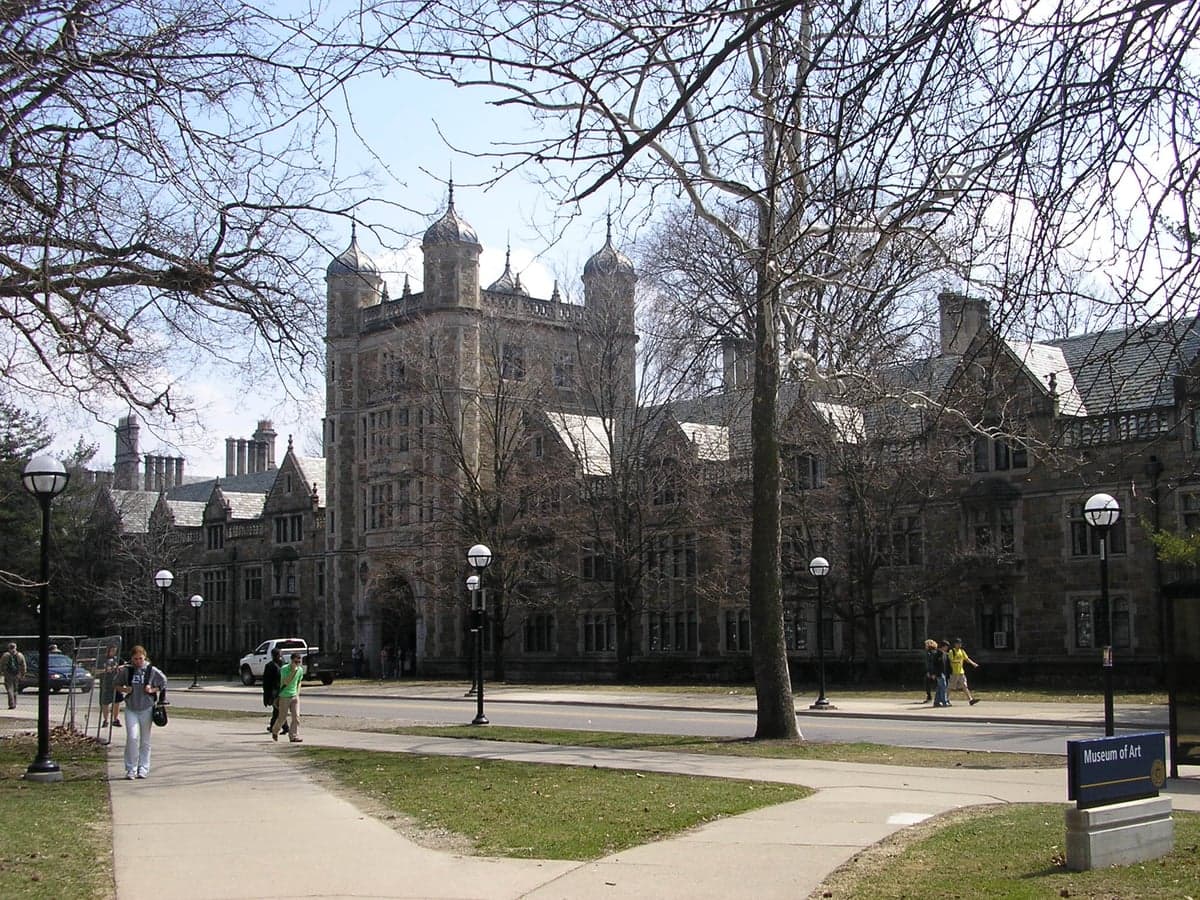
Photo: Wikipedia
Strategic Assessment of Ann Arbor, MI
Meaningful friction. Expect exposure to either population pressure, blast zones, or natural disaster risk. Consider buying a retreat property.
What does the Strategic Assessment tell us?
Our Strategic Assessment grades tactical survivability of an area. Major population centers, military targets, fallout zones, natural disasters, and border exposure all drive risk — lower exposure means a more defensible position in a crisis.
This is heavily inspired by Joel Skousen's Strategic Relocation book. Highly recommended you checkout the book ($)What does this tell us?
Our Strategic Assessment grades tactical survivability of an area. Major population centers, military targets, fallout zones, natural disasters, and border exposure all drive risk — lower exposure means a more defensible position in a crisis.
This is heavily inspired by Joel Skousen's Strategic Relocation book. Highly recommended you checkout the book ($)Strategic Pillars

Key Distances
Regional Safe Places
Below is our recommended "safe zones" in Michigan and the surrounding area based on our strategic heuristics. For most people, it's unrealistic to live in a “safe zone” full-time due to work, family or other personal reasons. They tend to be more rural. However, many of these areas are perfect for second homes and retreat properties that double as a vacation home or even a short-term rental.


Important Note: For informational purposes only. This does not mean nothing bad ever happens in the green zones. Please use common sense. This is based on public data and modeled with AI. We tried to take a conservative approach but mistakes happen. We update this regularly as new information becomes available.
Solar Generator Recommendations
Backup power matters more here than in safer locations. We've picked three solar generators across budgets and capacity tiers — start with the budget unit if you only need a few essentials, or step up if you want to run a fridge and HVAC for days at a time.

Jackery Portable Power Station Explorer 300
Budget OptionPower on the Go: Weighing only 11 lbs, it's convenient to set up and store with book-sized foldable solar panels

BLUETTI Portable Power Station AC180
Designed for both indoor and outdoor scenarios, AC180 is highly capable as it has a robost capacity and continuous output power.

EF ECOFLOW DELTA Pro Ultra Power Station
Upgraded PickEcoFlow DELTA Pro Ultra is a whole-home energy system designed to grow with your family. Integrated with the Smart Home Panel 2, it scales to meet your evolving energy needs — keeping your home powered, intelligent, and secure through every stage of life.
We earn a commission, at no additional cost to you.
Strategic Assessment Analysis
Ann Arbor presents a complex strategic picture for the conservative prepper. On one hand, its location in Southeast Michigan offers genuine resilience advantages—ample fresh water, a moderate climate, and distance from coastal fallout zones. On the other, it sits squarely in the orbit of Detroit (45 miles east) and is a deep-blue university town whose political and social dynamics may feel alien to a conservative relocator. The question isn't whether Ann Arbor is survivable—it's whether its specific trade-offs align with your risk calculus for civic unrest, supply chain disruption, and long-term societal instability.
Geographic position and natural advantages for long-term survival
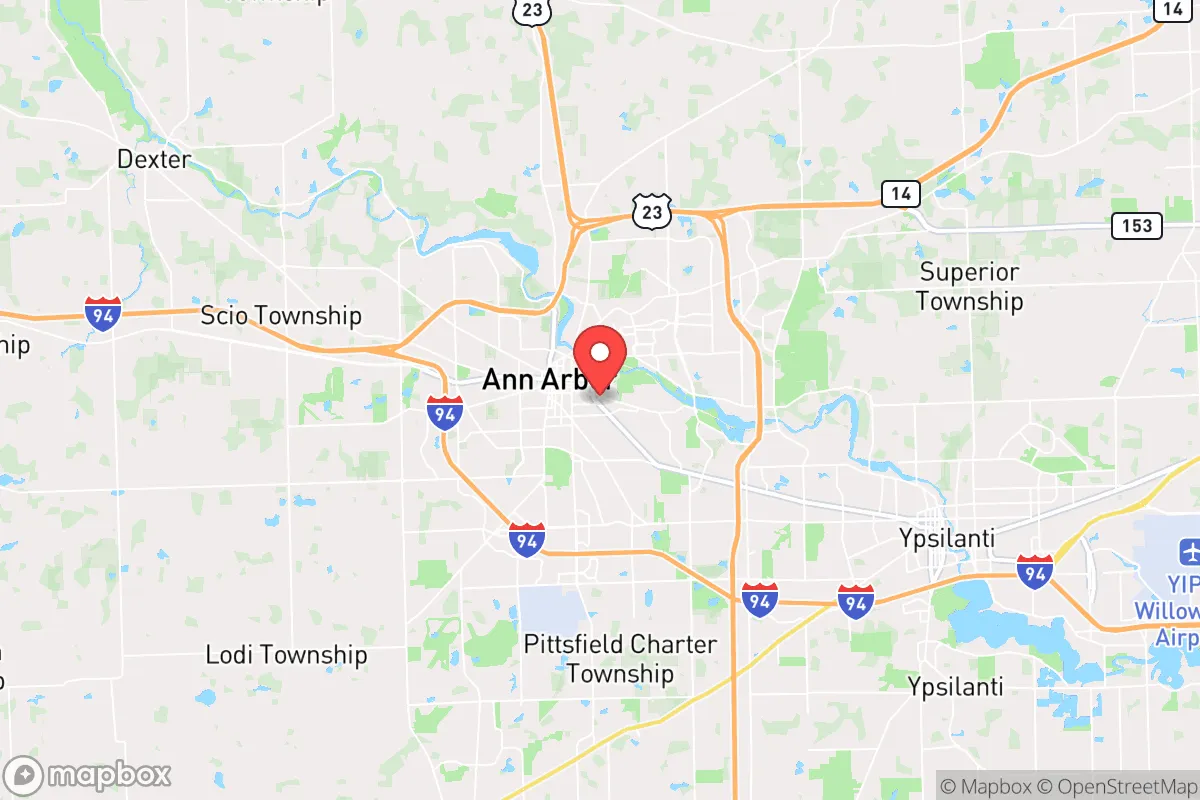
Ann Arbor's primary strategic asset is its position within the Great Lakes water basin. The city sits on the Huron River, a tributary of the Detroit River system, giving residents access to one of the largest freshwater reserves on the planet. In a scenario where drought or contamination plagues other regions, this is a non-negotiable advantage. The surrounding Washtenaw County is a patchwork of farmland, woodlots, and small towns—places like Dexter, Chelsea, and Saline—that offer retreat options within a 20- to 30-minute drive. The terrain is gently rolling, with no major floodplains or seismic risks. Winters are cold but manageable, and the growing season (roughly 150 days) is long enough for serious subsistence gardening. The city's tree canopy is dense, providing natural cover and reducing heat island effects. For a relocator thinking in decades, not years, Ann Arbor's water security and moderate climate are hard to beat.
Risks, exposures, and proximity to fallout-relevant landmarks
The most glaring vulnerability is proximity to Detroit. At 45 miles, Ann Arbor is within the blast radius of a major terrorist or state-actor attack on Detroit's infrastructure—the Ambassador Bridge, the Detroit-Windsor Tunnel, or the Ford River Rouge Complex. A conventional or dirty bomb detonation in Detroit would send fallout, refugees, and chaos westward along I-94. Ann Arbor is also 30 miles from the Fermi 2 nuclear plant in Monroe County, a pressurized water reactor that, while well-regulated, is a single-point-of-failure risk. A Fukushima-style event would force evacuation of a 10-mile radius and contaminate the Huron River watershed. The city itself is a target for civil unrest: the University of Michigan campus is a perennial flashpoint for protests, and the city's progressive governance means police funding and response times are perennial political battlegrounds. In a breakdown scenario, Ann Arbor's dense student population (over 30,000) could become a liability—young, transient, and dependent on institutional food and housing. The city's reliance on just-in-time supply chains for groceries and medical supplies is another weak point. Most food comes via truck from distribution centers in Detroit and Toledo; a fuel shortage or highway closure would empty shelves within 72 hours.
Practical resilience for a relocator: food, water, energy, and defensibility
For a prepper willing to invest, Ann Arbor offers workable but not ideal conditions. Water: The city's municipal supply comes from the Huron River and is treated at the Ann Arbor Water Treatment Plant. In a grid-down scenario, the river is accessible but requires filtration and boiling. A well on rural property outside city limits is the gold standard. Food: Washtenaw County has a strong local food network—farmers' markets, CSAs, and u-pick operations—but these are seasonal. Year-round food security means building a pantry and learning to preserve. The city's zoning allows backyard chickens and small-scale gardening, but livestock like goats or pigs are restricted. For serious self-sufficiency, you'll need land in the surrounding townships. Energy: DTE Energy provides electricity via a mix of natural gas, coal, and renewables. The grid is aging and prone to outages during ice storms and heat waves. Solar is viable—Michigan gets about 4.5 peak sun hours per day—but net metering policies are state-level and subject to change. A backup generator with a 200-gallon propane tank is the baseline recommendation. Defensibility: Ann Arbor itself is not defensible. It's a sprawling, open city with multiple highway access points. The defensible positions are in the rural ring: farmhouses with long sightlines, properties with natural barriers (creeks, woodlots), and small towns where neighbors know each other. The Washtenaw County Sheriff's Office is professional but understaffed; response times in rural areas can exceed 20 minutes. For a relocator, the strategy is clear: live in or near Ann Arbor for its economic and medical infrastructure, but maintain a prepared retreat in the surrounding countryside.
The overall strategic picture for Ann Arbor is one of cautious viability. It offers genuine natural advantages—fresh water, arable land, moderate climate—that many other regions lack. But it also carries significant exposure to urban collapse, nuclear risk, and political instability. For the conservative prepper, Ann Arbor is not a destination; it's a base of operations. The city provides access to world-class medical care (Michigan Medicine), a diverse economy, and a talent pool that could be useful in a rebuilding scenario. But the real value lies in the surrounding region—the small towns, the farmland, the lake country to the northwest. If you can secure a property in the rural ring, maintain a low profile, and build relationships with like-minded neighbors, Ann Arbor's location becomes a strategic asset rather than a liability. If you plan to hunker down inside the city limits, you're betting that the university's institutional stability outlasts the chaos. That's a bet this analyst wouldn't take.

* Values derived from national, state, county, city and local statistics and may differ in a specific area. Last updated: 2026-04-24T13:11:16.000Z
Narrative content on this page is AI-generated and may contain mistakes. Verify any details that matter before acting on them.
ReloMaps may earn a commission from affiliate links at no extra cost to you.

