Photo: Wikipedia
Political ClimatePolitical Climate in Ann Arbor, MI
District shown is the primary district for this city’s centroid. Cities may span multiple districts.
Local Political AnalysisPolitical Analysis of Ann Arbor, MI
Ann Arbor leans heavily Democratic, with a Cook PVI of D+12, meaning the city votes about 12 points more Democratic than the national average. That’s not just a number—it’s a lived reality that has shifted noticeably over the past decade. I’ve been here long enough to remember when the city had a more moderate, live-and-let-live vibe, but the political center has moved left, and fast. If you’re looking for a place where personal freedoms and limited government are respected, you’ll want to pay close attention to how that D+12 plays out in daily life.
How it compares
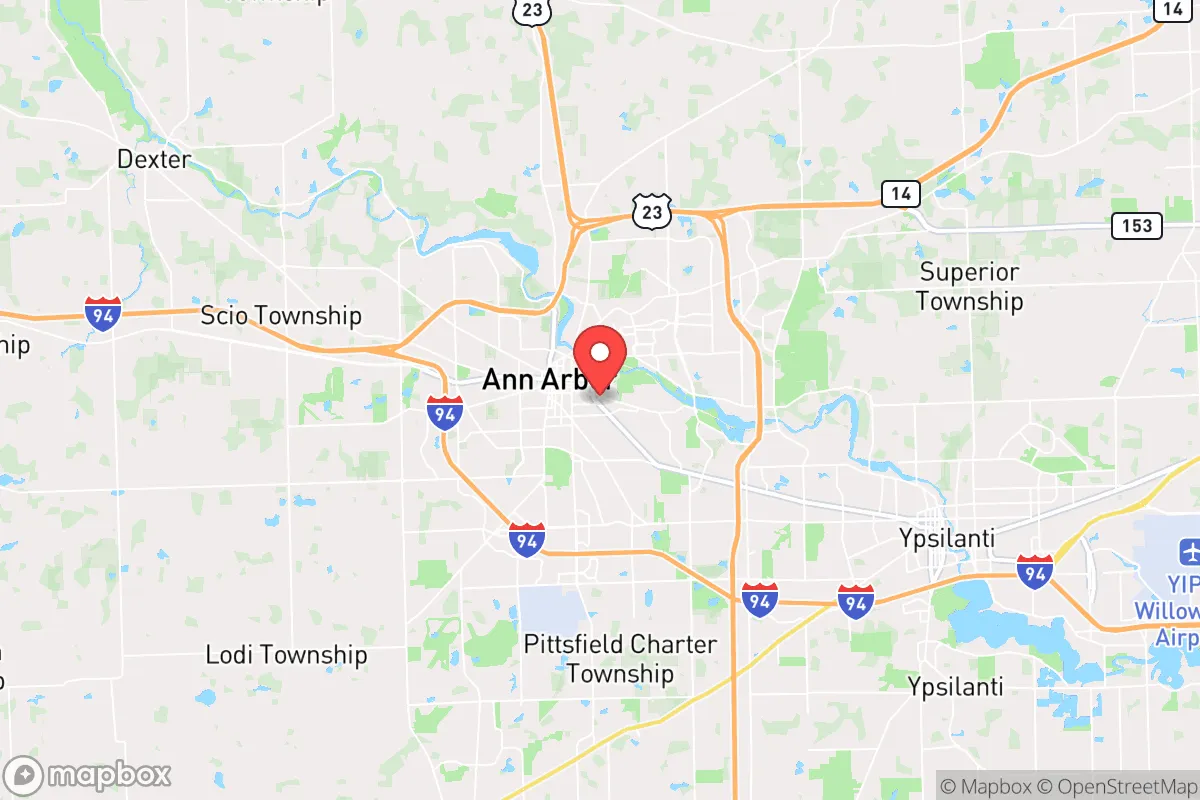
Drive 15 minutes outside the city limits, and you’re in a different world. Towns like Saline and Dexter still lean conservative, with voters who prioritize property rights, school choice, and lower taxes. Head 30 minutes east to Ypsilanti, and you’ll find a similar progressive tilt to Ann Arbor, but with less money and more grit. The real contrast is with Pittsfield Township or Scio Township—suburbs that vote more purple, often splitting tickets between local Republicans and state Democrats. Ann Arbor itself, though, is an island of deep-blue politics in a county that’s otherwise more balanced. The Washtenaw County Board of Commissioners has shifted left in recent years, passing policies on zoning, housing mandates, and environmental regulations that feel like they came straight from a state-level playbook. If you value local control, that’s a red flag.
What this means for residents
For the average person, the political climate here means more rules, more fees, and more oversight. The city council has pushed through mandatory inclusionary zoning for new developments, which sounds nice but drives up costs for everyone. Rent control proposals pop up regularly, and the city has expanded its paid sick leave and minimum wage mandates beyond state law. If you run a small business, you’re constantly checking what new regulation just dropped. On the personal freedom side, gun rights are heavily restricted—Ann Arbor has its own local ordinances that go beyond state preemption, including bans on open carry in city parks and buildings. School curriculum has become a flashpoint, with the Ann Arbor Public Schools district adopting DEI initiatives and gender-inclusive policies that some parents feel sideline academic basics. The city’s police oversight commission has also grown more powerful, leading to longer response times and a sense that law enforcement is handcuffed by bureaucracy. For a long-time resident, it feels like the government is getting into every corner of life.
Culturally, Ann Arbor has always prided itself on being progressive, but the shift in the last five years has been toward a more aggressive, top-down approach. The city’s climate action plan includes mandates for electric-only new construction and a ban on natural gas hookups in new homes—a policy that limits homeowner choice and raises energy costs. Public gatherings downtown often require permits and fees that weren’t needed a decade ago. The University of Michigan dominates the local economy and culture, and its administration has pushed DEI training, speech codes, and hiring quotas that many faculty and staff privately grumble about but can’t challenge. If you’re looking for a place where you can live your life without a government checklist, Ann Arbor is moving in the wrong direction. The long-term trajectory, unless there’s a political realignment, points to more regulation, higher taxes, and less personal autonomy. It’s a beautiful city with great schools and a vibrant downtown, but the political climate is something you’ll feel every day—and not always in a good way.

State Political ClimatePolitical Climate in Michigan
State Political AnalysisPolitical Environment in the State
Michigan has shifted from a classic blue-leaning swing state to a solidly Democratic-controlled state over the past decade, but the picture is far from uniform. The state’s overall partisan lean is now roughly D+3 to D+5 in presidential elections, driven overwhelmingly by the Detroit metro area and Washtenaw County (Ann Arbor). However, the rest of the state—particularly the western Lower Peninsula and the Upper Peninsula—has swung hard to the right, creating one of the most politically polarized landscapes in the Midwest. For a conservative considering a move, the key question isn’t whether Michigan is red or blue—it’s where you land on the map.
Urban vs. rural divide
The political map of Michigan is a tale of two peninsulas. The Detroit tri-county area (Wayne, Oakland, Macomb) alone delivers roughly 40% of the state’s Democratic votes, with Wayne County (Detroit proper) consistently voting 70%+ Democratic. Ann Arbor (Washtenaw County) is the state’s most liberal enclave, routinely hitting 80% Democratic. On the flip side, the western half of the Lower Peninsula—places like Grand Rapids, Holland, and Traverse City—has become a Republican stronghold. Ottawa County (Holland) voted +28 R in 2024, and the Grand Rapids metro (Kent County) flipped from blue to red in 2020 and stayed there. The Upper Peninsula, once a Democratic bastion of union miners, has flipped hard: Marquette County went from D+10 in 2012 to R+4 in 2024. The rural-urban divide is so stark that a drive from Detroit to Grand Rapids feels like crossing into a different country.
Policy environment
Michigan’s policy environment has shifted sharply left since Democrats took full control of state government in 2023. The state income tax is a flat 4.25%, but that’s under pressure—a 2023 law tied the rate to revenue triggers, and a temporary cut to 4.05% was allowed to expire in 2024. Property taxes are moderate, but the real sticker shock comes from auto insurance: Michigan’s no-fault system, reformed in 2019, still keeps rates among the highest in the nation. On education, the state repealed its right-to-work law in 2023, re-empowering unions in public schools. The same year, Democrats passed a package expanding LGBTQ+ nondiscrimination protections and codifying abortion access into state law. Election laws have also tightened from a conservative perspective: Michigan now has nine days of early voting, automatic voter registration, and no-excuse absentee voting—all passed in 2022 via a ballot initiative (Proposal 2) that Republicans largely opposed. For a conservative, the policy environment is increasingly hostile to limited-government principles.
Trajectory & freedom
Michigan is becoming less free by any objective measure of personal liberty. The most glaring example is gun rights: in 2023, Democrats passed universal background checks and a red-flag law (extreme risk protection orders), both of which were previously blocked by Republican legislatures. The state also banned open carry at polling places and the state capitol. On parental rights, a 2023 law removed the requirement for schools to notify parents of a student’s sexual orientation or gender identity—a direct blow to family autonomy. Medical freedom took a hit with the repeal of a 2012 law that required a 24-hour waiting period for abortions, replaced by a law that protects providers from out-of-state lawsuits. Property rights are under threat from a new state-level zoning reform that overrides local control on accessory dwelling units and density—good for housing supply, but a loss for local decision-making. The only bright spot for conservatives is that Michigan remains a right-to-work state for private-sector workers (the 2023 repeal only applied to public employees), and there’s no state-level income tax on pensions or Social Security.
Civil unrest & political movements
Michigan has been a flashpoint for political activism on both sides. The 2020 lockdown protests at the state capitol in Lansing drew national attention, with armed demonstrators opposing Governor Gretchen Whitmer’s COVID restrictions. That movement morphed into a broader “We the People” network that remains active in rural counties. On the left, the “Stand Up Michigan” coalition has pushed progressive ballot initiatives on abortion and voting rights. Immigration politics are relatively quiet compared to border states, but Detroit and Ann Arbor have sanctuary city policies that limit cooperation with ICE. Election integrity remains a live issue: the 2020 and 2022 cycles saw multiple lawsuits over absentee ballot procedures, and a 2024 audit in Antrim County (which initially reported a software error in 2020) found no widespread fraud but fueled ongoing distrust. The state’s independent redistricting commission, created by a 2018 ballot initiative, has drawn maps that both parties dislike—a sign of genuine competition.
Projection
Over the next 5-10 years, Michigan will likely become more Democratic at the state level, driven by continued in-migration to Detroit’s suburbs and Ann Arbor, plus the naturalization of immigrant populations in Wayne County. The Republican base in western Michigan and the UP is aging, and younger voters in Grand Rapids and Traverse City are trending left. However, the state’s electoral college votes could still be competitive if Republicans nominate a candidate who appeals to blue-collar workers in Macomb County and the UP. The biggest wildcard is the auto industry’s transition to electric vehicles: if it kills jobs in places like Flint and Saginaw, those voters could swing back to populist Republicans. For a conservative moving in now, expect a decade of Democratic trifectas, higher taxes, and more regulation—but also a vibrant, affordable life in the state’s red enclaves if you choose wisely.
Bottom line for a new resident: Michigan is a state of stark choices. If you land in Grand Rapids, Holland, or Traverse City, you’ll find conservative communities with strong churches, good schools, and a lower cost of living than the coasts. If you land in Detroit or Ann Arbor, you’ll be in a blue bubble with high taxes and progressive policies. The state’s trajectory is leftward, but the rural and western areas remain resilient redoubts. Just know that your vote for governor and state legislature will likely be in the minority for the foreseeable future—so choose your county carefully, and get involved in local politics to protect your freedoms where you can.
* Values derived from national, state, county, city and local statistics and may differ in a specific area. Last updated: 2026-04-24T13:11:16.000Z
Narrative content on this page is AI-generated and may contain mistakes. Verify any details that matter before acting on them.
ReloMaps may earn a commission from affiliate links at no extra cost to you.

