Photo: Wikipedia
Political ClimatePolitical Climate in Annapolis, MD
District shown is the primary district for this city’s centroid. Cities may span multiple districts.
Local Political AnalysisPolitical Analysis of Annapolis, MD
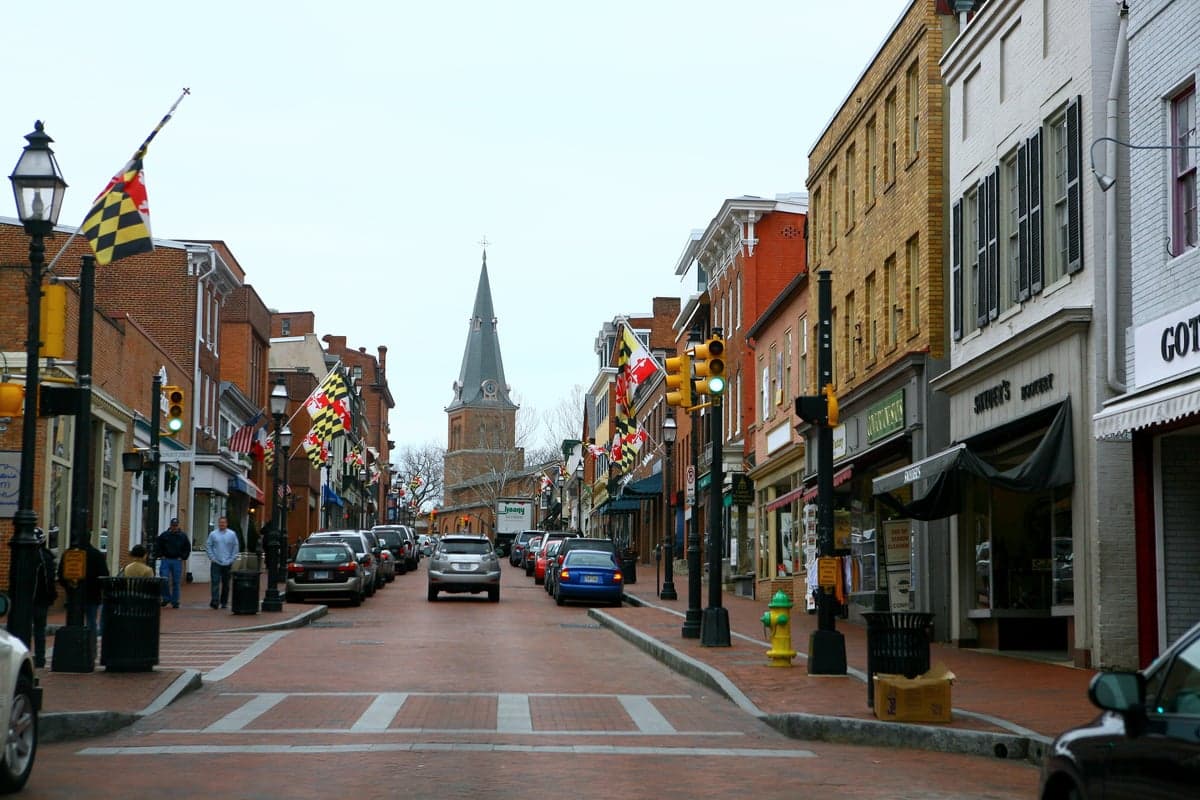
Annapolis, Maryland, is a city that has drifted further and further left over the past couple of decades, and the numbers back up what anyone living here can feel. The Cook Partisan Voting Index (PVI) for the Annapolis area sits at D+12, meaning it votes about 12 points more Democratic than the national average. That’s not just a blue dot on the map; it’s a deep blue anchor for the state’s progressive agenda. If you’ve been here since the 90s or early 2000s, you’ve watched the local political culture shift from a pragmatic, small-government mindset to one that increasingly embraces top-down mandates and social engineering. The trajectory is clear: each election cycle brings more candidates who see government as the primary tool for solving every problem, and that’s a concerning trend for anyone who values personal freedom and local control.
How it compares
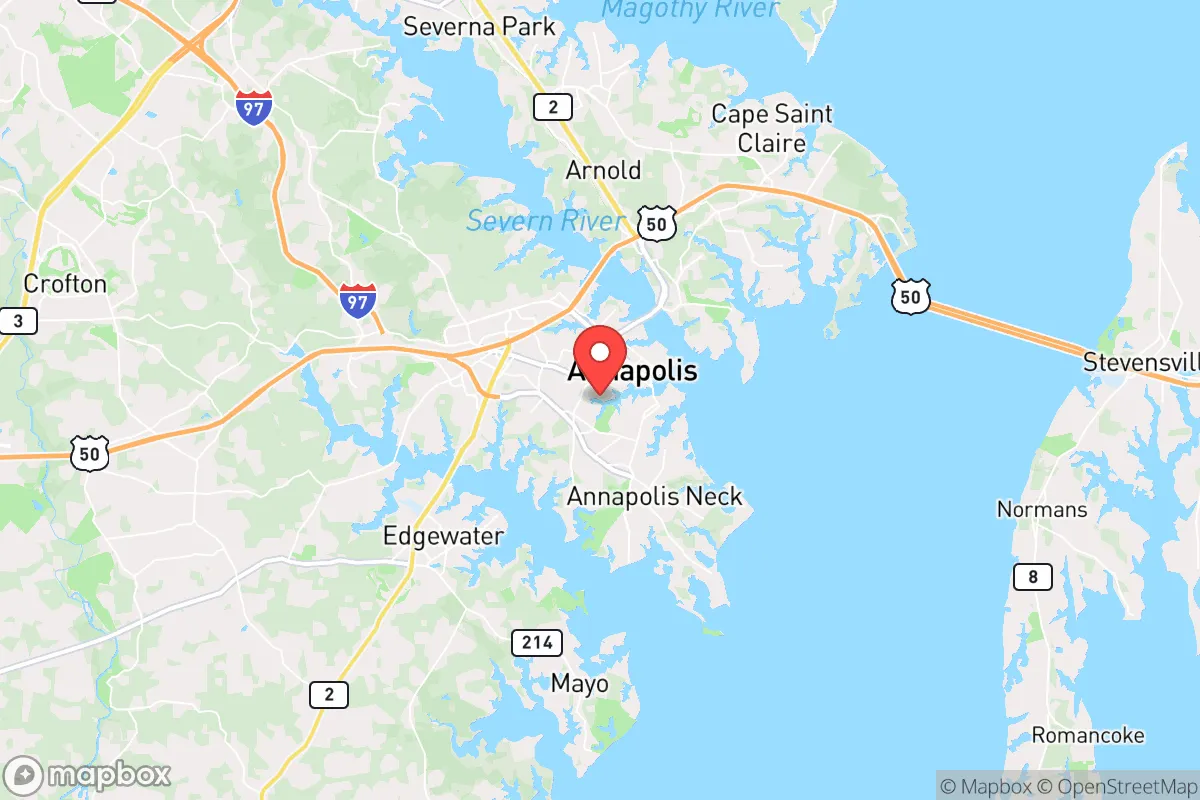
To understand Annapolis, you have to look at what’s around it. Drive just 15 minutes west to Edgewater or Davidsonville, and you’ll find a completely different political reality—more conservative, more rural, and far more skeptical of the heavy-handed policies coming out of the State House. Even Severna Park, just across the Severn River, leans noticeably more moderate. Annapolis itself, however, is the epicenter of Maryland’s political machine. It’s the state capital, so you’ve got thousands of government employees, lobbyists, and activists living right here, all pushing for bigger budgets and more regulations. Compare it to a place like Easton or Stevensville on the Eastern Shore, where the conversation is still about property rights and keeping taxes low, and the contrast is stark. Annapolis has become a bubble where progressive orthodoxy is the default, and dissenting voices are often drowned out by the sheer weight of institutional power.
What this means for residents
For the average person living here, the political climate translates directly into your wallet and your daily life. Property taxes have climbed steadily as the city and county fund new social programs and green initiatives that sound good on paper but rarely deliver results. You’ll also see it in the local schools, where curriculum decisions are increasingly driven by state-level mandates rather than what parents actually want. Business owners feel it too—permitting processes have gotten slower, and new regulations on everything from short-term rentals to restaurant operations make it harder to just run a simple enterprise without a lawyer on retainer. The biggest red flag for me is the erosion of local decision-making. Annapolis used to have a more independent, neighborly feel, but now so many rules come down from Annapolis (the State House) that the city council often just rubber-stamps them. If you value the freedom to make your own choices about your property, your children’s education, or your business, this place is becoming a tougher place to call home.
One cultural distinction that really sets Annapolis apart is the sheer density of government influence. It’s not just the State House—it’s the Naval Academy, the county government, and a whole ecosystem of non-profits and advocacy groups that all share a progressive worldview. This creates a social pressure to conform, especially in professional circles. Openly questioning the direction of the city or state can get you labeled in a way that it wouldn’t in more politically diverse towns. In the long term, I see this trend continuing unless there’s a major shift in the national mood or a grassroots pushback from residents who are tired of being told how to live. For now, Annapolis is a place where the political machine runs the show, and if you’re not on board, you’re often just along for the ride.

State Political ClimatePolitical Climate in Maryland
State Political AnalysisPolitical Environment in the State
Maryland has long been a solidly blue state, but its political reality is far more complex than a simple partisan label suggests. The state’s dominant Democratic coalition is powered by the massive, heavily liberal populations of the Washington, D.C., suburbs (Montgomery and Prince George’s counties) and the Baltimore metro area, which together account for over half the state’s vote. Over the last 10-20 years, the state has shifted steadily leftward on cultural and economic issues, driven by in-migration from D.C. and a growing reliance on federal and state government employment. While Republicans can win in rural and exurban pockets, the statewide trend is clear: Maryland is becoming more progressive, more regulated, and more expensive, with a political climate that increasingly prioritizes government solutions over individual freedom.
Urban vs. rural divide
The political map of Maryland is a tale of two worlds. The western and eastern shores, along with the rural central counties like Carroll and Harford, lean heavily Republican. Places like Hagerstown in Washington County and Cumberland in Allegany County reliably vote red, with some precincts delivering 70%+ for GOP candidates. Meanwhile, the D.C. suburbs—Bethesda, Silver Spring, Columbia—are among the most liberal jurisdictions in the country, routinely voting 80-90% Democratic. Baltimore City is similarly deep blue, though its population decline has slightly reduced its electoral weight. The key swing counties are Anne Arundel (home to Annapolis) and Frederick County, which have trended left in recent cycles as D.C. commuters push outward. In 2024, Frederick County voted for Kamala Harris by a narrow margin, a flip from its purple status a decade ago. The divide isn’t just partisan—it’s cultural: rural Marylanders feel increasingly alienated from the state’s Annapolis-based leadership, which they see as catering to urban and suburban interests.
Policy environment
Maryland’s policy environment is a textbook example of progressive governance. The state has a graduated income tax with a top rate of 5.75% (plus local add-ons that can push the effective rate above 9%), one of the highest in the nation. Property taxes are locally set but generally high, especially in the D.C. suburbs. The regulatory posture is aggressive: Maryland has a strict climate law (the Climate Solutions Now Act of 2022) mandating a 60% reduction in greenhouse gas emissions by 2031, which drives up energy costs and restricts development. Education policy is dominated by the Blueprint for Maryland’s Future, a massive funding overhaul that increases taxes and centralizes control in Annapolis, while parental rights have been weakened—the state passed a law in 2023 requiring schools to withhold information from parents about a child’s gender identity if the child requests it. Healthcare is heavily regulated, with a state-based insurance exchange and strict certificate-of-need laws that limit competition. Election laws are among the most liberal: no-excuse mail-in voting, same-day registration, and automatic voter registration are all in place. For a conservative-leaning resident, the policy environment feels like a constant expansion of government reach into daily life.
Trajectory & freedom
Maryland is becoming less free by almost any measure. The state has some of the strictest gun laws in the country, including a ban on “assault weapons” (upheld by the 4th Circuit in 2024), a handgun permit system that requires “good and substantial reason” (though Bruen has loosened this slightly), and a magazine capacity limit of 10 rounds. In 2023, the legislature passed a law banning the carrying of firearms in “sensitive places” like parks and public transportation, which is currently being litigated. On medical freedom, Maryland was one of the first states to impose strict COVID-19 vaccine mandates for healthcare workers and state employees, and it retains some of the most aggressive public health powers. Parental rights took a hit with the 2023 gender identity notification law mentioned above. Property rights are constrained by strict zoning and environmental regulations, particularly in the Chesapeake Bay watershed, where new development faces lengthy permitting processes. The state’s tax burden is consistently ranked among the top 5 in the nation. The trajectory is clear: each legislative session brings new restrictions on personal liberty, whether it’s gun ownership, school choice, or economic freedom.
Civil unrest & political movements
Maryland has seen its share of political flashpoints. The 2015 Baltimore riots following Freddie Gray’s death were a national story, and the city still struggles with high crime and a strained relationship between residents and police. More recently, the state has become a battleground over immigration: Maryland is a sanctuary state, with a 2023 law (the “Dignity Not Detention” act) that prohibits state and local cooperation with federal immigration enforcement. This has created tension in more conservative areas like Harford County, where local officials have tried to push back. On the right, grassroots movements have emerged around gun rights (Maryland Shall Issue is a prominent group) and school choice, but they face an uphill battle in the legislature. Election integrity has been a recurring concern: the state’s widespread use of mail-in ballots and lack of strict voter ID laws have led to ongoing debates, though no major scandals have been proven. A new resident would notice the stark contrast between the liberal activism in places like Takoma Park (a “nuclear-free zone” that also allows non-citizen voting in local elections) and the more traditional, community-oriented politics of towns like Easton on the Eastern Shore.
Projection
Over the next 5-10 years, Maryland will likely continue its leftward drift. Demographic trends favor the Democrats: the D.C. suburbs are growing, while rural areas are stagnant or declining. In-migration from other blue states (particularly California and New York) is accelerating, bringing more progressive voters. The state’s economy is increasingly tied to the federal government, which insulates it from conservative policy shifts. However, there are countercurrents: the high cost of living and tax burden are driving some middle-class families to neighboring states like Pennsylvania, Delaware, and West Virginia. If this exodus accelerates, it could shift the political calculus. For now, expect more of the same: higher taxes, stricter regulations, and a continued erosion of individual freedoms. A conservative moving in now should expect to be in a permanent minority, with limited ability to change state-level policy.
Bottom line for a new resident: If you value low taxes, gun rights, parental control over education, and limited government, Maryland is a challenging place to live. The state’s political climate is dominated by a progressive coalition that sees government as the primary solution to social and economic problems. You can find like-minded communities in the rural counties and some exurbs, but you’ll be fighting an uphill battle at the state level. Consider whether the trade-offs—proximity to D.C., strong job market, natural beauty—are worth the loss of personal freedom. For many conservatives, the answer is increasingly no.
* Values derived from national, state, county, city and local statistics and may differ in a specific area. Last updated: 2026-04-29T23:21:38.000Z
Narrative content on this page is AI-generated and may contain mistakes. Verify any details that matter before acting on them.
ReloMaps may earn a commission from affiliate links at no extra cost to you.

