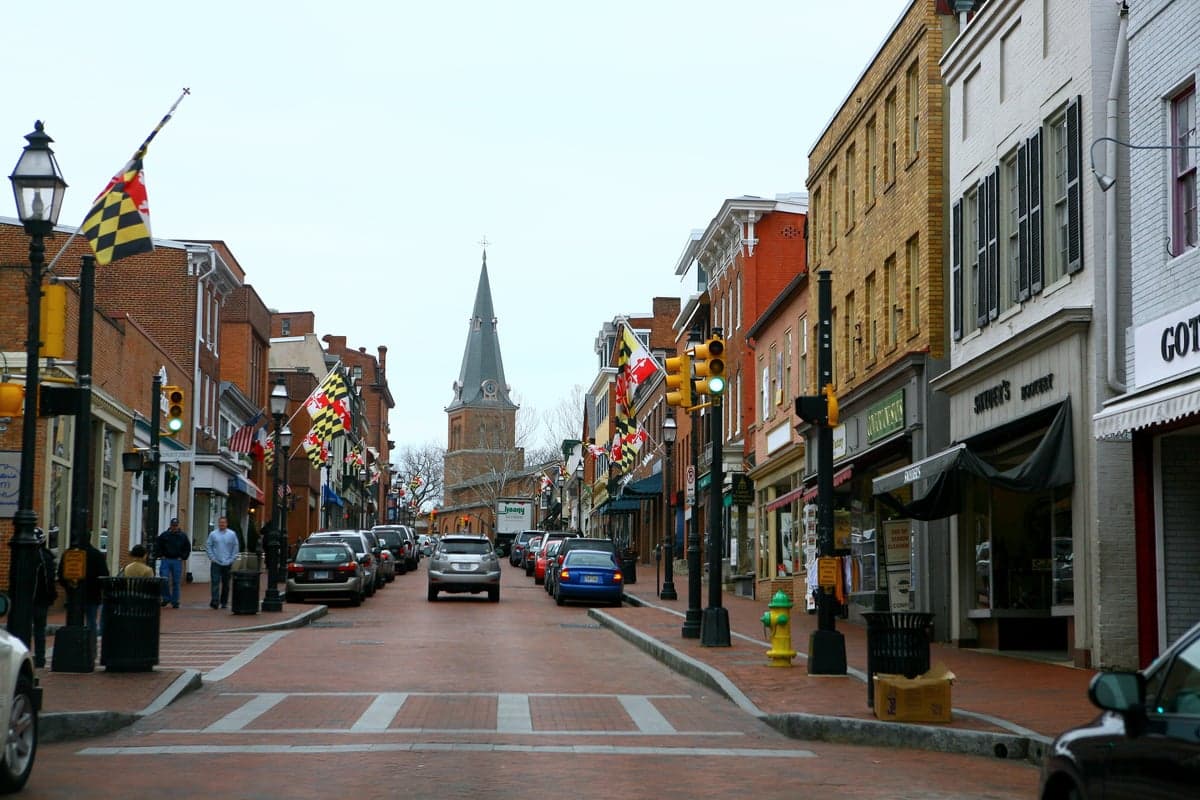
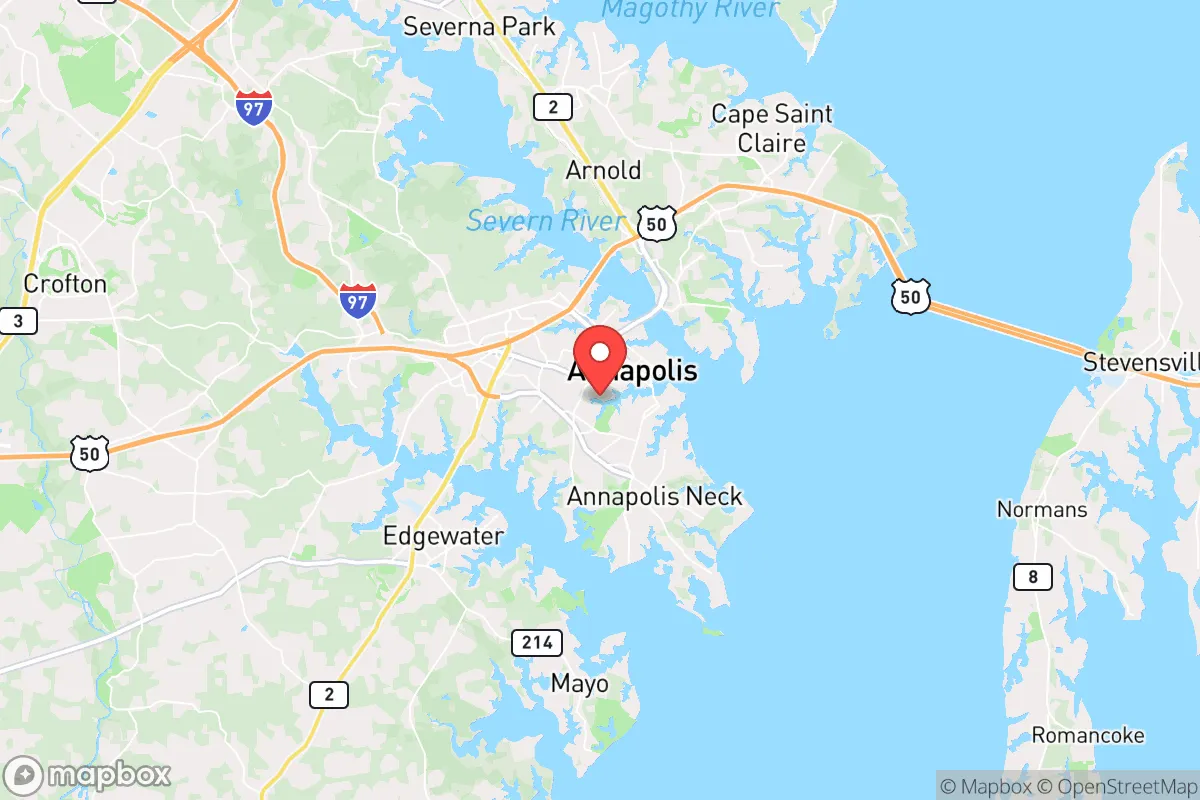
Photo: Wikipedia
Quality of Life in Annapolis, MD
A high quality of life with strong walkability, manageable living costs, healthy neighborhood signals, and solid amenity access.
What does Quality of Life tell us?
Quality of Life blends cost of living, nearby amenities, socioeconomic signals, and neighborhood character. City-level scores represent the whole municipality; individual neighborhoods can differ.
What does this tell us?
Quality of Life blends cost of living, nearby amenities, socioeconomic signals, and neighborhood character. City-level scores represent the whole municipality; individual neighborhoods can differ.
Cost of Living
68% above national average
The Real Cost of Living in Annapolis, MD for 2026
| Tier | Individual | Family (4) |
|---|---|---|
| Survival | $30k | $56k |
| Comfortable | $99k | $146k |
| Luxury | $188k+ | $292k+ |
| Elite (Top 5%) | $238k+ | $368k+ |
72%
The Area Signal
A metric tracking the socioeconomic signals of the area.
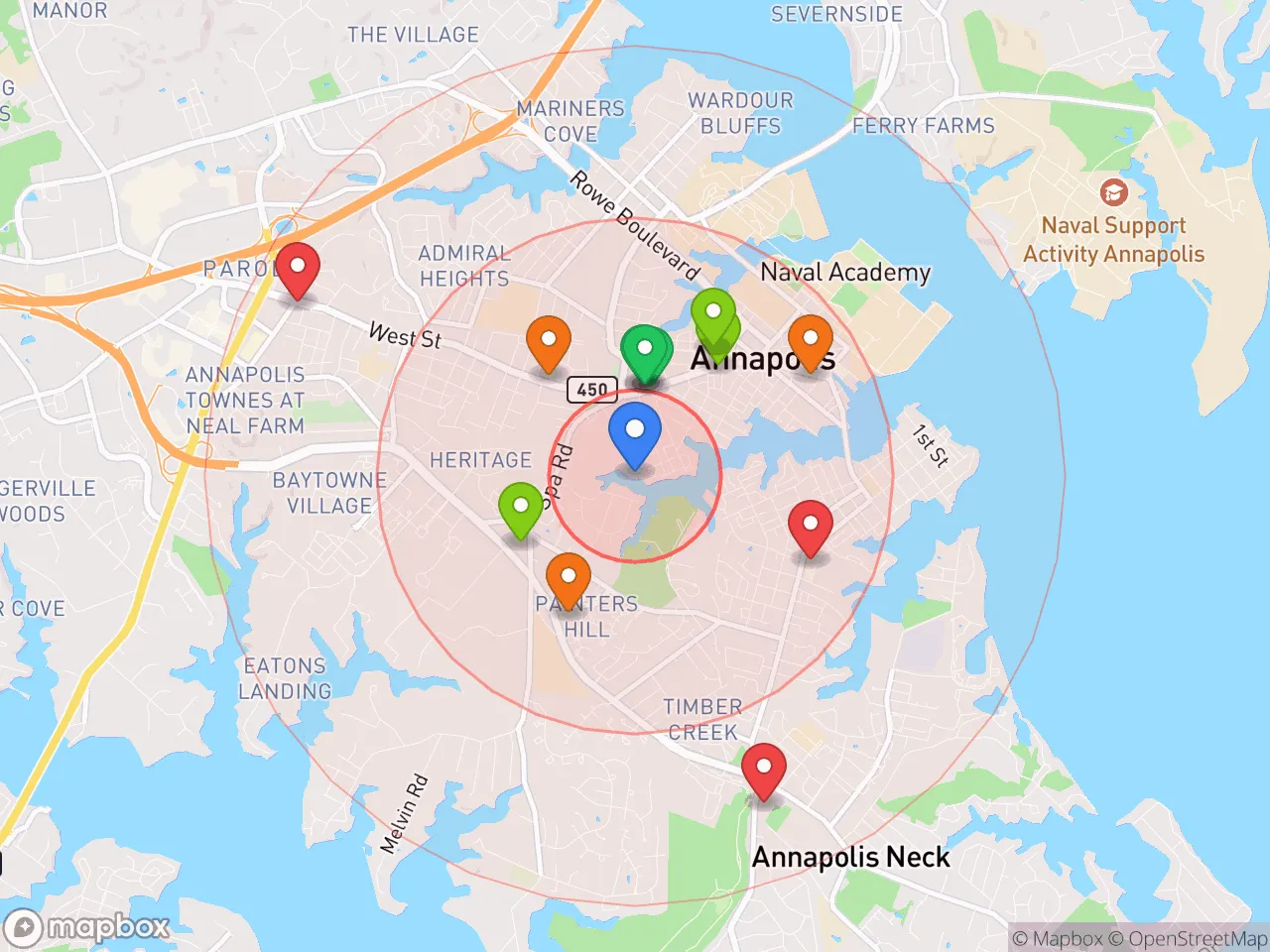
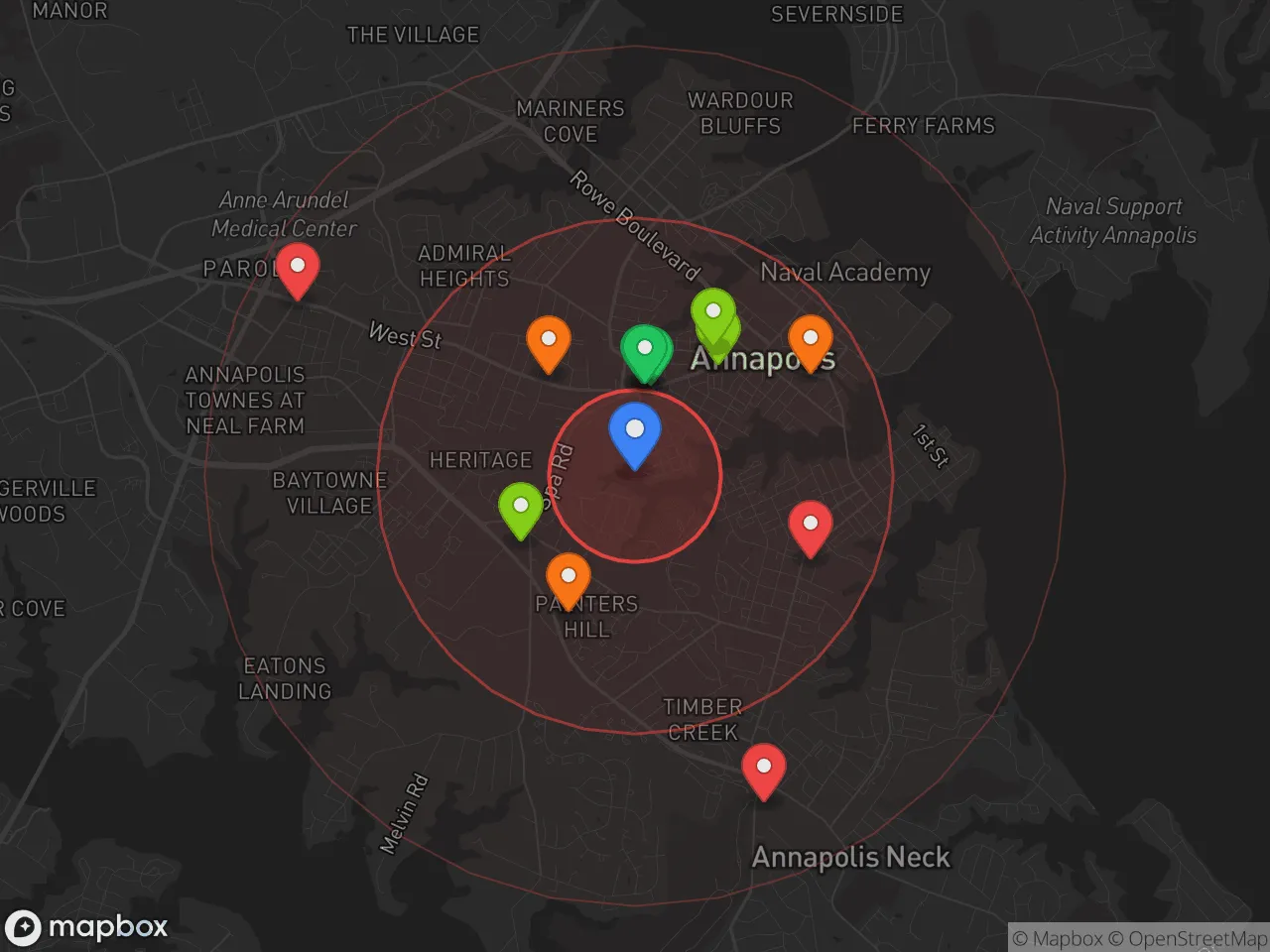
Hobbies
Explore the areaGroceries
8 within 10 miles
Gas
20 within 10 miles
Hospital
9 within 20 miles
Airport
BWI — Baltimore/Washington International Thurgood Marshall
Post Office
USPS — Annapolis, MD
Critical Amenities
Quality-of-Life Analysis
Annapolis, Maryland, presents a quality of life defined by historic charm, a robust maritime identity, and a notably high cost of living that attracts a mix of affluent professionals, government employees, and military families. The city serves as the state capital, home to the United States Naval Academy, and a hub for sailing and boating, creating a population that skews educated and civically engaged. With a cost of living index of 168—68 percent above the national average—life here is a deliberate trade-off between premium expenses and access to a unique, walkable waterfront environment.
Cost of living, housing costs, and affordability compared to Washington DC and Baltimore
Annapolis is significantly more expensive than both the national average and many nearby Maryland cities, though it remains somewhat more affordable than core Washington, D.C. The median home value sits at $510,200, a figure that is roughly 30 percent lower than the D.C. metro median but substantially higher than Baltimore's median. Renters face a median monthly cost of $1,855, which is competitive with suburban D.C. prices but well above the national norm. The average one-way commute of 28.7 minutes reflects the reality that many residents work in the city itself—at the state government complex, the Naval Academy, or local tech firms—while others endure longer drives to D.C. or Baltimore. For those seeking affordability, neighboring areas like Glen Burnie or Edgewater offer lower home prices, but buyers sacrifice the walkable historic core and direct waterfront access that define Annapolis living.
What daily life is like for families, professionals, and retirees
Daily life in Annapolis revolves around its compact downtown, the Chesapeake Bay waterfront, and a strong sense of community anchored by top-tier public schools. The Anne Arundel County Public School system includes highly rated options like Annapolis High School and Bates Middle School, making the city attractive to families who can absorb the housing costs. Professionals benefit from a steady job market in government, defense contracting, and maritime industries, while retirees are drawn to the walkable streets, cultural events like the Annapolis Film Festival, and easy access to sailing and kayaking. The city's rhythm is slower than D.C.'s but busier than a typical small town, with a vibrant restaurant scene along Main Street and City Dock that fills with tourists on weekends. Residents frequently cite the ability to walk to grocery stores, coffee shops, and the waterfront as a key quality-of-life advantage, though traffic congestion on US-50 and limited parking remain persistent frustrations.
Annapolis is best suited for those who prioritize walkability, water access, and a strong sense of place over raw affordability. Families with dual incomes, government employees, and retirees with equity from previous homes will find the cost manageable, while young professionals on a single salary may struggle with the housing market. The city's blend of historic architecture, active outdoor lifestyle, and political engagement creates a distinctive environment that rewards those who can afford its premium—and who value a life lived on the water over a lower monthly payment.

Crime in Annapolis, MD
Higher crime rates than 65% of comparable U.S. locations.
Violent CrimeViolent Crime Analysis
Property CrimeProperty Crime Analysis
Crime Analysis
Annapolis, Maryland, presents a safety profile that warrants careful consideration for potential residents. The city's violent crime rate stands at 654.4 incidents per 100,000 residents, while property crime occurs at a rate of 1,264.5 per 100,000. These figures place Annapolis in a category of elevated risk compared to national averages, a situation compounded by the progressive judicial policies prevalent in Anne Arundel County and the broader state of Maryland.
Crime in context
When measured against national benchmarks, Annapolis's violent crime rate is roughly 1.8 times higher than the U.S. average, and its property crime rate is about 1.2 times higher. The city's proximity to the Baltimore-Washington metropolitan area means it is influenced by the same regional crime dynamics and, critically, the same prosecutorial and judicial philosophies. Maryland has seen a trend toward progressive district attorneys and judges who prioritize alternatives to incarceration and reduced sentencing. While intended to address systemic issues, this approach has a direct, measurable consequence: more offenders remain on the streets, often with minimal supervision, which erodes public safety and diminishes justice for victims. The state's relatively lenient parole and bail policies further contribute to a revolving-door effect for repeat offenders.
What residents experience
For those living in Annapolis, the daily reality includes a tangible risk of both violent and property crime. The violent crime rate of 654.4 per 100,000 translates to a roughly 1 in 153 chance of being a victim of violent crime each year, a figure that includes aggravated assault, robbery, and, less frequently, homicide. Property crime—theft, burglary, and motor vehicle theft—is the more common concern, with a 1 in 79 annual victimization rate. Residents report that car break-ins and package thefts are routine nuisances, particularly in denser neighborhoods near downtown and the waterfront. The progressive legal environment means that even when suspects are arrested, they are often released quickly on low or no bail, creating a cycle of crime that frustrates community policing efforts and leaves residents feeling unprotected.
Neighborhood-level safety varies significantly. Historic districts like Murray Hill and the waterfront areas near the Naval Academy tend to have lower crime rates due to higher property values and concentrated police presence. Conversely, areas west of the downtown core, including parts of Parole and Forest Drive, experience higher rates of both violent and property crime. The Eastport neighborhood, while charming, has pockets of property crime tied to its density and foot traffic. Prospective residents are advised to examine block-level crime maps and consider that the city's overall statistics are pulled upward by a few high-crime zones, while the progressive judicial climate affects the entire jurisdiction equally.
* Values derived from national, state, county, city and local statistics and may differ in a specific area. Last updated: 2026-04-29T23:21:38.000Z
Narrative content on this page is AI-generated and may contain mistakes. Verify any details that matter before acting on them.
ReloMaps may earn a commission from affiliate links at no extra cost to you.

