
Photo by Courtney Rose on Unsplash
Demographics of Annetta, TX
Affluence Level in Annetta, TX
An upper-middle-class area. Household wealth, education levels, and homeownership run ahead of national benchmarks.
People of Annetta, TX
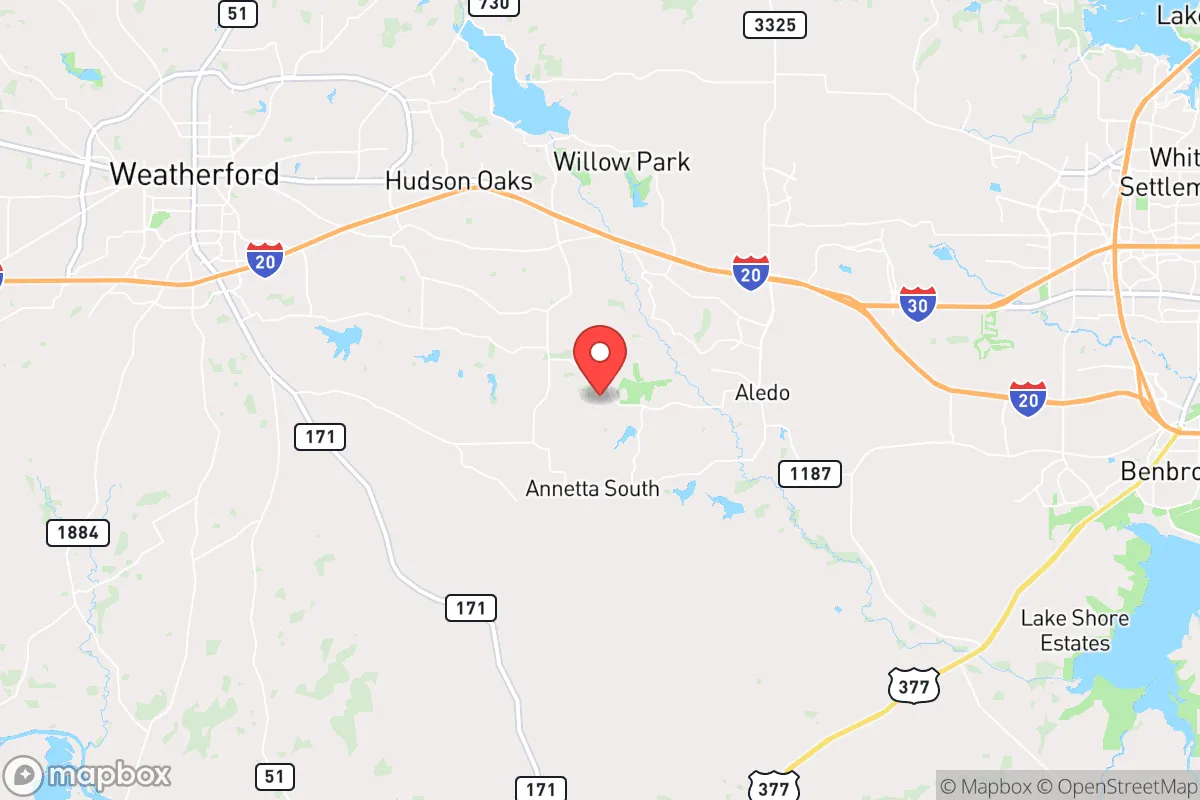
The people of Annetta, Texas, today number roughly 3,172, forming a predominantly white (85.6%) and highly educated (52.4% college-educated) community with an exceptionally low foreign-born population of just 0.2%. The city is characterized by its rural-residential feel, large lots, and a strong sense of local governance, distinct from the more densely developed suburbs of Fort Worth to the east. Annetta’s identity is rooted in its history as a small, independent-minded settlement that has consciously resisted annexation and rapid urbanization, attracting residents who value space, privacy, and local control.
How the city was settled and grew
Annetta’s population history begins not with a grand founding, but with the slow, organic settlement of the Cross Timbers region in the late 19th century. The area was originally part of the Peters Colony land grant, which drew Anglo-American farmers and ranchers from the U.S. South and Midwest in the 1850s and 1860s. These early settlers, primarily of English, Scottish, and Irish descent, established homesteads on the rolling, wooded terrain. The community that would become Annetta was named after the wife of a local landowner, and for decades it remained a loose collection of farmsteads with no formal town center. The original population clustered along what is now Annetta Road and around the historic Annetta Cemetery, where many founding families are buried. The arrival of the Texas and Pacific Railway in nearby Aledo in the 1880s spurred modest growth, but Annetta itself stayed rural, with its population never exceeding a few hundred through the early 20th century. The economy was entirely agricultural—cotton, cattle, and hay—and the population remained overwhelmingly white, Protestant, and native-born.
Modern era (post-1965)
The modern transformation of Annetta’s population began in earnest after the 1965 Hart-Cellar Act, though its effects were minimal here compared to major cities. The real driver was domestic suburbanization from the 1970s onward, as Fort Worth’s western suburbs expanded. Annetta incorporated as a city in 1978 specifically to avoid being annexed by the growing city of Aledo, a move that defined its modern character. The population grew slowly but steadily, attracting families and professionals seeking larger lots—typically one to five acres—and a lower tax burden than Tarrant County’s more developed areas. The Annetta South and Annetta North subdivisions, platted in the 1980s and 1990s, absorbed most of this new wave, drawing residents from within the Dallas-Fort Worth metroplex. These newcomers were predominantly white, college-educated, and employed in white-collar professions in Fort Worth or Dallas. The Hispanic population, now at 8.5%, grew modestly during this period, largely through domestic migration from other Texas counties rather than international immigration, and is concentrated in the older, more affordable housing stock along Bankhead Highway and in the Annetta Valley area. The East/Southeast Asian population (1.2%) is a very recent and small addition, with no distinct ethnic enclave. The Black population remains at 0.0%, and the Indian-subcontinent population is also 0.0%, reflecting the city’s lack of diversity relative to the broader metro area.
The future
Annetta’s population trajectory points toward slow, steady homogenization rather than rapid diversification. The city’s zoning—which mandates minimum lot sizes of one acre—limits housing density and effectively caps population growth, making large-scale demographic shifts unlikely. The foreign-born population is negligible and shows no sign of increasing, as there are no immigrant-service organizations, ethnic grocery stores, or places of worship serving non-English-speaking communities. The Hispanic share may rise gradually through natural increase and continued domestic migration from nearby Parker County, but it will likely remain a minority. The East/Southeast Asian population is too small to form a community and will likely plateau or assimilate. The white, native-born, college-educated majority is expected to persist, with the city becoming slightly older as existing residents age in place. The Annetta Ridge and Annetta Estates areas, developed in the 2000s, represent the newest wave of residents—upper-middle-class families who chose Annetta specifically for its rural character and independent school district (Aledo ISD). No new large-scale subdivisions are planned, reinforcing the status quo.
For someone moving in now, Annetta is a stable, low-diversity, high-amenity community that is unlikely to change dramatically in the next decade. It offers a predictable, safe environment for families who prioritize space, local control, and a like-minded social fabric, but it offers little for those seeking ethnic diversity, rental options, or a walkable urban lifestyle. The city’s future is one of careful preservation, not transformation.

* Values derived from national, state, county, city and local statistics and may differ in a specific area. Last updated: 2026-04-11T19:02:20.000Z
Narrative content on this page is AI-generated and may contain mistakes. Verify any details that matter before acting on them.
ReloMaps may earn a commission from affiliate links at no extra cost to you.

