
Photo by Courtney Rose on Unsplash
Political ClimatePolitical Climate in Annetta, TX
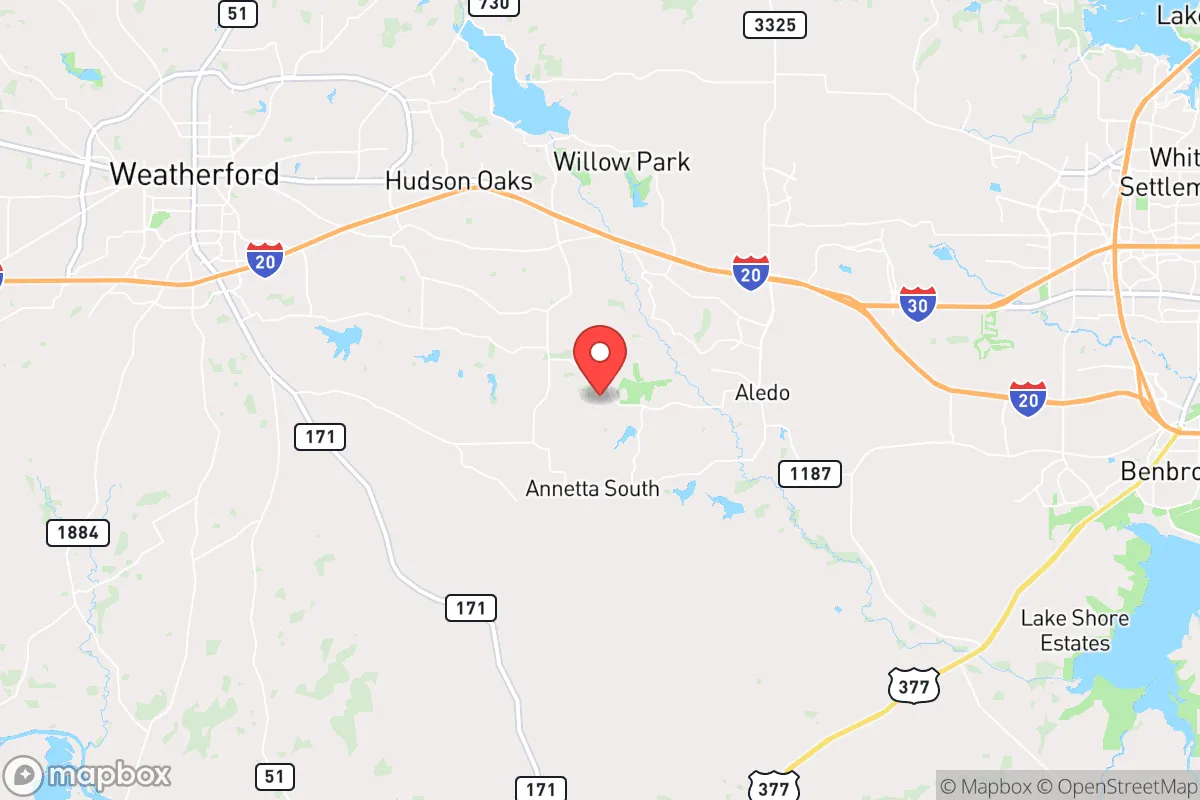
District shown is the primary district for this city’s centroid. Cities may span multiple districts.
Local Political AnalysisPolitical Analysis of Annetta, TX
Annetta, Texas, is about as solidly conservative as it gets in the Lone Star State, and that’s not changing anytime soon. The area carries a Cook PVI of R+18, which means it votes nearly 20 points more Republican than the national average—a number that’s held steady even as some nearby suburbs have started to shift. If you’ve been here a while, you know this isn’t just a voting pattern; it’s a way of life that’s been passed down through generations, and folks here are fiercely protective of it.
How it compares
Drive ten minutes east to Weatherford, and you’ll find a similar conservative vibe, though it’s a bit more of a mixed bag with the college crowd and new transplants from Dallas. Head south to Aledo, and you’re in the same boat—R+18 territory, with a strong ranching and equestrian culture that keeps things grounded. The real contrast comes when you go north to Fort Worth or east to Arlington. Those cities have seen a noticeable push toward progressive policies in recent years, especially around zoning, taxes, and school board decisions. In Annetta, we’ve watched that happen from a distance, and it’s only reinforced the local resolve to keep government small and local control strong. The Parker County Republican Party holds a tight grip here, and you won’t find many yard signs for the other side during election season.
What this means for residents
For the people living here, the political climate translates directly into daily life. Property taxes are a constant concern, but the county commission has historically been resistant to the kind of runaway spending you see in more urban areas. The school board in the Aledo Independent School District, which serves Annetta, has held the line on curriculum battles, keeping critical race theory and gender ideology out of the classroom—something parents here take very seriously. You won’t see mask mandates or vaccine passports being enforced at local businesses, and the sheriff’s office makes it clear they’re not interested in enforcing federal gun laws that don’t align with Texas’s constitutional carry. The biggest worry among long-time residents is that as more people move in from blue states, they’ll bring their voting habits with them. So far, the R+18 rating has held, but it’s something we keep an eye on every election cycle.
Culturally, Annetta is a place where the Second Amendment is a given, not a debate, and where the local churches still anchor the community. The town’s small size—under 3,000 people—means everyone knows everyone, and that neighborly trust extends to how things are run. There’s no appetite for the kind of overreach you see in places like Austin or Dallas, where city councils are pushing for higher density, more regulations, and a bigger government footprint. Here, the motto is simple: leave us alone, let us live our lives, and keep the taxes low. If that starts to change, you’ll hear about it at the feed store or the Sunday potluck before you ever see it in the news.

State Political ClimatePolitical Climate in Texas
State Political AnalysisPolitical Environment in the State
Texas has been a reliably Republican state for decades, but the political climate is more complex than a simple red-state label suggests. The GOP holds every statewide office and both legislative chambers, and Donald Trump carried the state by 5.6 points in 2024, a slight improvement over his 2020 margin. However, the underlying coalition is shifting: the traditional conservative base in rural and suburban areas is being challenged by rapid in-migration from blue states, particularly into the urban cores of Austin, Dallas, and Houston, while the Rio Grande Valley and border counties have shown surprising movement toward the GOP. Over the last 10-20 years, the state has moved from a solid +12 Republican lean to a more competitive +5-6, driven by explosive growth in the suburbs and a slow but steady leftward drift in the major metros.
Urban vs. rural divide
The political map of Texas is a study in contrasts. The vast rural expanse—from the Panhandle down through West Texas and into the Hill Country—votes overwhelmingly Republican, often by 70-80% margins. Counties like Lubbock (home to Texas Tech) and Amarillo in the Panhandle are deep red strongholds. Meanwhile, the state's major urban centers are blue islands. Austin (Travis County) is the most liberal major city in the South, voting +50 points for Biden in 2020. Dallas (Dallas County) and Houston (Harris County) are reliably Democratic, though their suburbs are the real battlegrounds. The most dramatic shift has been in the suburbs of Fort Worth (Tarrant County), which flipped from red to blue in 2020 and 2024, and in the exurbs of San Antonio (Bexar County), which are trending left. The Rio Grande Valley, once a Democratic stronghold, saw a major shift in 2020 and 2024, with counties like Zapata and Starr flipping to Trump, driven by conservative social values and frustration with the border crisis.
Policy environment
Texas maintains a policy environment that is broadly conservative, with a few notable exceptions. The state has no personal income tax, a major draw for relocating families and businesses. Property taxes are high—averaging around 1.6% of assessed value—but the state has no state-level property tax, leaving it to local jurisdictions. The regulatory posture is business-friendly, with a right-to-work law and limited occupational licensing. On education, Texas has a school choice program (the Texas Education Savings Account) passed in 2023, allowing parents to use state funds for private or homeschool expenses. Healthcare policy is a mixed bag: Texas did not expand Medicaid under the ACA, leaving roughly 1.5 million uninsured, but the state has strong parental consent laws for minors seeking abortions and a near-total abortion ban (SB 8, the "Heartbeat Act") that went into effect in 2021. Election laws were tightened in 2021 with SB 1, which added voter ID requirements, limited drive-through and 24-hour voting, and banned unsolicited mail-in ballot applications. The state also has a constitutional carry law (HB 1927, 2021) allowing permitless carry of handguns.
Trajectory & freedom
On balance, Texas has been moving in a direction of expanded personal freedom in several key areas over the last five years, though not without countervailing trends. The biggest win for liberty was the passage of constitutional carry in 2021, which removed the government permission slip requirement for carrying a handgun. Parental rights were strengthened with the 2023 school choice law and the 2021 ban on transgender medical procedures for minors (SB 14, 2023). Property rights were bolstered by the 2021 law limiting local government authority to impose restrictions on land use (HB 2127, the "Texas Regulatory Consistency Act"). However, there are concerning trends: the state has aggressively expanded its power to prosecute election crimes (creating a new election integrity unit in 2021), and the 2023 law banning drag shows in public spaces (SB 12) has raised free speech concerns. The biggest threat to freedom is the rapid growth of local government overreach in blue cities—Austin and Houston have imposed strict zoning, rent control measures, and vaccine mandates that conflict with state law. The state legislature has pushed back with preemption laws, but the tension is real.
Civil unrest & political movements
Texas has seen its share of political flashpoints. The 2020 Black Lives Matter protests in Austin and Dallas were large and sometimes violent, leading to property damage and a lasting police defunding movement in Austin that was later partially reversed. The border crisis has been a constant source of tension, with Governor Abbott's Operation Lone Star deploying state troopers and National Guard to the border, and busing migrants to sanctuary cities like New York and Chicago. This has created a visible presence of law enforcement along the border, particularly in El Paso and the Rio Grande Valley. On the right, the "Texas Nationalist Movement" has gained some traction, advocating for secession, though it remains a fringe idea. Election integrity remains a hot-button issue: the 2020 election saw widespread claims of irregularities in Harris County, leading to the passage of SB 1. The most visible political movement is the "Parents' Rights" movement, which has been particularly active in school board meetings in suburban districts like Katy and Frisco, pushing back against critical race theory and LGBTQ curriculum.
Projection
Over the next 5-10 years, Texas is likely to become more competitive at the statewide level, but not necessarily more liberal. The in-migration from California and New York is slowing, and many of those newcomers are conservative-leaning or moderate. The Rio Grande Valley's shift toward the GOP is likely to continue, as Hispanic voters increasingly prioritize economic opportunity and border security over traditional Democratic loyalty. The suburbs of Dallas and Houston will remain the key battlegrounds, with areas like Collin County (north of Dallas) trending slightly left but still reliably red. The biggest wildcard is the state's rapidly growing Hispanic population, which is not monolithic—younger Hispanic voters are more conservative on social issues than their parents. Expect the state to remain under Republican control for the foreseeable future, but with narrower margins. The legislature will likely continue to pass conservative policies on guns, abortion, and school choice, but may face increasing pressure to expand Medicaid and address property tax relief. A new resident moving in now should expect a state that is politically stable but increasingly polarized between the blue cities and the red countryside.
For a conservative-leaning individual or family, Texas offers a strong alignment with traditional values on most fronts: low taxes, strong gun rights, school choice, and a pro-life legal framework. The main practical concerns are the high property taxes (which can be a shock for newcomers from no-income-tax states) and the growing political influence of the blue cities, which can affect state-level policy through the legislature. If you're moving to a suburb like Frisco or Katy, you'll find a community that largely shares your values. If you're moving to Austin or Dallas proper, you'll be in a blue enclave with all the associated government overreach. The bottom line: Texas is still a free state, but you need to choose your county carefully.
* Values derived from national, state, county, city and local statistics and may differ in a specific area. Last updated: 2026-04-11T19:02:20.000Z
Narrative content on this page is AI-generated and may contain mistakes. Verify any details that matter before acting on them.
ReloMaps may earn a commission from affiliate links at no extra cost to you.

