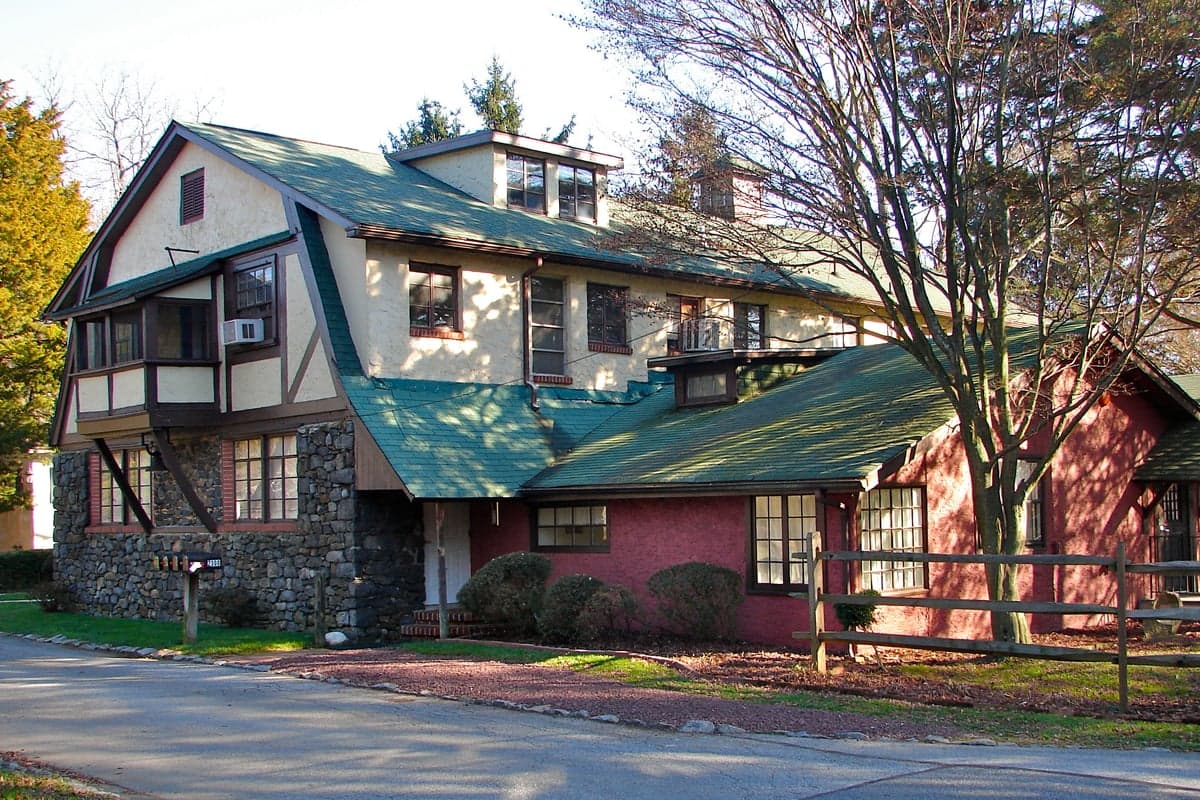
Photo: Wikipedia
Personal Sovereignty in Arden, DE
Viable for self-reliance. Generally workable, though some barriers may limit total independence.
What does Personal Sovereignty tell us?
Personal Sovereignty measures your capacity for self-reliance and independence with minimal government friction. Higher scores mean fewer barriers between you and the way you want to live... but it assumes you have the space you need and good neighbors.
What does this tell us?
Personal Sovereignty measures your capacity for self-reliance and independence with minimal government friction. Higher scores mean fewer barriers between you and the way you want to live... but it assumes you have the space you need and good neighbors.
State Policy
Energy independence: Importer (2% of energy produced in-state)
Personal Liberty
Homesteading

Personal Liberty Analysis
For the liberty-minded individual or family evaluating Delaware as a relocation option, Arden presents a uniquely complex sovereignty picture. This small, unincorporated village in northern New Castle County operates under a distinctive land trust model that grants residents significant control over their immediate environment, yet it sits within a state whose overall policy trajectory—particularly in taxation, gun regulation, and emergency powers—raises serious red flags for those prioritizing personal autonomy. The trade-off here is stark: you get a tight-knit, self-governing community with deep roots in mutual self-reliance, but you must navigate a state-level apparatus that has increasingly centralized authority and restricted individual choice in recent years. For the strategic relocator, Arden is less a sanctuary and more a high-risk, high-reward outpost where local resilience must constantly push back against state overreach.
Tax burden and regulatory posture: How Delaware’s fiscal climate affects your autonomy
Delaware’s tax structure is a double-edged sword for the sovereignty-minded. On one hand, the state has no sales tax, which directly reduces the government’s ability to tax your consumption and gives you more control over your spending. On the other hand, the personal income tax is progressive, with rates climbing to a top marginal rate of 6.6% on income over $60,000—a bracket that hits many middle-class households hard. Property taxes in New Castle County are moderate, but the state’s overall tax burden as a percentage of personal income is above the national average. More concerning for the prepper mindset is the regulatory posture: Delaware’s government has a history of aggressive environmental and land-use regulations, and the state’s corporate-friendly reputation does not extend to individual property rights. The state’s building codes are stringent, and the Department of Natural Resources and Environmental Control (DNREC) has broad authority over land use, including wetlands and stormwater management, which can complicate any off-grid or self-sufficient building project. For the person seeking to minimize government entanglement, Delaware’s tax and regulatory climate is a net negative—you keep more at the register but lose more to income taxes and bureaucratic hurdles.
Self-defense and gun law specifics: What you can and cannot do in Arden
This is where Delaware’s state-level policies clash most directly with personal sovereignty. In 2022, Delaware passed a comprehensive gun control package that includes a ban on "assault weapons" (defined broadly to include many common semi-automatic rifles), a ban on magazines over 17 rounds, and a permit-to-purchase requirement for handguns. The state also has a "red flag" law that allows for temporary firearm seizure without a criminal conviction, and it requires a background check for all firearm sales, including private transfers. For the survivalist, these laws are a direct infringement on the right to keep and bear arms for self-defense and community defense. Concealed carry is shall-issue, but the process is now more burdensome, and the list of prohibited places—including schools, government buildings, and private businesses that post signs—is extensive. Arden itself, as a village with a strong community ethos, has no local ordinances that further restrict firearms, but the state laws apply uniformly. If you value the ability to own standard-capacity magazines or modern sporting rifles, Delaware is not a favorable jurisdiction. The legal landscape here is trending in the wrong direction for the liberty-minded, and any relocation should factor in the likelihood of further restrictions.
Self-reliance and homesteading viability: Lot sizes, zoning, and off-grid feasibility
Arden’s unique land trust model is its greatest asset for self-reliance. The village owns the land collectively, and residents lease their homesites under a 99-year renewable lease. This structure gives the community direct control over zoning and land use, and it has historically fostered a culture of gardening, small-scale agriculture, and shared resources. Lot sizes in Arden are generally small—typically one-quarter to one-half acre—which limits large-scale homesteading but is adequate for intensive vegetable gardening, fruit trees, and small livestock like chickens (subject to community approval). The village’s zoning is permissive for home-based businesses and workshops, which aligns with a self-reliant lifestyle. However, off-grid feasibility is severely limited. The land trust requires connection to municipal water and sewer, and the state’s building codes effectively mandate grid-tied electricity. Solar panels are allowed, but net metering policies are state-controlled and have been subject to change. Rainwater collection is legal but regulated, and composting toilets are not permitted as a primary system. For the serious prepper seeking true off-grid independence, Arden’s infrastructure requirements are a dealbreaker. This is a community for those who want to be self-reliant within a cooperative framework, not for those seeking complete autonomy from the grid.
Personal liberties: Parental rights, medical autonomy, speech, and property
Delaware’s record on personal liberties is mixed and increasingly concerning for the conservative parent or individual. On parental rights, the state has been aggressive in mandating school curricula, including comprehensive sex education and social-emotional learning standards that many parents find intrusive. The state does not have a robust parental opt-out framework, and school boards in New Castle County have shown little resistance to state directives. Medical autonomy is another area of tension: Delaware was among the states that imposed strict COVID-19 mandates, including vaccine requirements for healthcare workers and school staff, and it maintains a centralized vaccine registry that raises privacy concerns. The state also has a "right-to-die" law, which some view as a slippery slope, and it has expanded Medicaid and state health insurance programs, increasing government involvement in healthcare decisions. Free speech is protected under the First Amendment, but the state has enacted laws against "hate speech" in public schools and workplaces that some critics argue chill political discourse. Property rights are the weakest link: the state’s use of eminent domain for economic development is well-documented, and the land trust model in Arden itself means you never own the land outright—you lease it from the community. For the individual who values absolute control over their property, family, and medical decisions, Delaware’s state-level policies are a significant downgrade from more liberty-friendly states like Texas, Florida, or New Hampshire.
In the final analysis, Arden offers a rare and valuable local sovereignty that can buffer some of the state’s overreach, but it cannot escape the gravitational pull of Delaware’s increasingly centralized government. The village’s cooperative land trust and community governance provide a model of self-rule that is almost extinct in modern America, and for the right person—someone who values community resilience and is willing to fight for local control—it can be a viable outpost. However, for the survivalist or prepper seeking maximum personal sovereignty, the state’s tax burden, restrictive gun laws, limited off-grid feasibility, and encroachments on parental and medical autonomy make it a poor long-term bet. Arden is a place to dig in and resist, not a place to retreat and be left alone. Compare it to a state like New Hampshire, where the tax burden is lower, gun laws are more permissive, and local control is stronger, and the choice becomes clear: Arden is for the activist who wants to fight the system from within, not for the individualist who wants to opt out entirely.

* Values derived from national, state, county, city and local statistics and may differ in a specific area. Last updated: 2026-04-29T21:02:29.000Z
Narrative content on this page is AI-generated and may contain mistakes. Verify any details that matter before acting on them.
ReloMaps may earn a commission from affiliate links at no extra cost to you.

