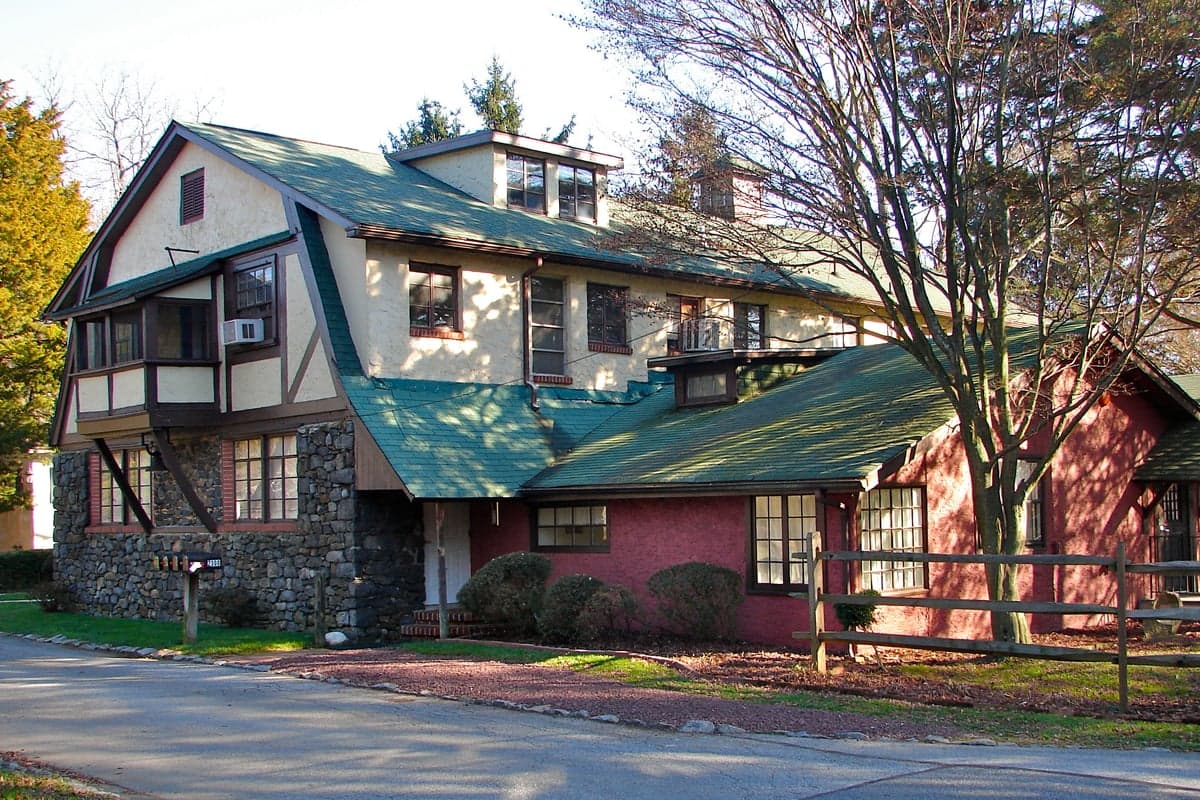
Photo: Wikipedia
Strategic Assessment of Arden, DE
Multiple tactical vulnerabilities. Population density, target proximity, or disaster risk are likely compounding. A retreat property and exit planning is required.
What does the Strategic Assessment tell us?
Our Strategic Assessment grades tactical survivability of an area. Major population centers, military targets, fallout zones, natural disasters, and border exposure all drive risk — lower exposure means a more defensible position in a crisis.
This is heavily inspired by Joel Skousen's Strategic Relocation book. Highly recommended you checkout the book ($)What does this tell us?
Our Strategic Assessment grades tactical survivability of an area. Major population centers, military targets, fallout zones, natural disasters, and border exposure all drive risk — lower exposure means a more defensible position in a crisis.
This is heavily inspired by Joel Skousen's Strategic Relocation book. Highly recommended you checkout the book ($)Strategic Pillars

Key Distances
Regional Safe Places
Below is our recommended "safe zones" in Delaware and the surrounding area based on our strategic heuristics. For most people, it's unrealistic to live in a “safe zone” full-time due to work, family or other personal reasons. They tend to be more rural. However, many of these areas are perfect for second homes and retreat properties that double as a vacation home or even a short-term rental.
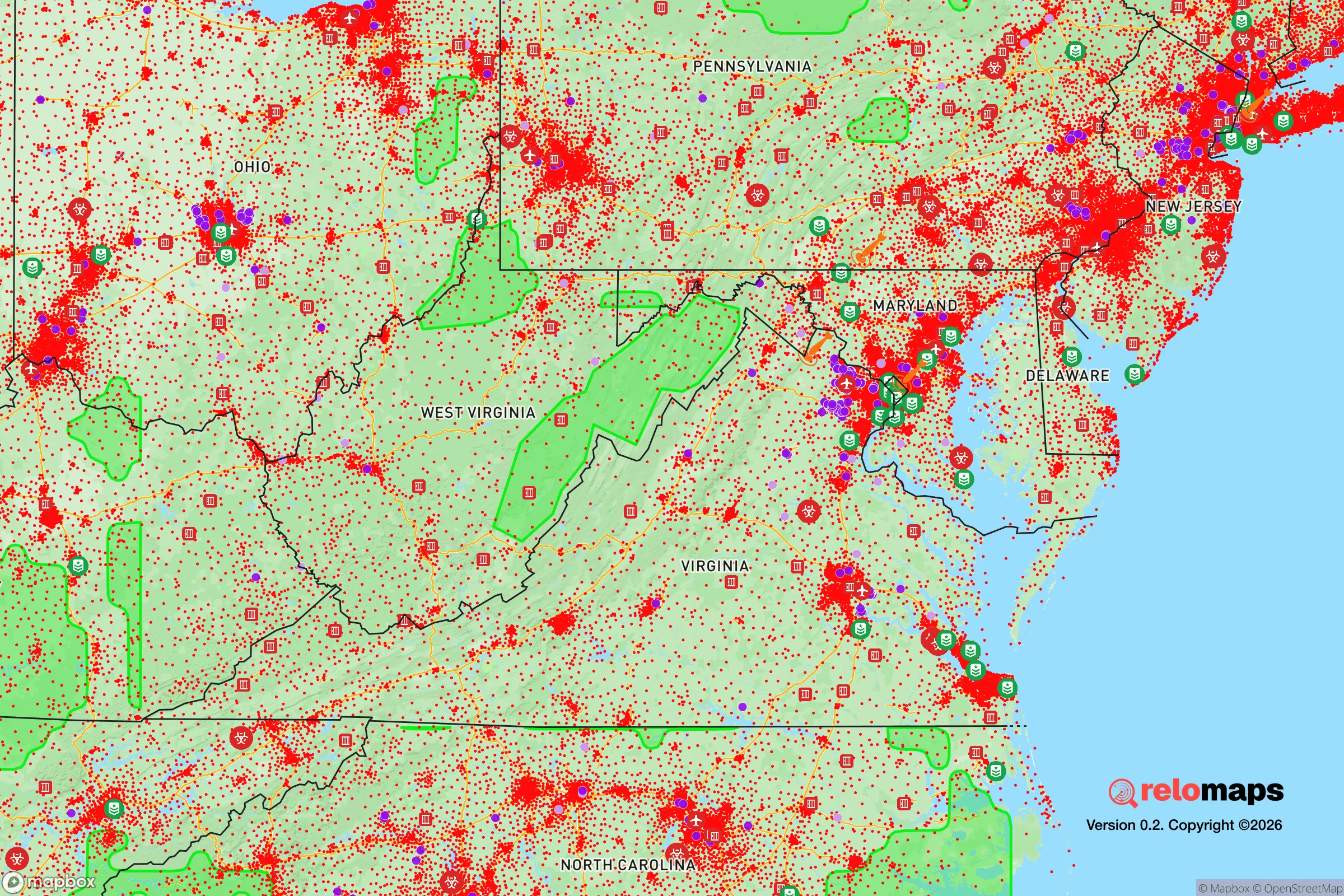
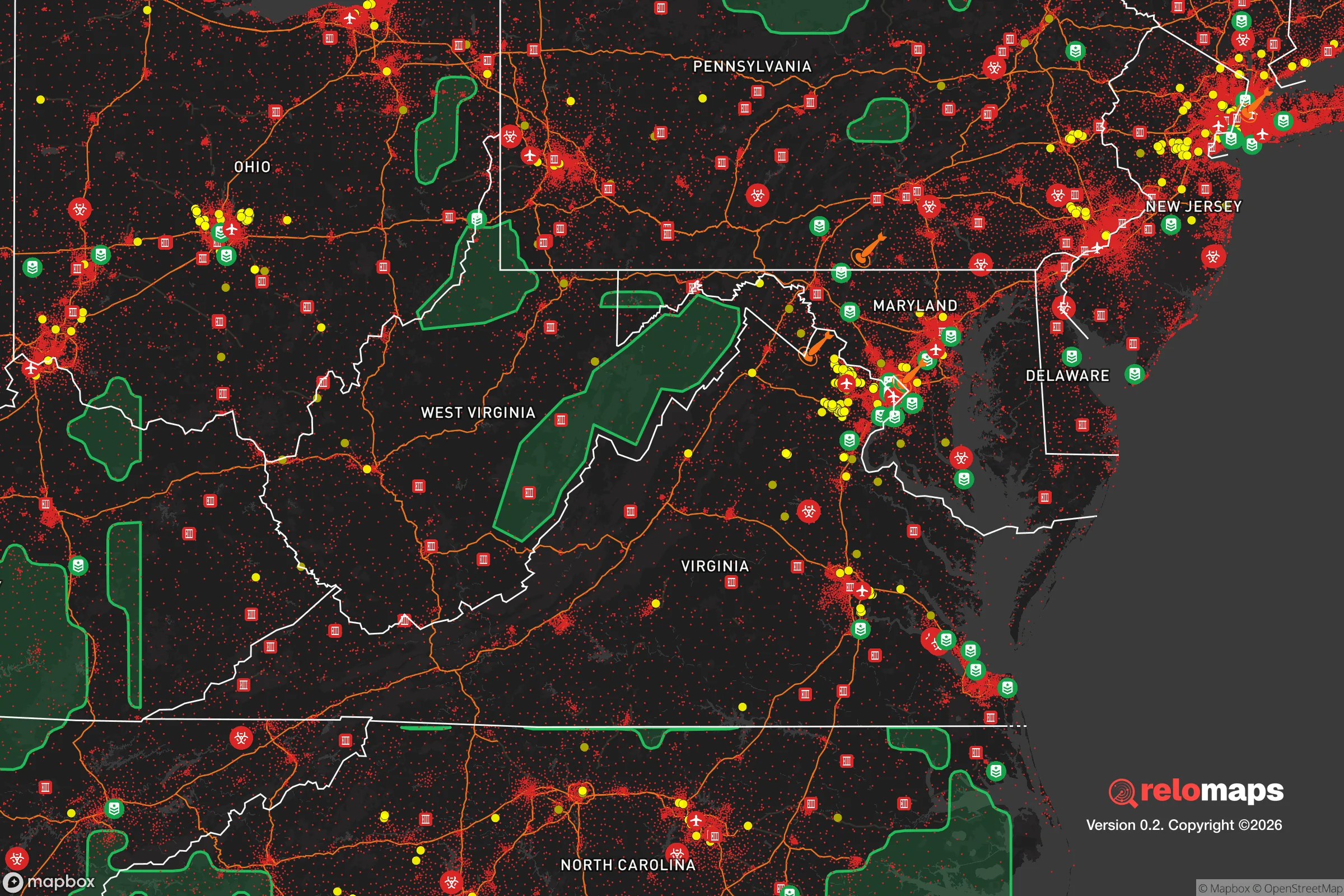


Important Note: For informational purposes only. This does not mean nothing bad ever happens in the green zones. Please use common sense. This is based on public data and modeled with AI. We tried to take a conservative approach but mistakes happen. We update this regularly as new information becomes available.
Solar Generator Recommendations
Backup power matters more here than in safer locations. We've picked three solar generators across budgets and capacity tiers — start with the budget unit if you only need a few essentials, or step up if you want to run a fridge and HVAC for days at a time.

Jackery Portable Power Station Explorer 300
Budget OptionPower on the Go: Weighing only 11 lbs, it's convenient to set up and store with book-sized foldable solar panels

BLUETTI Portable Power Station AC180
Designed for both indoor and outdoor scenarios, AC180 is highly capable as it has a robost capacity and continuous output power.

EF ECOFLOW DELTA Pro Ultra Power Station
Upgraded PickEcoFlow DELTA Pro Ultra is a whole-home energy system designed to grow with your family. Integrated with the Smart Home Panel 2, it scales to meet your evolving energy needs — keeping your home powered, intelligent, and secure through every stage of life.
We earn a commission, at no additional cost to you.
Strategic Assessment Analysis
Arden, Delaware, presents a mixed strategic picture for the prepper or survivalist household. Its primary resilience advantage is its location within the relatively low-key, low-density Brandywine Valley, but its proximity to the I-95 corridor and the Wilmington-Philadelphia metroplex introduces significant vulnerabilities. For a conservative-minded relocator concerned with civic unrest, mass casualty events, and national-scale disasters, Arden offers a unique blend of quiet community life and uncomfortable proximity to high-value, high-risk targets.
Geographic position and natural advantages for long-term survival
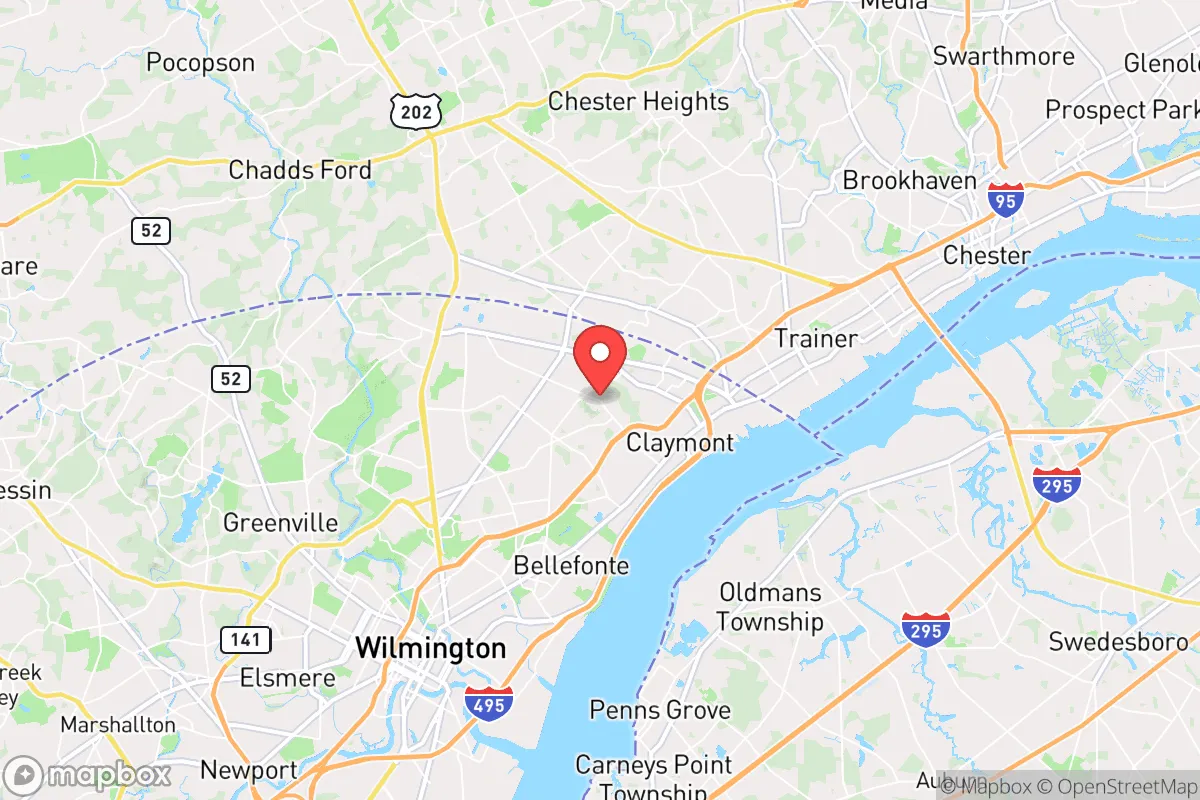
Arden sits in northern New Castle County, roughly 5 miles northwest of Wilmington and 25 miles southwest of Philadelphia. The area's natural advantages are rooted in its position within the Piedmont Plateau, where rolling hills, hardwood forests, and a network of creeks and streams provide a more defensible and resource-rich environment than the flat, open farmland to the south. The nearby Brandywine Creek and Red Clay Creek offer surface water sources, though both are within easy reach of suburban runoff and would require robust filtration. The region's moderate climate—with four distinct seasons but no extreme temperature swings—reduces the strain on heating and cooling fuel reserves compared to the Deep South or Upper Midwest. The soil in the Brandywine Valley is generally well-drained and capable of supporting small-scale agriculture, though the growing season (roughly 170 days) is shorter than in the Mid-Atlantic coastal plain. For a family looking to establish a semi-self-sufficient homestead, the area's tree cover and topography provide natural screening and multiple egress routes away from the I-95 corridor, should a rapid evacuation become necessary.
Risks, exposures, and proximity to fallout-relevant landmarks
The single greatest strategic liability of Arden is its location within the blast and fallout shadow of the Philadelphia-Wilmington-Newark urban triangle. Wilmington is home to the Port of Wilmington, a major chemical and petroleum shipping hub, and the nearby Delaware City Refinery—both high-priority targets in any peer-state conflict scenario. Philadelphia's oil refineries, naval shipyard, and major rail interchanges are within a 30-mile radius, meaning a single airburst or ground burst over the city could produce fallout that reaches Arden within hours, depending on wind direction. Additionally, the area sits within 50 miles of the Salem and Hope Creek nuclear generating stations in southern New Jersey, and the Peach Bottom Atomic Power Station in Pennsylvania. A catastrophic failure at any of these facilities—whether from accident, sabotage, or attack—would place Arden in a moderate-to-high contamination zone. On the civil unrest front, Wilmington has a history of periodic civil disturbances, and the I-95 corridor is a known chokepoint for both evacuation and supply movement. Arden's location on the edge of a major metro area means that any large-scale unrest in Philadelphia or Wilmington would likely push refugees north along Route 202 and I-95, putting the community directly in the path of displaced populations. The area's lack of natural barriers—no mountains, wide rivers, or dense swamps—makes it difficult to control access or establish a perimeter during a breakdown of civil order.
Practical resilience for a relocator: food, water, energy, and defensibility
For a relocator serious about self-sufficiency, Arden offers a mixed bag. Water is the most immediate concern: municipal water comes from the Wilmington system, which draws from the Brandywine Creek and is vulnerable to both contamination and supply disruption. A private well is a must for any prepper property, but many homes in the Arden historic district are on town water. The water table is generally high, so a shallow well is feasible, but drilling permits and setbacks are regulated by New Castle County. Food production is viable on larger lots—the soil is decent for vegetables, and the area supports fruit trees (apples, pears, peaches) and small livestock. However, suburban zoning restrictions in Arden proper limit the number of chickens or goats you can keep, and any serious food storage will require a basement or outbuilding. Energy resilience is a bright spot: the region has good solar insolation for a northern state, and net metering is available through Delmarva Power. A grid-down scenario would likely see power restored within days in normal conditions, but a major event—EMP, cyberattack, or physical sabotage of the nearby substations—could leave the area without power for weeks. Defensibility is the weakest link. Arden is a compact, walkable village with narrow roads and dense tree cover, which aids concealment but also limits sightlines and creates multiple approach vectors. The community's strong social cohesion—Arden has a long tradition of town meetings and cooperative governance—is a genuine asset for mutual aid and neighborhood watch, but it also means that outsiders are easily identified, which cuts both ways. For a relocator seeking a truly hardened position, the lack of a natural defensive terrain (no high ground, no water barrier, no choke points) means that security would depend almost entirely on community organization and pre-positioned supplies.
The overall strategic picture for Arden is one of cautious viability for the prepared relocator who understands the trade-offs. It is not a remote bug-out location, nor is it a high-risk urban core. Its greatest strength is its community fabric and its position in a relatively stable, low-crime corner of the Mid-Atlantic, away from the worst of the coastal megalopolis. Its greatest weakness is its proximity to multiple high-value targets and the inevitable refugee flow that would follow any major disaster. For a conservative family that values local governance, walkable neighborhoods, and a slower pace of life—and that is willing to invest in a well, solar panels, and a deep pantry—Arden can work as a long-term base. But for those whose primary concern is surviving a full-scale societal collapse or a nuclear exchange, the risk profile is too high. The smart play is to treat Arden as a "gray man" location: a place to live quietly, build community ties, and maintain a low profile, while keeping a fully stocked vehicle ready to head west or south into the Delmarva Peninsula or the Appalachian foothills if the situation deteriorates beyond what local resilience can handle.

* Values derived from national, state, county, city and local statistics and may differ in a specific area. Last updated: 2026-04-29T21:02:29.000Z
Narrative content on this page is AI-generated and may contain mistakes. Verify any details that matter before acting on them.
ReloMaps may earn a commission from affiliate links at no extra cost to you.

