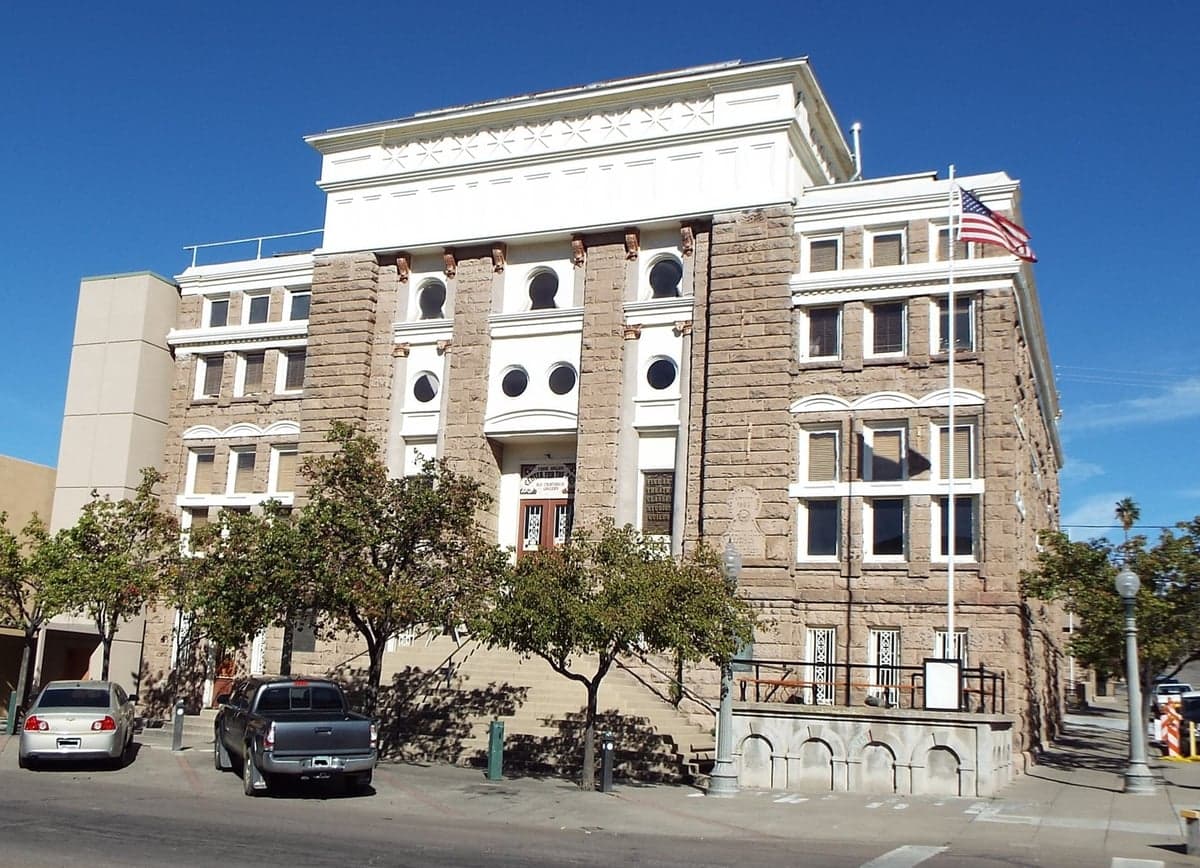
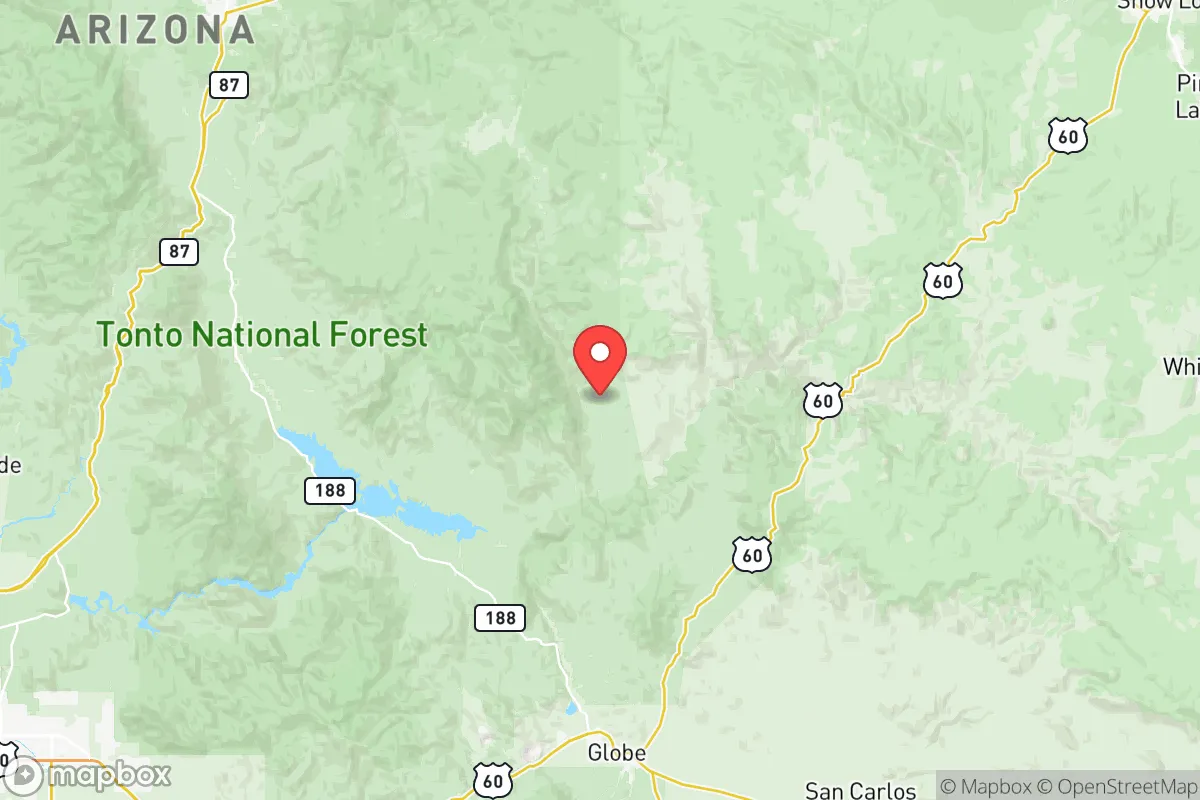
Photo: Wikipedia
Demographics of Gila County
Affluence Level in Gila County
A middle-class area roughly in line with national averages across income, home values, education, and employment.
People of Gila County
Gila County today is home to 53,610 residents, a majority-White (62%) community forged by copper mining booms and rugged Western settlement rather than recent immigration. The Hispanic population stands at 17.8%, concentrated in the historic mining towns of Globe, Miami, and Hayden, while the San Carlos Apache Reservation anchors a substantial Native presence across the county's eastern half. With only 1.2% foreign-born and 18.8% college-educated, the population skews older, blue-collar, and culturally rooted in the resource-extraction and ranching economy that defined Arizona's interior for over a century.
Settlement & growth (pre-1960)
Long before European contact, the region that became Gila County was home to Western Apache bands, particularly the San Carlos and Tonto groups, who maintained seasonal settlements along the Salt, Gila, and San Carlos river drainages. Spanish and Mexican expeditions probed the area from the 1600s, but no permanent colonial towns were established—Apache resistance and remote terrain kept outpost-building to a minimum. The United States assumed control after the Gadsden Purchase (1854) and the Apache Wars ended with the confinement of the Western Apache onto the San Carlos Reservation, established in 1872 and still a defining presence in the county today.
The county's modern population began with the copper boom of the 1870s–1900s. Prospectors discovered rich ore bodies in the Pinal Mountains, and the towns of Globe (founded 1876) and Miami (laid out 1907) quickly grew into roaring mining camps. The first major European-descended wave was a mix of Cornish "Cousin Jack" miners, Irish laborers, and German and Slavic immigrants who brought hard-rock mining skills. They were joined by Mexican miners recruited from Sonora—many of whose families remain in Miami, Superior, and Hayden to this day. By 1910, Gila County held roughly 23,000 people, a mix of White American-born, European immigrant, and Mexican-heritage residents, with a small number of Black and Chinese laborers who worked in railroads and mine support roles.
The Dust Bowl era of the 1930s brought a second domestic wave: Anglo farmers and ranchers displaced from the Southern Plains, who took up dryland ranching and small-scale agriculture around Payson and the Tonto Basin. These newcomers reinforced the county's Western, rural identity. The post-World War II period saw a modest influx of returning veterans and their families, some finding work in the expanding copper pits and smelters. However, population growth was slow compared to Phoenix—the county hit a 1950 peak of 24,000 and stayed relatively flat until the 1970s.
Modern era (post-1965)
The 1965 Hart-Cellar Act had a negligible effect on Gila County's makeup: the foreign-born share never rose above 1–2%, and no large new immigrant enclave formed. Instead, the post-1965 story is one of domestic migration—specifically, a modest inflow of retirees and second-home buyers from Phoenix and California seeking cooler temperatures and rural land around Payson, which grew from a ranching hamlet of 1,800 in 1970 to over 15,000 by 2020. This shifted the county's center of population weight northward: where Globe and Miami once dominated, Payson now accounts for roughly a third of the county's total population.
Hispanic residents, predominantly of Mexican descent, remained concentrated in the mining towns of the south: Hayden and Winkleman are now majority-Hispanic, while Miami sits roughly half-Hispanic. These communities have deep roots, with many families tracing their arrival before Arizona statehood in 1912. The East/Southeast Asian share (0.7%), the Indian-subcontinent share (0.1%), and the Black share (0.6%) remain tiny, reflecting the county's limited pull for service-economy jobs or chain migration. The college-educated share of 18.8%—roughly half the national average—underscores the economy's shift away from mining (which required few degrees) toward an uncertain mix of retail, healthcare, and government employment.
The future
Gila County is not homogenizing or diversifying quickly; it is slowly aging and slightly thinning in its core towns while Payson absorbs most new arrivals. The Hispanic share has grown gradually—from roughly 14% in 2000 to 18% today—driven by natural increase rather than new immigration, and is likely to plateau near 20–22% as younger generations assimilate and out-migrate. The White population will remain the majority, but its share will ease as the overall population stays roughly flat. The San Carlos Apache Reservation's population, about 14,000 tribal members, is the county's largest single concentrated community, and its younger age structure will give the Native share a demographic lift over the next decade.
In-migration from the Rust Belt and California has been modest and overwhelmingly White and older, reinforcing the county's culturally conservative character rather than altering it. The next 10–20 years will likely see slow population growth of 5–10%, concentrated in Payson and the Rim Country, while Globe, Miami, and Hayden continue to contract. No major wave of foreign immigration is visible on the horizon given the employment base.
For someone moving in now, Gila County remains a place of settled, generations-deep communities—White, Hispanic, and Apache—where newcomers are absorbed into an existing, rural-conservative culture rather than reshaping it. The population is among the least diverse in Arizona by immigrant share, and its future is one of gradual, localized growth rather than demographic transformation.

* Values derived from national, state, county, city and local statistics and may differ in a specific area. Last updated: 2026-05-27T20:49:15.000Z
Narrative content on this page is AI-generated and may contain mistakes. Verify any details that matter before acting on them.
ReloMaps may earn a commission from affiliate links at no extra cost to you.

