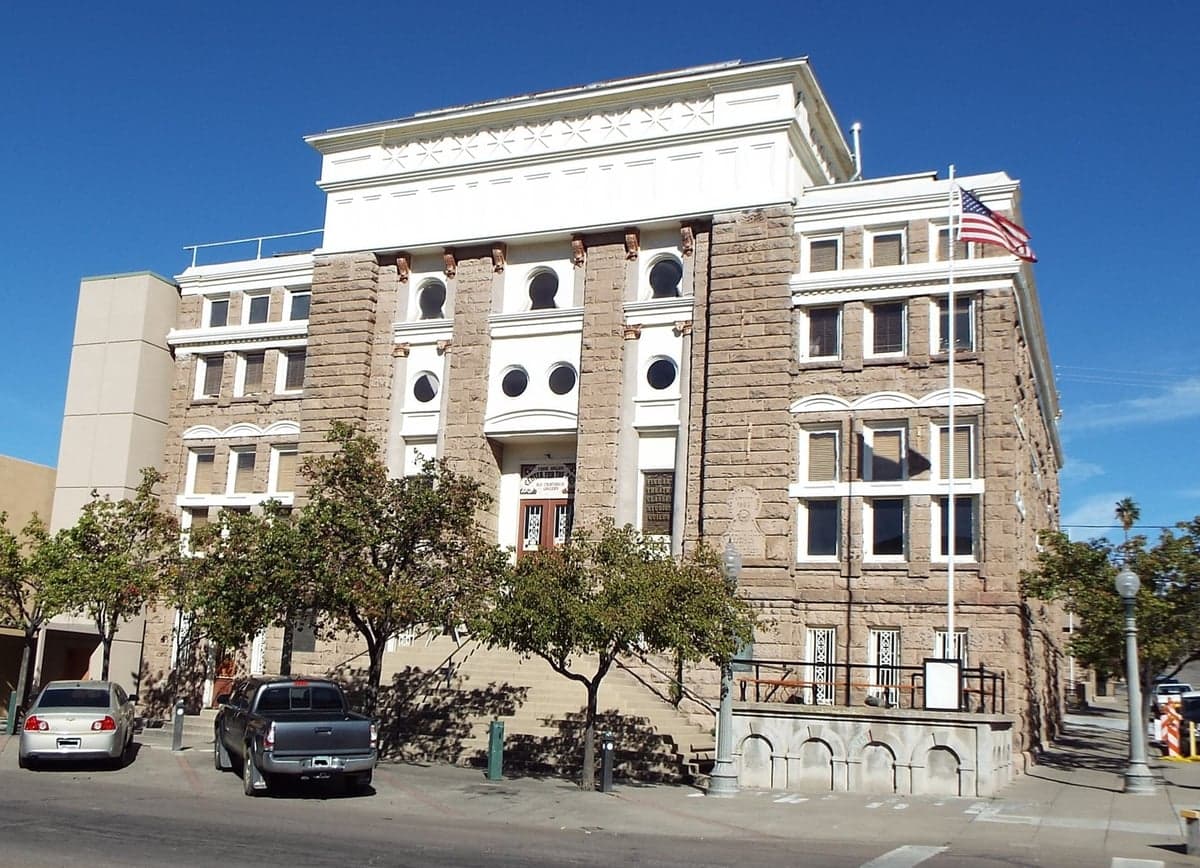
Photo: Wikipedia
Political ClimatePolitical Climate in Gila County
Showing district-level results — no local-only data available.
Local Political AnalysisPolitical Analysis of Gila County
Gila County's political climate has long been a reliably conservative stronghold, with a Cook Partisan Voting Index of R+7 that makes it noticeably redder than Arizona as a whole, which sits at EVEN. But if you’ve lived here as long as I have, you know that label only tells part of the story. The county has been shifting rightward over the past decade, especially in the smaller mountain towns, while a few pockets—namely around Payson and the Globe-Miami corridor—have seen more mixed results in recent cycles. That said, the overall trajectory is clear: this is a place that values limited government, local control, and personal freedoms, and any move toward progressive policies is met with serious skepticism.
How it compares
Statewide, Arizona has become a true battleground, flipping blue in 2020 for president and electing a Democrat governor in 2022. Gila County, meantime, hasn't budged. In 2024, the county voted +19 points for the Republican presidential candidate, while the state overall was decided by less than two points. The geographic breakdown matters: Payson, the largest town, remains deep red, with few precincts showing even competitive margins. Globe and Miami, the historic mining hubs, lean conservative but have a larger Hispanic population that sometimes votes more moderately—though not enough to flip a precinct. The real outliers are a handful of precincts near Young and Pine that are among the most conservative in the state. On the flip side, Strawberry and Tonto Basin have seen an influx of second-home owners from Maricopa County, bringing a slight purple tinge to those local races, but they still vote red down the line. The key takeaway: Gila County isn't just R+7 on paper; it's culturally and practically a place where conservative values—gun rights, low taxes, minimal zoning—are the baseline expectation.
What this means for residents
For folks living here, the political climate directly shapes daily life. You don't see the kind of government overreach that plagues bigger cities. Property taxes remain among the lowest in the state, and the county government generally stays out of your business unless you give them a reason. That’s not an accident—it’s a reflection of voters who consistently reject bond measures for new public projects and who turned down a county-wide sales tax hike in 2023. The downside? Some infrastructure—like broadband and rural roads—lags behind, because residents would rather patch it themselves than accept a larger government footprint. The recent push by the state legislature to preempt local land-use rules (SB 1163 in 2025) was cheered here; it keeps county supervisors from getting too creative with zoning ordinances that might infringe on private property rights. If you're worried about progressive trends creeping into Arizona from the coast, Gila County feels like a firewall—for now.
What daily life is like for families
If you're raising kids or just want to live without constant political noise, this county delivers. Schools in Payson Unified and Globe Unified have kept curriculum battles local—parents have a real say in what's taught, and critical race theory or gender ideology hasn't gained a foothold. The sheriff's office is proactive on immigration enforcement, cooperating with Border Patrol, which many residents see as common-sense law and order. Culturally, you'll find that church attendance is high, but no one shoves it down your throat. The big distinction between Gila County and the rest of Arizona? Out here, the Second Amendment isn't debated; it's practiced. Open carry is common, and you won't find any of the draconian magazine bans or waiting periods that some Phoenix suburbs have flirted with. That's the kind of freedom that keeps people here—and keeps the progressives at arm's length.

State Political ClimatePolitical Climate in Arizona
State Political AnalysisPolitical Environment in the State
Arizona has transformed from a reliably red stronghold into the nation’s premier swing state, with a Cook PVI of EVEN that reflects a bitter tug-of-war between its deep-rooted conservative base and a surging progressive coalition. The dominant forces are no longer just the old Goldwater Republicans but a messy alignment of suburban moderates, libertarian-leaning transplants, and a growing Democratic machine centered in Maricopa County. Over the past 15 years, the state has lurched from a +8 Republican advantage to a dead split, driven by explosive growth in the Phoenix metro and a steady influx of voters from bluer states.
Urban vs. rural divide
The political map breaks into three stark zones. Maricopa County, home to 60% of the population, is the entire battlefield—its suburbs like Mesa, Gilbert, and Chandler still lean Republican but are trending purple, while the core of Phoenix and working-class South Phoenix have become reliably Democratic. Tucson and Flagstaff are deep blue strongholds, with Pima County and Coconino County consistently delivering margins that offset Republican gains in the hinterlands. Everything outside the two big metros—from the rugged Prescott area in Yavapai County to Mohave County along the Colorado River and Cochise County on the border—votes Republican by 20 to 40 points. The rural vote isn’t enough to win statewide anymore, which is why every election comes down to the 50,000 or so swing voters in Maricopa’s suburban “snowbird” precincts.
Policy environment
Arizona still has a fundamentally conservative policy architecture, though it’s under constant siege. The state levies a flat income tax of 2.5%, one of the lowest in the nation, and maintains a right-to-work status that keeps union power relatively weak. K-12 education policy is a war zone: the state was a national leader in school choice with its Empowerment Scholarship Account (ESA) program, which was expanded in 2024 to cover nearly all students—a huge win for parental rights. Election law is a patchwork of old-school convenience (no-excuse mail voting is the norm) and newer integrity measures like HB 2492, which requires proof of citizenship for federal voter registration. Healthcare expansion via Medicaid (AHCCCS) was adopted under the old Brewer administration and hasn’t been rolled back, making it more expansive than in most red states. On immigration, the legacy of SB 1070 still looms, but the border is essentially a federal liability the state can’t control.
Trajectory & freedom
On personal liberty, the state is a mixed bag that trends in a concerning direction. The 2022 expansion of the ESA school voucher program was a landmark win for educational freedom, giving families direct control over their kids’ schooling. Gun rights remain broadly protected, with permitless carry (Constitutional Carry, HB 2511) going into effect in 2024, and no red flag law on the books—a major positive for the freedom-minded. But the state supreme court’s 2024 ruling that upheld a near-total 1864 abortion ban was quickly overturned by a coalition of Republicans and Democrats in the legislature, with the governor signing a repeal that left a 15-week ban in place. That chaotic episode illustrated how quickly the legislative machinery can produce outcomes that feel less like liberty and more like a negotiated surrender. Property rights are generally strong, with minimal zoning overreach outside of Phoenix’s urban core, but the tide of transit-oriented development mandates coming out of Phoenix City Hall is a growing worry for those who value low-density living.
Civil unrest & political movements
Arizona has been a flashpoint for the nation’s most volatile political struggles. The 2020 election produced the infamous “Cyber Ninjas” audit of Maricopa County’s ballots, a partisan drama that dragged on for months and polarised the state. Immigration politics are raw—the border is a daily reality for residents of Sierra Vista and Yuma, where crossings and cartel activity are visible. On the left, activist groups like LULAC and Mi Familia Vota are highly organized and aggressive, while the right has a vocal contingent of “Stop the Steal” activists who maintain an active presence. There were significant 2020 Black Lives Matter protests in downtown Phoenix that turned destructive, and the recovery period saw a rise in armed counter-protests organized by local militia groups like the Arizona Rangers. The overall atmosphere is one of permanent low-grade confrontation—few neutral ground exists.
Projection
Over the next 5 to 10 years, the trajectories are fairly clear and somewhat sobering for the conservative-leaning resident. The in-migration of roughly 100,000 net new residents annually is heavily skewed toward Maricopa County and Pima County, many from California and Illinois, and they tend to bring their voting habits with them. The state's Hispanic population is the fastest-growing demographic and continues to lean Democratic by comfortable margins. If the GOP cannot consolidate the suburban vote around a clean message of economic freedom and school choice without a divisive social agenda, the state could turn reliably blue within a decade. However, the legislature’s conservative supermajority (as of 2025) still provides a strong bulwark against progressive policy shifts, and the court system remains partially conservative. The realistic projection is a state that remains competitive but trends leftward, with school choice and low taxes holding the line.
For a new resident, the bottom line is that Arizona offers genuine advantages—low taxes, school choice, gun freedom—but you are moving into a state currently in open political warfare. The freedom on offer is real, but it is not guaranteed by the landscape itself; it’s being fought over every election cycle. If you value personal liberty and low government overreach, you will find plenty to like, but you should also expect to be an active participant in the fight to keep it that way. Choose your county wisely—rural areas and the outer ring of Maricopa suburbs offer the most conservative stability.
* Values derived from national, state, county, city and local statistics and may differ in a specific area. Last updated: 2026-05-27T20:49:15.000Z
Narrative content on this page is AI-generated and may contain mistakes. Verify any details that matter before acting on them.
ReloMaps may earn a commission from affiliate links at no extra cost to you.

