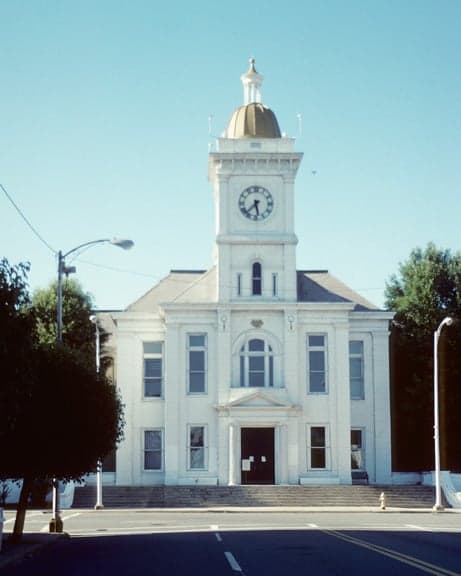
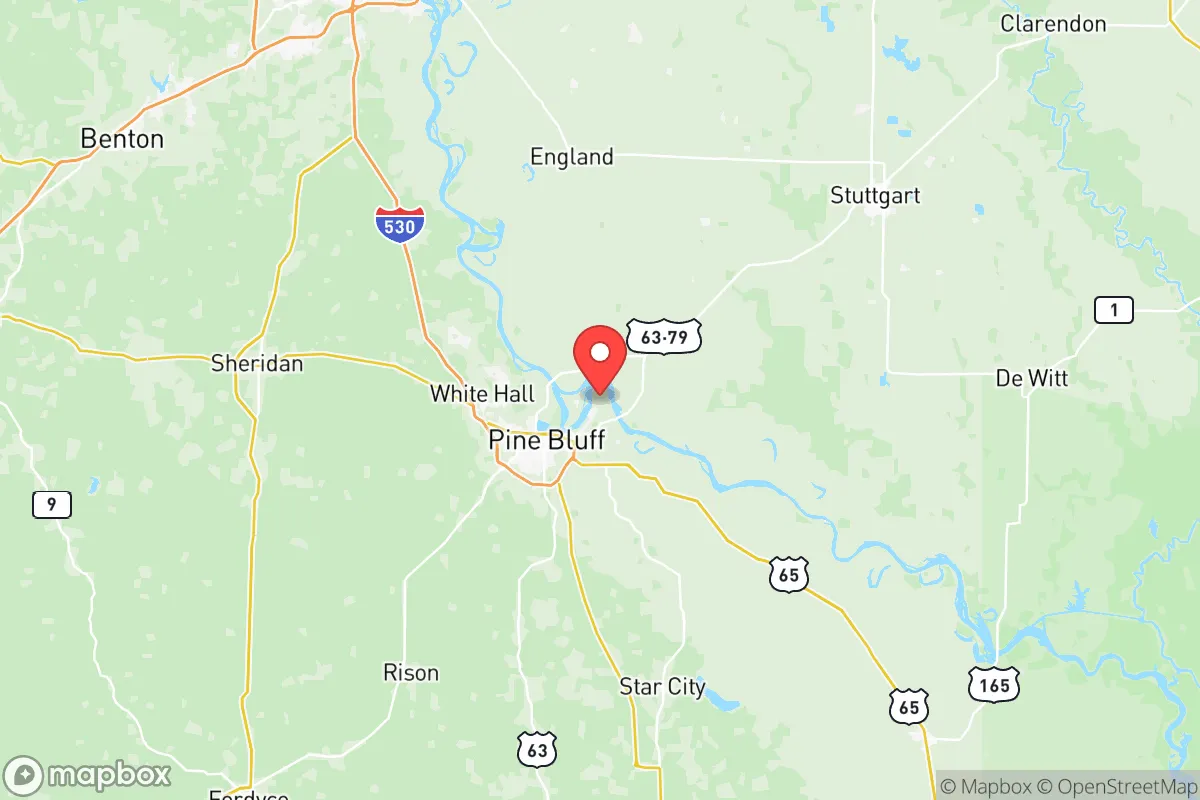
Photo: Wikipedia
Political ClimatePolitical Climate in Jefferson County
Showing district-level results — no local-only data available.
Local Political AnalysisPolitical Analysis of Jefferson County
Jefferson County, Arkansas, has historically been a Democratic stronghold in a deeply red state, but that's changing fast. The county now carries a Cook PVI of R+20, meaning it votes 20 points more Republican than the national average, which is actually more conservative than the state of Arkansas as a whole (R+16). This shift didn't happen overnight—it's been a slow, steady move to the right, driven by a realignment of working-class voters and a growing unease with the national Democratic Party's progressive agenda. If you're looking at the political landscape here, you're seeing a place that's still sorting itself out, with some pockets holding onto old loyalties while the rest of the county is embracing a more traditional, freedom-focused conservatism.
How it compares
The big difference between Jefferson County and the rest of Arkansas is the urban-rural split within the county itself. The city of Pine Bluff, the county seat, still leans blue, but it's a shadow of its former Democratic self. The old industrial and union vote that kept it solidly Democratic for decades has eroded, and many of those voters have either moved to the suburbs or simply stopped voting for a party they feel has abandoned them. Meanwhile, towns like White Hall and Redfield are solidly red, with precincts often voting 70% or more Republican. The swing precincts are in the unincorporated areas around Altheimer and Sherrill, where you'll find a mix of longtime residents and new arrivals who are fed up with government overreach. Compared to the state, Jefferson County is actually more conservative on cultural issues—think Second Amendment rights and school choice—but it's still catching up to the rest of Arkansas on economic conservatism, like cutting taxes and regulations.
What this means for residents
For folks living here, the political shift means a real change in how local government operates. The old guard in Pine Bluff has been slow to embrace conservative reforms, but the county commission and school boards are increasingly filled with people who prioritize personal freedoms and limited government. You're seeing fewer mask mandates, less talk of "equity" programs in schools, and a stronger push for property tax relief. The concern, though, is that the progressive influence in Pine Bluff city government still tries to push through policies that feel like overreach—like zoning restrictions or business regulations that make it harder for small shops to open. The good news is that the county's rural and suburban voters are pushing back, and the trend is clearly toward more liberty, not less.
One of the biggest cultural distinctions here is the strong gun culture and the near-universal support for the Second Amendment. Unlike in some parts of the country, you won't find many people here who think the government should have a say in what firearms you own. There's also a deep skepticism of federal mandates, whether it's on education, healthcare, or environmental rules. The local economy is still struggling, but the political shift is bringing a new focus on cutting red tape and attracting businesses that want to operate without heavy-handed government interference. If you're someone who values your rights and wants to live in a place where the government stays out of your life, Jefferson County is becoming a better fit every election cycle. The trajectory is clear: more conservative, more freedom-focused, and less tolerant of progressive overreach.

State Political ClimatePolitical Climate in Arkansas
State Political AnalysisPolitical Environment in the State
Arkansas is a solidly Republican state with a Cook PVI of R+16, meaning it votes about 16 points more Republican than the national average. The dominant coalition is a mix of rural conservatives, evangelical Christians, and a growing number of transplants from blue states who are drawn to the state’s low taxes and cultural conservatism. Over the past 10–20 years, Arkansas has shifted from a competitive purple state—it voted for Bill Clinton twice—to a deep red stronghold, with the GOP now holding every statewide office, supermajorities in the legislature, and all four U.S. House seats. The change accelerated after 2010, driven by rural realignment and the collapse of the old Democratic machine that once dominated places like Little Rock and the Delta.
Urban vs. rural divide
The political map breaks into three distinct zones. Northwest Arkansas—the corridor from Fayetteville up through Springdale, Rogers, and Bentonville—is the state’s economic engine and its most politically mixed region. Benton and Washington counties together cast about a quarter of the state’s votes. Benton County (home to Walmart’s headquarters) is reliably Republican, but Washington County, anchored by the University of Arkansas in Fayetteville, has a growing progressive bloc that occasionally flips local races. Fayetteville itself is the bluest city in the state outside Little Rock, with a city council that has pushed for sanctuary-city policies and LGBTQ+ nondiscrimination ordinances—a stark contrast to the surrounding rural areas. Central Arkansas, dominated by Pulaski County (Little Rock), is the other Democratic stronghold, but it’s shrinking in relative influence. Little Rock’s population has declined, and the surrounding suburbs—like Conway, Maumelle, and Cabot—lean increasingly red. The rest of the state, from the Ozarks in the north (Baxter County, Boone County) to the Delta in the east (Jonesboro, Paragould) and the southwest (Texarkana, Hope), is deeply conservative. These rural counties routinely vote 70–80% Republican, and they drive the state’s overall partisan lean.
Policy environment
Arkansas’s policy environment is among the most conservative in the country. The state has a flat individual income tax rate of 4.4% (down from 7% a decade ago) and is on a path to eliminate it entirely. Sales taxes are relatively high—state rate 6.5%, plus local add-ons—but property taxes are low. The regulatory posture is pro-business, with few zoning restrictions outside major cities. Education policy has been a flashpoint: the LEARNS Act of 2023, championed by Governor Sarah Huckabee Sanders, created universal school vouchers, expanded charter schools, and banned “critical race theory” and “indoctrination” in classrooms. It also raised teacher salaries and required parental notification for any health-related surveys. On healthcare, Arkansas expanded Medicaid under the “private option” in 2013, but the program has been repeatedly trimmed; work requirements were imposed and then struck down in court. The state has a near-total abortion ban (triggered in 2022) with no exceptions for rape or incest. Election laws are restrictive but stable: voter ID is required, early voting is limited to 15 days, and absentee voting requires an excuse. There are no same-day voter registration or automatic registration systems. Overall, the policy environment is designed to maximize personal responsibility and limit government expansion—except in areas like education curriculum and abortion, where the state actively enforces conservative moral standards.
Trajectory & freedom
On balance, Arkansas has become more free over the past five years in several key areas, though not uniformly. Gun rights expanded significantly with Act 746 of 2021, which made Arkansas a constitutional carry state—no permit needed to carry a concealed handgun. The state also passed a “Second Amendment Sanctuary” law in 2021, prohibiting state funds from being used to enforce federal gun restrictions. On medical freedom, Act 180 of 2021 banned COVID-19 vaccine mandates by state and local governments, and a 2023 law prohibits employers from requiring vaccines as a condition of employment. Parental rights were strengthened by the LEARNS Act’s transparency provisions and a 2023 law requiring schools to notify parents of any changes in a student’s “services or monitoring” related to mental, emotional, or physical health—effectively a “don’t say gay” law for all grades. Property rights are strong: there is no statewide zoning, and eminent domain is rarely abused. Taxation has been trending downward, with the income tax rate scheduled to drop to 3.9% by 2027. However, personal liberty has contracted in areas like abortion (total ban) and marijuana (medical only, with a restrictive program). The state also banned transgender athletes from women’s sports (Act 461 of 2021) and prohibited gender-affirming care for minors (Act 626 of 2021). For a conservative relocating here, the trajectory is positive on economic and Second Amendment freedoms, but the state is increasingly willing to use government power to enforce social conservatism—which most residents see as protecting, not restricting, freedom.
Civil unrest & political movements
Arkansas has not seen the large-scale civil unrest of coastal states, but there have been flashpoints. In 2020, Little Rock experienced several nights of protests after George Floyd’s death, with some property damage and clashes with police. The protests were smaller than in major cities but still notable for a state this size. Organized activist movements are active on both sides. On the right, the Arkansas Family Council and local chapters of Moms for Liberty, and the Arkansas Republican Assembly are influential, particularly in school board races and legislative primaries. On the left, groups like Indivisible Arkansas and the ACLU of Arkansas have fought against the LEARNS Act and the abortion ban, but they have limited success in a supermajority environment. Immigration politics are relatively quiet: there are no sanctuary cities, and local law enforcement cooperates with ICE. In 2023, a bill to ban foreign ownership of agricultural land (aimed at Chinese entities) passed easily. Election integrity controversies have been minimal; the 2020 and 2022 elections ran smoothly, though some rural counties saw calls for hand-counting ballots. The most visible flashpoint for a new resident would be the cultural divide between Fayetteville and the rest of the state—Fayetteville’s progressive city council has passed resolutions declaring itself a “sanctuary city” for transgender people and a “Welcoming City” for immigrants, which has drawn legislative pushback from the state capitol. If you move to Northwest Arkansas, you’ll see this tension play out in local news and school board meetings.
Projection
Over the next 5–10 years, Arkansas is likely to remain solidly Republican, but the demographic trends are worth watching. The biggest driver of change is in-migration to Northwest Arkansas, which is growing at about 2% annually—faster than any other region. Many newcomers come from California, Texas, and the Northeast, and while they are often drawn by low taxes and conservative values, they also bring more moderate social views. This could gradually shift Washington County from purple to light blue, especially in local races. Meanwhile, rural counties are aging and losing population, which will reduce their electoral weight. The state’s Republican supermajority is unlikely to crack, but internal fights may intensify between the business-friendly, Chamber-of-Commerce wing (centered in Bentonville) and the more populist, culture-war-focused wing (strong in rural areas). Expect continued tax cuts, further school choice expansion, and possibly a push to eliminate the income tax entirely. On social issues, the legislature will likely double down on parental rights and anti-LGBTQ+ measures, but the courts may strike some down. A new resident moving in now should expect a state that is deeply conservative but with a growing, politically active minority in Fayetteville and Little Rock. The practical reality is that your experience will vary dramatically depending on whether you settle in Benton County or Pulaski County.
For a conservative individual or family, Arkansas offers a policy environment that aligns closely with traditional values—low taxes, strong gun rights, school choice, and limited government interference in daily life. The key is choosing your location wisely: Northwest Arkansas (Bentonville, Rogers, Springdale) provides economic opportunity and a conservative-friendly atmosphere with some cultural diversity, while rural areas like Jonesboro or Mountain Home offer a quieter, more homogeneous setting. Avoid Fayetteville city limits if you want to avoid progressive local governance, and be aware that Little Rock has higher crime and a more liberal city council. Overall, Arkansas is a safe bet for someone seeking freedom from overreach, but it’s not a monolith—the local flavor matters.
* Values derived from national, state, county, city and local statistics and may differ in a specific area. Last updated: 2026-05-17T23:35:16.000Z
Narrative content on this page is AI-generated and may contain mistakes. Verify any details that matter before acting on them.
ReloMaps may earn a commission from affiliate links at no extra cost to you.

