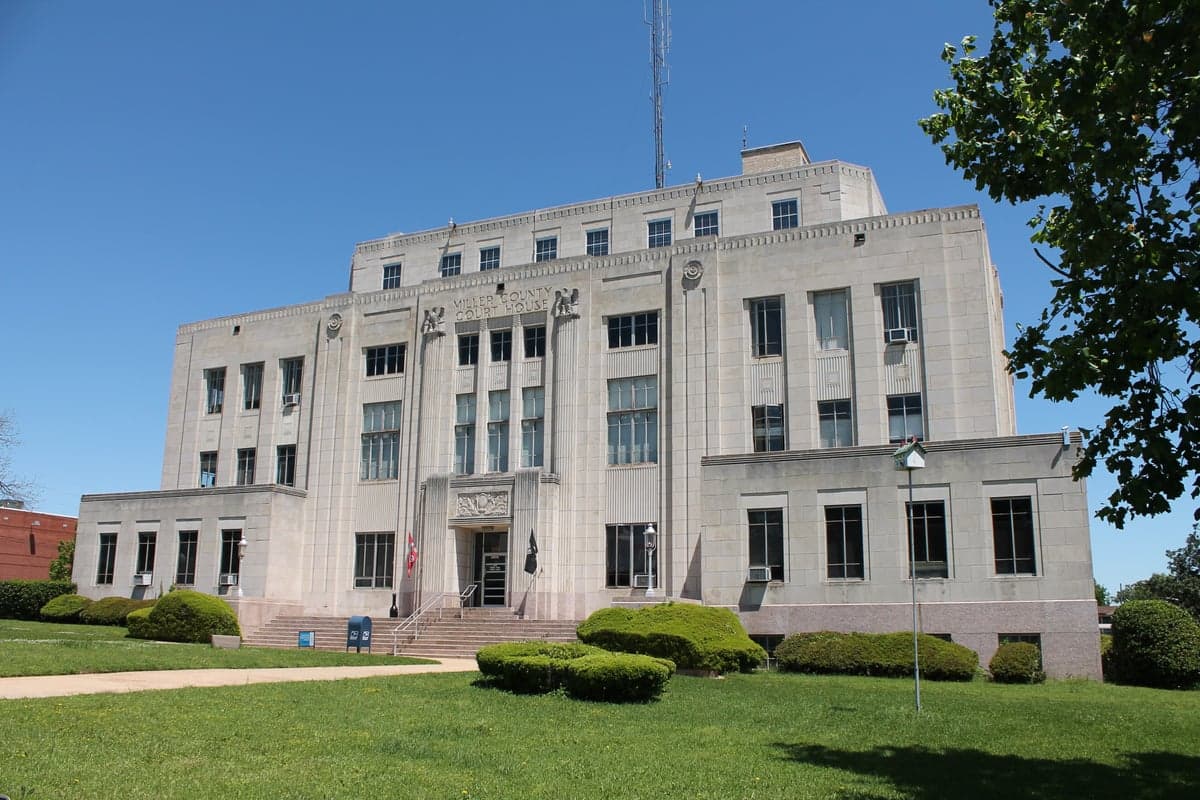
Photo: Wikipedia
Political ClimatePolitical Climate in Miller County
Showing district-level results — no local-only data available.
Local Political AnalysisPolitical Analysis of Miller County
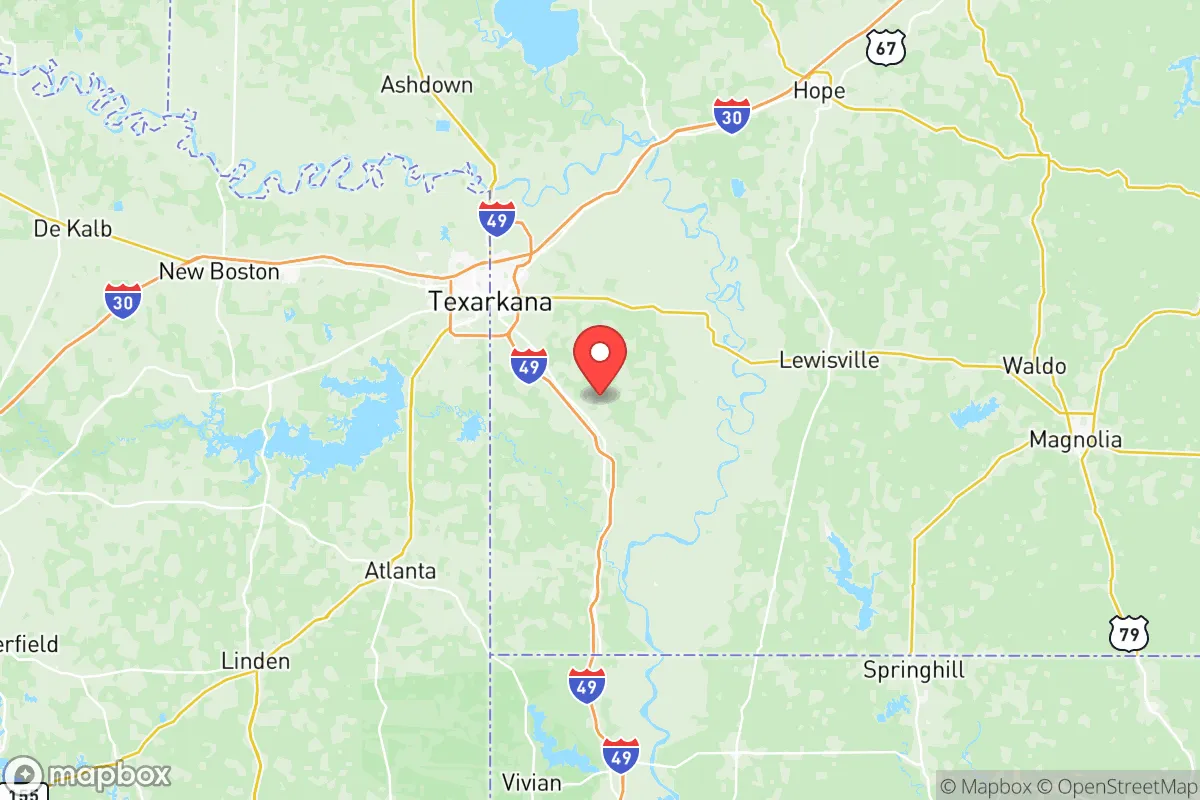
Miller County, Arkansas, is a reliably Republican stronghold with a Cook Partisan Voting Index (PVI) of R+20, making it four points more conservative than the state of Arkansas as a whole (R+16). This isn't a recent shift; the county has been trending red for decades, driven by a mix of rural, culturally conservative values and a growing population of retirees and commuters from nearby Texarkana, TX. While the county as a whole is deeply red, there are subtle variations—Texarkana, AR, the county seat and largest city, shows slightly more moderation, while smaller towns like Fouke and Garland lean heavily Republican. The county's trajectory suggests it will remain solidly Republican for the foreseeable future, though local primaries often see more competitive races than general elections.
How it compares
Miller County's R+20 PVI places it among the most conservative counties in a state that is itself deeply red. For context, Arkansas's statewide PVI of R+16 already makes it one of the most Republican states in the country, so Miller County is essentially an even more concentrated version of the state's political character. The difference is most visible in presidential elections: while Arkansas as a whole voted for Donald Trump by about 27 points in 2020, Miller County delivered a margin closer to 35 points. This isn't just a rural vs. urban divide—Texarkana, AR, which has a more diverse economy and a small but noticeable population of union workers and healthcare professionals, occasionally produces precincts that vote within 10 points of the national average. Meanwhile, the unincorporated areas around Doddridge and Garland consistently vote 40+ points Republican. The county's political DNA is shaped by its position on the Texas border, where conservative Texas values blend with Arkansas's own rural traditions, creating a political culture that is more Southern Baptist and gun-rights oriented than even the rest of Arkansas.
What this means for residents
For conservative residents, Miller County is a comfortable place to live politically. Local elected offices—from the county judge to the quorum court—are almost entirely held by Republicans, and conservative policy priorities like low taxes, limited regulation, and Second Amendment protections are broadly popular. The county's Republican lean means that conservative voters rarely feel the need to defend their views in daily life; it's simply the baseline. For liberal residents, the reality is more complex. While there is a small but active Democratic presence in Texarkana, AR—often centered around the city's African American community and a handful of progressive-leaning professionals—it can feel isolating. Liberal residents often find their political voice in the city's municipal elections, which are technically nonpartisan but tend to be more moderate than countywide races. The practical effect of the county's lean is that policy debates are largely settled before they begin: tax increases are rare, gun laws are permissive, and social issues like abortion and LGBTQ+ rights are generally viewed through a conservative lens. For newcomers, the key is understanding that the county's politics are not just about party labels but about a deep-seated cultural conservatism that values self-reliance and tradition.
One cultural distinction worth noting is the county's relationship with Texas. Miller County is part of the Texarkana metropolitan area, which straddles the state line, and many residents work, shop, or attend church in Texas. This cross-border dynamic means that the county's political climate is subtly influenced by Texas's even more conservative politics, particularly on issues like property taxes and school funding. The county also has a strong tradition of local control, with residents often more engaged in school board and city council races than in national politics. For anyone moving to the area, the political climate is straightforward: it's a deeply red county where conservative values are the norm, but where local issues—like the condition of Highway 71 or the quality of the Texarkana Arkansas School District—often matter more than national partisan battles.

State Political ClimatePolitical Climate in Arkansas
State Political AnalysisPolitical Environment in the State
Arkansas is a deeply conservative state with a Cook PVI of R+16, meaning it votes about 16 points more Republican than the national average in presidential elections. This wasn't always the case — as recently as the 1990s, Arkansas was a Democratic stronghold at the state and local level, with Bill Clinton serving as governor. But a dramatic realignment over the past two decades has left the GOP in near-total control of every lever of government, from the governor's mansion to the state legislature to all six congressional seats. For a relocator, this means you're moving into a state where conservative values dominate policy, culture, and daily life, with little organized opposition at the state level.
Urban vs. rural divide
The political map of Arkansas is a textbook case of the urban-rural split. The state's two major population centers — Little Rock (Pulaski County) and Fayetteville (Washington County) — are the only real blue dots on an otherwise deep red map. Pulaski County, home to the capital, voted for Joe Biden in 2020 by about 12 points, driven by the city's sizable African American population and a growing professional class. Washington County, anchored by the University of Arkansas, has trended bluer in recent cycles, though it still leans Republican overall. Meanwhile, the rest of the state is overwhelmingly Republican. Benton County, home to the booming Northwest Arkansas corridor (including Bentonville and Rogers), is a conservative stronghold despite rapid population growth from corporate transplants. Rural counties like Stone, Van Buren, and Yell routinely deliver 75-80% of their votes to Republican candidates. The divide isn't just about population density — it's cultural. The Delta region in eastern Arkansas, including Pine Bluff and West Memphis, remains more Democratic due to higher concentrations of Black voters, but these areas have been losing population for decades, further consolidating Republican power.
Policy environment
Arkansas's policy environment is unmistakably conservative. The state has a flat income tax rate of 4.4%, down from 7% a decade ago, with further cuts scheduled to bring it to 3.9% by 2027. There is no state-level property tax, though local property taxes average around 0.6% of assessed value. Sales tax is 6.5% at the state level, but local add-ons can push it over 10% in some cities. The state is a right-to-work state with weak labor unions. Education policy has been a flashpoint: the LEARNS Act, passed in 2023, created a universal school voucher program, banned "critical race theory" and "indoctrination" in classrooms, and restricted transgender students' participation in sports and bathroom access. Healthcare is a mixed bag — Arkansas expanded Medicaid under the private option model, but the state has some of the strictest abortion laws in the country, with a near-total ban in effect since the Dobbs decision. Election laws have tightened: voter ID is required, early voting is limited to 15 days, and absentee ballot drop boxes were banned in 2021.
Recent policy direction
The last three years have seen a sharp conservative turn across multiple fronts. On gun rights, Arkansas became a permitless carry state in 2021, allowing any adult who can legally possess a firearm to carry it concealed without a license. On parental rights and education, the LEARNS Act (2023) is the marquee achievement — it not only created vouchers but also raised teacher salaries to $50,000 minimum and banned "indoctrination" and "critical race theory." On medical and bodily autonomy, the state enacted a near-total abortion ban with no exceptions for rape or incest, only to save the mother's life. A 2023 law also banned gender-affirming care for minors. On property rights, Arkansas is a strong "right to farm" state, limiting nuisance lawsuits against agricultural operations. On taxation, the trend is unmistakably downward — the income tax has been cut repeatedly, and the state is on a path to phase it out entirely, though no timeline has been set. On voting and ballot access, the state has moved to restrict mail-in voting and require stricter ID verification. On privacy and surveillance, Arkansas passed a law in 2023 requiring age verification for adult websites, citing child safety concerns. The overall direction is clear: the state is moving to entrench conservative governance at every level, with little internal resistance.
Civil unrest & political movements
Arkansas has not seen the kind of large-scale civil unrest that has hit states like Oregon or Minnesota. The most visible political flashpoints have been around abortion rights and LGBTQ+ issues. In 2022, protests erupted at the state capitol in Little Rock after the abortion ban took effect, but they were relatively small and short-lived. The Arkansas Abortion Support Network continues to operate, helping residents travel out of state for care. On the right, the Arkansas Family Council and Citizens for Community Values are active in pushing for further restrictions on LGBTQ+ rights and abortion. Immigration politics are less heated than in border states, but Springdale and Rogers have seen tensions over growing Hispanic populations, with some local ordinances targeting undocumented immigrants. There is no serious secession or nullification movement in Arkansas, though the state has joined multi-state lawsuits against federal vaccine mandates and environmental regulations. Election integrity controversies have been minimal compared to states like Georgia or Arizona — the 2020 and 2022 elections were largely uncontested, with no major fraud allegations gaining traction. A new resident would likely find Arkansas politically stable, with protests rare and generally small.
Projection
Over the next 5-10 years, Arkansas is likely to become even more conservative, not less. The primary driver is demographic: the state's rural areas are aging and shrinking, while the urban centers — particularly Northwest Arkansas — are growing. But that growth is coming from conservative-leaning transplants from other states, not from liberal migration. The Bentonville and Fayetteville areas are attracting professionals from across the country, but many are drawn by the low taxes and business-friendly environment, not by progressive politics. Meanwhile, the Delta region continues to lose population, further diluting the Democratic base. The state's Republican supermajority in the legislature is unlikely to be seriously challenged in the next decade. Expect further tax cuts, continued expansion of school choice, and additional restrictions on abortion and transgender rights. The only wild card is the possibility of a federal court striking down some of the state's more aggressive laws, particularly around abortion and LGBTQ+ issues, but that would likely trigger a political backlash rather than a policy reversal. For a relocator, the trajectory is clear: Arkansas will remain a reliably conservative state with a policy environment that reflects that.
Bottom line for a new resident: If you're conservative, you'll find Arkansas's political climate comfortable and aligned with your values — low taxes, strong gun rights, school choice, and a government that actively promotes traditional social norms. If you're liberal, you'll be in a distinct minority, especially outside of Little Rock and Fayetteville. You'll have limited political influence, and you may find state policies on abortion, LGBTQ+ rights, and education frustrating. But you won't face the kind of intense political conflict seen in swing states — Arkansas's politics are settled, stable, and unlikely to change dramatically in the near future. The practical takeaway is simple: know what you're moving into, and you'll be fine either way.
* Values derived from national, state, county, city and local statistics and may differ in a specific area. Last updated: 2026-08-08T19:11:00.000Z
Narrative content on this page is AI-generated and may contain mistakes. Verify any details that matter before acting on them.
ReloMaps may earn a commission from affiliate links at no extra cost to you.

