
Photo: Wikipedia
Strategic Assessment of Ouachita County
Strong survivability profile. Good buffer from population centers, with manageable environmental and tactical risks.
What does the Strategic Assessment tell us?
Our Strategic Assessment grades tactical survivability of an area. Major population centers, military targets, fallout zones, natural disasters, and border exposure all drive risk — lower exposure means a more defensible position in a crisis.
This is heavily inspired by Joel Skousen's Strategic Relocation book. Highly recommended you checkout the book ($)What does this tell us?
Our Strategic Assessment grades tactical survivability of an area. Major population centers, military targets, fallout zones, natural disasters, and border exposure all drive risk — lower exposure means a more defensible position in a crisis.
This is heavily inspired by Joel Skousen's Strategic Relocation book. Highly recommended you checkout the book ($)Strategic Pillars

Key Distances
Strategic Assessment Analysis
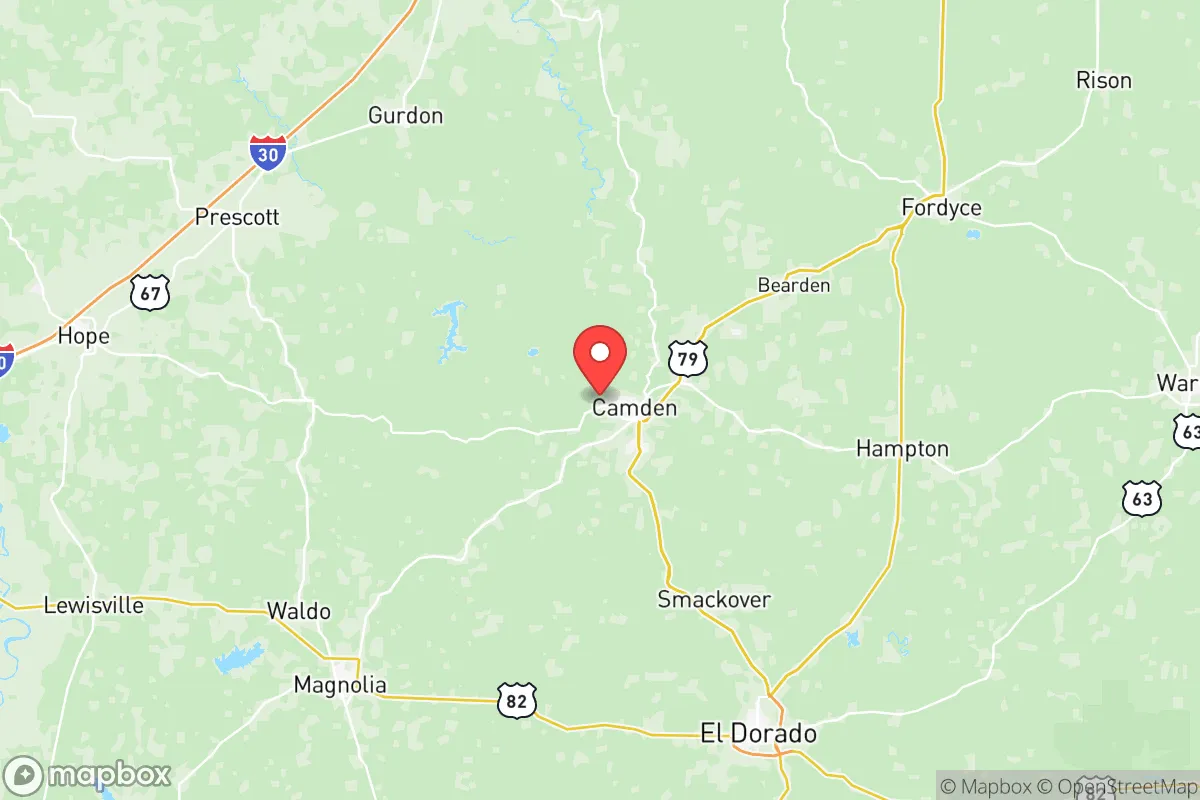
Ouachita County, Arkansas, offers a compelling mix of remote resilience and practical access that makes it a serious contender for those looking to step away from the chaos of major metropolitan areas. Anchored by the city of Camden, this region sits far enough from the major fallout corridors of the Gulf Coast and the Mississippi River Valley to provide a genuine buffer, yet it remains within a reasonable drive of essential supply lines and medical facilities in Texarkana and Little Rock. For a relocator prioritizing stability, self-sufficiency, and a lower risk profile in an increasingly uncertain national landscape, Ouachita County presents a strategic base that balances isolation with the ability to stay connected to the outside world when needed.
Geographic position and natural advantages for long-term stability
Ouachita County’s geography is its strongest asset for a prepper or survivalist mindset. The county sits in the heart of the Ouachita Mountains, a region of folded ridges and hardwood forests that naturally limits large-scale population movement and provides excellent cover. The area is drained by the Ouachita River, which flows south through the county, offering a reliable water source and a natural barrier to the east. The terrain around Camden is hilly but not impassable, with numerous creeks, springs, and small lakes—like the 6,700-acre Lake Ouachita just north in Garland County—that support off-grid water collection and fishing. The soil in the river bottoms is fertile enough for small-scale agriculture, and the long growing season (roughly 220 days) allows for substantial food production. Critically, the county is positioned roughly 100 miles from the nearest major interstate (I-30 to the north), meaning it is not a primary transit corridor for large-scale evacuation or military movement, which reduces the likelihood of being caught in a mass exodus scenario. The nearest major military installation is the Arkansas Army Ammunition Plant in nearby Calhoun County, but that facility is a low-profile industrial site, not a strategic target like Fort Hood or a major air base.
Risks, exposures, and proximity to fallout-relevant landmarks
No location is without risk, and Ouachita County has specific exposures that a strategic relocator must weigh. The most significant concern is the proximity to the Arkansas Nuclear One plant in Russellville, about 90 miles north-northwest. While that distance provides a substantial safety buffer in the event of a release, it is within the 50-mile ingestion pathway zone that the NRC monitors. More immediate is the county’s location relative to the major petrochemical and refining infrastructure along the Gulf Coast. The Houston Ship Channel and the refineries in Port Arthur, Texas, are roughly 350 miles south—far enough to avoid direct fallout from a conventional attack or industrial accident, but close enough that a major event could disrupt fuel supplies and trigger regional panic. The county also sits within 150 miles of the Pine Bluff Arsenal, a chemical weapons storage and demilitarization facility. While the arsenal is a hardened target, any incident there could contaminate the Ouachita River watershed if it involved a release. On the plus side, there are no major ports, dams, or nuclear waste storage sites within the county itself, and the nearest major population center—Little Rock, with its 200,000+ residents—is 80 miles north, which is far enough to avoid the worst of urban unrest but close enough to monitor for news and supply runs.
Practical resilience for a relocator: food, water, energy, and defensibility
For a single individual or family looking to establish a resilient homestead, Ouachita County offers a strong foundation. The water situation is excellent: the Ouachita River and its tributaries provide surface water, and the county’s groundwater aquifers are generally reliable, with many rural properties having shallow wells. The area’s forest cover—predominantly oak, hickory, and pine—provides ample firewood and building material, and the timber industry is a major local employer, meaning chainsaws, logging equipment, and woodworking skills are common. Food production is viable: the county has a long history of cattle ranching and row crops like soybeans and corn, and the Camden Farmers Market operates seasonally. For those willing to hunt, white-tailed deer, wild turkey, and squirrel are abundant, and the Ouachita National Forest to the west offers additional public land for foraging and hunting. Energy resilience is a mixed bag: the grid is rural and prone to outages during ice storms, but the county’s low population density (roughly 23,000 residents across 740 square miles) means that solar panels, small wind turbines, and backup generators are practical and unlikely to attract attention. Defensibility is a key advantage: the hilly terrain and winding backroads make it easy to control access to a property, and the county’s law enforcement presence is thin but responsive, with the Camden Police Department and Ouachita County Sheriff’s Office covering a large area. The nearest National Guard armory is in Camden, which could be a double-edged sword—it provides a potential resource in a crisis but also a potential target for looters or federal forces. Overall, the county’s low profile and natural barriers make it a strong candidate for those who want to be left alone while still having access to a small city’s infrastructure.
The strategic picture for Ouachita County is one of calculated trade-offs. It is not a fortress, but it is a solid, defensible position with good water, decent soil, and a location that avoids the worst of the nation’s critical infrastructure targets. The risks from the nuclear plant in Russellville and the arsenal in Pine Bluff are real but manageable with proper planning—a good water filtration system and a radiation detector would be wise investments. The county’s conservative culture, with its emphasis on self-reliance, hunting, and community, aligns well with a prepper mindset, and the local economy—dominated by manufacturing, timber, and healthcare—provides a stable base for those who need to work while they prepare. For a relocator looking to escape the volatility of coastal cities and the vulnerability of the interstate corridor, Ouachita County offers a quiet, resilient, and strategically sound option that deserves serious consideration.

* Values derived from national, state, county, city and local statistics and may differ in a specific area. Last updated: 2026-05-13T15:36:30.000Z
Narrative content on this page is AI-generated and may contain mistakes. Verify any details that matter before acting on them.
ReloMaps may earn a commission from affiliate links at no extra cost to you.

