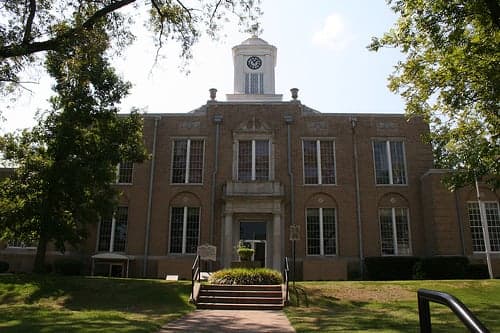
Photo: Wikipedia
Political ClimatePolitical Climate in Ouachita County
Showing district-level results — no local-only data available.
Local Political AnalysisPolitical Analysis of Ouachita County
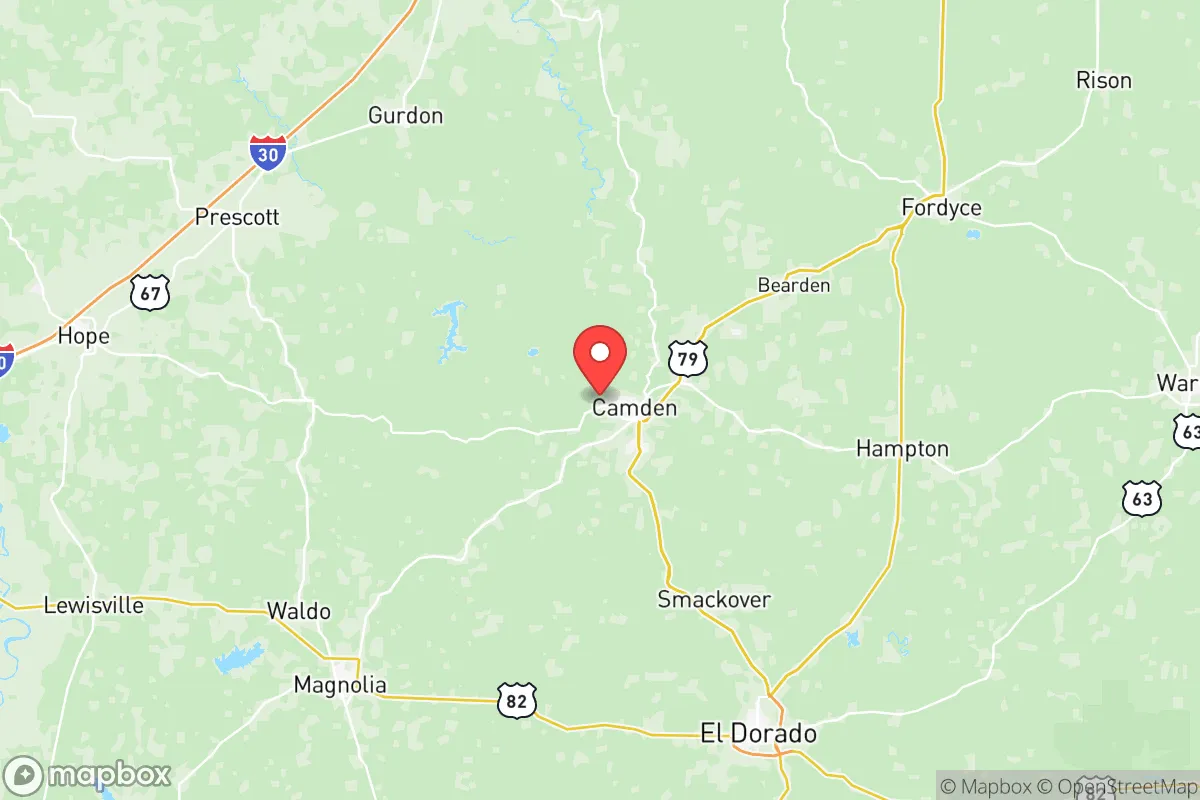
Ouachita County, Arkansas, has long been a solidly conservative stronghold, and that hasn’t changed much over the years. With a Cook PVI of R+20, it’s a good four points redder than the state of Arkansas as a whole, which sits at R+16. That means when you’re driving through places like Camden, the county seat, you’re in a community that’s reliably voted Republican in every presidential election since 2000, and the local races tend to follow suit. The real story, though, is how the political winds are shifting within the county’s own borders, and what that means for folks who value their personal freedoms and want to keep government out of their lives.
How it compares
Compared to the rest of Arkansas, Ouachita County is a bit of a conservative outlier. While the state as a whole has been trending redder over the last decade, Ouachita has held steady or even deepened its conservative lean. The difference is most noticeable when you look at the county’s rural precincts versus its small towns. For instance, the precincts around Chidester and Stephens are deep red, often voting 70-80% Republican in statewide races. Meanwhile, the city of Camden itself has a few precincts that are more competitive, especially around the historic downtown and the areas near the Ouachita River. Those precincts can swing closer to 55-60% Republican, but they’re still solidly red. The real contrast is with the state’s more urban areas like Little Rock or Fayetteville, which have seen a noticeable shift toward progressive policies in recent years. In Ouachita County, that kind of shift is almost nonexistent. The local school board, county commission, and even the sheriff’s office are all dominated by conservatives who prioritize law and order, low taxes, and minimal government interference. It’s a place where the Second Amendment is still a given, not a debate.
What this means for residents
For residents, this political climate means a lot of the headaches you see in other parts of the country just don’t happen here. There’s no push for defunding the police or implementing radical zoning changes that would drive up property taxes. The local government in Camden and the surrounding towns like Bearden and Louann tends to focus on practical issues like maintaining roads, supporting the local timber and manufacturing industries, and keeping the schools funded without raising taxes. The downside, if you can call it that, is that the county’s conservative nature means there’s less tolerance for progressive social experiments. If you’re looking for a place where the government will try to micromanage your business or your family’s choices, you won’t find it here. The community values personal responsibility and self-reliance, and that’s reflected in how the local officials govern.
That said, there are some cultural and policy distinctions worth noting. Ouachita County has a strong tradition of local control, which means the county government is more responsive to residents than state or federal agencies. For example, during the COVID-19 pandemic, the county largely resisted heavy-handed mandates, letting businesses and churches make their own decisions. That’s a stark contrast to what you saw in more progressive parts of the state. Looking ahead, the biggest concern for long-time residents is the slow population decline, which could eventually bring in outside influences or pressure from the state level to adopt more progressive policies. But for now, Ouachita County remains a place where conservative values are the norm, and the government stays out of your way. If you’re looking for a community that respects your rights and doesn’t try to run your life, this is about as good as it gets in Arkansas.

State Political ClimatePolitical Climate in Arkansas
State Political AnalysisPolitical Environment in the State
Arkansas is a deeply conservative state, with a Cook PVI of R+16, meaning it votes about 16 points more Republican than the national average in presidential elections. Over the past 20 years, the state has shifted from a competitive, split-ticket state (where Democrats still held many local offices) to a solidly red stronghold, driven by the realignment of rural and exurban voters away from the national Democratic Party. The dominant coalition is a mix of evangelical Christians, rural conservatives, and a growing number of fiscally conservative transplants from blue states, while the Democratic base is increasingly confined to the urban cores of Little Rock, Fayetteville, and a few college towns.
Urban vs. rural divide
The political map of Arkansas is starkly divided. The northwest corner, anchored by Fayetteville and Bentonville, is the state’s economic engine and a political battleground. While Benton and Washington counties have trended right overall, the city of Fayetteville itself is a liberal island, home to the University of Arkansas and a growing population of younger, more progressive voters. In contrast, Little Rock and its immediate suburbs in Pulaski County are the state’s Democratic stronghold, but even that is shrinking as the city’s black population remains reliably Democratic while white suburbanites in Conway and Maumelle have shifted right. The rest of the state—places like Jonesboro in the northeast, Texarkana in the southwest, and the vast Arkansas Delta—is deeply red. In the 2024 election, rural counties like Stone and Searcy voted over 85% Republican, while Pulaski County went about 60% Democratic. The divide is not just about party; it’s about culture. Rural Arkansas sees itself as the last bastion of traditional values, while the urban cores are increasingly adopting national progressive norms on issues like race, gender, and environmental regulation.
Policy environment
Arkansas’s policy environment is aggressively conservative, with a focus on low taxes, limited regulation, and cultural conservatism. The state has a flat income tax of 4.4% (down from 7% in 2015) and a sales tax that averages around 9.5% when local levies are included. There is no property tax on vehicles, and homestead exemptions keep property taxes low for homeowners. The regulatory posture is business-friendly, with a right-to-work law and minimal zoning restrictions outside of major cities. On education, the state passed the Arkansas LEARNS Act in 2023, which created a universal school voucher program and banned “critical race theory” and “indoctrination” in public schools. This was a major win for parental rights advocates. Healthcare policy is mixed: the state expanded Medicaid under the private option (Arkansas Works), but the legislature has repeatedly tried to impose work requirements. Election laws have tightened: the 2021 Act 249 requires a photo ID to vote, and Act 736 limits absentee ballot drop boxes. There is no early voting on Sundays, and the state purges inactive voters regularly. For a conservative, this is a state that largely respects the Second Amendment (constitutional carry, no permit needed) and protects religious liberty, but the expansion of Medicaid and the presence of a few blue cities are ongoing concerns.
Trajectory & freedom
Arkansas is becoming more free in several key areas, particularly for conservatives. The 2023 Arkansas LEARNS Act expanded school choice and parental rights, a direct response to federal overreach during COVID. The state also passed Act 590 in 2021, which prohibits the enforcement of any federal gun law that infringes on the Second Amendment—a form of nullification that signals a strong stance against federal overreach. In 2023, the legislature passed Act 237, banning gender transition procedures for minors, and Act 626, which prohibits transgender girls from participating in female sports. These laws are seen by conservatives as protecting children and women’s spaces. On taxation, the state has cut income taxes every year since 2019, with a goal of reaching a 3.9% flat rate by 2027. However, there are concerns about government overreach in other areas: the state’s medical marijuana program is heavily regulated and expensive to access, and the Arkansas Department of Health has broad powers over property and business during declared emergencies—a lesson many learned during COVID. Property rights are generally strong, but the state’s lack of zoning in rural areas can lead to conflicts over hog farms and industrial development. Overall, the trajectory is toward more personal liberty on cultural and economic issues, but with a heavy hand on regulation of vice and public health.
Civil unrest & political movements
Arkansas has seen relatively little civil unrest compared to coastal states, but there have been flashpoints. In 2020, Little Rock experienced several nights of protests and looting following the George Floyd killing, leading to a heavy police response and a curfew. The state’s Republican leadership, including Governor Asa Hutchinson at the time, condemned the violence but also faced criticism from the right for not being tough enough. More recently, the Arkansas Freedom Fund and local Moms for Liberty chapters have been active in school board meetings, pushing back against mask mandates and LGBTQ-inclusive curricula. Immigration politics are less visible here than in border states, but Springdale and Rogers have large Marshallese and Hispanic populations, leading to occasional tensions over housing and labor. There is no sanctuary city policy anywhere in the state; in fact, Act 819 (2021) requires local law enforcement to cooperate with federal immigration authorities. Election integrity remains a hot topic: the 2022 election saw a controversial recount in the Republican primary for lieutenant governor, and activists on the right continue to push for hand-counting of ballots and elimination of electronic voting machines. A new resident would notice that political activism is mostly channeled through churches, gun clubs, and local Republican Party meetings, not street protests.
Projection
Over the next 5-10 years, Arkansas will likely become more Republican and more culturally conservative, but with growing internal friction. The northwest corridor—Bentonville, Fayetteville, Rogers—is attracting thousands of new residents from California, Texas, and the Midwest, many of whom are fiscally conservative but socially moderate. This could create a split between the old-guard rural conservatives and the new suburban transplants who want lower taxes but are less interested in culture war battles. The Delta region will continue to depopulate, shrinking the Democratic base. The state’s Republican supermajority is likely to push for further tax cuts, a school voucher expansion, and possibly a constitutional amendment to require a supermajority for tax increases. However, the growing influence of the Walmart and Tyson Foods corporate class in the northwest may push for more moderate policies on immigration and environmental regulation to attract talent. A new resident moving in now should expect a state that is safe, affordable, and politically aligned with traditional values, but with a slowly diversifying population and a simmering tension between the rural heartland and the urbanizing northwest.
Bottom line for a new resident: If you’re moving to Arkansas for conservative values, you’ll find a state that largely respects your rights—especially on guns, school choice, and taxes. But don’t expect a libertarian paradise; the state still has a heavy hand in regulating marijuana, alcohol, and public health. The best bet for a like-minded community is the rural counties or the outer suburbs of Bentonville and Conway. Avoid the urban cores of Little Rock and Fayetteville if you want to avoid progressive politics. The state is trending in the right direction, but keep an eye on the northwest—that’s where the future of Arkansas politics will be decided.
* Values derived from national, state, county, city and local statistics and may differ in a specific area. Last updated: 2026-05-13T15:36:30.000Z
Narrative content on this page is AI-generated and may contain mistakes. Verify any details that matter before acting on them.
ReloMaps may earn a commission from affiliate links at no extra cost to you.

