
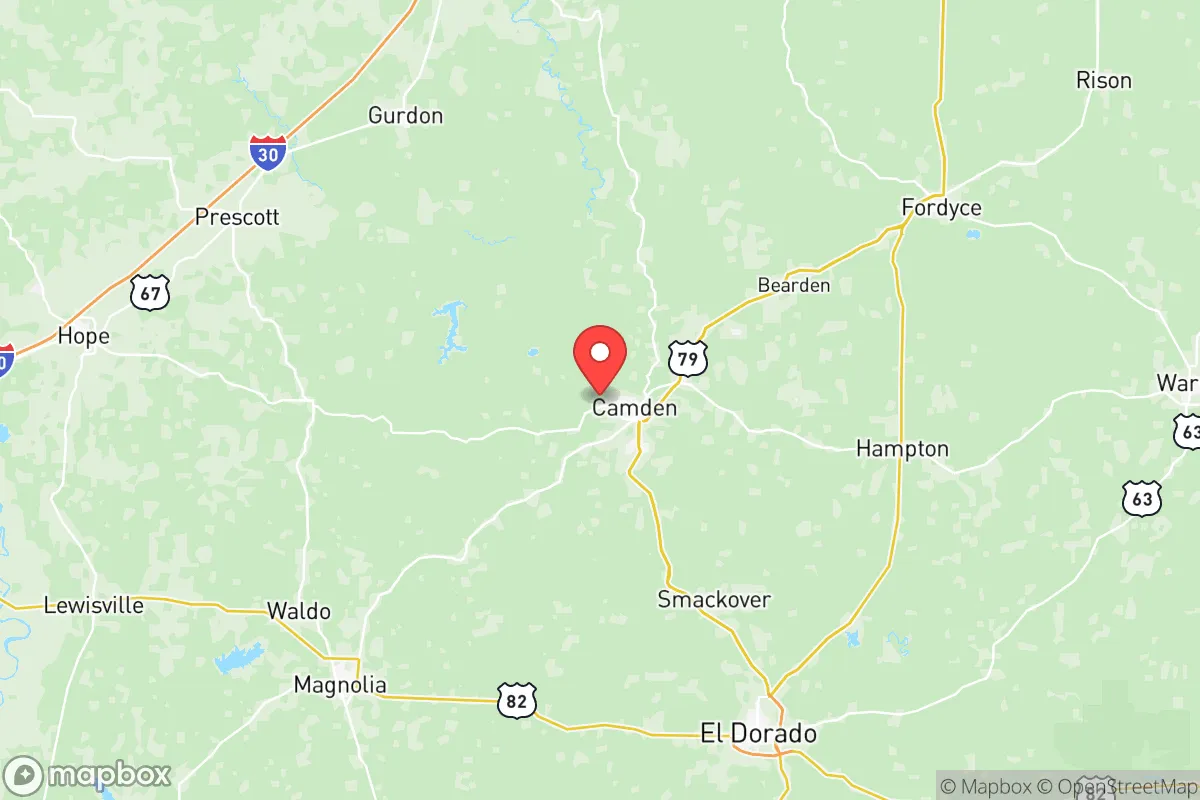
Photo: Wikipedia
Quality of Life in Ouachita County
A livable area that tracks near national norms for affordability, walkability, and neighborhood health.
What does Quality of Life tell us?
Quality of Life measures an area by evaluating factors like cost of living, nearby amenities, country club access, airport proximity, socioeconomic signals and neighborhood character. For large states, this is a general average — quality of life can vary dramatically between metro areas, suburbs, and rural communities within the same state.
What does this tell us?
Quality of Life measures an area by evaluating factors like cost of living, nearby amenities, country club access, airport proximity, socioeconomic signals and neighborhood character. For large states, this is a general average — quality of life can vary dramatically between metro areas, suburbs, and rural communities within the same state.
Cost of Living
49% below national average
173%
The Real Cost of Living in Ouachita County for 2026
| Tier | Individual | Family (4) |
|---|---|---|
| Survival | $11k | $21k |
| Comfortable | $20k | $29k |
| Luxury | $81k+ | $126k+ |
| Elite (Top 5%) | $95k+ | $148k+ |
Quality-of-Life Analysis
Ouachita County, Arkansas, offers a spectrum of living environments that range from the historic river town of Camden to quiet, unincorporated crossroads and deep-rural farmland, attracting everyone from manufacturing workers and retirees to hunting enthusiasts and small-town families. With a cost of living index of 51—roughly half the national average—and a median home value of $99,600, the county provides starkly different quality-of-life options depending on whether one chooses the county seat, a smaller community, or a remote rural homestead.
Largest town(s) & population centers
Camden is the county's undisputed hub and only incorporated city of significant size, home to roughly 10,000 residents. Daily life here centers around a mix of light manufacturing, healthcare, and retail, anchored by employers like Highland Pellets, Lockheed Martin’s Camden Operations, and the Ouachita County Medical Center. The downtown area along Washington Street retains a small-city feel with local diners, antique shops, and a historic courthouse square. Commute times average just over 21 minutes countywide, and in Camden most errands are a short drive. The city offers a public library, a municipal golf course, and the Ouachita River for fishing and boating. Housing is notably affordable: the median home value of $99,600 means a typical three-bedroom house in Camden costs less than $100,000, while median rent of $714 keeps monthly housing costs low. The trade-off is limited nightlife and fewer dining options than a larger metro area, though nearby El Dorado (45 minutes south) and Little Rock (90 minutes north) provide broader amenities.
Smaller towns & rural pockets
Outside Camden, the county's smaller communities offer quieter, more self-reliant lifestyles. Chidester (population ~400) is a classic rural crossroads with a post office and a few churches, surrounded by cattle pastures and timberland. Stephens (population ~800) sits near the Calhoun County line and has a small grocery store, a gas station, and a strong sense of local identity tied to its school district. Louann (population ~150) is a tiny unincorporated community along U.S. Highway 79, primarily residential with no commercial core. Bearden (population ~700) lies in the county's northern reaches, offering a Dollar General, a few churches, and easy access to the Ouachita National Forest's southern edge. These areas lack the retail and healthcare options of Camden, but residents gain larger lots, lower property taxes, and direct access to hunting leases, fishing ponds, and ATV trails. Many residents in these pockets commute to Camden or even to jobs in El Dorado or Magnolia.
Cost & lifestyle range
The cost-of-living spread across Ouachita County is narrow in absolute dollars but meaningful in lifestyle terms. At the low end, a two-bedroom rental in a rural area like Louann or Chidester can be found for $500–$600 per month, while a similar unit in Camden averages closer to the county median of $714. Home values follow a similar pattern: a fixer-upper on a rural acre in Stephens might sell for $60,000, while a move-in-ready home in Camden's historic district or near the Ouachita River can reach $130,000–$150,000. The county's overall COL index of 51 means groceries, utilities, and transportation all run well below national averages. At the higher end, a few newer subdivisions on Camden's south side (near the Ouachita River) offer homes in the $180,000–$220,000 range with larger lots and modern finishes. The lifestyle trade-off is clear: Camden provides walkable downtown access, schools, and medical services, while rural areas like Bearden or Chidester offer privacy and land but require longer drives for groceries, prescriptions, and school bus routes.
This county works best for people who value low housing costs, short commutes, and outdoor recreation over urban amenities. Retirees on fixed incomes, remote workers seeking a quiet base, and families who prioritize affordable homeownership over nightlife will find the most to like here. Those needing frequent access to specialty healthcare, major shopping, or diverse employment sectors may find the county too limited, but for anyone comfortable with a self-sufficient, small-town or rural rhythm, Ouachita County delivers a low-stress, low-cost quality of life.

Crime in Ouachita County
Crime rates similar to the national median for U.S. locations.
Violent CrimeViolent Crime Analysis
Property CrimeProperty Crime Analysis
Crime Analysis
Ouachita County, Arkansas, reports a violent crime rate of 496.8 incidents per 100,000 residents and a property crime rate of 1,552.8 per 100,000, placing it above both state and national averages for overall crime. While the county seat of Camden anchors the region, smaller communities like Bearden, Stephens, and Chidester experience varying levels of safety, with crime concentrated in specific corridors rather than uniformly distributed. The county’s justice system, overseen by the 13th Judicial District, has faced scrutiny for progressive sentencing policies that some argue prioritize offender rehabilitation over public safety, contributing to recidivism concerns.
Crime in context
Ouachita County’s violent crime rate of 496.8 per 100,000 is roughly 35% higher than the Arkansas state average (approximately 367 per 100,000) and nearly double the national median of 380 per 100,000. Property crime at 1,552.8 per 100,000 similarly exceeds the state average of 1,400 per 100,000 and the national rate of 1,954 per 100,000. Aggravated assault accounts for the majority of violent incidents, with robbery and homicide rates elevated in Camden, particularly along the U.S. 79 corridor near the industrial district. The county’s proximity to larger metro areas like El Dorado (Union County) and Texarkana (Miller County) does not significantly drive its crime—most offenses are local, tied to drug trafficking networks that operate between Camden and the smaller towns of Louann and Norphlet.
What residents experience
Residents in Camden report property crime—especially vehicle break-ins and residential burglary—as the most common safety concern, with incidents often clustered near the downtown area and the Ouachita River industrial zone. In contrast, the rural communities of Bearden and Stephens see lower violent crime rates, though drug-related arrests remain frequent. The 13th Judicial District, which includes Ouachita County, has implemented pretrial diversion programs and restorative justice initiatives that critics argue reduce accountability for repeat offenders. For example, a 2024 report from the Arkansas Crime Information Center noted that nearly 40% of property crime arrests in Camden involved individuals previously released under such programs. Residents in Chidester and Tinsman often cite a lack of consistent law enforcement presence as a factor in underreported thefts, while Camden’s police department maintains a visible patrol presence but struggles with staffing shortages.
Neighborhood-level variation
Safety varies significantly within Ouachita County. The eastern side of Camden, near the Ouachita River and the former Camden Fairview School District, sees higher violent crime rates, while the western neighborhoods closer to the Ouachita National Forest are quieter. Bearden, with a population under 1,000, reports violent crime rates roughly 60% lower than Camden’s, though property crime remains a concern due to its location along Highway 79. Stephens, a historic railroad town, has seen a decline in crime since 2022 following targeted drug enforcement operations, but residents still advise caution after dark near the town’s commercial district. For those considering relocation, the safest areas are generally the unincorporated communities of Louann and Norphlet, where crime rates are negligible but amenities are limited. Prospective residents should review local sheriff’s office data for specific blocks, as Ouachita County’s crime is highly localized rather than uniformly distributed.
* Values derived from national, state, county, city and local statistics and may differ in a specific area. Last updated: 2026-05-13T15:36:30.000Z
Narrative content on this page is AI-generated and may contain mistakes. Verify any details that matter before acting on them.
ReloMaps may earn a commission from affiliate links at no extra cost to you.

