
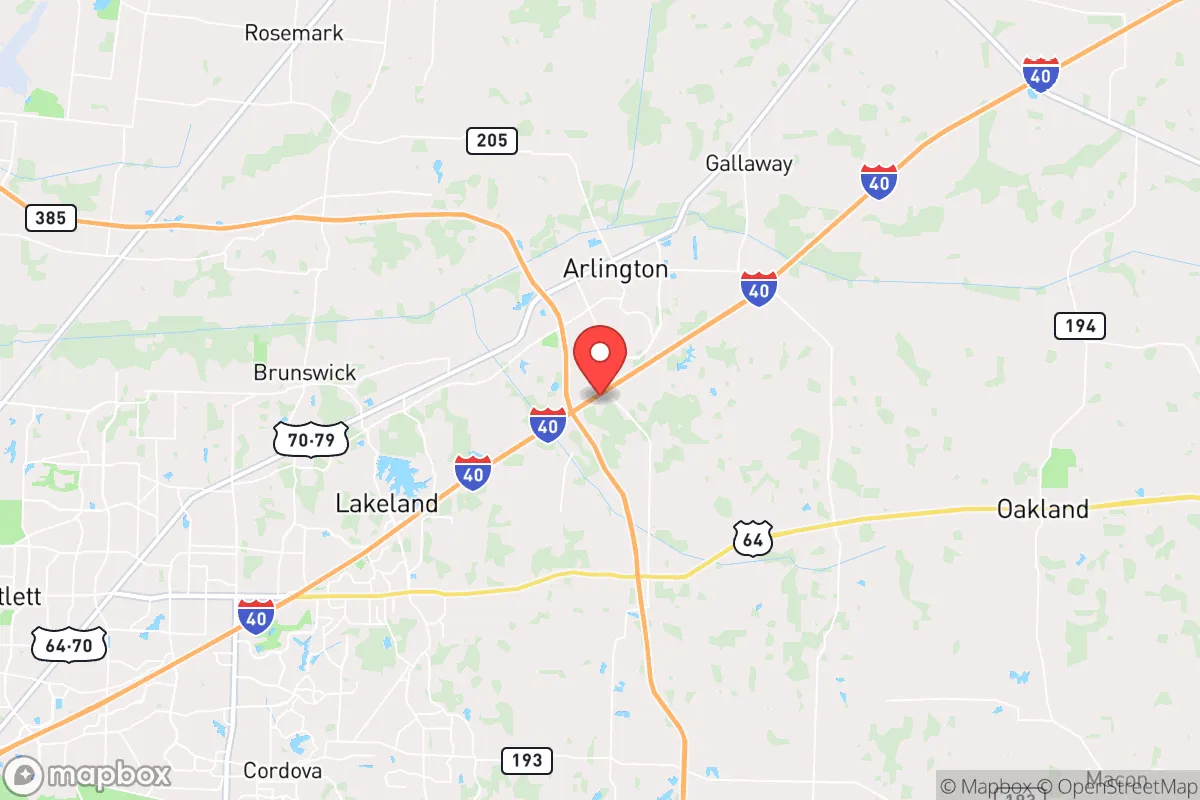
Photo: Wikipedia
Personal Sovereignty in Arlington, TN
Viable for self-reliance. Generally workable, though some barriers may limit total independence.
What does Personal Sovereignty tell us?
Personal Sovereignty measures your capacity for self-reliance and independence with minimal government friction. Higher scores mean fewer barriers between you and the way you want to live... but it assumes you have the space you need and good neighbors.
What does this tell us?
Personal Sovereignty measures your capacity for self-reliance and independence with minimal government friction. Higher scores mean fewer barriers between you and the way you want to live... but it assumes you have the space you need and good neighbors.
State Policy
Energy independence: Importer (25% of energy produced in-state)
Personal Liberty
Homesteading

Personal Liberty Analysis
Arlington, Tennessee, offers a notably high degree of personal sovereignty compared to many suburban enclaves, largely due to Tennessee’s strong state-level preemption laws and a local culture that values self-reliance. For the strategic-minded individual or family concerned with government overreach, this town provides a buffer against the most intrusive policies seen in blue states, while still requiring vigilance on local zoning and school board decisions. The autonomy environment here is best described as "guarded freedom"—the state gives you wide latitude, but you must actively protect it from creeping municipal ordinances and federal overreach.
Tax burden and regulatory posture: How Tennessee’s policies protect your wallet and choices
Tennessee’s tax structure is a major draw for those seeking to minimize the state’s claim on their earnings. There is no state income tax on wages, which means every dollar you earn stays in your pocket—a stark contrast to states like California or New York that take a double-digit bite. The state sales tax is high at 7%, but Arlington’s local rate adds only 2.75%, bringing the total to 9.75% on most goods. Property taxes are low by national standards, with effective rates around 0.6% of assessed value, and Tennessee has no estate or inheritance tax. This creates a regulatory posture that is generally business-friendly and light on licensing burdens. However, be aware that the state’s reliance on sales tax means consumption is taxed heavily, so preppers who stockpile supplies will pay more upfront. The regulatory environment for firearms, vehicles, and property is permissive, with no state-level red flag laws or annual vehicle inspections, giving residents more control over their daily lives.
Self-defense and gun law specifics: What the Second Sanctuary status means for your rights
Tennessee is a constitutional carry state, meaning no permit is required to carry a handgun, openly or concealed, for anyone 21 or older who can legally possess a firearm. This is a foundational sovereignty right that Arlington residents enjoy without local interference, as state preemption prohibits cities from enacting stricter gun ordinances. The state also has a "stand your ground" law with no duty to retreat, and Castle Doctrine protections extend to your vehicle and place of business. For preppers, this means you can legally keep firearms in your home, vehicle, and on your person without bureaucratic hurdles. However, federal restrictions still apply—NFA items like suppressors and short-barreled rifles require ATF approval, though Tennessee has no additional state-level restrictions. The local sheriff’s office in Shelby County is generally pro-2A, but the proximity to Memphis (a high-crime city with a more restrictive culture) means you should be aware of jurisdictional boundaries. For those building a survival cache, Tennessee’s preemption laws are a critical shield against future local overreach, as Arlington cannot ban magazines or specific firearm types.
Self-reliance and homesteading viability: Lot sizes, zoning, and off-grid feasibility in Arlington
Arlington’s zoning is a mixed bag for serious homesteaders. The town has a suburban character with typical lot sizes ranging from 0.25 to 1 acre in most subdivisions, but there are still pockets of larger parcels, especially on the outskirts near the Fayette County line. Chickens are allowed on lots of 1 acre or more, and some residents keep bees and small livestock, but pigs, cattle, and horses are generally prohibited within town limits. The town’s zoning code requires minimum lot sizes of 10,000 square feet in most residential zones, which limits high-density development but also restricts the kind of rural self-sufficiency you’d find in unincorporated areas. Off-grid living is legally challenging: Arlington requires connection to municipal water and sewer in most developed areas, and solar panels are permitted but must meet HOA aesthetic standards in many subdivisions. Rainwater collection is legal but regulated—you can capture up to 5,000 gallons without a permit, but larger systems require approval. For a true prepper setup, look for property in the unincorporated areas of Shelby or Fayette County just outside Arlington’s city limits, where zoning is more relaxed and you can drill a well, install septic, and keep livestock without municipal interference. The town’s building codes are based on the International Residential Code, which adds costs for DIY construction but ensures structural safety.
Personal liberties: Parental rights, medical autonomy, speech, and property protections
Tennessee has been a battleground for parental rights, and the state has passed laws that give parents significant control over their children’s education and medical decisions. Tennessee’s "Parental Bill of Rights" law (SB 0795) requires schools to notify parents of any changes in a student’s mental, emotional, or physical health, and prohibits schools from hiding information about gender identity or sexual orientation from parents. This is a strong sovereignty protection for families who want to raise their children without state interference. Medical autonomy is more complex: Tennessee has no vaccine passport mandate, and the state banned COVID-19 vaccine requirements for government employees and contractors. However, the state does have a strict abortion law (triggered after Dobbs) that bans the procedure with narrow exceptions, which aligns with conservative values but also limits medical choice. Free speech is robustly protected under the Tennessee Constitution, and there are no state-level hate speech laws that chill political expression. Property rights are strong, with no statewide rent control and a "right to farm" law that protects agricultural operations from nuisance lawsuits. The biggest threat to property sovereignty here is HOA covenants in many Arlington subdivisions, which can restrict everything from vehicle parking to garden sheds—always review the CCRs before buying.
Overall, Arlington’s personal sovereignty is high relative to the national average, particularly when compared to coastal states with aggressive tax and regulatory regimes. The town sits in a sweet spot: close enough to Memphis for employment and infrastructure, but far enough to avoid the worst of urban crime and progressive overreach. The state-level protections on guns, taxes, and parental rights are strong, but the suburban HOA culture and municipal zoning can chafe against a true survivalist lifestyle. For the strategic relocator, Arlington offers a solid foundation for personal autonomy, provided you choose your neighborhood carefully and stay engaged with local politics to prevent future encroachments on your freedoms. The key is to treat this as a base of operations—not a retreat—and to maintain a network of allies in the surrounding rural counties for when the world gets tighter.

* Values derived from national, state, county, city and local statistics and may differ in a specific area. Last updated: 2026-04-21T10:11:30.000Z
Narrative content on this page is AI-generated and may contain mistakes. Verify any details that matter before acting on them.
ReloMaps may earn a commission from affiliate links at no extra cost to you.

