Photo: Wikipedia
Quality of Life in Arlington, TN
A high quality of life with strong walkability, manageable living costs, healthy neighborhood signals, and solid amenity access.
What does Quality of Life tell us?
Quality of Life blends cost of living, nearby amenities, socioeconomic signals, and neighborhood character. City-level scores represent the whole municipality; individual neighborhoods can differ.
What does this tell us?
Quality of Life blends cost of living, nearby amenities, socioeconomic signals, and neighborhood character. City-level scores represent the whole municipality; individual neighborhoods can differ.
Cost of Living
58% above national average
The Real Cost of Living in Arlington, TN for 2026
| Tier | Individual | Family (4) |
|---|---|---|
| Survival | $33k | $61k |
| Comfortable | $71k | $105k |
| Luxury | $152k+ | $235k+ |
| Elite (Top 5%) | $178k+ | $276k+ |
120%
The Area Signal
A metric tracking the socioeconomic signals of the area.
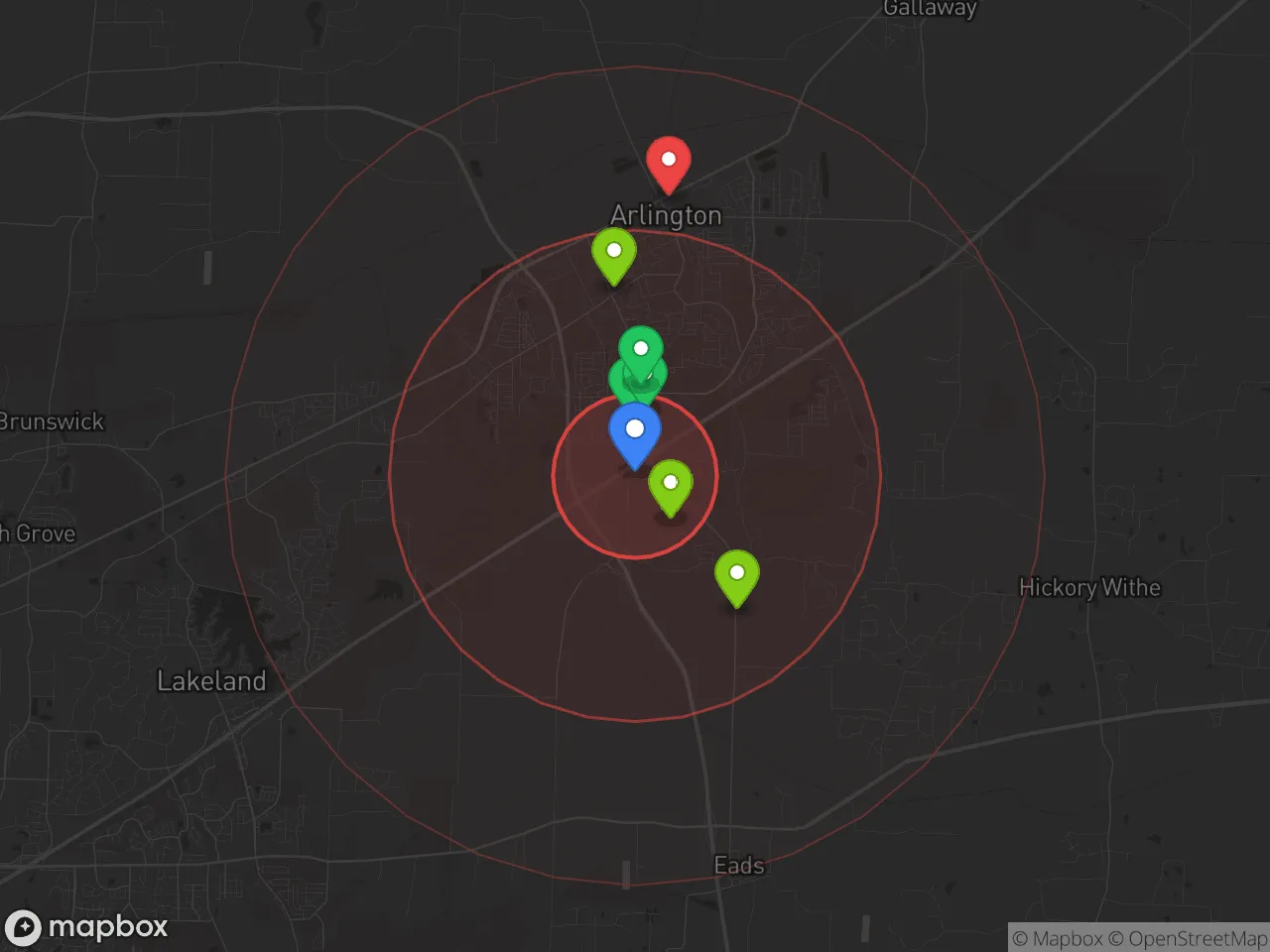
Hobbies
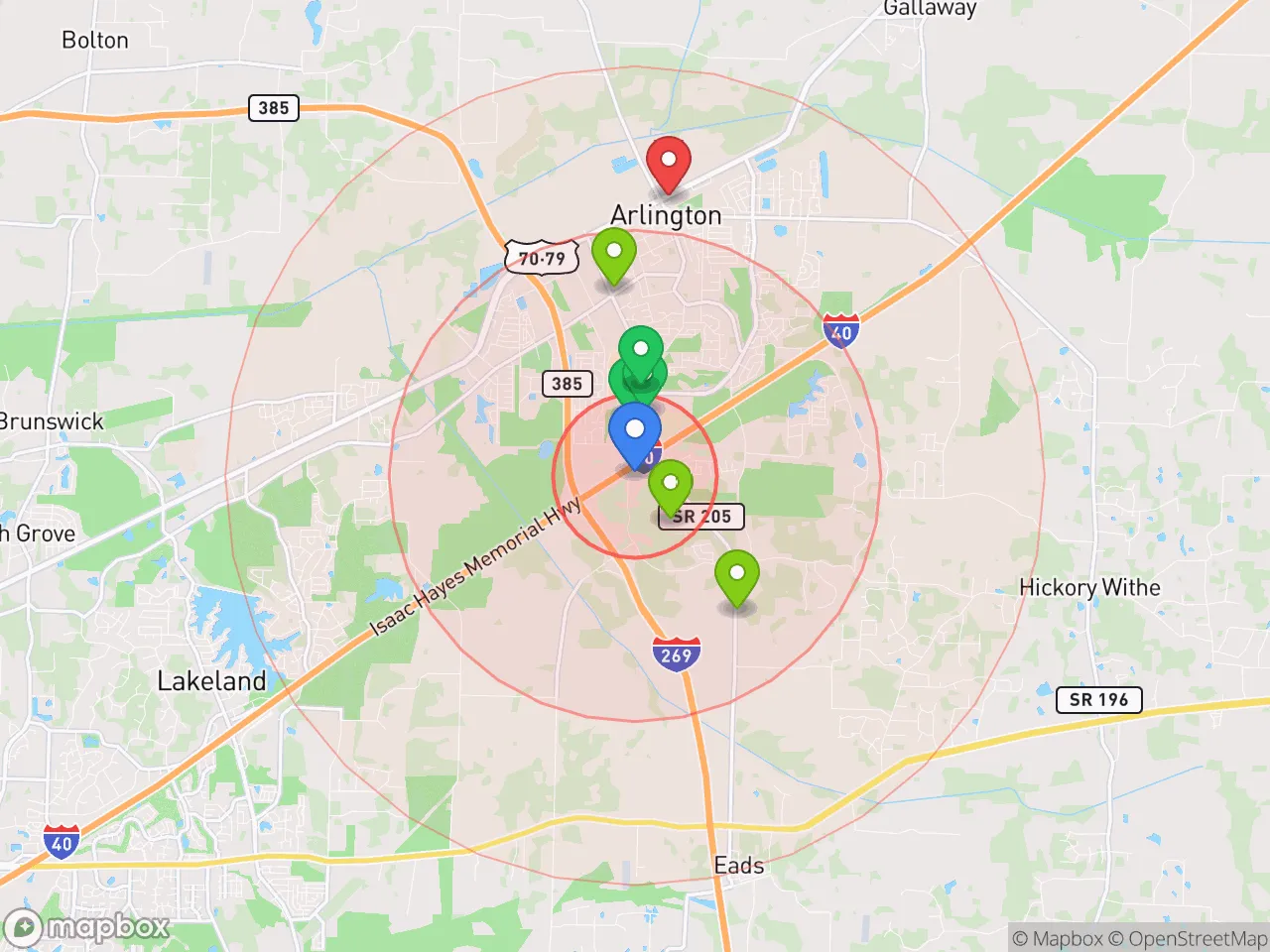
Explore the areaGroceries
6 within 10 miles
Gas
20 within 10 miles
Hospital
15 within 20 miles
Airport
BNA — Nashville International
Post Office
USPS — Arlington, TN
Critical Amenities
Quality-of-Life Analysis
Arlington, Tennessee, is an affluent Memphis suburb where the cost of living index reaches 158—58 percent above the national average—reflecting a community of professionals, executives, and families who prioritize space, safety, and strong schools over urban proximity. With a median home value of $367,700 and median rent of $2,046, the town attracts residents who can afford a premium for its low crime rates, large-lot subdivisions, and top-rated public schools in the Shelby County system. The average commute of roughly 30 minutes connects Arlington to Memphis employment hubs, making it a classic bedroom community for those who work in the city but prefer a quieter, more suburban lifestyle.
How housing costs and affordability compare to nearby Memphis suburbs
Arlington’s housing market sits at the higher end of the Shelby County suburban spectrum, with a median home value of $367,700 that is roughly $70,000 more than neighboring Lakeland and about $100,000 above the median in Bartlett. Rents average $2,046 per month, which is approximately $300–$400 higher than comparable three-bedroom rentals in Germantown or Collierville. The overall cost of living index of 158 is driven primarily by housing, as utilities and groceries in Arlington are only modestly above national averages. Property taxes in Shelby County are relatively high—around $3,500 annually on a median-priced home—but there is no city property tax in Arlington, which slightly offsets the burden. For buyers, the trade-off is clear: Arlington offers newer construction, larger lots (often half-acre or more), and lower density than older suburbs, but the entry price excludes many first-time buyers and renters on median incomes.
What daily life is like for families: schools, parks, and local amenities
Daily life in Arlington revolves around its highly rated public schools—Arlington Elementary, Arlington Middle, and Arlington High School all consistently earn A ratings from the Tennessee Department of Education—and a calendar of community events at the Arlington Community Center and W.J. Freeman Park. The town has limited commercial development compared to Bartlett or Collierville; most retail and dining options are concentrated along Highway 70/Stage Road, anchored by a Kroger, a few chain restaurants, and local spots like Arlington Pizza & Grill. For more extensive shopping and entertainment, residents drive 15–20 minutes east to the Wolfchase Galleria area or west into Memphis. The Arlington Greenway offers a 2.5-mile paved trail for walking and biking, and the nearby Meeman-Shelby Forest State Park provides hiking and fishing within a 20-minute drive. The average commute of 29.9 minutes is typical for a Memphis exurb, with most traffic flowing along Highway 70 and I-40 into downtown Memphis or the medical district.
Arlington is best suited for families and established professionals who value top-tier public schools, low crime rates, and a suburban pace over walkability or urban nightlife. Empty-nesters and retirees also find the town appealing for its quiet neighborhoods and proximity to Memphis medical facilities. Singles and young renters may struggle with the high housing costs and limited social scene, while remote workers will appreciate the reliable internet infrastructure and space for home offices. For those who can afford the premium, Arlington delivers a consistently high quality of life with strong property value appreciation and a tight-knit community feel.

Crime in Arlington, TN
Higher crime rates than 58% of comparable U.S. locations.
Violent CrimeViolent Crime Analysis
Property CrimeProperty Crime Analysis
Crime Analysis
Arlington, Tennessee, presents a crime profile that demands careful consideration from potential residents. With a violent crime rate of 490.5 per 100,000 residents and a property crime rate of 1,640.7 per 100,000, the town's safety statistics are notably higher than national averages. As a small city within the Memphis metropolitan area, Arlington's crime environment is influenced by broader regional trends, including the policies of the Shelby County justice system, which has been characterized by progressive and liberal approaches to prosecution and sentencing.
Crime in context
Arlington's violent crime rate of 490.5 per 100,000 is significantly above the national median, making it a point of concern for those prioritizing safety. This figure is roughly 40% higher than the U.S. average for violent offenses, which includes homicide, rape, robbery, and aggravated assault. Property crime, at 1,640.7 per 100,000, also exceeds national benchmarks, though less dramatically. These rates place Arlington in a challenging position relative to other suburban communities in the region. The presence of progressive district attorneys and judges in Shelby County, who often emphasize rehabilitation over incarceration, has been linked to higher recidivism rates and a greater number of offenders remaining on the streets, directly impacting public safety in communities like Arlington.
What residents experience
For those living in Arlington, the elevated crime statistics translate into tangible daily concerns. Residents report that property crimes, such as vehicle break-ins and residential burglaries, are the most common offenses they encounter. The violent crime rate, while lower in absolute numbers, means that incidents like aggravated assault are not rare occurrences. The town's proximity to Memphis, a city with its own significant crime challenges, means that criminal activity can spill over into Arlington's neighborhoods. The progressive justice policies in the broader metro area, which prioritize offender sympathy over victim protection, contribute to a sense of vulnerability among residents who feel the legal system does not adequately deter or punish criminal behavior.
Neighborhood-level variation
Safety in Arlington is not uniform across all areas. Newer subdivisions on the town's eastern and northern edges, such as those near Highway 70 and the Lakeland border, tend to report lower crime rates due to higher property values and more robust neighborhood watch programs. In contrast, areas closer to the railroad tracks and older commercial corridors along Airline Road see a higher concentration of property crime incidents. The town's overall safety profile is heavily influenced by its status as a bedroom community within a large, progressive metro area, where the justice system's leniency toward offenders creates a challenging environment for maintaining low crime rates. Prospective residents are advised to examine specific block-level crime maps and speak with local law enforcement about recent trends in their desired neighborhood.
* Values derived from national, state, county, city and local statistics and may differ in a specific area. Last updated: 2026-04-21T10:11:30.000Z
Narrative content on this page is AI-generated and may contain mistakes. Verify any details that matter before acting on them.
ReloMaps may earn a commission from affiliate links at no extra cost to you.

