Photo: Wikipedia
Strategic Assessment of Arlington, TN
Meaningful friction. Expect exposure to either population pressure, blast zones, or natural disaster risk. Consider buying a retreat property.
What does the Strategic Assessment tell us?
Our Strategic Assessment grades tactical survivability of an area. Major population centers, military targets, fallout zones, natural disasters, and border exposure all drive risk — lower exposure means a more defensible position in a crisis.
This is heavily inspired by Joel Skousen's Strategic Relocation book. Highly recommended you checkout the book ($)What does this tell us?
Our Strategic Assessment grades tactical survivability of an area. Major population centers, military targets, fallout zones, natural disasters, and border exposure all drive risk — lower exposure means a more defensible position in a crisis.
This is heavily inspired by Joel Skousen's Strategic Relocation book. Highly recommended you checkout the book ($)Strategic Pillars

Key Distances
Regional Safe Places
Below is our recommended "safe zones" in Tennessee and the surrounding area based on our strategic heuristics. For most people, it's unrealistic to live in a “safe zone” full-time due to work, family or other personal reasons. They tend to be more rural. However, many of these areas are perfect for second homes and retreat properties that double as a vacation home or even a short-term rental.
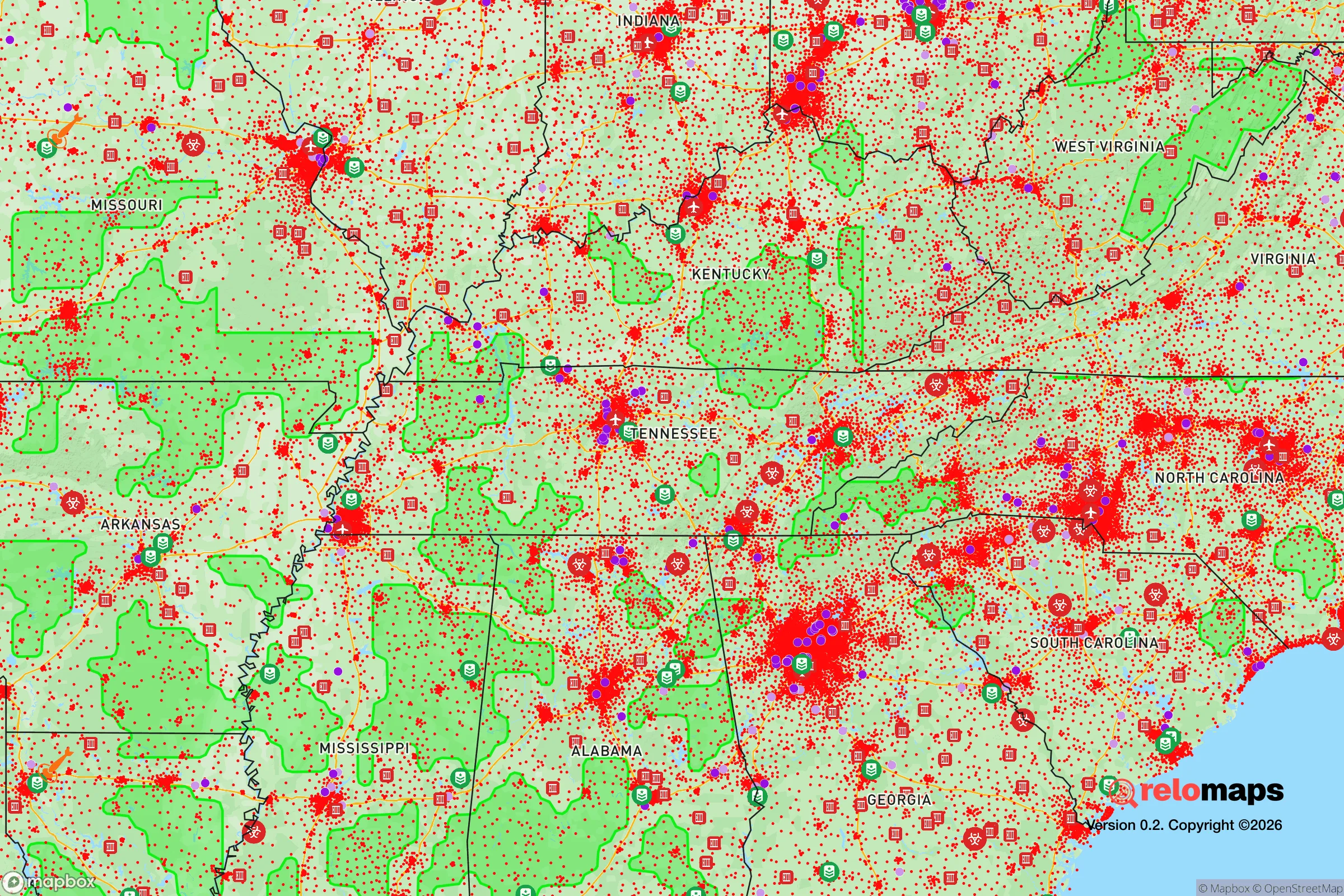
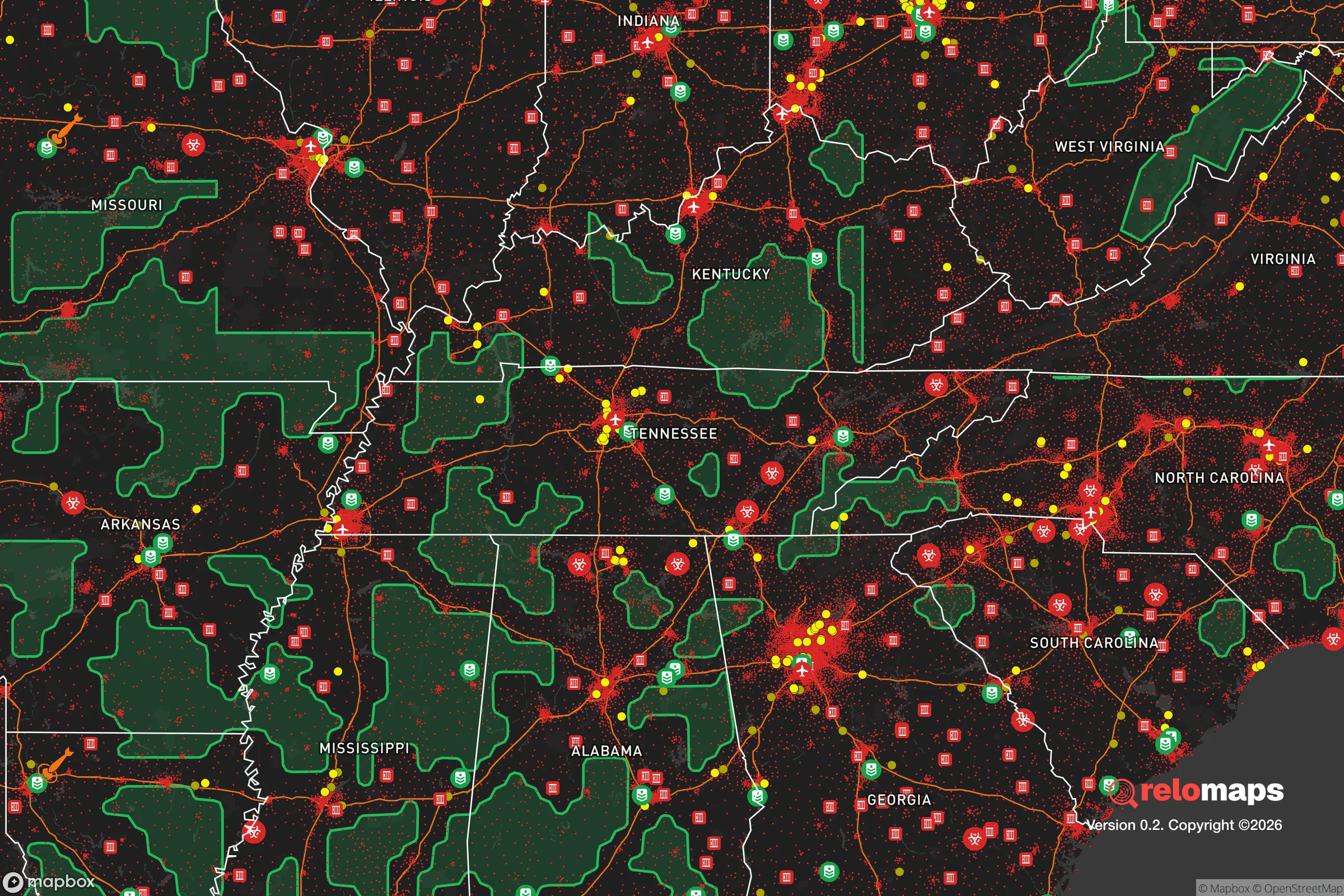


Important Note: For informational purposes only. This does not mean nothing bad ever happens in the green zones. Please use common sense. This is based on public data and modeled with AI. We tried to take a conservative approach but mistakes happen. We update this regularly as new information becomes available.
Solar Generator Recommendations
Backup power matters more here than in safer locations. We've picked three solar generators across budgets and capacity tiers — start with the budget unit if you only need a few essentials, or step up if you want to run a fridge and HVAC for days at a time.

Jackery Portable Power Station Explorer 300
Budget OptionPower on the Go: Weighing only 11 lbs, it's convenient to set up and store with book-sized foldable solar panels

BLUETTI Portable Power Station AC180
Designed for both indoor and outdoor scenarios, AC180 is highly capable as it has a robost capacity and continuous output power.

EF ECOFLOW DELTA Pro Ultra Power Station
Upgraded PickEcoFlow DELTA Pro Ultra is a whole-home energy system designed to grow with your family. Integrated with the Smart Home Panel 2, it scales to meet your evolving energy needs — keeping your home powered, intelligent, and secure through every stage of life.
We earn a commission, at no additional cost to you.
Strategic Assessment Analysis
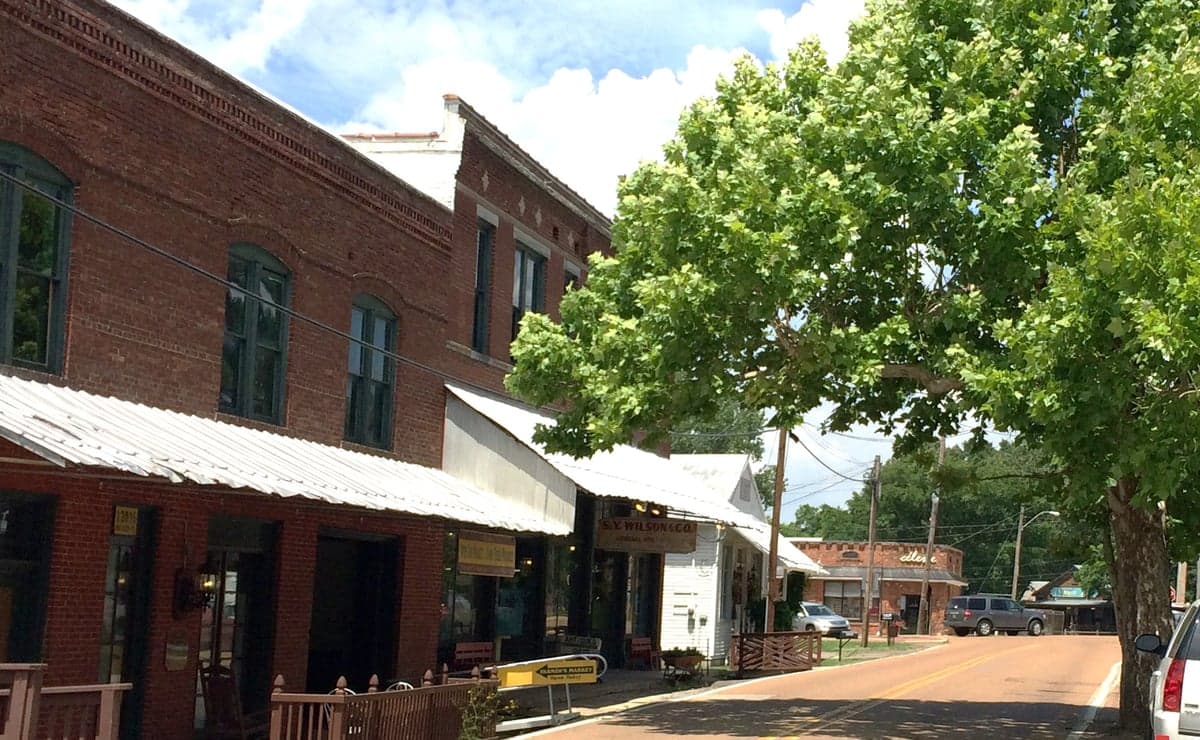
Arlington, Tennessee, sits in a strategic sweet spot that few relocators fully appreciate: close enough to Memphis for supply runs and employment, yet far enough to avoid the worst of urban collapse scenarios. Its position along the Loosahatchie River and near the I-40 corridor gives it both a natural buffer and a logistical backbone, but the same geography that makes it livable also introduces real vulnerabilities. For a conservative-minded prepper or survivalist, Arlington offers a solid foundation—but only if you understand where the risks lie and how to mitigate them.
Geographic position and natural advantages for long-term security
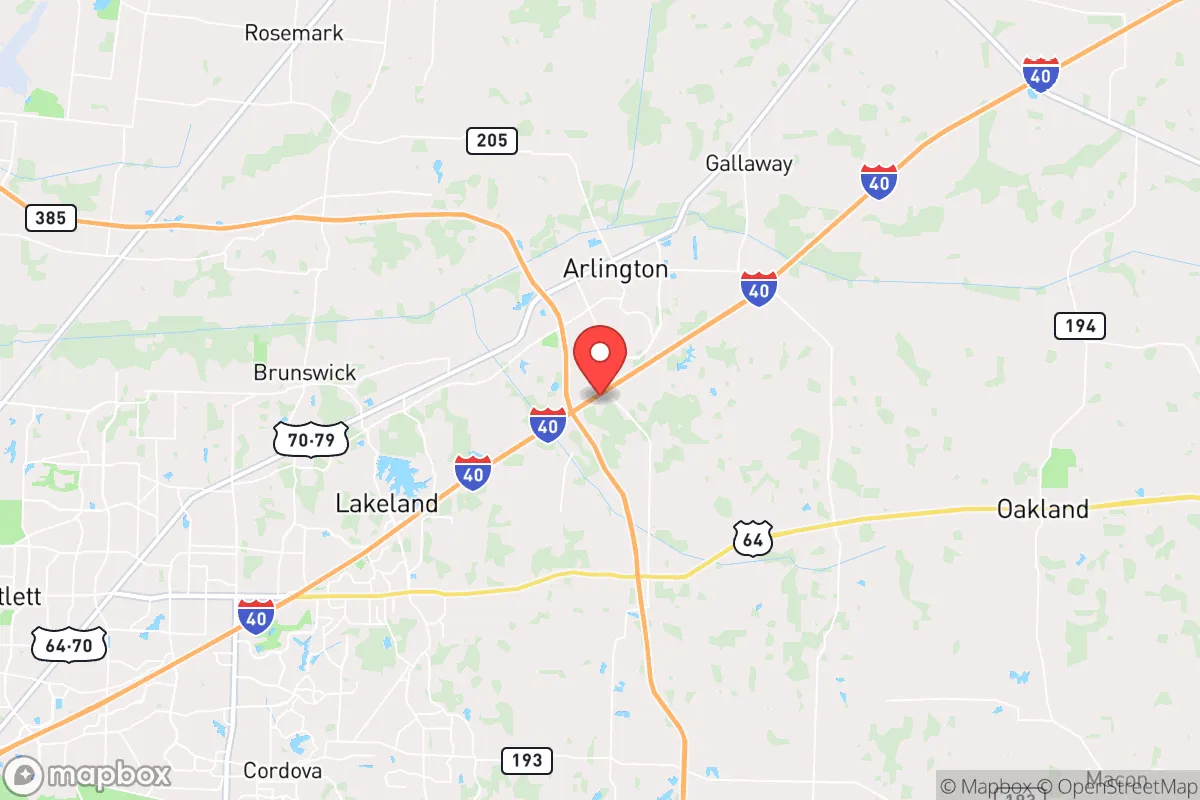
Arlington’s location in western Tennessee, roughly 25 miles east of downtown Memphis, places it in a transitional zone between the Mississippi Delta and the rolling hills of the Tennessee Valley. The area’s elevation—averaging around 300 feet—provides modest relief from flooding risks along the Loosahatchie River, though low-lying parcels near the river remain vulnerable during heavy rain events. The surrounding landscape is a mix of hardwood forests, agricultural fields, and small creeks, offering ample opportunities for hunting, foraging, and off-grid water sourcing if needed. The climate is humid subtropical, with hot summers and mild winters, which supports year-round gardening and reduces the heating fuel burden compared to northern states. For a relocator prioritizing self-sufficiency, the growing season runs roughly from April to October, allowing for substantial food production. The area’s relatively low population density—Arlington’s population hovers around 12,000—means less competition for resources during a crisis, and the rural character of adjacent communities like Lakeland and Eads provides additional buffer space. The I-40 corridor, while a double-edged sword, offers a direct route to the Mississippi River and the agricultural riches of the Arkansas Delta, which could be critical for barter and supply runs in a prolonged disruption.
Risks, exposures, and proximity to fallout-relevant landmarks
The most significant risk for Arlington is its proximity to Memphis, a major urban center with a population of over 630,000. In a scenario involving civil unrest, mass casualty events, or a breakdown of public order, Memphis could become a source of refugees, looters, or organized criminal elements moving east along I-40. The city’s history of high crime rates—Memphis consistently ranks among the top five most dangerous cities in the U.S. for violent crime—means that even in peacetime, the spillover effect is real. Arlington’s police department is small, and the Shelby County Sheriff’s Office would be stretched thin in a regional emergency. Additionally, the Memphis International Airport and the FedEx SuperHub at Memphis are both potential targets for terrorism or logistical disruption, and their proximity (under 30 miles) means that any large-scale event could generate fallout—both literal and figurative. The Tennessee Valley Authority’s nuclear plants, such as the Watts Bar and Sequoyah facilities, are over 200 miles away, which reduces direct radiation exposure risk, but the I-40 corridor itself is a high-value target for infrastructure attacks. The Loosahatchie River, while a water source, also serves as a potential contamination vector if upstream industrial sites in Memphis are compromised. For a relocator, the key takeaway is that Arlington is not a remote bunker; it is a suburban buffer zone that requires active defense planning, including secure perimeter measures, community watch networks, and a pre-planned evacuation route east toward the less populated areas of Fayette County.
Practical resilience for a relocator: food, water, energy, and defensibility
For a single individual or family looking to establish a resilient homestead, Arlington offers a mixed bag. The soil in the area is primarily loam and clay, which can be worked for gardens but requires amendment for high yields. Local farmers’ markets and agricultural supply stores in nearby Collierville and Bartlett provide seeds, tools, and livestock, but a prepper should plan to establish a greenhouse or hoop house to extend the growing season. Water is the most critical concern: Arlington’s municipal water comes from the Memphis Sand Aquifer, one of the purest groundwater sources in the country, but a grid-down scenario would cut access. A well is the gold standard here, and many rural properties in the area already have them. If you’re buying, prioritize parcels with a tested well and a backup hand pump. Rainwater collection is viable, with annual precipitation averaging 54 inches, but storage capacity must be substantial—at least 1,000 gallons per person for a three-month buffer. Energy resilience is achievable through solar, as the region gets about 210 sunny days per year, though cloud cover in winter can reduce output. A propane generator with a buried tank is a practical backup, especially since natural gas lines are not universal in the outlying areas. Defensibility is where Arlington shines relative to denser suburbs: lot sizes often range from half an acre to several acres, allowing for setback from the road, and the mature tree canopy provides natural concealment. However, the flat terrain means that line-of-sight from neighboring properties is limited, so a prepper should invest in motion-sensor lighting, reinforced doors and windows, and a clear field of fire if the situation demands it. Community resilience is a wildcard: Arlington has a strong church presence and a conservative-leaning population, which can foster mutual aid networks, but it also means that outsiders may be viewed with suspicion. Building relationships with neighbors before a crisis is essential—don’t wait until the power goes out to introduce yourself.
The overall strategic picture for Arlington, Tennessee, is one of cautious optimism for the prepared relocator. It is not a remote redoubt, nor is it a high-risk urban core; it is a defensible suburban enclave with access to critical resources and a community that shares many of the values that drive prepper thinking. The proximity to Memphis is a liability that must be actively managed through planning, hardening, and community engagement. For a single individual or family willing to invest in a well, solar, and a solid security setup, Arlington offers a viable base of operations for weathering the storms ahead—whether those storms are economic, political, or literal. The key is to treat it as a forward operating base, not a final retreat, and to have a secondary plan for relocation deeper into rural Tennessee if the situation deteriorates beyond local control. In a world where the state of the country feels increasingly fragile, Arlington provides a place to stand—but only if you stand ready.

* Values derived from national, state, county, city and local statistics and may differ in a specific area. Last updated: 2026-04-21T10:11:30.000Z
Narrative content on this page is AI-generated and may contain mistakes. Verify any details that matter before acting on them.
ReloMaps may earn a commission from affiliate links at no extra cost to you.

