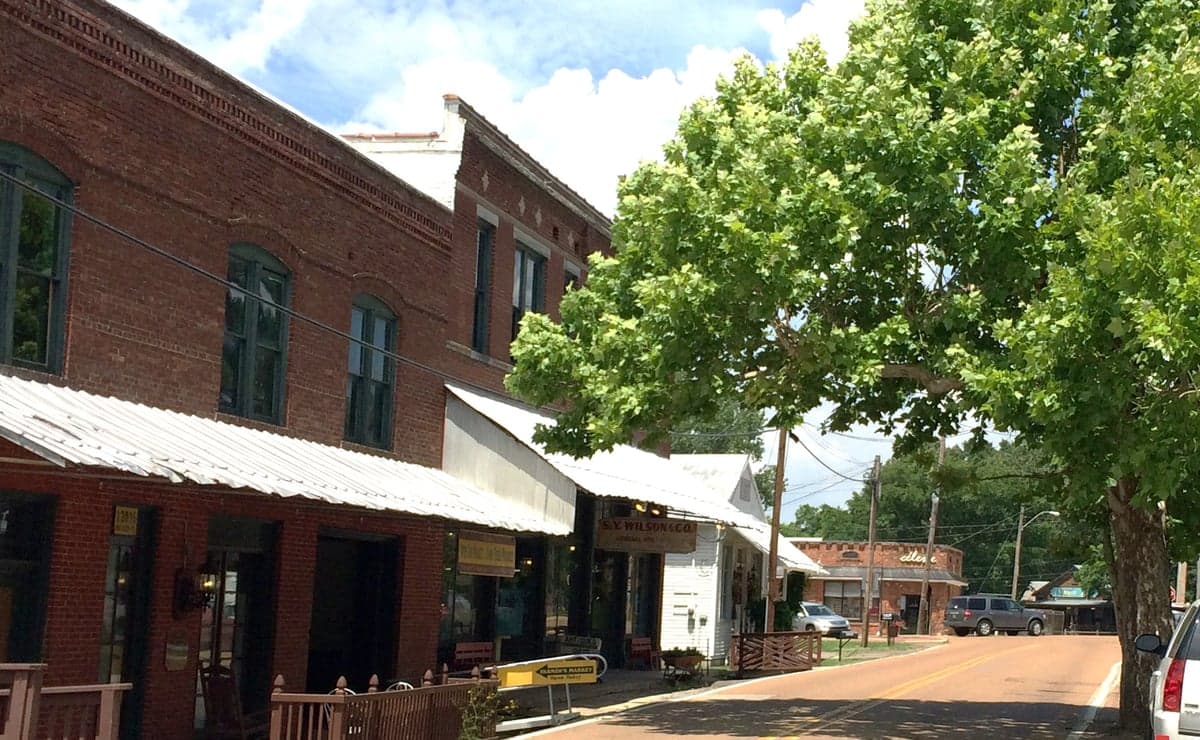
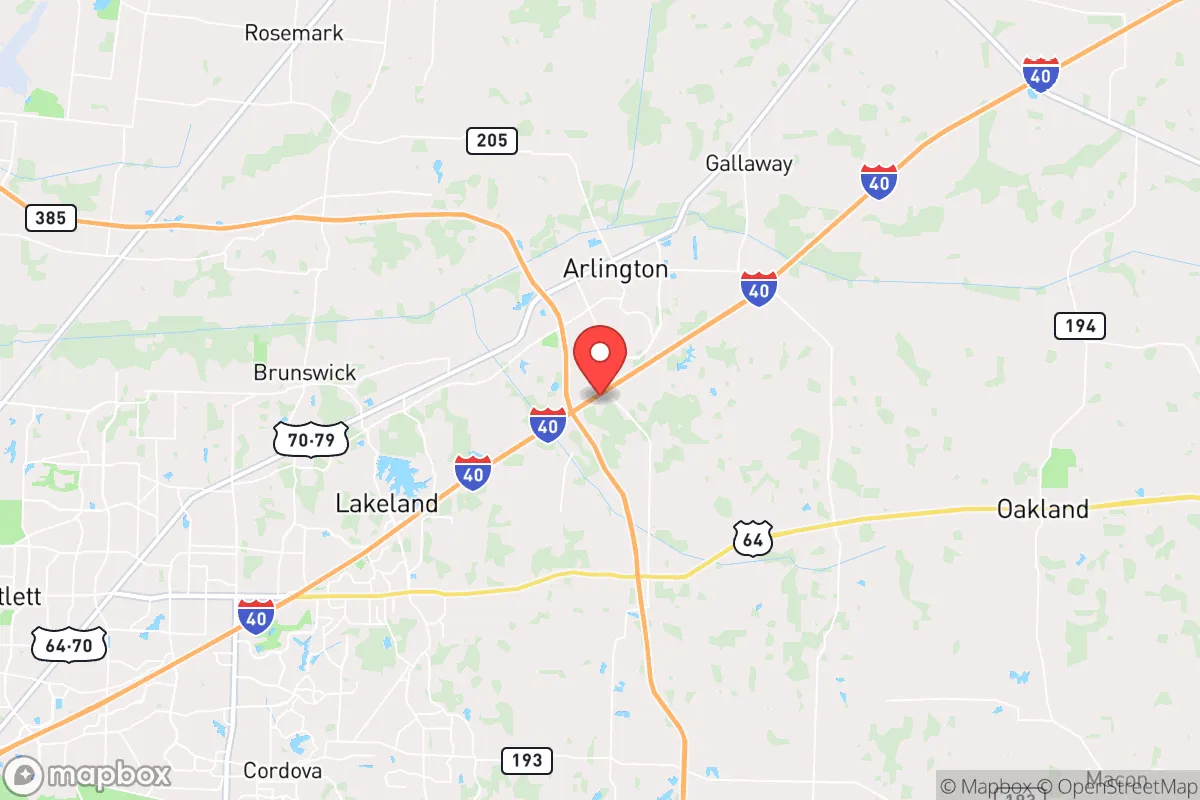
Photo: Wikipedia
Political ClimatePolitical Climate in Arlington, TN
District shown is the primary district for this city’s centroid. Cities may span multiple districts.
Local Political AnalysisPolitical Analysis of Arlington, TN
Arlington, Tennessee, is about as solidly conservative as it gets in the Mid-South, and that’s not changing anytime soon. The Cook PVI of R+21 tells you everything you need to know: this town votes red, and it votes red by a wide margin. If you look at the voting maps, Arlington is a deep, deep shade of Republican, and that’s been the case for as long as I can remember. The trajectory here is actually a little interesting—while some of the outer suburbs around Memphis have seen a slow creep of purple, Arlington has held the line, and if anything, the local politics have gotten more consistently conservative as new folks move in from places like Collierville and Germantown, looking for a place that still feels like the old-school, freedom-minded Tennessee they grew up in.
How it compares
Drive ten miles west into Memphis proper, and you’re in a completely different world—politically, culturally, and in terms of how much the government sticks its nose into your business. Memphis is deep blue, with all the progressive policies that come with it: higher taxes, more regulations, and a general sense that the city knows what’s best for you. Arlington, by contrast, is a breath of fresh air. We’re closer in spirit to towns like Oakland or Rossville, where the county commission still believes in limited government and letting people live their lives without a permit for everything. Even Collierville, which used to be a conservative stronghold, has started to show some cracks—you see more local races there where the progressive-leaning candidates are making noise. Arlington hasn’t had that problem. Our local school board and town council are still filled with folks who understand that the best government is the one that stays out of your way.
What this means for residents
For the people who live here, the political climate means a few very practical things. First, your property taxes stay reasonable because the local government isn’t trying to fund a dozen new social programs. Second, you don’t have to worry about your kids being taught radical ideology in the schools—the school board here has been very clear about keeping the curriculum focused on fundamentals, not activism. Third, and this is a big one, you don’t feel like you’re constantly being told what to do. During the pandemic, Arlington was one of those towns that pushed back hard against the overreach from Nashville and Shelby County. The local leaders trusted residents to make their own decisions, and that’s the kind of common-sense approach that keeps people here. There’s no talk of defunding the police or implementing equity audits—that stuff gets laughed out of the room at town hall meetings.
That said, I’d be lying if I said there wasn’t a little bit of concern about the long-term. The growth is bringing in people from all over, and some of them are bringing big-government ideas with them. You see it in the occasional zoning fight or the push for more "affordable housing" mandates, which is usually code for government picking winners and losers. The key is staying vigilant. If the local elections start to get complacent, that’s when the progressive foot gets in the door. For now, though, Arlington is still a place where a handshake means something, where the Second Amendment is respected, and where the government remembers it works for you—not the other way around. It’s the kind of town where you can still raise a family without feeling like the state is raising them for you.

State Political ClimatePolitical Climate in Tennessee
State Political AnalysisPolitical Environment in the State
Tennessee has been a reliably red state for decades, but the political climate here isn't just about voting Republican—it's about a deep-seated cultural conservatism that's been hardening over the last 10-20 years. The state leans solidly Republican at every level, with Donald Trump winning by 30 points in 2020 and 2024, and the GOP holding supermajorities in both chambers of the legislature. What's changed is the intensity: a wave of in-migration from blue states, combined with a rural backlash against federal overreach, has pushed the state further right, especially on cultural and liberty issues. If you're looking for a place where government stays out of your life, your business, and your family, Tennessee is a strong contender—but the picture isn't uniform across the state.
Urban vs. rural divide
The political map of Tennessee is a classic story of urban islands in a sea of red. Nashville (Davidson County) is the state's deep-blue anchor, voting for Biden by 30 points in 2020 and consistently electing progressive Democrats to local office. Memphis (Shelby County) is similarly blue, driven by a large African American population and union-heavy industrial base. Chattanooga (Hamilton County) has been trending purple, flipping to Biden in 2020 by a slim margin, though it's still competitive. Knoxville (Knox County) is more conservative than the other big cities but has a growing progressive enclave around the University of Tennessee. The real story is the suburbs and exurbs: places like Williamson County (south of Nashville) and Rutherford County (east of Nashville) are among the most conservative in the nation, with Trump winning Williamson by 40 points. These are the areas absorbing the most in-migration from California and Illinois, and they're voting even redder than the rural counties. The rural west and middle Tennessee—places like Dickson County, Hickman County, and the Upper Cumberland region—are deep red, with Trump winning by 60-70 points. The divide isn't just about party; it's about worldview. Urban areas want more government services and regulation; rural and suburban areas want less interference and lower taxes.
Policy environment
Tennessee's policy environment is aggressively pro-business and pro-liberty, with a few notable exceptions. There is no state income tax on wages, which is a huge draw for high-earners and retirees. Sales tax is high (around 9.5% average), but the overall tax burden is low. The regulatory posture is light: no state-level minimum wage above the federal $7.25, no universal background checks for gun purchases, and no state-level rent control. On education, Tennessee has a robust school choice program: the Education Savings Account (ESA) program, expanded in 2023, allows families in certain counties to use state funds for private school tuition. The state also has a strong charter school law. On healthcare, Tennessee did not expand Medicaid under the Affordable Care Act, and the state has a strict abortion ban (trigger law after Dobbs, with no exceptions for rape or incest). Election laws are conservative: voter ID is required, early voting is available but limited, and the state purges inactive voters regularly. The legislature has also passed laws restricting local governments from defunding police and from enacting sanctuary city policies. For a conservative, this is a friendly environment—but it's worth noting that the state's heavy reliance on sales tax can be regressive, and the lack of income tax means the state budget is more volatile.
Trajectory & freedom
Tennessee is becoming more free in many traditional conservative senses, but there are areas of concern. On gun rights, the state passed permitless carry (constitutional carry) in 2021, allowing any law-abiding adult to carry a handgun without a permit. On parental rights, the legislature passed a law in 2023 requiring schools to notify parents of any changes in a student's health or well-being, effectively banning classroom instruction on gender identity in K-8. On medical autonomy, the state banned gender-affirming care for minors in 2023, overriding local ordinances. On property rights, the state has strong eminent domain protections and no statewide rent control. On speech, the state passed a law in 2022 prohibiting social media platforms from censoring users based on political viewpoint—though it's been challenged in court. The concerning trend is the growth of government power in the name of "public health" or "safety." During COVID, Governor Bill Lee's administration imposed some restrictions, but they were lighter than in blue states. More recently, the state has expanded its surveillance powers through the Tennessee Fusion Center, which monitors social media for "threats." The biggest freedom concern is the state's high incarceration rate and strict sentencing laws, which can feel like government overreach for non-violent offenders. Overall, the trajectory is toward more personal liberty on cultural issues, but with a growing state apparatus that bears watching.
Civil unrest & political movements
Tennessee has seen its share of political flashpoints, but they're less frequent than in deep-blue states. The most visible recent unrest was the 2023 Nashville Covenant School shooting, which sparked a massive protest movement for gun control, led by parents and activists. The state legislature responded by passing a law to allow teachers to carry firearms on campus, not by restricting guns. On the right, the Tennessee Freedom Coalition and local Moms for Liberty chapters are highly active, pushing for school board control and parental rights. Immigration politics are heated but not as visible as in border states; there are no sanctuary cities, and the state has a law requiring local law enforcement to cooperate with ICE. Election integrity controversies flared after 2020, with the state passing stricter voter ID laws and banning private funding of election administration. There have been no major secession or nullification movements, but there is a strong strain of "Tennessee First" rhetoric in rural areas. The most visible political movement is the populist conservative wave that's taken over the state GOP, pushing out establishment figures in favor of more combative, anti-establishment candidates. For a new resident, you won't see daily protests or political violence, but you will see a lot of political yard signs, church-based activism, and a general expectation that people keep their politics to themselves in mixed company.
Projection
Over the next 5-10 years, Tennessee will likely become more conservative, not less. The in-migration from blue states is accelerating, but these newcomers are mostly moving to red suburbs and exurbs, not to Nashville or Memphis. The state's population is projected to grow by 10-15% by 2030, with most growth in Williamson, Rutherford, and Wilson counties—all deep red. The rural areas will continue to lose population, but their political weight will remain strong due to gerrymandered state legislative districts. The biggest wild card is the Nashville metro area, which is growing fast and becoming more diverse. If Nashville's blue vote continues to expand, it could flip the state's 5th Congressional District (currently held by a Republican) and make the governor's race more competitive. But the state legislature is so gerrymandered that Democrats are unlikely to break the supermajority anytime soon. On policy, expect more school choice expansion, more tax cuts (possibly a phase-out of the sales tax on groceries), and more restrictions on local government autonomy. The biggest risk for conservatives is that the state's heavy reliance on sales tax and low corporate taxes could lead to budget shortfalls in a recession, forcing either spending cuts or a new tax. For someone moving in now, expect to find a state that's deeply conservative, increasingly wealthy, and politically stable—but with a growing urban-rural tension that could erupt in the next decade.
Bottom line for a new resident: If you're a conservative looking for low taxes, strong gun rights, school choice, and a government that mostly leaves you alone, Tennessee is one of the best bets in the country. The political climate is stable and friendly to your values, but it's not a libertarian paradise—the state has a strong law-and-order streak, a high incarceration rate, and a growing surveillance apparatus. The urban areas are blue and getting bluer, but the suburbs and rural areas are red and getting redder. You'll find a community that shares your values in most places outside of Nashville and Memphis. Just be prepared for hot summers, high sales tax, and a political culture that expects you to be involved in your local school board and church. It's a state where your vote counts, your voice matters, and the government is mostly on your side—for now.
* Values derived from national, state, county, city and local statistics and may differ in a specific area. Last updated: 2026-04-21T10:11:30.000Z
Narrative content on this page is AI-generated and may contain mistakes. Verify any details that matter before acting on them.
ReloMaps may earn a commission from affiliate links at no extra cost to you.

