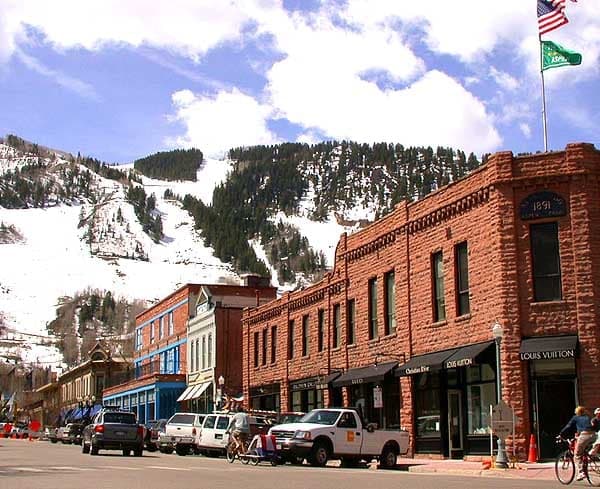
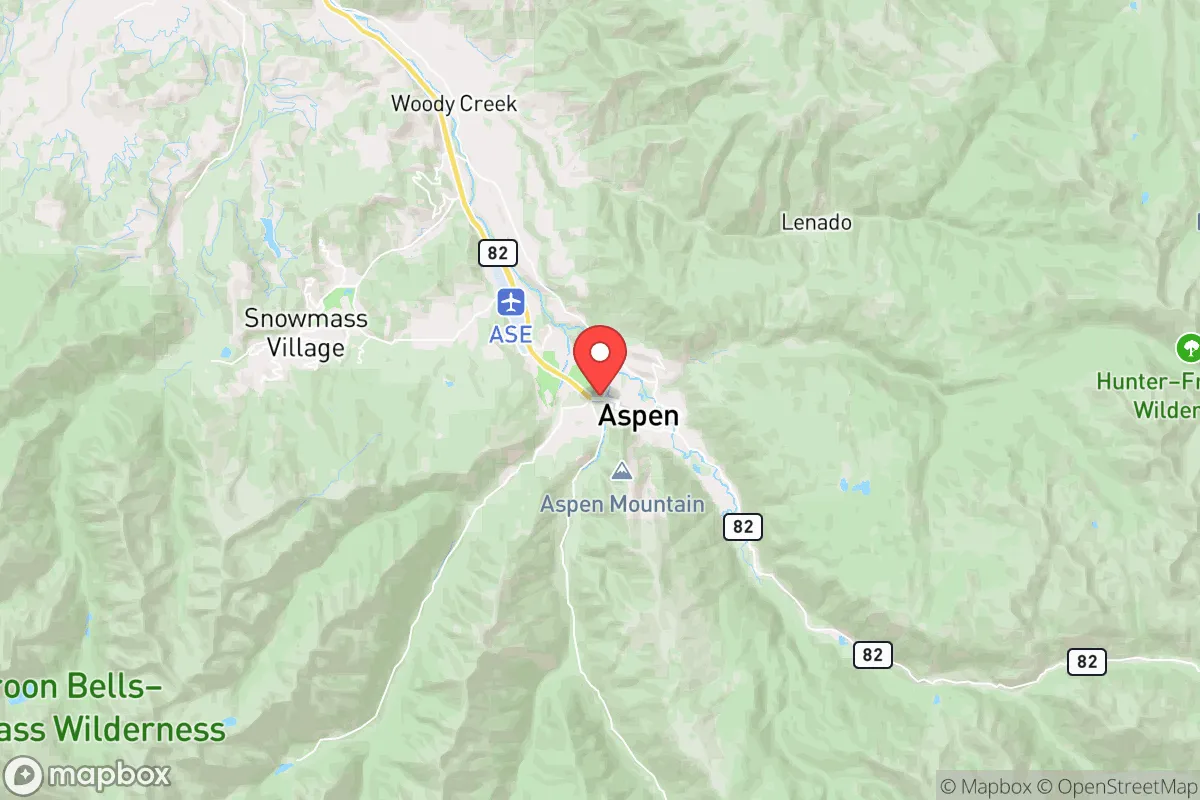
Photo: Wikipedia
Demographics of Aspen, CO
Affluence Level in Aspen, CO
A wealthy area with high-earning, well-educated households. Incomes, home values, and educational attainment meaningfully outpace national averages.
People of Aspen, CO
The people of Aspen, Colorado, today number 6,862, forming a community that is predominantly white (79.4%) and highly educated (68.3% hold a college degree), with a notable Hispanic presence (10.7%) and smaller East/Southeast Asian (3.2%) and Black (0.9%) populations. The city’s character is defined by extreme wealth, a transient workforce tied to the luxury tourism and real estate economy, and a sharp socioeconomic divide between long-term locals and seasonal newcomers. Foreign-born residents make up 7.4% of the population, a relatively low share for a resort town, reflecting Aspen’s shift from a working-class mining hub to an exclusive enclave for the global elite.
How the city was settled and grew
Aspen’s human history began with the Ute people, who used the Roaring Fork Valley seasonally before being displaced by silver prospectors in the 1879 Colorado Silver Boom. The town was founded in 1879 by miners, many of them Anglo-American and European immigrants (Cornish, Irish, German), who built the original West End neighborhood with modest Victorian cottages. By 1893, the silver crash collapsed the population from over 12,000 to a few hundred, leaving Aspen a near-ghost town for decades. The Smuggler Mountain area, named for the rich Smuggler Mine, housed the mining families who stayed, while the Downtown Core retained commercial buildings from the boom era. A small Hispanic population arrived in the early 20th century as railroad and agricultural laborers, settling in the Maroon Creek valley and the North End, where they worked on ranches and in service roles. This wave remained small and largely invisible in official records until the post-1960s resort boom.
Modern era (post-1965)
The 1960s ski resort development, led by the Aspen Skiing Company, triggered a demographic transformation. Wealthy white professionals from the East and West Coasts—drawn by the mountain lifestyle and investment opportunities—bought up Victorian homes in the West End and built new estates in the Red Mountain neighborhood, which became the epicenter of Aspen’s billionaire class. The East End, closer to the ski lifts, saw a mix of second-home owners and service workers in smaller condos. The Hispanic population grew modestly during this period, driven by construction and hospitality jobs, but remained concentrated in the Maroon Creek area and the Burlingame affordable housing complex, built in the 1990s to retain essential workers. The East/Southeast Asian community (3.2%) is a recent addition, largely composed of wealthy Chinese and Japanese buyers of second homes and investment properties, with no distinct ethnic neighborhood—they are dispersed across the West End and Red Mountain. The Indian subcontinent population (0.1%) is negligible, mostly professionals in finance or tech who work remotely. Aspen’s Black population (0.9%) remains tiny, reflecting the city’s lack of a historical Black community and the high cost of living that limits in-migration. The foreign-born share (7.4%) is lower than the national average, as most newcomers are domestic migrants with capital.
The future
Aspen’s population is heading toward greater homogenization by wealth and race, with the white, college-educated elite consolidating their hold on the West End and Red Mountain. The Hispanic population, which grew from roughly 5% in 1990 to 10.7% today, is plateauing as affordable housing becomes scarcer and service jobs are automated or outsourced to commuters from downvalley towns like Basalt and Carbondale. The East/Southeast Asian community may grow slowly as luxury real estate remains attractive to international buyers, but it will likely remain a small, dispersed group rather than forming an enclave. The city’s strict growth controls and zoning laws, combined with a median home price exceeding $4 million, ensure that future in-migration will be limited to the ultra-wealthy and a shrinking pool of essential workers. No new ethnic enclaves are forming; instead, the Burlingame complex and Maroon Creek area will continue to house a multi-ethnic service class, while the rest of Aspen becomes more uniformly affluent and white.
For someone moving in now, Aspen is a place of stark contrasts: a globally famous resort where the people are overwhelmingly white and wealthy, with a small, stable Hispanic workforce and a scattering of international elites. The city’s future is one of demographic stasis—highly educated, high-income, and increasingly exclusive—offering little racial or economic diversity beyond the service sector. New residents should expect a community where social circles are largely defined by property ownership and professional status, not ethnic or cultural ties.

* Values derived from national, state, county, city and local statistics and may differ in a specific area. Last updated: 2026-05-11T22:11:57.000Z
Narrative content on this page is AI-generated and may contain mistakes. Verify any details that matter before acting on them.
ReloMaps may earn a commission from affiliate links at no extra cost to you.

